Resource context, publisher and authors
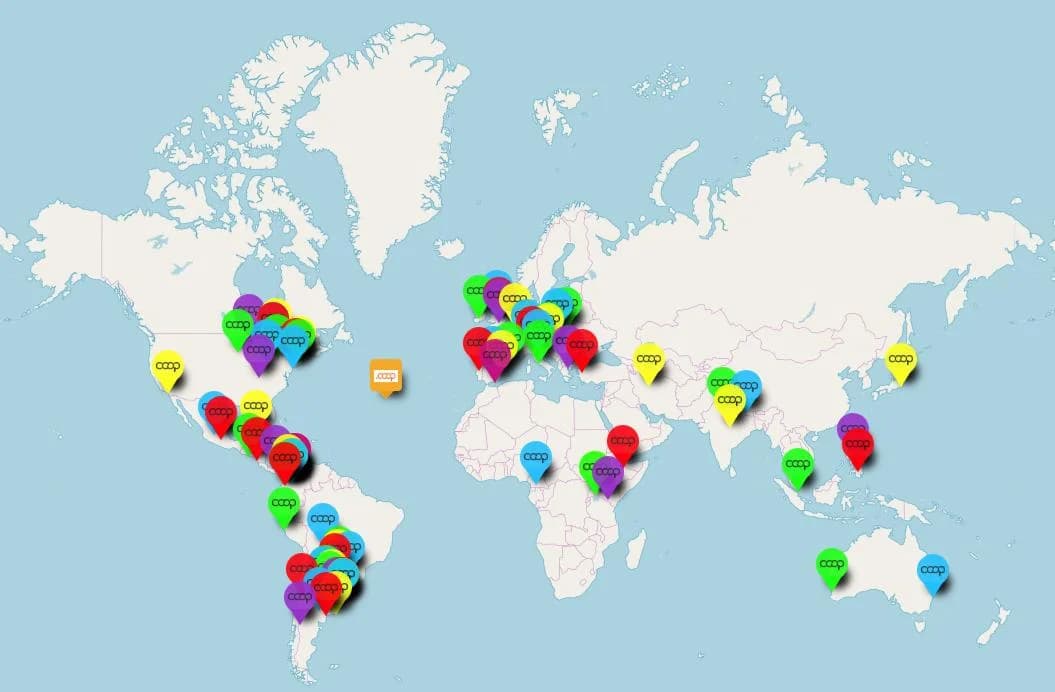
The Cooperative World Map (CWM) is an interactive, regularly updated digital map that aims to “unite and showcase” cooperative entities worldwide. The resource is presented as a collaborative project between DotCooperation LLC (DotCoop) and the Digital Commons Cooperative, with these organisations also listed as publisher and authors. It is positioned as a single online hub where cooperatives can be identified, promoted, and connected, with the live map accessible at worldmap.coop.
What the platform is and what it offers
CWM is described as an open, shared digital platform built with open-source mapping and data-sharing technology. Users can search for cooperative entities by name, sector, or type using “user-friendly search functionalities.” Each cooperative listed is intended to be discoverable on the map, increasing visibility and allowing people to see the reach of cooperatives “big and small” across sectors and regions. The platform’s core proposition is centralising information that is otherwise fragmented and difficult to locate.
Data contributions and update cycle
The map’s data is provided by a network of membership partners. These partners share information either through automated processes or by making periodic contributions of updated information. The content notes that, at the time described, the data is “currently a maximum of three months old,” with an objective to refresh the dataset more frequently. This approach is intended to keep the map current enough to be used as a dependable reference point for finding and comparing cooperative ecosystems across geographies.
Uses for research, coordination and storytelling
The resource highlights multiple use cases: the research and academic community can use cohesive cooperative data to analyse trends, issues, and challenges; apex or umbrella cooperative organisations can use the map’s information to tell stories and promote the cooperative brand; and individual cooperatives can use the platform to identify potential partners across regions and sectors. The map is framed as a “first stop” for forming groups and connections, identifying common challenges, facilitating discussion, and initiating coordinated action.
Cooperation among cooperatives and relevance to sustainable housing
A central theme is strengthening “Principle #6 — cooperation among cooperatives” by making it easier for organisations to find each other and collaborate. The resource argues that bringing together cooperative data supports knowledge-sharing and best-practice exchange, which can help expand the role of cooperatives in the wider economy. For pan-European audiences focused on sustainable housing, this emphasis on collaboration, community-based organisation, and shared infrastructure aligns with how housing cooperatives and commons-oriented models often coordinate learning, governance approaches, and replicable practices across cities and countries.
Governance, transparency and contact points
Data and relationships are described as being managed by the DC Alliance, a joint effort by DotCoop and the Digital Commons Cooperative that oversees the data-sharing system and the technology behind the map. The platform is presented as hosting public and available data that cooperative organisations voluntarily share. For data and compliance enquiries, the resource provides the email address data@worldmap.coop; for other enquiries it provides support@worldmap.coop, underscoring an emphasis on support and transparency for contributors and users.