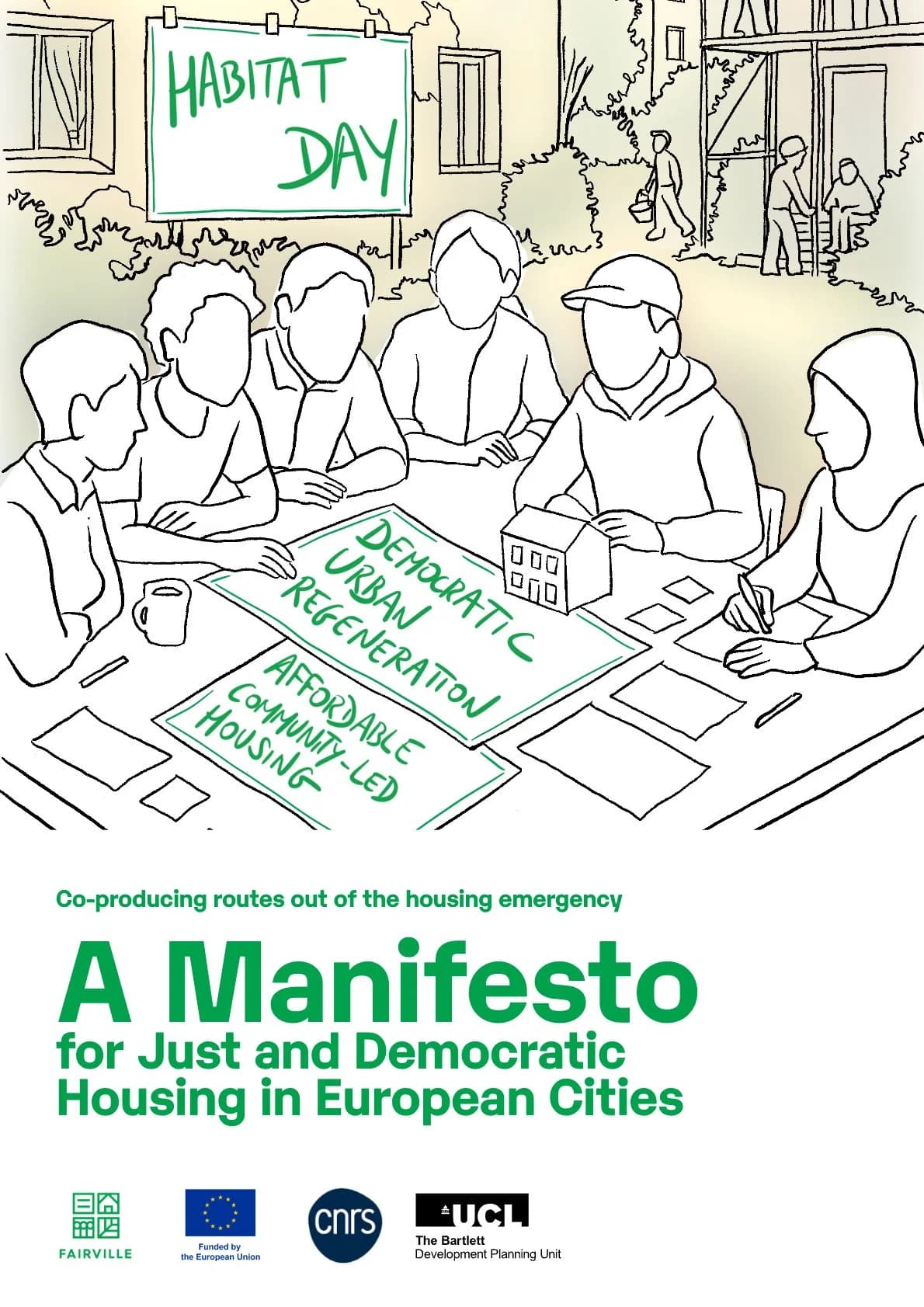
Overview of the Manifesto and Its Origin
The document titled “Co‑producing routes out of the housing emergency – A Manifesto for Just and Democratic Housing in European Cities” is a collective output of the Fairville Consortium, a European research and advocacy network focused on urban inequality and democratic participation. The manifesto was drafted after a pan‑European workshop held on 4‑5 October 2025 in Roubaix, France, bringing together grassroots housing activists, academic researchers, and professionals from a wide range of organisations, including universities, community groups, and housing NGOs across Europe. The Fairville Consortium coordinates the project, and the research was supported by the Bartlett Development Planning Unit (UCL) and the Centre National de la Recherche Scientifique (CNRS).
Core Demands for Sustainable Housing
The manifesto outlines a set of concrete demands aimed at securing affordable, dignified housing as a human right. Key points include protecting existing social and public housing stock, prioritising refurbishment over demolition, and establishing enforceable maintenance rights for tenants. It calls for municipalities to be empowered with fiscal and planning tools—such as pre‑emptive purchase rights, expropriation mechanisms, and rent‑control regulations—to curb vacancy, speculation, and the financialisation of housing.
Linking Housing to Climate and Democracy
A central argument is that the housing emergency is intertwined with the climate crisis and democratic erosion. The text stresses that addressing housing adequacy can rebuild trust in public institutions and support a just ecological transition. It highlights the need for zero‑land, zero‑energy retrofits, low‑impact construction materials, and tenant‑led decision‑making in decarbonisation projects, positioning sustainable housing as a lever for both climate action and democratic renewal.
Collaborative Networks and Contributors
Over 50 organisations contributed to the manifesto, ranging from community‑land‑trusts and cooperative housing networks to academic institutions such as University College London and the University of Regensburg. Notable participants include the Bartlett Development Planning Unit, the Centre National de la Recherche Scientifique, the Global Platform for the Right to the City, and numerous local housing collectives in France, Belgium, Spain, and Germany. This broad coalition underscores the pan‑European scope and the multi‑stakeholder approach required for systemic change.
Key Data and Facts
- The manifesto was produced following a workshop that convened representatives from more than 30 European cities.
- It references the EU Affordable Housing Plan currently under consultation by the European Commission.
- The document cites the universal right to housing (Article 25 of the Universal Declaration of Human Rights) and stresses that housing costs should not exceed 30 % of household income.
- Funding for the broader Fairville project comes from Horizon Europe (grant No. 101094991) for the period 2023‑2026.
Implementation Pathways
The text proposes practical pathways, including: establishing strong regulatory instruments to reverse financialisation; creating non‑profit financial institutions at EU, national, and municipal levels to channel capital into affordable housing; and mandating transparent public consultation and tenant participation in all housing‑related decisions. It also calls for the exclusion of extractive, deforestation‑linked construction materials from publicly funded housing projects.
Vision for Future Housing
Ultimately, the manifesto envisions a Europe where housing is treated as habitat—central to access to services, environmental benefits, and civic participation. By co‑producing housing policies with communities, the authors argue that Europe can achieve a more just, democratic, and sustainable urban future.