Overview of the Quarterly Network Journal
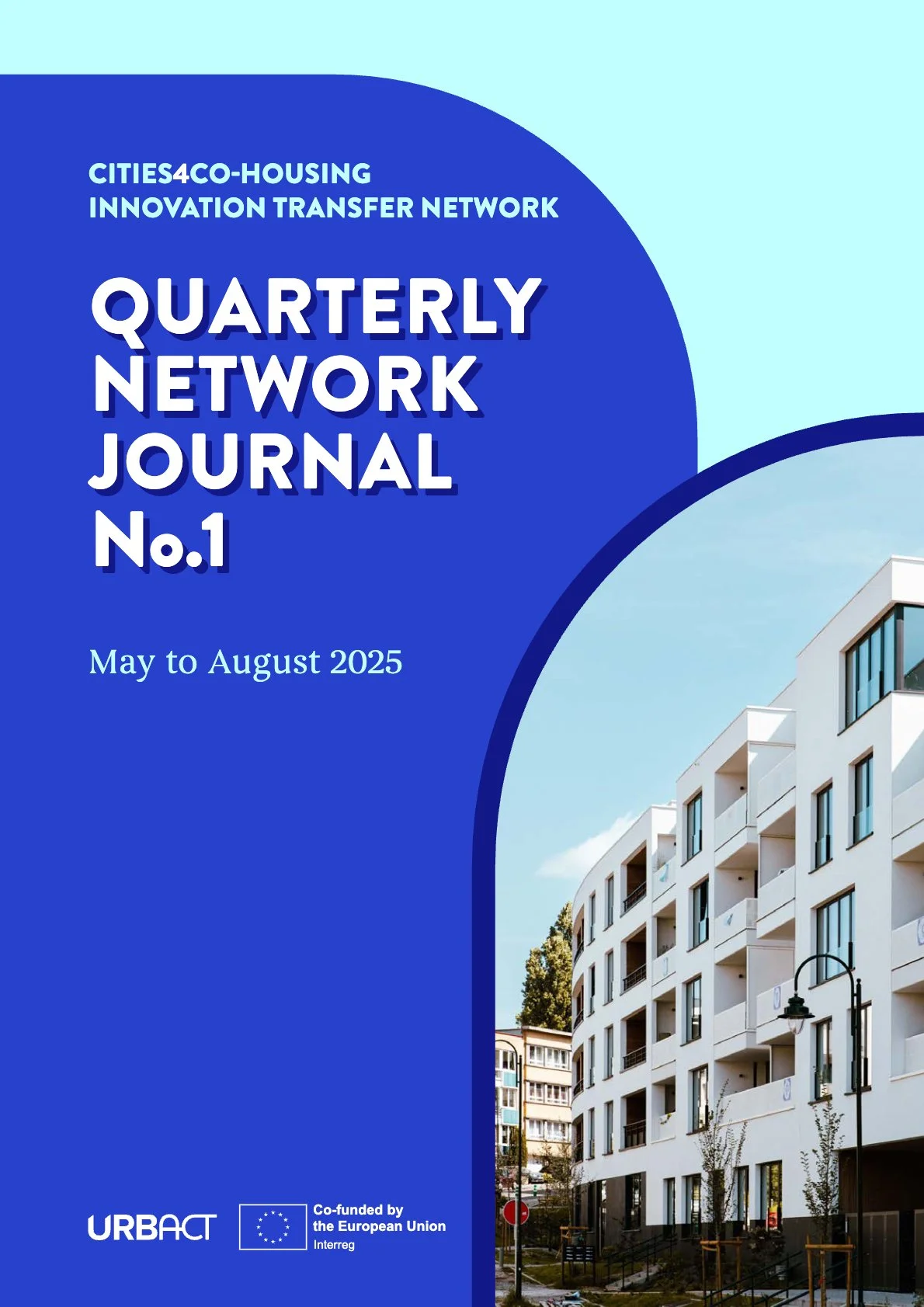
The first issue of the CITIES 4 CO‑HOUSING – Quarterly Network Journal presents the activities and progress of the URBACT‑led Cities 4 Co‑Housing Innovation Transfer Network for the period May‑August 2025. Authored by Dr Orna Rosenfeld (URBACT Lead Expert) with design by Katharine Mugridge and cover photography by CLTB (Community Land Trust Brussels), the journal documents the network’s efforts to promote affordable, sustainable housing across Europe through the transfer of the CALICO project’s innovative practices.
Key Themes and Modules Transferred
The network focused on the most complex CALICO modules: TM3 Legal & Financial and TM4 Building. Partners exchanged knowledge on community land‑trust structures, long‑term affordability mechanisms, and energy‑efficient building standards. Workshops employed the OPERA method, World Café, and iterative co‑design to generate nearly 50 testing actions, which were compiled into an online Testing Actions Bank for ongoing use.
Partner Contributions and Activities
Five European cities – Brussels (lead), Vila Nova de Gaia, Fuenlabrada, Naples, Thessaloniki, and Nikšić – participated actively. Highlights include:
- A transnational meeting in Vila Nova de Gaia (26‑28 May 2025) where partners co‑created testing actions and refined investment‑plan drafts.
- Local URBACT Local Groups (ULGs) conducting surveys, workshops, and stakeholder meetings to adapt CALICO tools to regional contexts.
- Development of testing actions such as resident‑led design workshops, solar‑panel feasibility studies, and solidarity‑condominium models.
Financial Data and Funding Overview
The CALICO project’s original budget was approximately €10 million, with €5 million from the European Regional Development Fund. Current network partners report varied funding situations: Vila Nova de Gaia accesses €143 million in EU funds through 2026; Fuenlabrada secured €6 million via the EU SHARE project; Nikšić’s solar‑panel initiative totals €85 000, expected to generate €12 000 annual revenue for community services. Overall, the network’s testing‑action bank and investment‑plan drafts reflect a mixed financing strategy that combines EU co‑funding, ethical loans, and local subsidies.
Progress on Investment Plans
Sections 1 and 2 (needs analysis, policy response, and investment proposal) are completed for all partners. Section 3 (investment case and budgeting) is underway, with detailed costings for actions such as the €6.15 million renovation of San Esteban Public School (including €4.92 million EU co‑funding). Naples’ Stadera 1.3.7 Solidarity Condominium project involves 24 apartments and commercial spaces, while Thessaloniki secured a vacant public building for a 10‑unit pilot co‑housing scheme.
Methodologies for Co‑Creation
Three participatory methods underpinned the testing‑action development:
- OPERA – individual reflection, pair discussion, group presentation, ranking, and clustering.
- World Café – rotating table discussions to explore specific CALICO modules.
- Iterative Co‑Design Workshops – multi‑stage refinement of testing actions across groups. These approaches ensured that actions were both ambitious and broken down into concrete, measurable steps.
Impact on Sustainable Housing Across Europe
The journal demonstrates how the Cities 4 Co‑Housing network translates high‑level policy concepts into local practice, fostering community‑owned land, energy‑efficient retrofits, and inclusive governance. By documenting concrete actions, funding structures, and collaborative processes, the resource offers a replicable model for other regions seeking to address housing affordability and sustainability challenges.