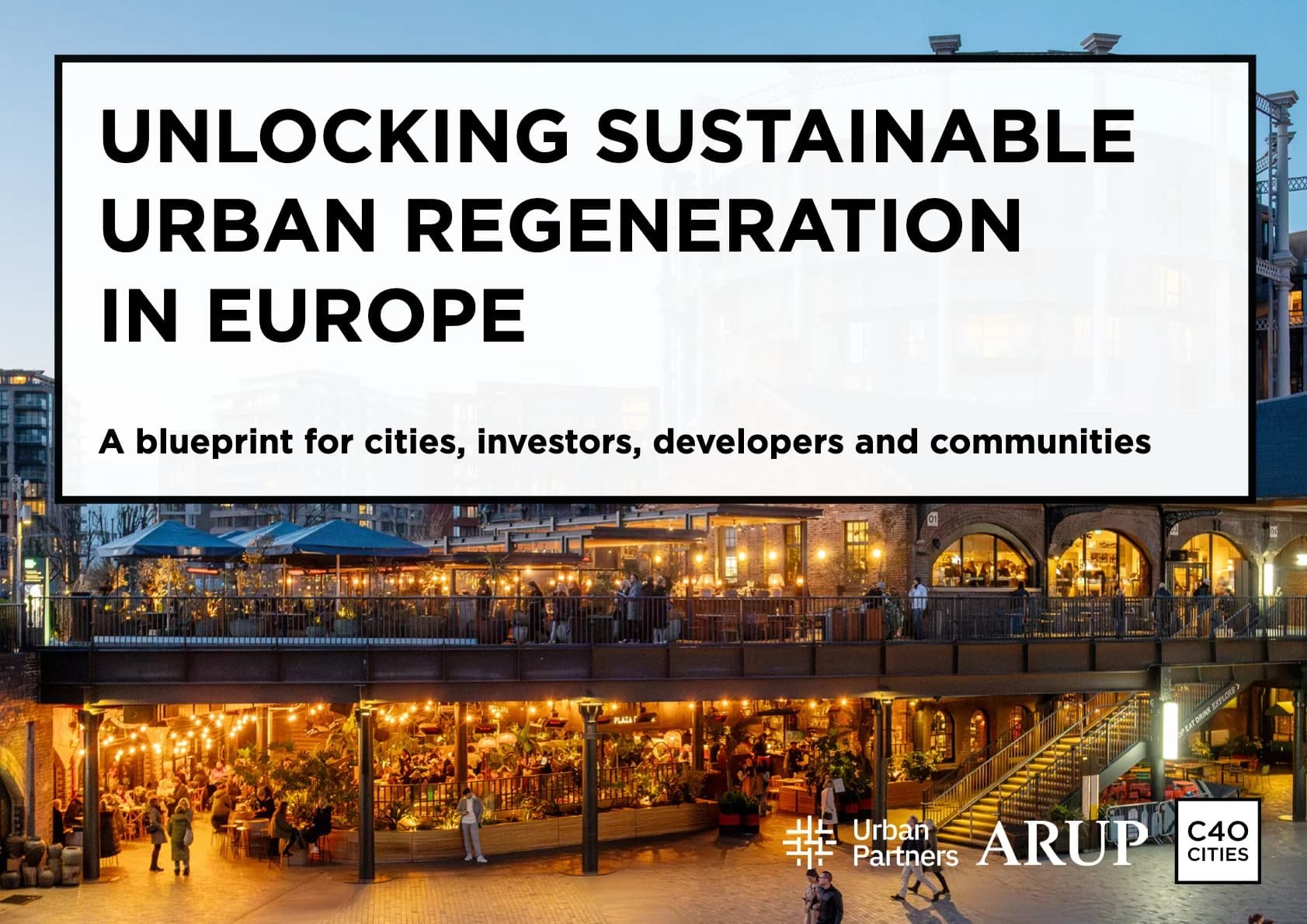
Introducing a Europe‑wide urban regeneration blueprint
The report “Unlocking Sustainable Urban Regeneration in Europe” offers a comprehensive guide for cities, investors, developers and communities seeking to revitalise brown‑field sites across the continent. Produced by Arup – a global design and engineering consultancy with a long history of delivering large‑scale infrastructure and sustainability projects – the study draws on the expertise of a diverse author team: Hélène Chartier, Michael O’Neill, Léan Doody, Giacomo Magnani, Jesse Shapins and Marcin Zebrowski. Their combined experience spans urban planning, engineering, finance and policy, reflecting the multidisciplinary nature of successful regeneration.
Scale of the challenge and opportunity
Europe possesses roughly 2 million hectares of brown‑field land, which could accommodate up to 230 million new homes. Realising this potential would deliver a six‑fold return on investment and cut transport‑related emissions by 70 percent, according to the report’s synthesis. The study notes that 75 percent of Europeans already live in cities, a figure expected to rise to 83 percent by 2050, underscoring the urgency of densifying existing urban areas rather than expanding into greenfield sites.
Key financial insights
Analyses of recent projects reveal that brown‑field regeneration can generate between two‑ and six‑fold returns, with some flagship schemes achieving internal rates of return above 20 percent. Infrastructure cost savings are significant: developing on previously built‑up land reduces projected public spending by roughly 20 percent compared with greenfield development. Moreover, land‑value capture mechanisms and public‑private partnerships are highlighted as proven tools for de‑risking projects and attracting long‑term capital.
Environmental and social benefits
Transforming former industrial zones into compact, mixed‑use neighbourhoods delivers multiple climate advantages. Compact development lowers per‑capita CO₂ emissions by about 0.79 percent for each 1 percent increase in population density. Transport emissions drop dramatically because residents can rely on walking, cycling and public transit. The report also quantifies a 30‑70 percent reduction in vehicle travel for inhabitants of well‑planned dense districts. Socially, regeneration projects increase affordable housing supply – for example, the Nordhavn district in Copenhagen and the King's Cross regeneration in London each allocate around 40 percent of new units to affordable or social rent categories.
Stakeholder collaboration framework
The authors outline five guiding principles: long‑term strategic planning, building multidisciplinary teams, fostering trusted relationships, adopting incremental delivery and continuously de‑risking investment. Successful case studies, such as Clichy‑Batignolles in Paris, King’s Cross in London, and Nordhavn in Copenhagen, demonstrate the importance of early community engagement, clear governance structures and alignment of public and private objectives. The report stresses that cities must provide regulatory certainty, infrastructure financing and land‑assembly mechanisms, while investors require transparent risk‑adjusted performance metrics that balance financial returns with ESG outcomes.
Practical tools and instruments
A suite of policy levers is catalogued, including land‑value taxes, tax‑increment financing, development fee waivers, blended‑finance loans and regeneration leases. The authors note that many European municipalities already employ these tools, but broader adoption and standardisation would accelerate project pipelines. The document also recommends the creation of dedicated development corporations to manage land assets, secure long‑term financing and retain control over urban outcomes.
Path forward for sustainable housing
By channeling the latent capacity of brown‑field sites, Europe can meet its housing demand while delivering climate‑neutral, inclusive neighbourhoods. The report calls on policy makers to embed the outlined principles into national and regional strategies, to mobilise patient capital from pension funds and sovereign wealth funds, and to ensure that affordability, green infrastructure and resilient design remain central to every regeneration programme.