Overview of the Report
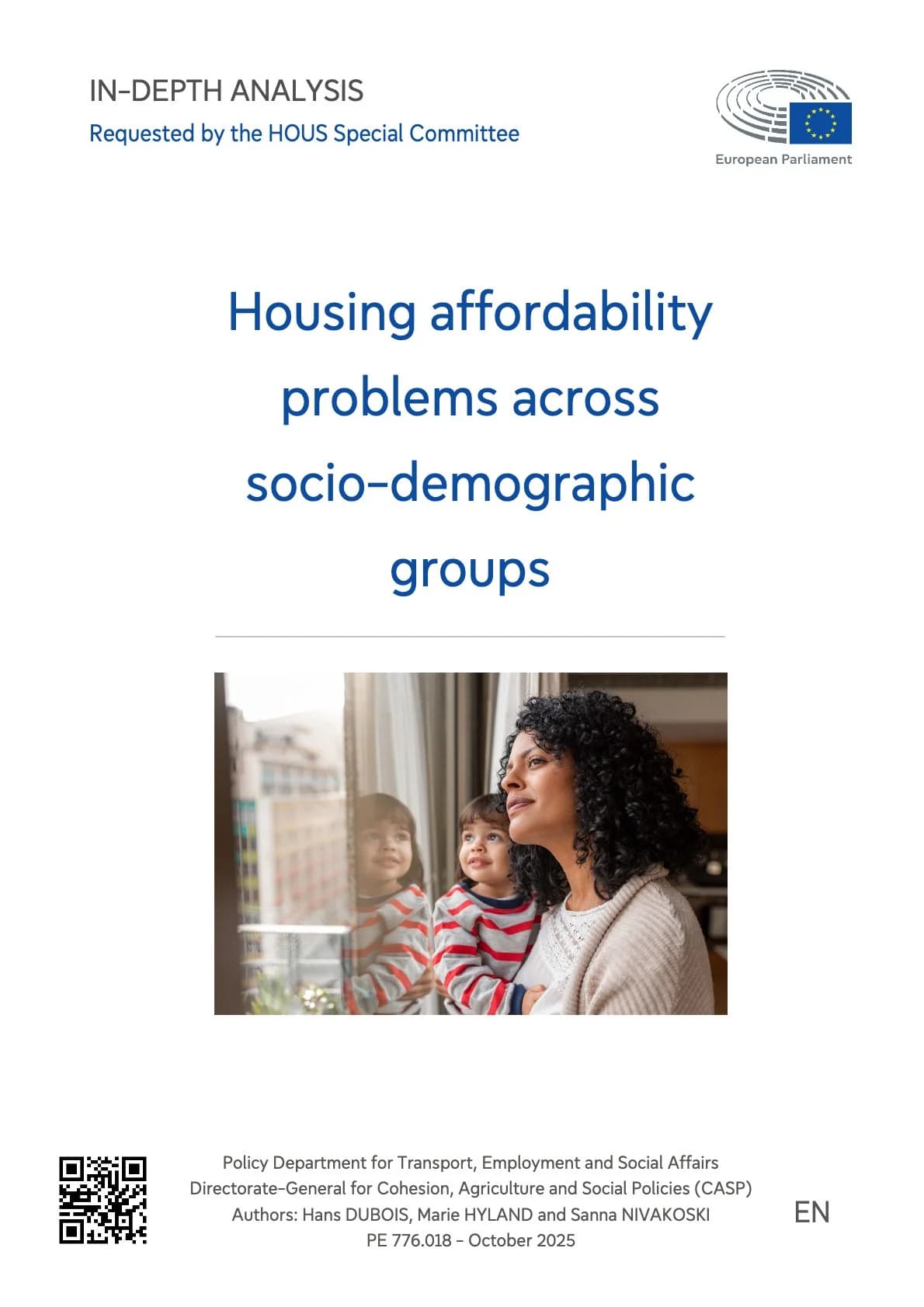
The European Parliament’s Policy Department for Transport, Employment and Social Affairs produced an in‑depth analysis on housing affordability across the EU, authored by Hans Dubois, Marie Hyland and Sanna Nivakoski of Eurofound. The study maps how younger people, households with children and older adults experience housing exclusion, insecurity, cost burdens and inadequacy, and evaluates policy options to promote sustainable, affordable homes.
Key Findings on Young People
Young adults face the highest risk of housing exclusion, with about one‑third of those aged 25‑34 still living with parents. In several Member States, up to 57 % remain at home (e.g., Slovakia). Over‑burdened housing cost rates are almost twice as high for ages 18‑29 (23 %) compared with 30‑39 (12 %). Urban dwellers are especially vulnerable, and insecure employment further amplifies exclusion.
Challenges for Households with Children
Families with dependent children are more likely to be over‑burdened by housing costs, with many spending over 40 % of disposable income on rent or mortgage. Single‑parent households experience the greatest strain: 11 % expect to leave their home within three months, 8 % are in arrears on rent or mortgage, and 28 % face overcrowding. Energy‑inefficient homes increase utility expenses, compounding financial pressure.
Issues Affecting Older Adults
Around 78 % of people aged 65 + own their homes, 71 % outright. Nevertheless, more than a quarter cannot afford to keep their homes adequately warm, and 13 % of older renters are over‑burdened by housing costs (29 % of that group). Energy‑efficiency retrofits are less common among older owners, limiting their ability to reduce utility bills.
Policy Recommendations for Sustainable Housing
The authors stress supply‑side measures: increasing the quantity of well‑connected, energy‑efficient homes and encouraging owners of vacant dwellings to release them. Demand‑side tools include targeted financial support, rent‑control safeguards and incentives for landlords to carry out retrofits without passing costs to tenants. Non‑housing policies—such as improved social protection, affordable transport and accessible childcare—are highlighted as essential to reduce overall cost burdens.
European Context and Implications
Across the EU, house‑price growth (55 % since 2010) and rent increases (27 %) outpace income gains, intensifying affordability pressures for all groups. The analysis notes that while younger people dominate urban markets, older households in rural areas confront higher heating costs due to older, less insulated housing stock. Sustainable solutions must therefore combine energy‑saving renovations with broader social policies to mitigate exclusion and insecurity.
How the Report Supports Sustainable Housing Goals
By linking housing affordability to energy efficiency, the study aligns with EU climate objectives. It provides evidence that retrofitting older dwellings can lower utility consumption, while increasing the supply of new, energy‑efficient homes can curb future emissions. The authors advocate coordinated action across housing, transport and social sectors to achieve a resilient, inclusive European housing market.