Loading...
Loading...
Monaco has Europe's most extreme housing dynamics: consistently the most expensive housing market in Europe per square metre, the highest population density at over twenty thousand per square kilometre, and a population structure dominated by foreign residents (typically over seventy percent of residents are non-Monégasque) alongside the Monégasque citizenry whose housing rights are protected through the distinctive secteur protégé framework.
The contemporary housing-policy framework, operating principally through the Direction de l'Habitat, distinguishes between three principal segments: the secteur libre (free market) serving foreign residents and the wealthiest segment, the secteur protégé reserving substantial parts of the rental stock for Monégasque citizens and qualifying residents, and the secteur domanial (public-housing) sector administered directly by the state. The current debate centres on whether the secteur protégé framework can be expanded at the pace the Monégasque-citizen housing demand requires.
Monaco's housing market combines three distinct segments. The secteur libre (free market) is structurally dominated by foreign residents and high-net-worth individuals, with rents and prices at among Europe's highest absolute levels. The secteur protégé reserves substantial parts of the rental stock for Monégasque citizens and qualifying residents through rent-controlled and allocation-controlled mechanisms. The secteur domanial (public-housing) sector administered directly by the state provides further reserved-housing capacity for Monégasque citizens.
The euro is used as the currency under the broader Monaco-EU monetary agreement, without Monaco being a eurozone member. The structural land-supply constraints — Monaco's two-square-kilometre geographic footprint — produce extreme price pressure that is partially managed through the segmented market structure and through sustained land-reclamation projects (the Mareterra Anse du Portier offshore reclamation project completed in the mid-2020s being the largest contemporary example).
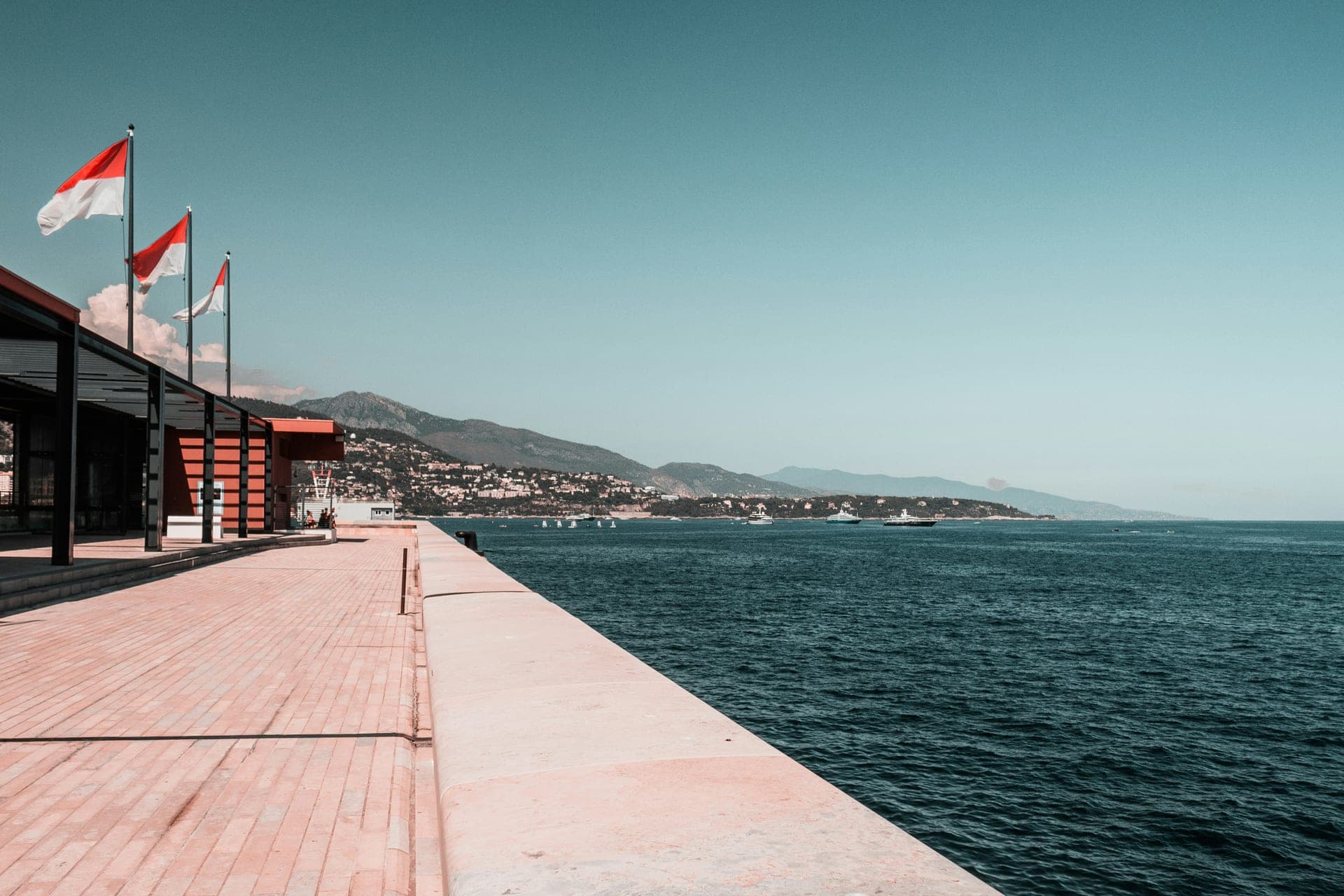
Monaco's two-square-kilometre geographic footprint means the country's housing dynamics operate at a scale closer to a single neighbourhood than to a typical national housing market. The principality is divided into four quartiers (districts): Monaco-Ville (the historic centre on the Rocher), La Condamine (the port district), Monte Carlo (the principal commercial and residential district), and Fontvieille (the post-1970s land-reclamation district). The contemporary Mareterra district, completed in the mid-2020s, adds a fifth quartier.
The cross-border-commuter dynamic with the broader French Alpes-Maritimes and Italian Liguria regional housing markets provides the broader geographic context, with many Monaco workers commuting daily from Nice, Menton, Beausoleil and the broader cross-border region. The integration with the broader Côte d'Azur housing market produces dimensions of regional housing interaction that significantly exceed Monaco's own geographic scale.
Establishes the long-term economic-integration framework with France.
Sustained institutional-reform period under Prince Rainier III; expansion of the secteur protégé framework.
First major Monaco land-reclamation project; sustained expansion of the geographic footprint.
Sustained international integration alongside continued sovereignty.
Euro adoption under the broader Monaco-EU arrangements.
Continued housing-market pressure from tax-residency-driven and broader high-net-worth demand.
Major contemporary land-reclamation project expanding the geographic footprint.
Severe cost-of-living crisis affecting all market segments.
Sustained expansion of the Monégasque-only rental framework alongside the broader housing-policy framework.
Monaco's cooperative-housing tradition is historically limited compared with the larger continental European countries. The secteur protégé framework and the secteur domanial public-housing administered directly by the state substitute for the cooperative-housing forms that exist in the larger Mediterranean and continental European countries. The broader Monégasque cooperative tradition is small-scale given the country's geographic and population scale.
Contemporary new cooperative-housing initiatives in Monaco remain at very early stage. The contemporary architectural-research community provides limited cooperative-housing seeds, with the broader regional Côte d'Azur cooperative-housing dynamics providing the geographic context for any potential expansion.
The Mareterra Anse du Portier offshore land-reclamation district — completed in the mid-2020s with mixed-tenure residential delivery — is the largest contemporary Monégasque housing investment programme. The continued Direction de l'Habitat secteur protégé expansion provides the principal sustained Monégasque-citizen housing-construction commitment. The Fontvieille land-reclamation district continues to provide the model for the post-1970s Monégasque urban-expansion approach.
Together with the broader Côte d'Azur regional housing-policy coordination and the European Green Deal renovation-wave commitments transmitted through the Monaco-EU arrangements, these projects provide the institutional foundation on which a continued reserved-housing capacity for Monégasque citizens can be sustained through the second half of the 2020s within the country's structurally constrained geographic footprint.
ehc-country-default preset. Last refreshed 26 May 2026. See the European peer view →Loading map...