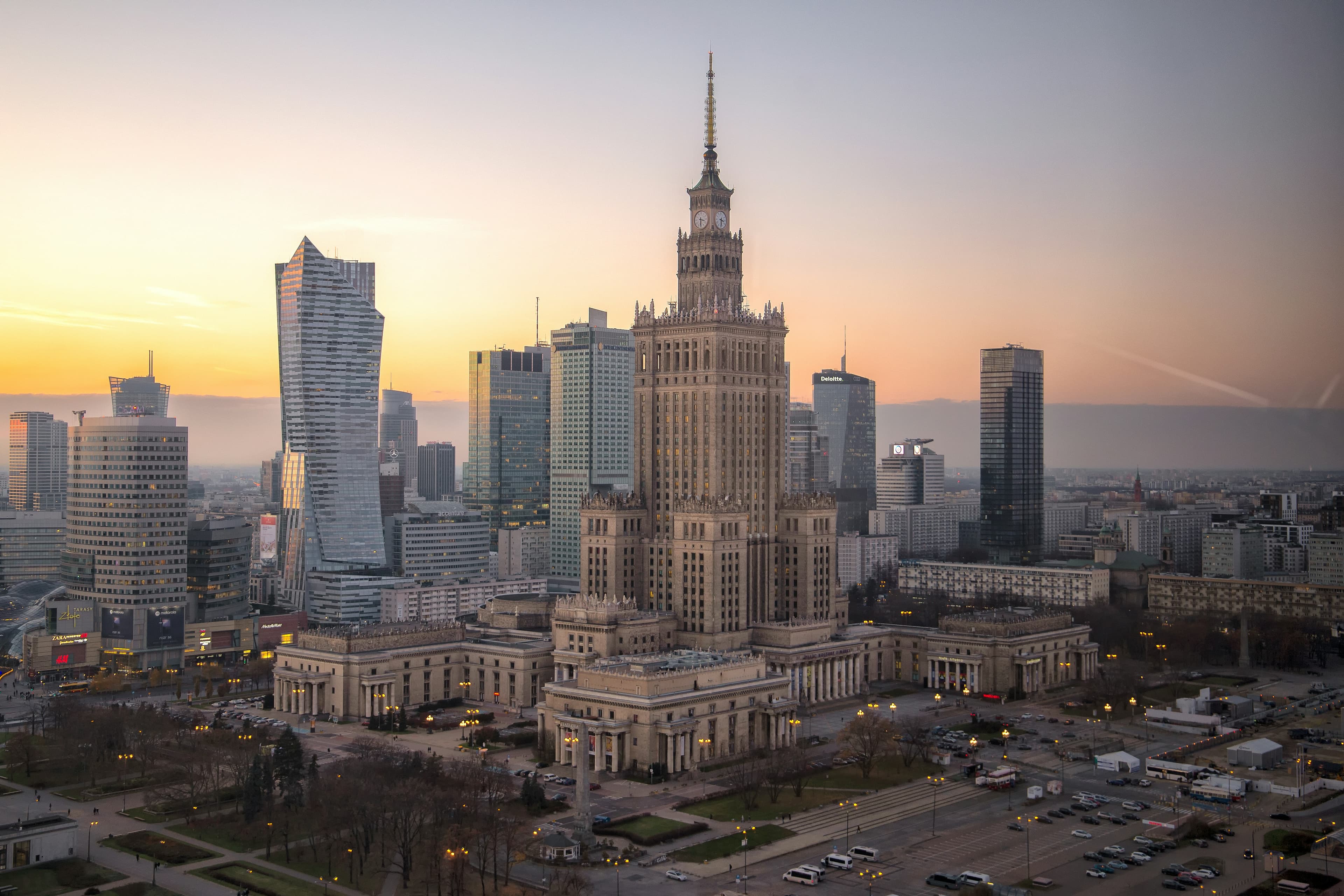
The capital that rebuilt itself, then sold itself
Warsaw is a city built twice. More than 85% of its centre was destroyed in the war, and the capital of 1.86 million people rebuilt its Old Town from old paintings and student drawings until UNESCO called it the world's first resurrection of a historic city core. The second rebuilding was quieter. After 1989 the city handed most of its housing to private owners, and that give-away still shapes the market: high ownership, a thin public tier, and rents that have run away from wages.
Read the tenure pie and the 1990 give-away is still visible in every slice. On the occupant-tenure basis Eurostat uses, about 60% of households own their home — cooperative members counted among them — and only 13% rent, one of the highest ownership rates of any European capital. Cooperatives remain large but ambiguous: the census records an 18% cooperative tenure, yet around 23% of Varsovians live in a flat a cooperative built — some 194,000 homes across roughly 534 cooperatives — because much of that stock converted toward ownership after 1989, which is why the statistics file cooperative members among owners. The municipality owns just 7.5% of dwellings, about 81,000 flats, and private landlords let around 27.5%, a share that has grown fast as institutional investors entered the city even though it stays small on a population basis.
- Owners
- Owner-occupier42.0%
- Cooperative18.0%
- Renters
- Public & non-profit rental7.5%
- Private rental27.5%
- Unclassified5.0%
- Unknown / Other5.0%
Social housing is small and is a rule, not a tenure. About 7.8% of Warsaw's dwellings carry a social-housing rule, a covenant that sits on top of the small municipal stock rather than forming a slice of its own. Roughly 28% of households qualify on income for a municipal flat, far more than the city can ever house. Poland built its post-war affordable homes through cooperatives, not through a dedicated social-rental sector, which is why the gap between need and supply is so wide.
Price the same square metre across tenures and the gap is stark. A municipal tenant pays around €2.27 per square metre and an old cooperative member about €2.36, but these are controlled maintenance charges, not market rents. On the open market the all-stock median runs to €18.59, a newly-let private contract asks a median €18.40, and furnished, serviced lets reach €22.40 per square metre gross. The distance from the controlled floor to a market contract is roughly eight to one. It is the whole affordability problem in one line.
- Public/municipal housing
- Cooperative
- New contracts
- All-stock median
- Furnished / serviced (gross)
Net-cold monthly rent per square metre by tier (furnished is gross, all-in). The controlled municipal and cooperative fee — a maintenance charge, not a market rent — sits an order of magnitude below the private median; a new private contract runs around eight times the municipal rate.
Paradoxically, a tight market sits beside a lot of unused floor. Warsaw's 2021 census put residential vacancy near 20%, around 35,000 flats counted as unoccupied, though much of that is second homes, inherited flats and unmodernised stock rather than usable supply. The office market is looser still: roughly 564,700 square metres stand vacant, about 9.1% of the stock, as hybrid work bites. In the centre the pressure runs the other way. Roughly 4,034 dwellings have been pulled into full-time entire-home short-term letting, concentrated in the historic core and along the Vistula, where they thin the long-term supply in exactly the streets visitors see.
The pressure no longer stops at the poorest households; it now bites into middle earners too. The city draws in roughly 29,300 people a year on net, yet issues only about 12,000 housing permits a year against a backlog of slow, fragmented permitting. Poland posted the largest house-price rise of any European country in 2024 at 19.3%, and Warsaw flats jumped about 21.7%, briefly overtaking Rome. With a third of an average income a Varsovian can buy only about 17.3 square metres of a home, among the least of any EU capital, and rent in big cities can swallow 60% to 70% of a salary. Around 4,500 people are homeless and the courts hear roughly 2,200 residential eviction cases a year.
Unfortunately, in bigger cities, the rent is very expensive. It sometimes takes up to 60 percent, 70 percent of a monthly salary.The spółdzielnia that became ownership
The Polish housing cooperative is the spółdzielnia mieszkaniowa, and its membership right comes in two historic forms. The older is a tenant-style right of occupancy; the more common, since the 1970s, is the spółdzielcze prawo własnościowe — an ownership-style cooperative right that members can sell and inherit. That second form is the key to Warsaw's tenure puzzle. A Varsovian cooperative member is closer to an owner than a tenant, which is why the census files so many of them among owner-occupiers and why the form privatised so readily after 1989.
The tradition is old and proud. The Warszawska Spółdzielnia Mieszkaniowa, founded in 1921 by socialist activists, built the model interwar estates at Żoliborz and Rakowiec — light, green, communal blocks that became a reference for European social housing. The decisive expansion came later, between the 1960s and 1980s, when cooperatives built most of the large-panel estates that still ring the city. After 1989 the right to buy hollowed the form out from inside: members converted their shares toward individual ownership, and for two decades the cooperative all but stopped building anything new.
Today the sector clusters into three groups with different problems. The legacy giants still dominate by stock: the Warsaw cooperative manages around 27,000 flats and RSM Praga runs estates on the right bank, both now spending most of their energy on renovation and energy retrofit of ageing blocks — a slow, capital-hungry task documented in a study of Polish and Czech cooperatives and their stalled energy transition. A second, much newer cluster is the resident-led kooperatywa mieszkaniowa, small groups commissioning a single building, revived by a 2022 law. A third is the self-organised civic layer of community spaces and mutual-credit experiments. The legacy cooperatives wrestle with retrofit cost and ageing membership; the new ones struggle with land and finance, because Poland still lacks a developed framework for not-for-profit housing.
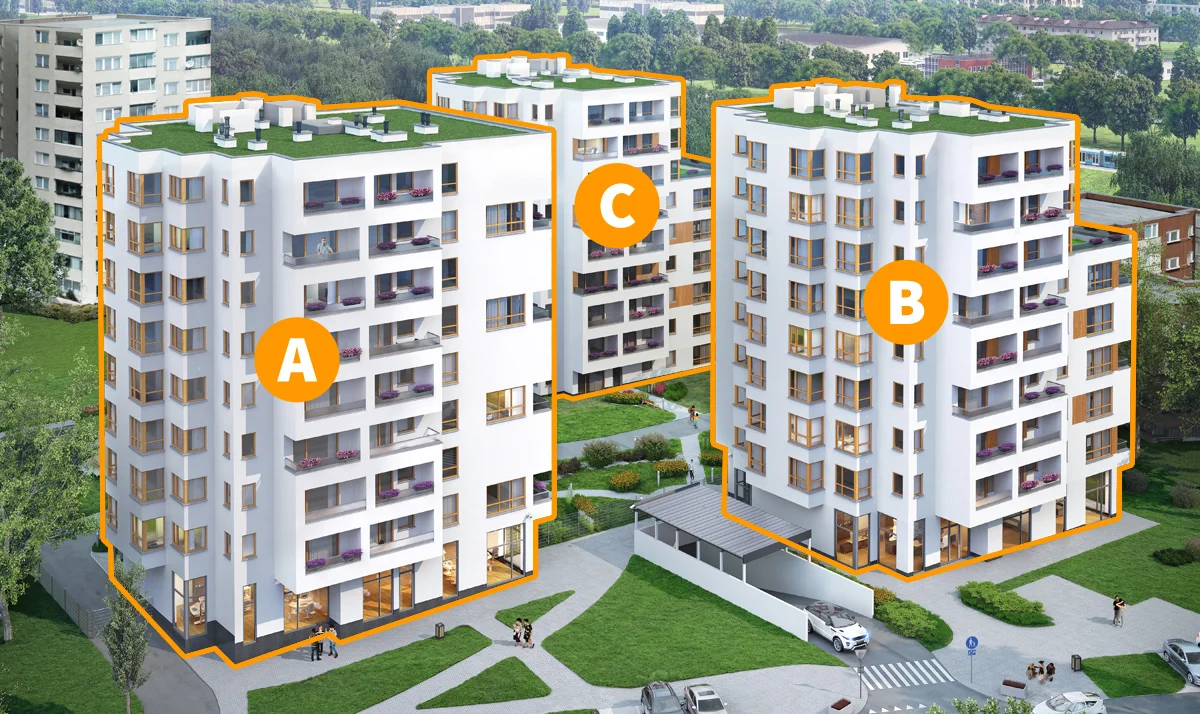
Whether the cooperative counts as a relic or a tool is ultimately a question of policy. Warsaw now treats the cooperative and the resident group as deliberate affordable channels rather than relics: the 2022 housing-cooperative law lets the city sell or lease municipal land to a kooperatywa on preferential terms, and the city's own incubator helps residents form one. The wider point is set out in a study of how institutional investors reshaped the Warsaw market, which describes a capital that became a 'super homeownership society' with little regulation and now has to rebuild a non-market tier almost from scratch.
Rebuilding a tier the city gave away
Warsaw's housing politics is the politics of rebuilding what was sold. Rafał Trzaskowski of the centrist Civic Coalition has led the city since 2018, with deputy mayor Aldona Machnowska-Góra among those fronting the municipal-housing build. The city's headline aim is to grow its municipal and social stock toward 100,000 flats by 2030, adding around 15,000 new homes through direct council building and social-housing companies. It is a modest target against the need, and the city is candid that it cannot close the gap alone.
Two tiers of government hold different parts of the toolkit. The city owns land, runs its housing companies and the cooperative incubator; the national government sets the law and the money. In 2025 the government dropped a planned mortgage subsidy and redirected the funds to local authorities, then launched Klucz do mieszkania, a programme built around municipal, social and ownership pillars. It targets around 15,000 social and municipal flats in its first year, with at least 2.5 billion złoty committed and subsidies covering up to 80% of a local investment, and up to 45 billion złoty over the period to 2030.
The cooperative sits deliberately inside this turn. The 2022 housing-cooperative law gives a kooperatywa preferential access to municipal land, and Warsaw's Mieszkać wspólnie incubator walks resident groups through forming one. The OECD's review of Polish housing argues the missing piece is a stable legal and financial framework for not-for-profit providers, without which cooperatives and social landlords struggle to scale beyond pilots.
Those empty flats and office floors have begun to draw a policy response, if only a partial one. The city wants to bring its pustostany — vacant municipal flats it can renovate rather than build — back into use, and the looser office market opens a conversion frontier as hybrid work empties tower floors. Europe's wave of office obsolescence offers a route to new homes the city is only starting to test, and there is no vacant-homes tax to force the issue. Slow, fragmented permitting remains the binding constraint, as the OECD and EU analysts both note.
- 1921[source]
Warsaw Housing Cooperative founded
Socialist activists found the Warszawska Spółdzielnia Mieszkaniowa, which builds the model interwar workers' estates at Żoliborz and Rakowiec — the founding moment of modern Polish cooperative housing.
- 1945[source]
A capital in ruins
More than 85% of central Warsaw lies destroyed after the war. The post-war state rebuilds the city largely through large-panel cooperative estates rather than a dedicated social-rental sector.
- 1990[source]
The give-away privatisation
Tenants and cooperative members buy their flats for a fraction of value, and most cooperative dwellings convert toward individual ownership — the start of Poland's shift to a 'super homeownership society'.
- 2004[source]
EU accession and the migration surge
Warsaw becomes the region's leading labour market; some 40% of current residents were not born in the city, and housing demand and prices climb steadily through the 2010s.
- 2022[source]
Russia's invasion of Ukraine
The arrival of around 300,000 Ukrainian refugees adds sharp new demand to an already tight rental market and pushes institutional buy-to-let interest higher.
- Mar 2023[source]
Housing-cooperative law takes effect
A 2022 act on housing cooperatives gives municipalities a legal route to sell or lease land to resident-led cooperatives at preferential terms, reviving the form as a delivery channel.
- Jun 2025[source]
"First Keys" dropped for social housing
The government abandons the planned demand-side mortgage subsidy and redirects the money to local authorities for municipal and social rental building.
- 2025[source]
"Klucz do mieszkania" launched
The new national programme targets around 15,000 social and municipal flats in its first year, with at least 2.5 billion złoty committed and a subsidy of up to 80% of investment cost.
- 2030[source]
Toward 40,000 social flats a year
The programme sets a horizon of approaching 40,000 social and municipal dwellings delivered annually by 2030, backed by up to 45 billion złoty over the period.
From the interwar Warsaw Housing Cooperative and the post-1989 give-away privatisation to the 2022 cooperative law and the national "Klucz do mieszkania" social-housing push.
Decarbonising the stock and growing the non-market tier turn out to be one task in Warsaw. The housing stock averages around 50 years old, only about 14% of dwellings are energy-efficient, and the renovation rate crawls at roughly 0.7% a year, far below the deep-retrofit pace the EU is pushing. The cooperatives that own the big panel estates are the main vehicle for cutting the sector's carbon, which ties the climate goal directly to the non-market tier the city is trying to grow.
Nobody in Warsaw argues against building; the quarrel is over speed and over which channel to build through. The government frames a major build-up of social rental as its main answer: presenting Klucz do mieszkania, the development minister set a 2030 horizon for the new system. Housing advocates argue the deeper problem is everyday affordability, not just the headline shortage, pointing out how far rent already eats into ordinary wages. Neither camp doubts the non-market tier has to grow — they part company on the pace, and on whether building enough is even possible at the current rate.
We assume annual increases in social housing construction, so that by 2030 we approach 40,000 apartments a year delivered through this system.Across the Vistula: heritage, prefab and the cooperative second chance
Warsaw's working examples run from a federation managing tens of thousands of flats to a handful of self-built community houses, and the thread that connects them is a city relearning the non-market form after privatising almost everything. Taken in order of scale — the vast cooperative legacy first, the smallest civic experiments last — they map a movement still searching for the actors who can make the model repeatable.
The Warszawska Spółdzielnia Mieszkaniowa is the living proof that the form built this city. Founded in 1921 and still managing around 27,000 flats across Żoliborz, its interwar estates remain a textbook of humane social housing — but its present work is mostly the unglamorous, expensive business of retrofitting century-old and panel-era blocks for energy and lifts. RSM Praga plays the same role on the right bank, where its estates sit in the city's most deprived districts. Both show the cooperative legacy's strength and its trap: vast stock, ageing members, and renovation bills that dwarf any budget for new building.
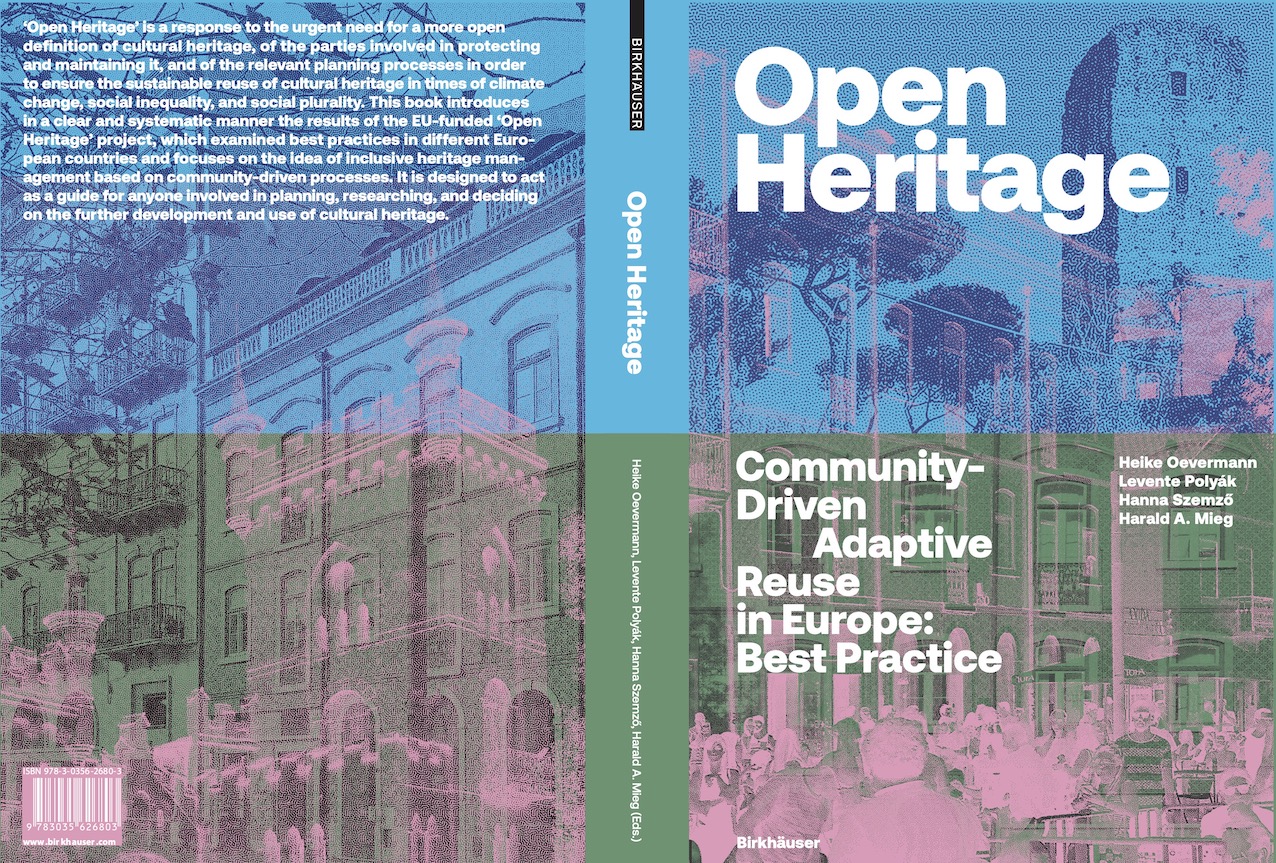
Praga, the long-neglected right-bank district, is where Warsaw's adaptive-reuse story is most visible. The Praga Koneser Center turned the historic Koneser vodka factory into a quarter of apartments, offices, a vodka museum and a Google campus, saving the brick halls but drawing the standard charge against such schemes: that the new homes are firmly market-rate and the regeneration speeds the gentrification of a working-class district. The Praga Lab heritage project, set out in the Open Heritage study of community-driven adaptive reuse, works the same ground from below, trying to keep residents and small makers in the frame rather than priced out.
The most decommodified examples are also the smallest. Open Jazdów, a cluster of postwar Finnish timber houses near the city centre, survives as a self-managed urban village of NGOs, gardeners and community groups after residents fought off demolition — a fragile, lease-by-lease arrangement rather than a settled tenure. The cooperative grocery Dobrze and the mutual-credit network Wymiennik, both chronicled in an account of community finance and the economy of civic spaces, show how Varsovians have built shared institutions without waiting for the state. The scale is tiny and the financing improvised, but together they are the closest the city has to a self-organised, anti-speculative housing movement.
The newest thread is the resident-led kooperatywa mieszkaniowa, the model the 2022 law was written to enable. Small groups of future neighbours are forming to commission a single building on city land, with Warsaw's incubator and a handful of pilot plots behind them. None has yet delivered at scale, and access to affordable land remains the constraint that decides whether the model grows or stays a curiosity. It is an early test of whether the cooperative idea that built Żoliborz can build anything new in the 2020s.
Holding these scattered projects up is an institutional scaffolding that remains thin but genuine. The Stefan Batory Foundation funds the civic and watchdog work that holds housing policy to account, and a body of Warsaw-rooted research — on the city's financialisation and its social innovations — gives the debate an evidence base. It is a thinner layer than Vienna's or Berlin's, and almost everything cooperative here is either a century old or barely born. But the memory is deep, the empty factory shells are many, and the law has finally been written. What Warsaw lacks is not the idea but the patient money and land to make it scale.
References
Statistics19Click on any number to see the source
Housing market
Tenure & affordability
Cooperative, social & public
Adaptive reuse & vacancy
Population & migration
From our library11
- Understanding the housing crisis: Staff Working Document accompanying the European Affordable Housing Plan — Knowledge
- RSM Praga — Organisation
- Between efficiency and democracy: Explaining support and resistance towards energy transition and prosumer solutions in Polish and Czech housing cooperatives — Knowledge
- Housing policy under the conditions of financialisation - The impact of institutional investors on affordable housing in European Cities — Knowledge
- Housing Reforms in Czechia and Poland — Knowledge
- Rethinking European Offices 2030 - Risks and Opportunities from Obsolesence — Knowledge
- Part 1: Mapping the housing needs in the EU, assessing the impacts of scarcity and providing an overview of relevant EU legislation — Knowledge
- Open Heritage - Community-Driven Adaptive Reuse in Europe: Best Practice — Knowledge
- Funding the Cooperative City: Community Finance and the Economy of Civic Spaces — Knowledge
- Stefan Batory Foundation — Organisation
- Social Innovations in the Urban Context — Knowledge
Further sources16
- Mayor of Warsaw — Rafał Trzaskowski — City of Warsaw
- Warsaw builds municipal housing (deputy mayor Machnowska-Góra) — City of Warsaw
- New municipal flats — delivered, building, in preparation — City of Warsaw
- Klucz do mieszkania — programme overview — Ministerstwo Rozwoju i Technologii
- Klucz do mieszkania — Minister Paszyk presentation + 40k/2030 quote — bank.pl
- Polish government approves bill to boost social-housing spending — Notes from Poland
- Government drops "First Keys" mortgage subsidy for social housing — Activ Investment
- Housing-cooperative law (Dz.U. 2023/28) — Dziennik Ustaw
- Mieszkać wspólnie — Warsaw cooperative incubator — City of Warsaw
- Habitat for Humanity Poland — big-city rent burden — Habitat for Humanity
- Warsaw overtakes Rome — Poland’s record 2024 price rises — Notes from Poland
- Warszawska Spółdzielnia Mieszkaniowa — history — WSM
- Praga Koneser Center — Wikipedia
- Open Jazdów — Warsaw’s urban village — Cooperative City
- OECD — Housing Reforms in Czechia and Poland — OECD
- Sciences Po — HoPoFin (Warsaw chapter) — Sciences Po Urban School