The renter city that owns its own answer
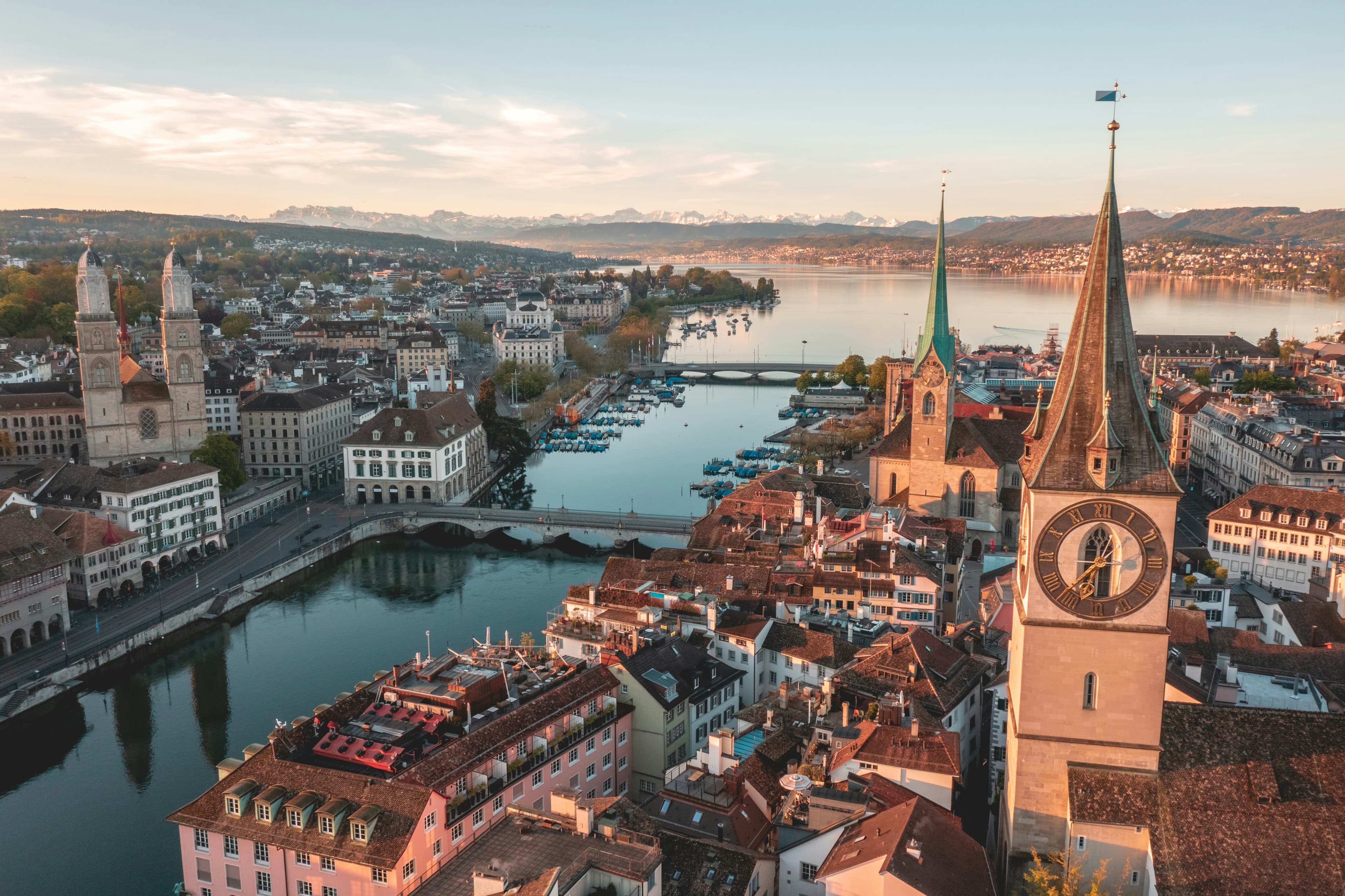
Zurich is Switzerland's financial capital and one of its richest cities, home to about 452,421 people, the Bahnhofstrasse and a skyline of global banks. It is also a city of tenants that, for more than a century, chose not to leave housing entirely to the market. The result is the contradiction this profile turns on: a global money centre with a thin owner class, the deepest non-profit housing tradition in Europe, and almost no empty flats to be had.
Almost nowhere else carries a tenure mix like this. Home ownership reaches just 8% of households while 92% rent — the highest renter share of any large Swiss city. Within the rental stock, cooperatives hold a remarkable 18% of all dwellings, around 42,000 flats across roughly 110 cooperatives, and the city itself owns about 6%, some 10,000 flats. Private landlords let the remaining 68%. The non-market tier of cooperative plus municipal housing therefore covers about 24% of the stock — a share no other European finance capital comes close to.
- Owners
- Owner-occupier8.0%
- Renters
- Public & non-profit rental6.0%
- Cooperative18.0%
- Private rental68.0%
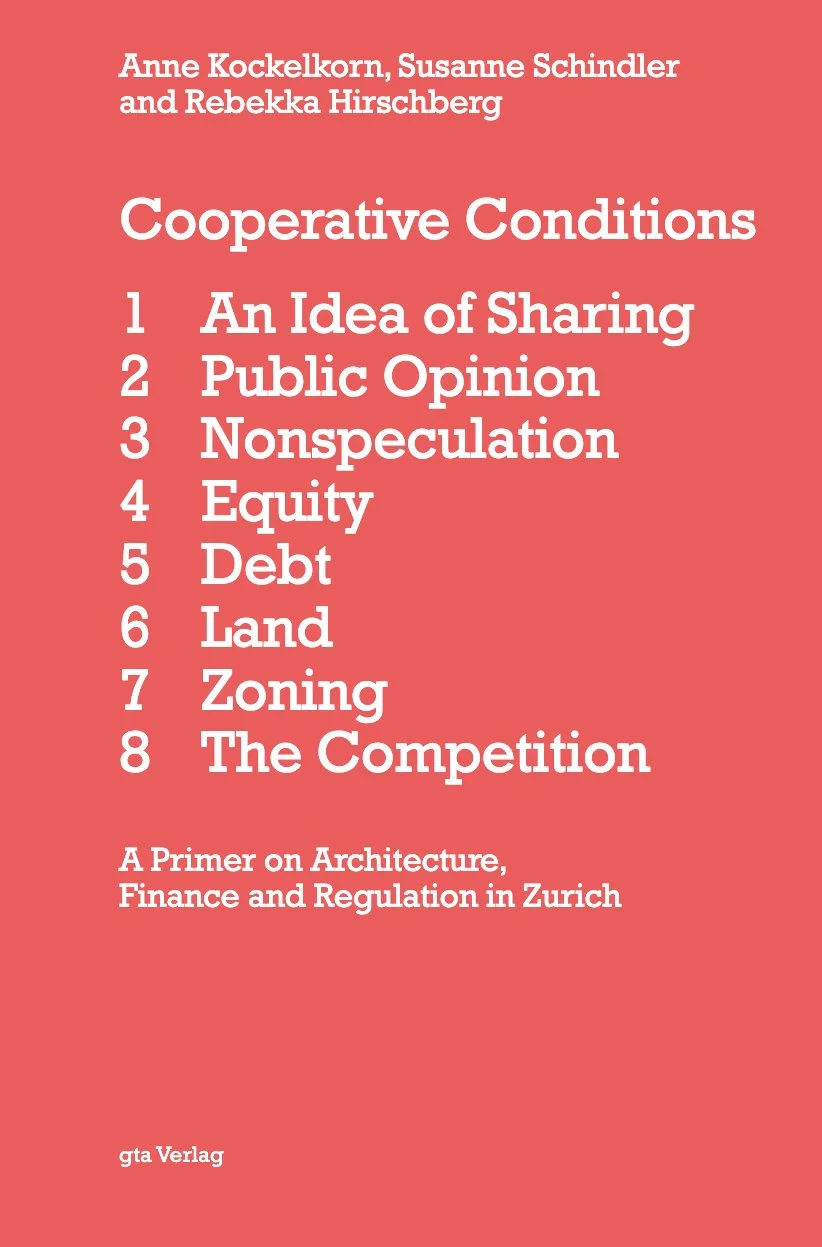
Zurich organises affordability through a principle rather than a tenure. The local term is Gemeinnützigkeit (common benefit, or non-profit), a covenant of cost-rent and non-speculation that sits across the tenure pie rather than inside one slice. About 24% of all dwellings count as gemeinnützig — mostly the cooperatives, the rest municipal — and roughly 32% of households earn little enough to qualify for that subsidised stock. Cooperative Conditions, a primer on the city's architecture, finance and regulation, explains the mechanism in full: a Czech-style sell-off never happened here because Swiss policy never pushed privatisation.
What that tradition is worth shows up directly in the rent paid. Cooperative tenants pay around €16.28 per square metre net and the city's own flats about €21.40, against an all-stock median near €23.85. A newly-let private flat asks a median €31.05, and furnished, serviced lets reach about €48 per square metre gross. A cooperative founded a century ago can still let a city-centre flat at roughly a third of the new-contract rate — which is why a cooperative flat almost never comes free.
- Cooperative
- Public/municipal housing
- All-stock median
- Furnished / serviced (gross)
- New contracts
Net-cold monthly rent per square metre by tier (furnished is gross, all-in). The cooperative floor sits far below the all-stock median, and a newly-let private contract runs nearly double the cooperative rate — which is why a cooperative flat almost never comes free.
There is, in effect, no slack. The June vacancy count puts residential vacancy at about 0.1%, among the lowest of any city in the Western world, with only around 550 usable flats standing empty. Offices are looser: roughly 220,100 square metres stand vacant, about 5.3% of the office stock, a modest conversion frontier by German standards. Airbnb barely registers as a pressure in Zurich — an estimated 720 dwellings run as full-time entire-home short-term lets, clustered in the central districts — so the policy fight stays fixed on the long-term market.
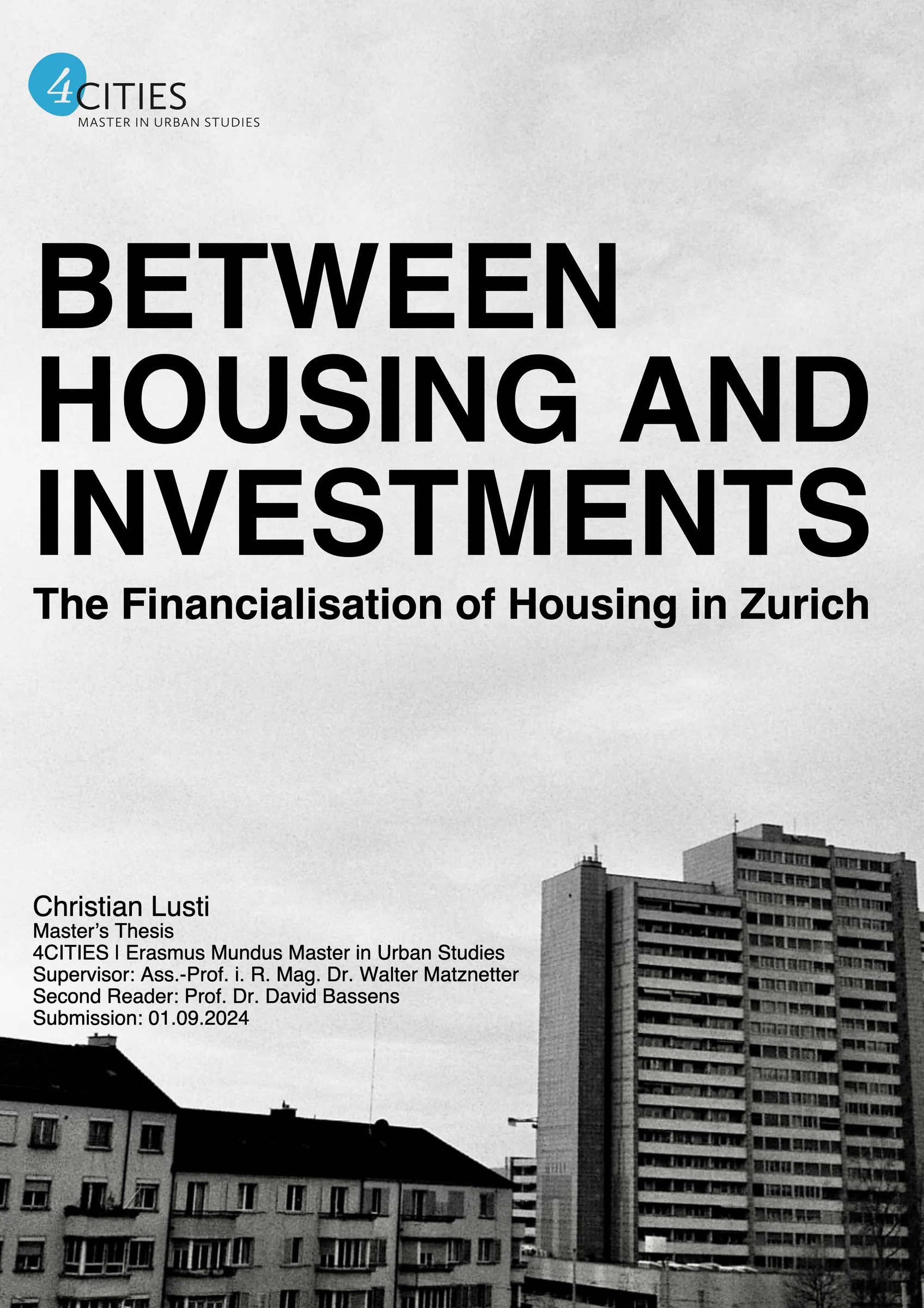
What feeds the shortage is arithmetic, and it now bites a long way up the income ladder. In-migration runs at roughly 30,000 moves a year against only about 2,200 flats permitted, while residential land changes hands near €6,100 per square metre. Existing tenants are protected by cost-rent and tenancy law, but anyone signing a new lease meets the asking-rent market head-on. The city's housing delegate puts the distribution bluntly, and residents now name housing as the city's single biggest problem. A study of the financialisation of housing in Zurich traces how, after 2008, global capital turned the city into one of the few cities still rated a speculative property bubble.
The bottom third today has to apply for flats that eat up more than 50% of household income.A century of Gemeinnützigkeit
The Swiss cooperative is a rental cooperative, not an ownership one. A member buys a modest Genossenschaftsanteil — the share that secures the right to rent a flat — and pays a Kostenmiete, a rent set to cover costs rather than to turn a profit. The member never owns the flat and cannot sell it on for a capital gain. That non-speculative lock is the whole point: it is why a cooperative built in the 1920s can still offer a central flat at a third of the market rate a hundred years later.
The tradition is old and, unusually, unbroken. It began in 1907-1908, when the city built its first public housing and railway workers founded the first rental cooperative, and consolidated between the wars as a tool of urban policy. The decisive modern revival came out of the crises of the 1980s and 1990s: after deindustrialisation and a wave of speculation, architects and activists such as Andreas Hofer launched Kraftwerk1 in 1999, and then mehr als wohnen in 2015, reviving the form with sustainability, social mix and shared community life. Swiss policy never pushed privatisation, so unlike most of Europe the sector was never sold off.
Today the sector clusters into three groups. The large legacy societies, ABZ chief among them — the city's biggest cooperative — own and manage tens of thousands of older flats and now carry the bulk of the energy-retrofit task. A second cluster is the new wave of design-led project cooperatives, Kalkbreite, Kraftwerk1 and mehr als wohnen, which treat each building as an experiment in shared living. A third is the small self-organised end, WOGENO and the Swiss arm of the Mietshäuser Syndikat, which keep individual houses permanently off the market. Their problems differ: the legacy coops wrestle with retrofit cost and long waiting lists, while the newer ones fight mainly for land in a city where almost none is for sale.
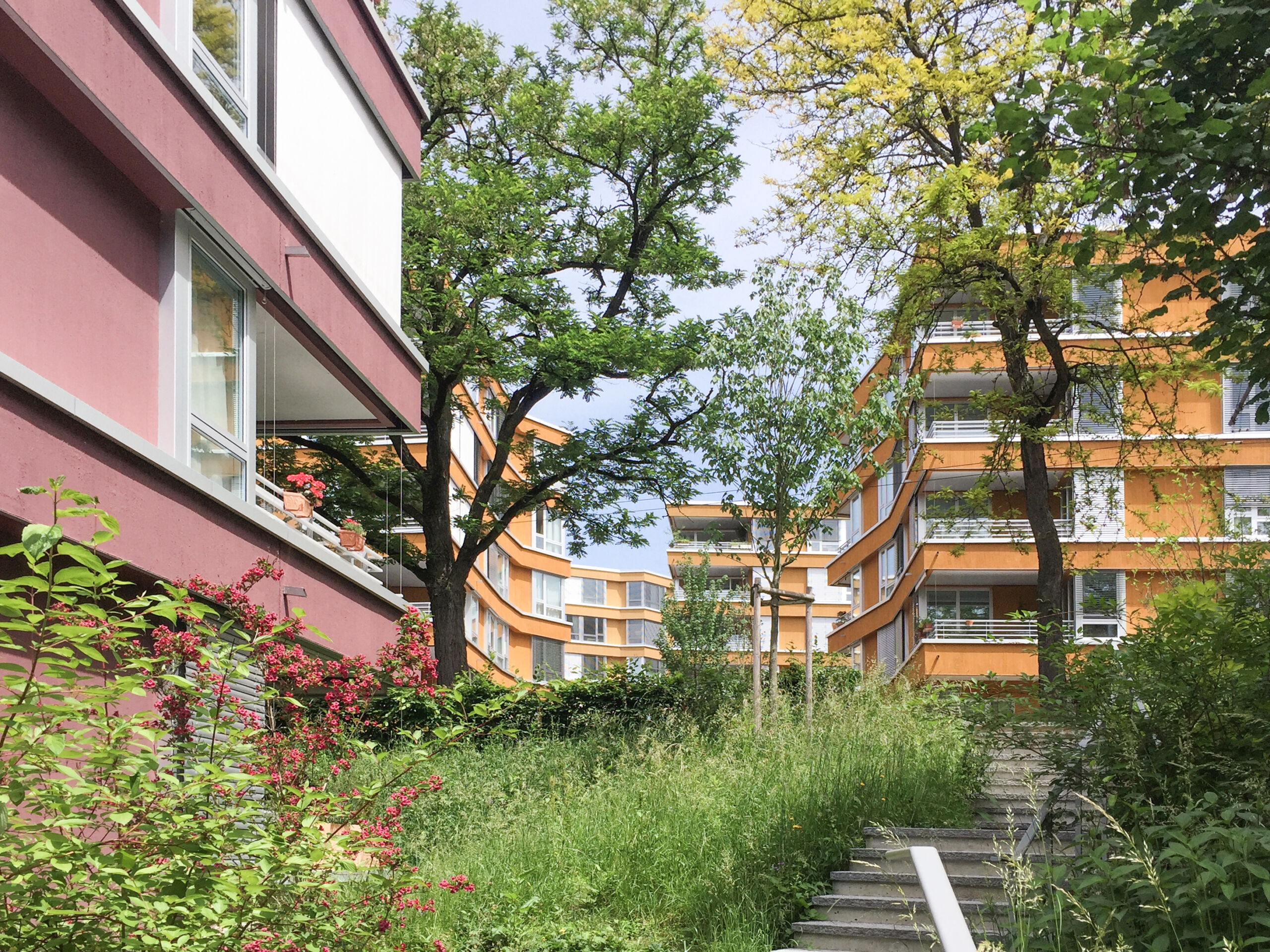
In Zurich the cooperative is not a private leftover but the chief instrument of city housing policy — which is what carries the form straight into politics. The city leases municipal land to cooperatives on a long Baurecht — a building right that keeps the land in public hands — rather than selling it, and Funding the Cooperative City shows how Swiss foundations and the city work in parallel to pull plots out of the speculative market. The cooperative revival now reaches across borders, and Zurich is the model others measure themselves against.
Buying the land back
Zurich's housing politics is the politics of a promise the city made to itself. In 2011 voters approved, by about 76%, a constitutional goal to lift the non-profit share of all rental flats to a third by 2050 — the Drittelziel. In March 2026 the city government published its Programm Wohnen, committing to expand the municipal rental stock by about 1,500 flats between 2025 and 2040 and to keep buying land for a three-digit-million sum each year. A reshaped executive takes office on 27 June: Raphael Golta becomes city president and Tobias Langenegger takes the building department that carries the housing brief.
- 1907-1908[source]
The non-profit tradition begins
The municipality builds its first public housing in 1907; in 1908 Swiss Federal Railways workers found the city's first rental cooperative — the start of more than a century of continuous public support for non-profit housing.
- 1999[source]
Kraftwerk1 opens
A new generation of cooperatives, led by figures such as Andreas Hofer, launches Kraftwerk1, reviving the form with sustainability, social mix and shared community life after the deindustrialisation and speculation of the 1980s and 1990s.
- 2011[source]
The third-by-2050 referendum
Zurich voters approve, by about 76%, a constitutional goal to lift the non-profit share of all rental flats to a third by 2050 — the Drittelziel that now anchors city housing policy.
- 2015[source]
mehr als wohnen completed
The Hunziker Areal, a 13-building cooperative neighbourhood for around 1,200 residents built to the 2000-watt standard, opens on a former concrete works and becomes an international reference for cooperative housing at neighbourhood scale.
- 2024[source]
Rents and vacancy at the extreme
Asking rents for re-let flats run far above existing tenancies, and the city's June vacancy count falls to around 0.1% — among the lowest of any city in the Western world.
- Mar 2026[source]
Programm Wohnen 2026
The city government publishes its housing programme, committing to expand the municipal rental stock by about 1,500 flats between 2025 and 2040 and to keep buying land for a three-digit-million sum each year.
- Jun 2026[source]
New city government takes office
A reshaped city executive takes office on 27 June: Raphael Golta becomes city president and Tobias Langenegger takes over the building department that carries the housing brief.
- 2040[source]
Municipal-stock milestone
The Programm Wohnen target year for the +1,500 municipal flats — the city scaling its own landlord role as a down-payment on the 2050 goal.
- 2050[source]
A third non-profit
The horizon set by the 2011 vote: a third of all rental flats in non-profit hands. The share has hovered near a quarter for years, so the gap to close remains wide.
From the first municipal housing and the first rail-workers cooperative to the 2011 third-by-2050 referendum and the 2026 housing programme.
Three tiers of government each hold a lever, but the binding one in Zurich is land. The federal government sets tenancy law and runs a modest non-profit support programme; the canton frames planning and zoning; yet it is the city that buys plots, leases them to cooperatives on a building right, and runs its own municipal landlord. The constraint is that Zurich sold much of its land in the 1980s and now competes for it on the open market with no right of first refusal. The city's development director is blunt about the cost of undoing that mistake.
The cooperative sits deliberately inside the programme. The city reserves land for cooperative bidders, leases it on a long Baurecht, and treats the form as the cheapest way to add permanently affordable homes to a budget that could never build them all directly. Public land foundations do the rest: the city-founded PWG foundation buys whole buildings to hold them out of the market, and pension funds such as Stiftung Abendrot and land trusts such as Stiftung Edith Maryon channel patient capital toward the same end. The international literature on cooperative finance reads Zurich as a working model of how land, lease and finance can be aligned.
Where other cities chase idle homes, Zurich has almost none to chase — its supply problem is idle land. The 2026 revision of the building and zoning code is meant to allow denser, taller building, and the modest pool of vacant offices offers a small conversion frontier. A vacant-homes tax would have almost nothing to bite on at near-zero vacancy; the fight is instead over how dense and how fast the city can build on the plots it already controls.
In Zurich decarbonisation and affordability run on the same track. The city adopted a 2000-watt target as far back as 2011, and the cooperatives became its delivery vehicle: mehr als wohnen and Kalkbreite were built to it. The stock averages around 55 years old, only about 25% of dwellings are energy-efficient, and the renovation rate runs near 1.6% a year — short of deep-retrofit targets. ABZ has gone furthest, issuing a sustainability bond to finance hundreds of low-carbon non-profit homes, a sign of how climate finance now flows through the cooperative tier.
What splits Zurich is not the third-by-2050 goal but who should reach it. The city side, voiced by development director Anna Schindler and housing delegate Philippe Koch, argues that buying land and building non-profit is the only way to hold the line, and that the bottom third already spends more than half its income on a new lease. The property-owner camp disagrees. The Hauseigentümerverband, the homeowners' association whose Zurich director Albert Leiser also sits on the city council, argues that the answer is to build more and regulate less — that good framework conditions, not new state structures, will close the gap. Neither side denies the shortage; they part on whether the state or the market should close it.
The city sold a lot of land in the 1980s; now we have to buy it back expensively.From tram depot to neighbourhood: the cooperatives that scaled
Zurich's working examples are the reason architects fly in to study the city. They run from a single block over a tram depot to a whole neighbourhood on a former factory, and the thread that connects them is a century of cheap public land turned into permanently affordable homes. The order below starts with the project that made the city famous and ends with the newest experiments, then names the land and finance layer that lets the city keep repeating them.
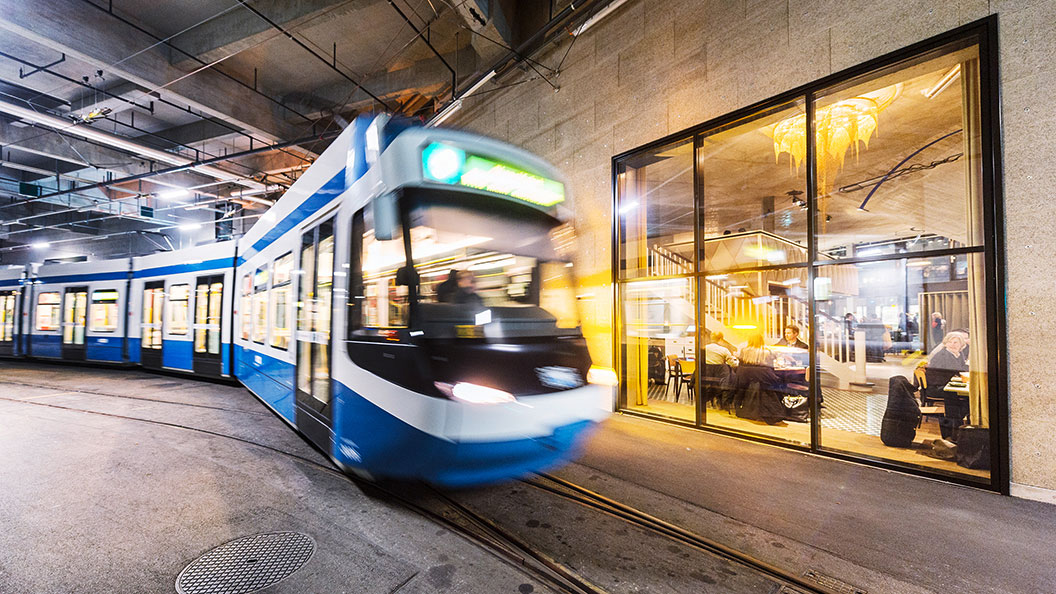
Kalkbreite is the project that put the new cooperative wave on the map. Completed in 2014 on a city plot leased to the cooperative, it wraps 88 flats and around 200 jobs around a working tram depot, with shared kitchens, a cinema and a deliberate social mix. Its friction is the quiet critique that has followed it: detractors call it a red-green Modelldorf, a model village, and note that much of the subsidised commercial space went to left-green businesses, raising awkward questions about who really benefits from a state-backed privilege.
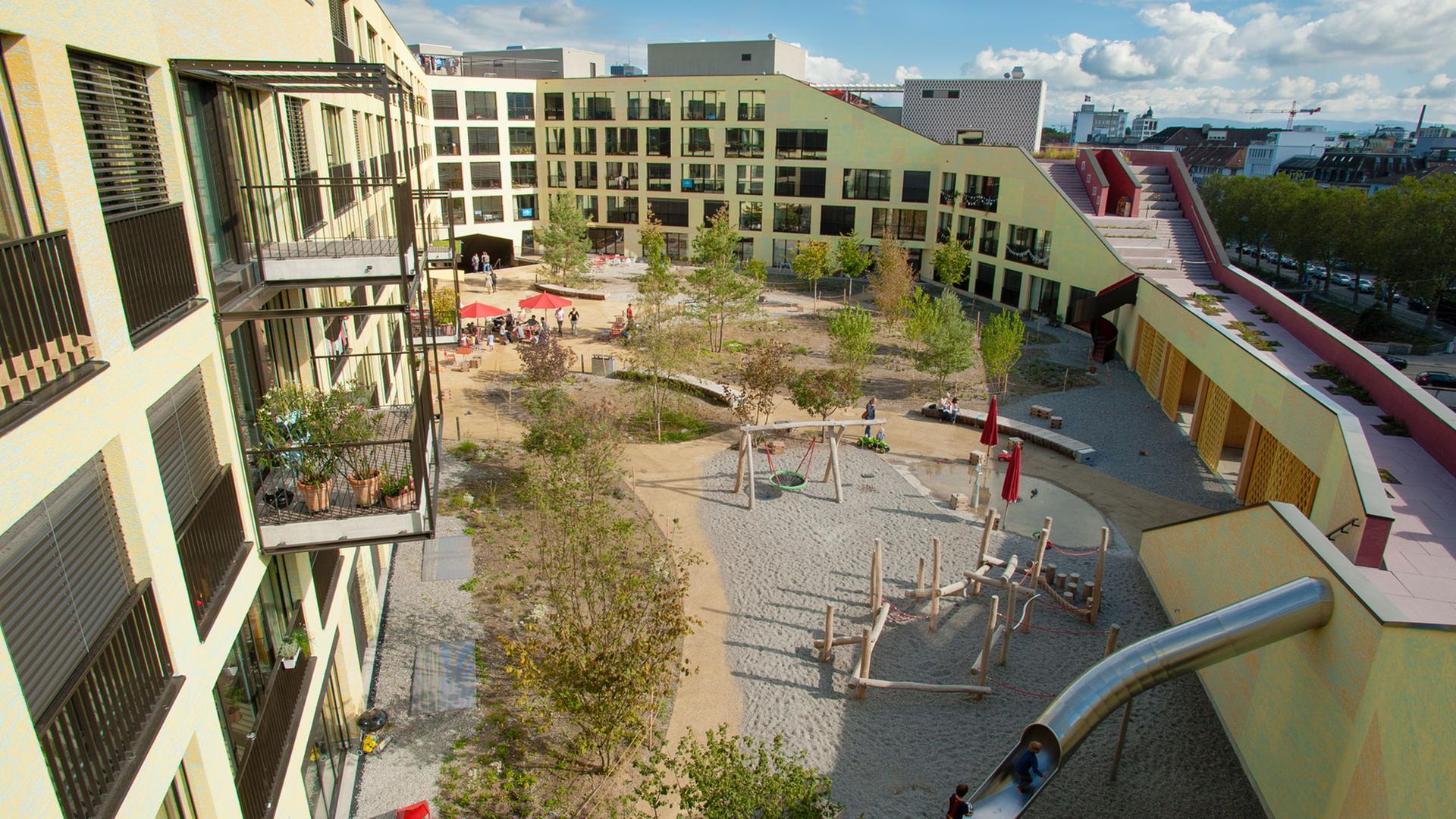
The Hunziker Areal, built by mehr als wohnen, took the idea to neighbourhood scale. Thirteen buildings on a former concrete works house around 1,200 residents and 150 workplaces, built to the 2000-watt standard with car-light streets and clusters of shared flats. It is the most-cited cooperative project in Europe, but it draws a pointed critique even from sympathisers: the participatory, self-selecting model tends to produce a homogenous, educated, middle-class community, and the share of flats reserved for low-income households does not fully answer the charge.
Kraftwerk1 is where the revival began, and it has kept building. Its Heizenholz house pairs two existing villas with a timber addition for around 85 residents, and its Zwicky Süd scheme on the city edge brings 125 flats with large cluster apartments and car-light sharing. The cooperative's friction is the one the whole sector shares: each scheme is a slow, consensus-heavy effort that depends on winning a scarce plot, so the model is admired far more often than it is copied at speed.
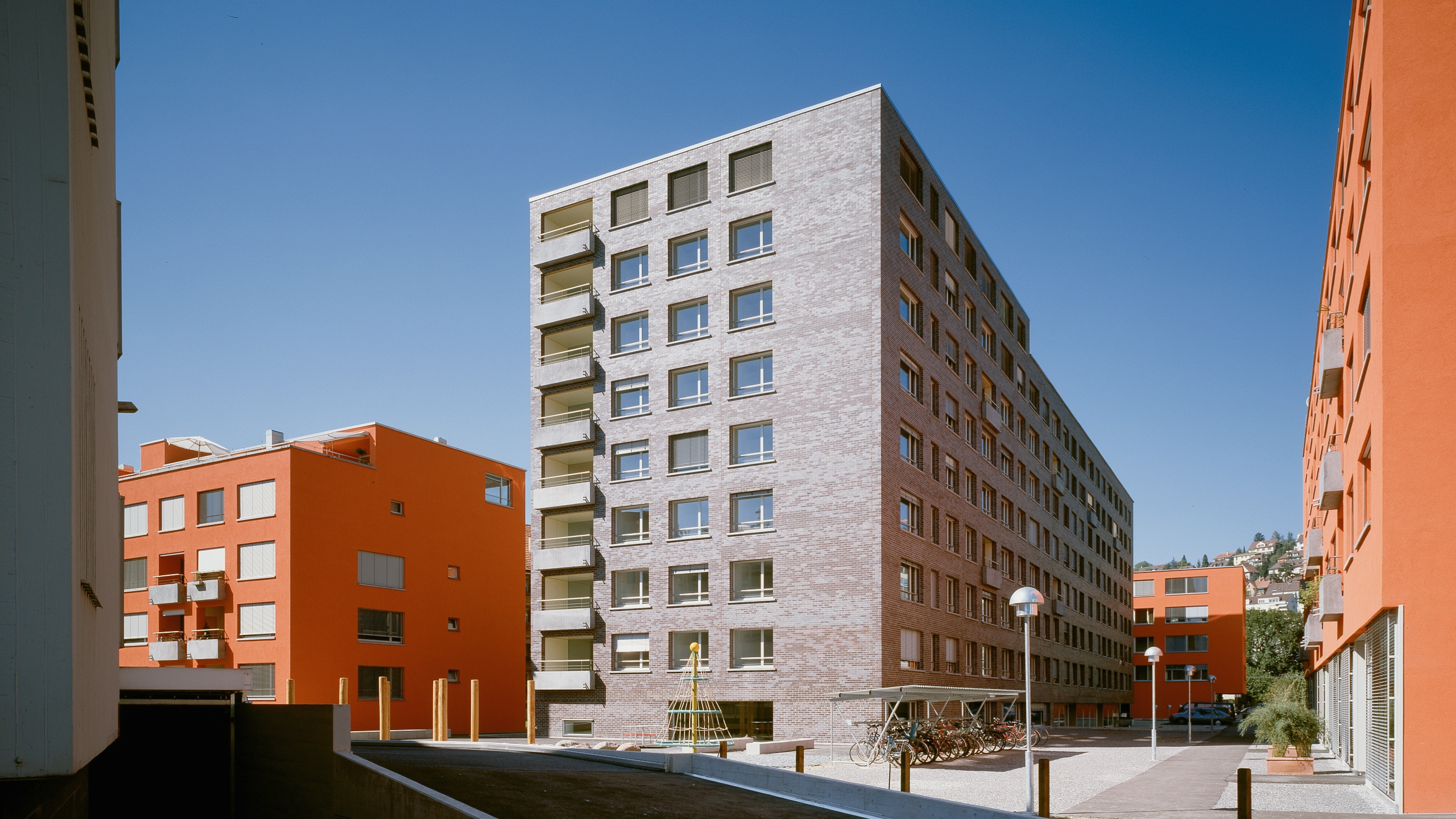
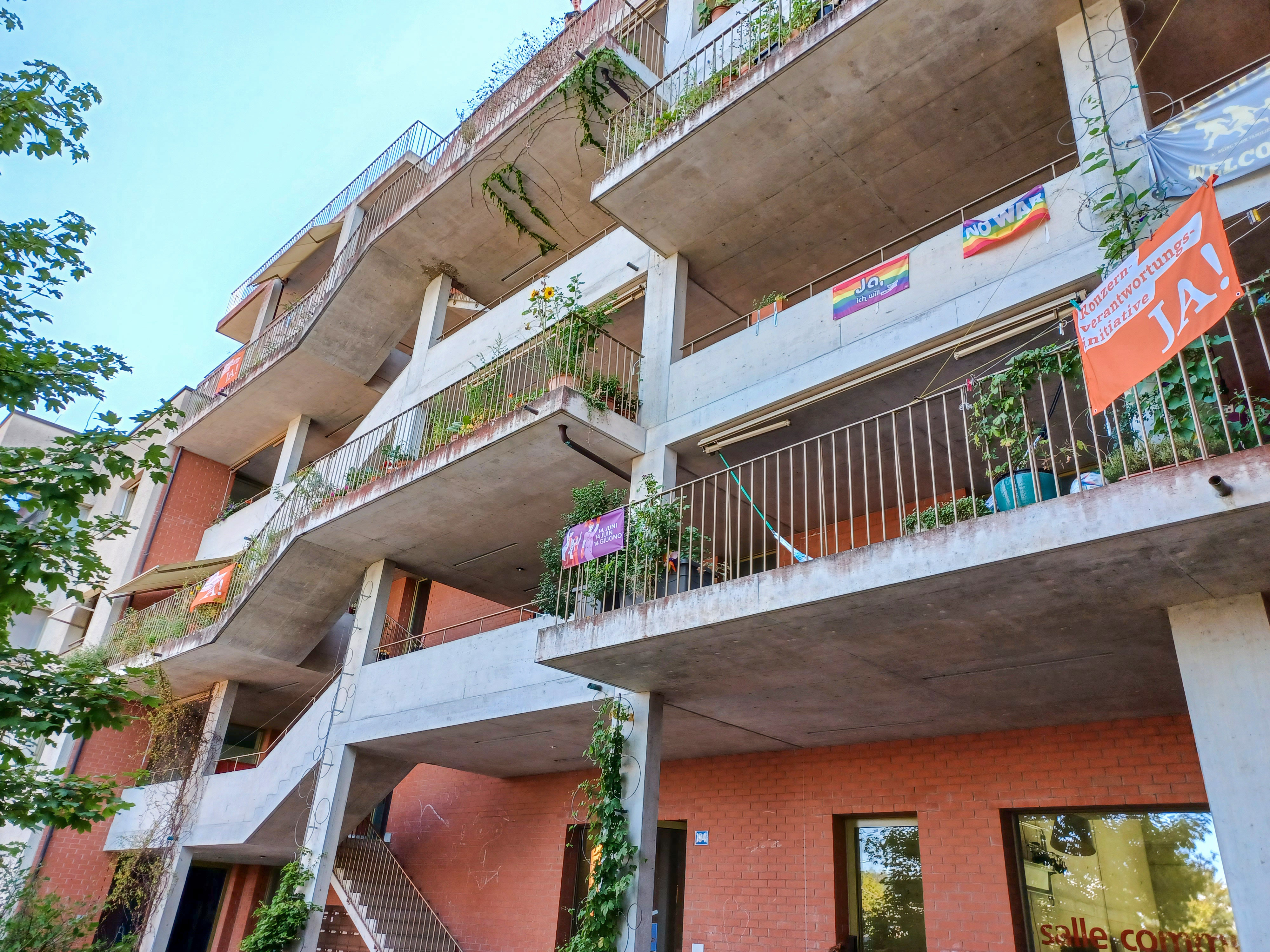
Newer projects push the form further. Zollhaus, by the Kalkbreite cooperative, offers customisable hall apartments in recycled concrete over a mixed-use ground floor, testing how flexible a cooperative flat can be. The ABZ Tower in the Koch-Areal answers the density question directly: a non-profit high-rise of around 350 homes beside a generous new public park, proof that the cooperative model can go tall. Both show the sector straining against its own limits — cost, height, and the sheer scarcity of land — even as it keeps delivering.
None of these projects would stand without the land-and-finance machinery beneath them. The city-founded PWG foundation buys whole buildings to hold them out of the market; Stiftung Abendrot and Stiftung Edith Maryon supply patient, mission-aligned capital; and a research layer at the ETH Wohnforum studies what the cooperatives are learning, while practices such as Esch Sintzel Architekten design much of the new stock and materials ventures such as rematter chase the low-carbon slab. It is a denser ecosystem than almost any European city can show, and it rests on the one foundation Zurich never sold: a public commitment to non-speculative housing that is now more than a century old.
References
Statistics19Click on any number to see the source
Housing market
Tenure & affordability
Cooperative, social & public
Adaptive reuse & vacancy
Population & migration
From our library22
- Cooperative Conditions - A Primer on Architecture, Finance and Regulation in Zurich — Knowledge
- Between Housing And Investments - The financialisation of housing in zurich — Knowledge
- Allgemeine Baugenossenschaft Zürich (ABZ) — Organisation
- Genossenschaft Kalkbreite — Organisation
- Bau- und Wohngenossenschaft Kraftwerk1 — Organisation
- Baugenossenschaft mehr als wohnen — Organisation
- WOGENO Zürich — Organisation
- Genossenschaft Mietshäuser Syndikat — Organisation
- Funding the Cooperative City: Community Finance and the Economy of Civic Spaces — Knowledge
- Gemeinwohlorientierte Wohnungspolitik - eine Studie — Knowledge
- Stiftung Abendrot — Organisation
- Stiftung Edith Maryon — Organisation
- Urban Community Land Trust in Europe — Knowledge
- Kalkbreite — Project
- Hunziker Areal | Mehr als Wohnen — Project
- Kraftwerk1 Heizenholz — Project
- Kraftwerk1 Zwicky Süd — Project
- Zollhaus — Project
- ABZ Tower im Koch-Quartier — Project
- ETH Wohnforum - ETH CASE Centre for Research on Architecture, Society and the & built Environment — Organisation
- Esch Sintzel Architekten — Organisation
- rematter — Organisation
Further sources16
- Stadt Zürich — Wohnpolitik (the third-by-2050 goal) — Stadt Zürich
- Programm Wohnen 2026 — Stadtrat presents anti-shortage paper — 20 Minuten
- Zurich city government — department distribution 2026 — Stadt Zürich
- BZO revision — building and zoning code 2026 — Stadt Zürich
- Zürich: Welthauptstadt der Wohnungsnot (Koch, Schindler quotes) — swissinfo
- Wohnungsnot in Zürich — gentrification and displacement — swissinfo
- HEV Kanton Zürich — "mehr Wohnraum statt mehr Staat" — HEV Kanton Zürich
- Albert Leiser — positions (HEV director / city councillor) — albertleiser.ch
- ULI — C-Change for Housing (ABZ sustainability bond) — Urban Land Institute
- Genossenschaft Kalkbreite — about — Genossenschaft Kalkbreite
- mehr als wohnen — Hunziker Areal — mehr als wohnen
- PWG — Stiftung zur Erhaltung von preisgünstigen Wohn- und Gewerberäumen — PWG Stiftung
- Zurich's 2000-watt experiment — swissinfo
- Street Parade — world’s most-attended technoparade — Wikipedia
- Bahnhofstrasse — one of the world’s most expensive shopping streets — Wikipedia
- Kunsthaus Zürich — largest Swiss art museum — Wikipedia