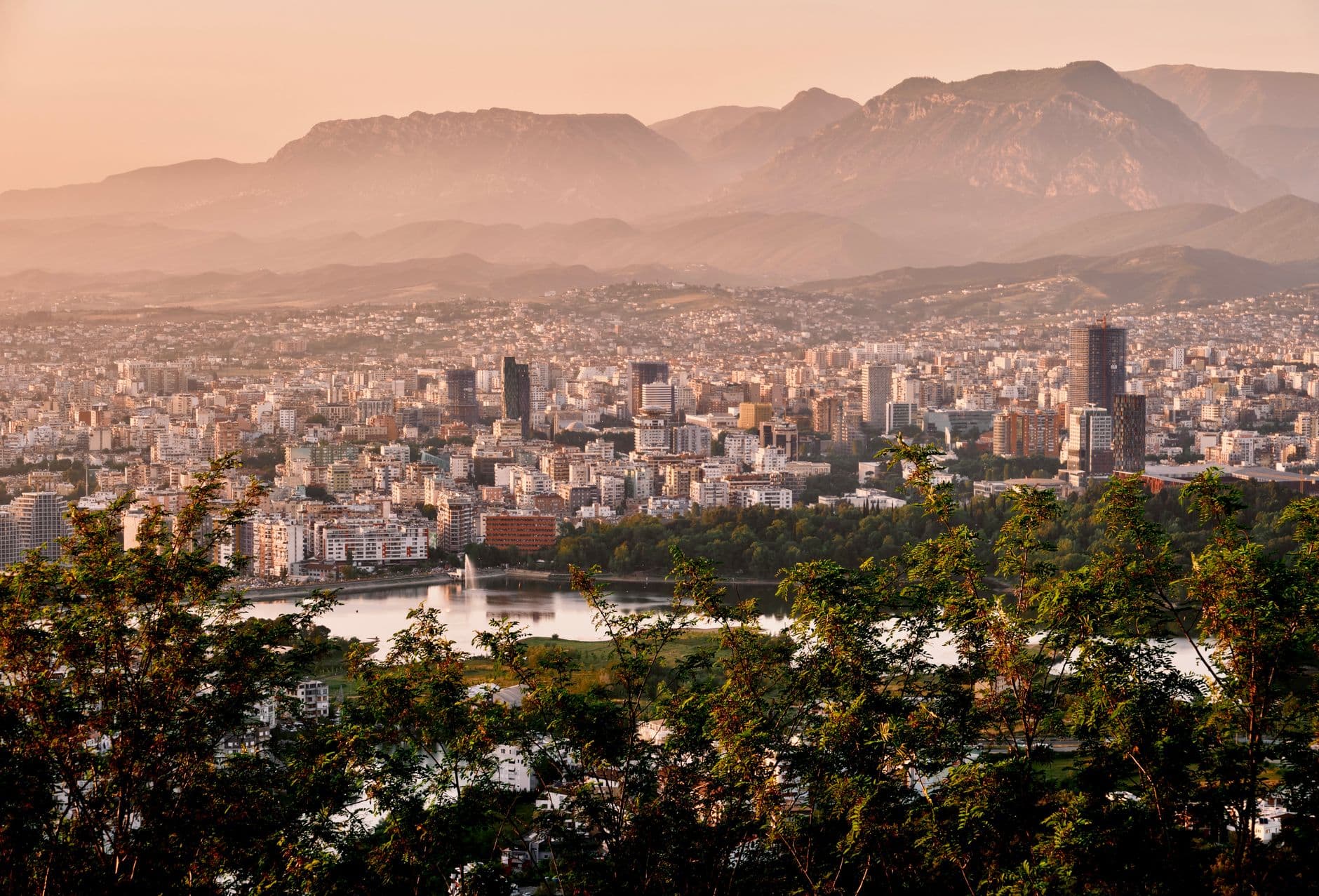
A capital of owners, cranes and dark windows
Tirana is a city that learned to build for itself. Under Enver Hoxha the state allocated housing and tightly controlled who could move to the capital. After 1991 people came anyway, from the mountains of the north and the south, and raised their own houses on the edge of town. A generation later the capital is a city of owners, of cranes, and of a surprising number of dark windows.
Ownership dominates. 83% of homes are occupied by their owners, and 17% by tenants, almost all of them in the private market, which leaves private rental at 17%. Public housing is a sliver: the municipality's own social rental stock stood at 384 apartments at the end of 2022. The cooperative slice is empty. The 2023 census asks households whether they own, rent or live under another arrangement, and has no cooperative category at all. In the wider Tirana prefecture it counted 39,572 tenant households and 21,024 living under another arrangement, usually a home lent by family.
- Owners
- Owner-occupier83.0%
- Renters
- Public & non-profit rental0.00%
- Cooperative0.00%
- Private rental17.0%
Social housing is a legal status rather than a slice of the pie. Only 0.1% of homes carry it, a figure that a Housing Europe review of Albania's urban growth puts at the same level nationally. Most help reaches households as cash instead: a rent bonus paid on private leases, or a subsidised mortgage.
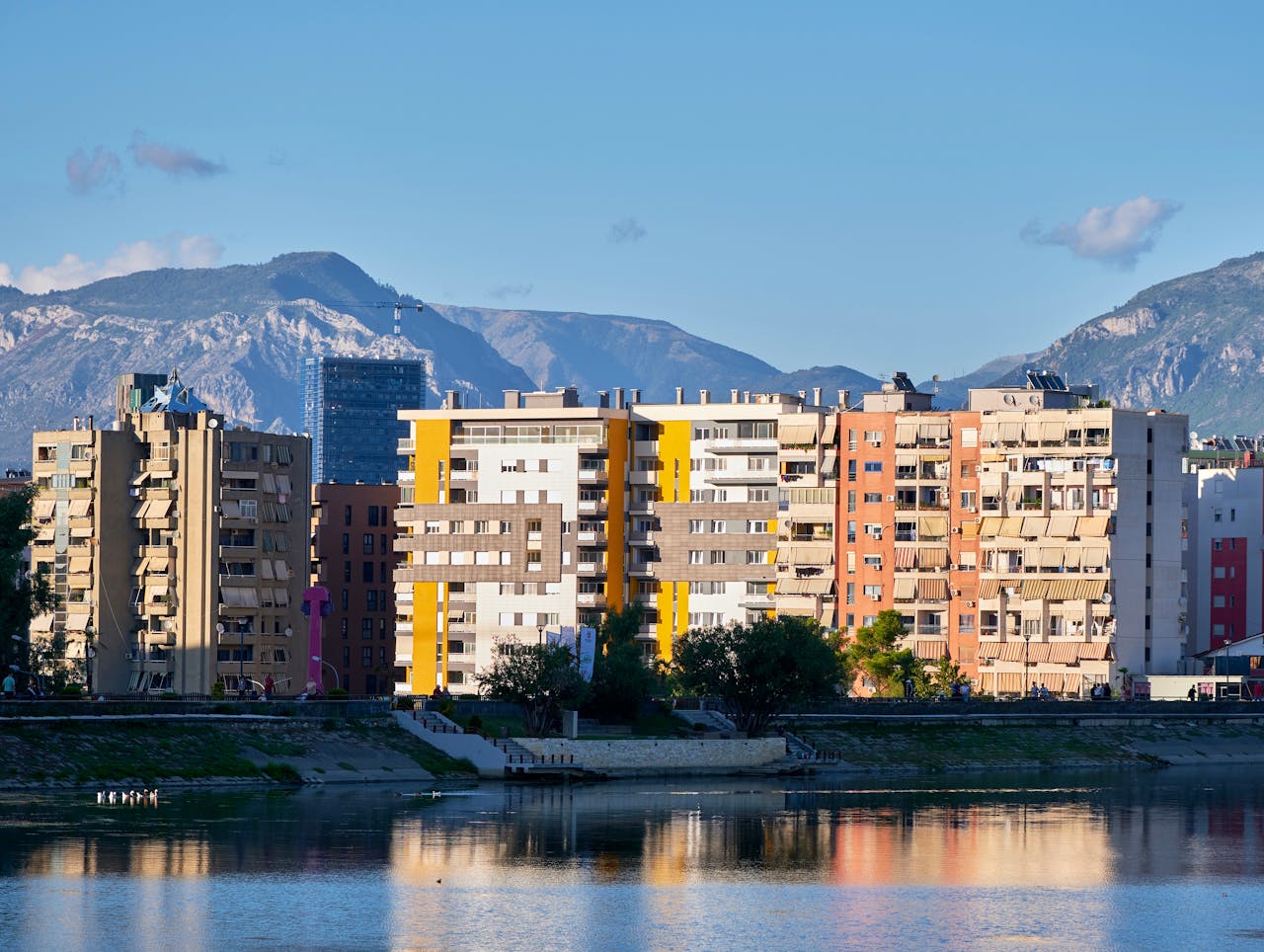
Rents have run ahead of pay. Listing-based rents ran from about €7.40 to €9.35/m² a month in 2025. A smaller survey of signed leases, uprated for inflation, suggests €6/m², so the two sources disagree more than the market does. Furnished and serviced homes, priced gross with utilities and furniture, reach €11.5/m² and serviced apartments €10.2/m². Colliers recorded a 20% year-on-year rise in 2024. By the first half of 2026 a one-bedroom flat averaged €590 a month, against an average gross wage of ALL 86,984.
- New contracts
- Listings 2025 (range midpoint)
- Serviced apartments (gross)
- Furnished / serviced (gross)
Monthly rent per m². All-stock and new contracts are net cold; furnished and serviced are gross, including utilities and furniture. No published rent exists for municipal social flats.
Beside the rising rents stand empty homes. The 2023 census found 21.5% of the city's homes unoccupied, 52,871 dwellings in all, 39,765 of them flats in apartment blocks. Tirana, the city of empty towers, a report by the Balkan observatory OBCT, notes that nationally one in three apartments stood empty, up from one in five in 2011. Offices are less of a problem: vacancy there is 9%, or 23,795 m². Short lets take a share of the occupied stock too. Airbnb supply in the city grew 70% in 2024 to 4,271 apartments, at a median of €44 a night for one bedroom.
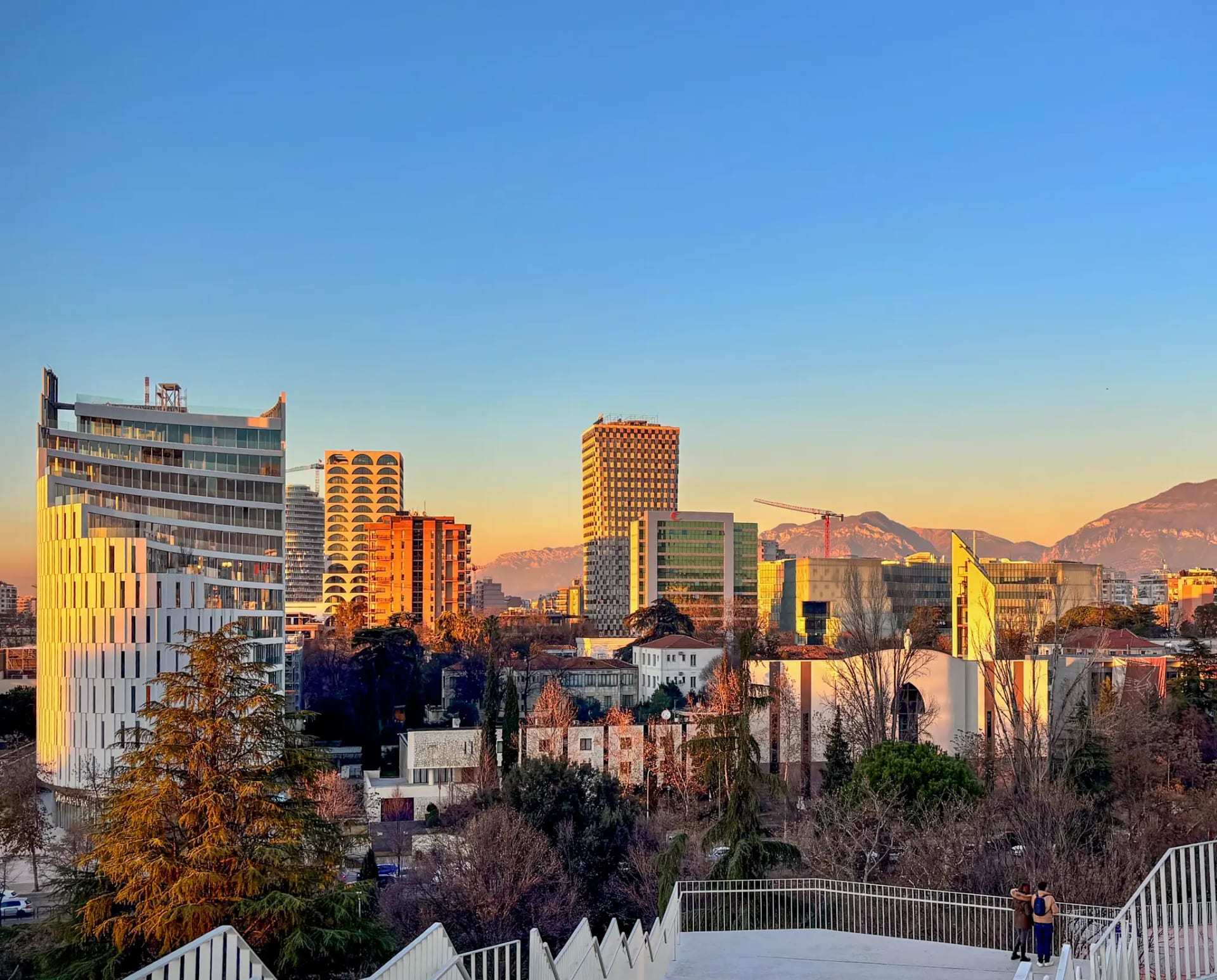
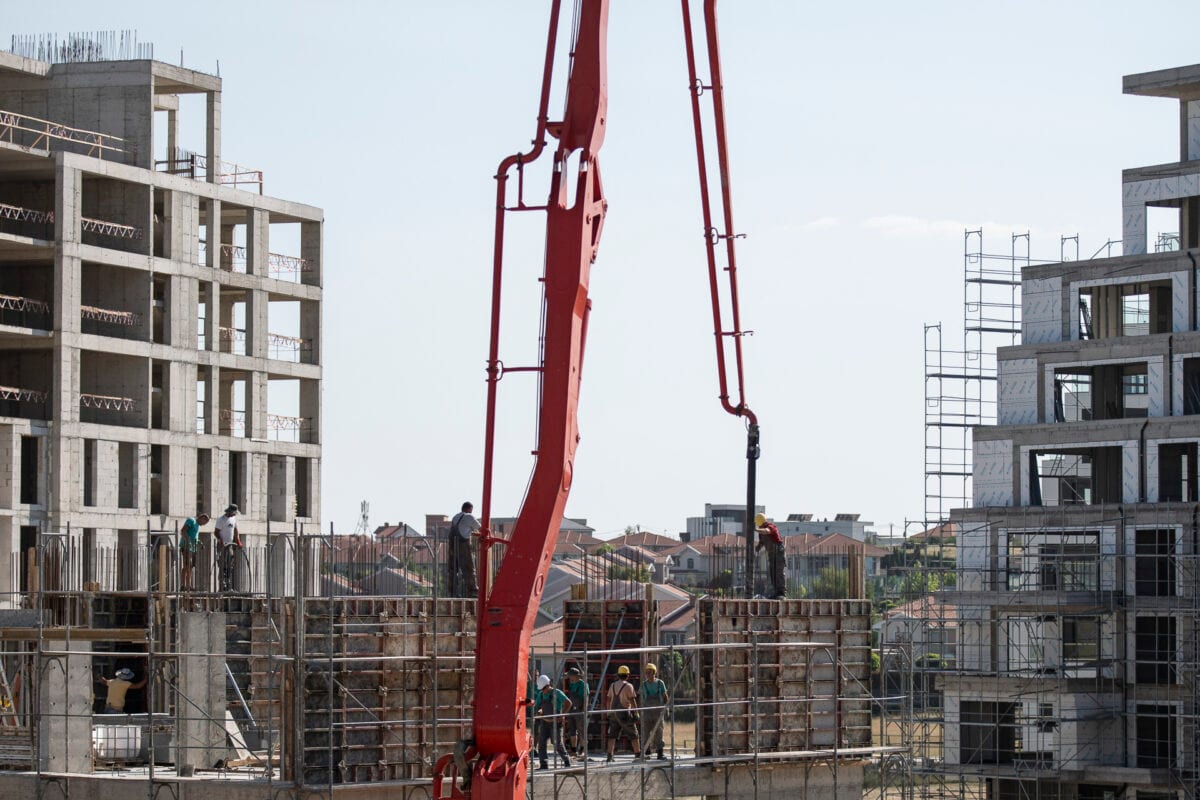
Supply is not the missing piece. The city gains about 15,000 arrivals a year, yet it approved 9.9 million m² of construction permits between 2015 and 2025, including 107 towers. Prices rose regardless. The Bank of Albania's index for Tirana was up 32.6% year on year in the first half of 2025. In the central districts, OBCT reports asking prices of €2,500–4,500/m², against €700–2,500 in 2011.
The strain runs well beyond the poor. A standard 70 m² flat now costs about 19 years of an average gross income. Young adults carry the heaviest load. Reporting by Kosovo 2.0 and Voxeurop found that 70% of young Albanians live with their parents. One of them is Emre Berisha, a 25-year-old taxi driver. “I don’t see how I will ever afford to move out,” he told the reporters. “My salary would need to almost double.” The squeeze now reaches salaried households too. An analysis by the business magazine Monitor finds that housing costs exceed the international affordability threshold across most of Tirana.
One number frames everything that follows: in a city of this size, the cooperative share of the stock is zero.
The cooperative tradition Tirana never had
Tirana has no housing cooperatives, and Albanian housing law offers no tenure form for them. The collective structures that do exist sit elsewhere. Every apartment block is meant to run a condominium assembly under Law 10112/2009 (the law on administering co-ownership in residential buildings). UNECE's 2024 country profile of Albania finds such assemblies still uncommon in socialist-era estates, which are left with no management or maintenance at all. The nearest thing to a limited-profit channel is Enti Kombëtar i Banesave (EKB, the National Housing Agency). It builds on municipal land and sells at cost to households chosen by income, on instalment loans of 15–25 years at 3%. The outcome is ownership, not shared tenure.
The history explains the gap. Under communism the state built, owned and allocated the blocks. In December 1992 Law 7652 privatised state housing to its sitting tenants at nominal prices. EKB was founded a year later with a World Bank loan to finish 6,000–7,000 flats abandoned half-built in 1990, as the UNECE #Housing2030 study records. Outside the old city, newcomers organised themselves, but as self-builders rather than members. At Bathore, north of the centre, squatters built multi-storey houses on state land. Tirana's informal belt did the work that an essay on Turkey's gecekondu calls social policy by other means. Across the region the pattern has a name, ‘super-homeownership’, which Corinna Hölzl's study of cooperative pioneers in Central and South-Eastern Europe ties to the privatisation waves of the early 1990s.
The actors who could seed a sector today fall into three clusters. The first is state-led: EKB, self-financing since 2007 from a revolving fund. The second is civic and technical. Co-PLAN Institute for Habitat Development ran Albania's first urban upgrading pilots in Bathore and Breglumas, and the POLIS University Center of Excellence on Housing, Planning and Development supplies research and trained planners. The third is the one Belgrade, Zagreb and Ljubljana already have and Tirana lacks: grassroots groups linked into the MOBA network with a shared revolving fund. The clusters face different walls. EKB lacks rental management capacity, civic groups lack land and capital, and would-be cooperators lack a legal vehicle. Sasha Tsenkova and Doris Andoni argued in 2017 that Albanian cities needed a strong non-profit partner to act as social landlord.

Government has started to answer that call, though not yet with cooperatives by name. The UNECE profile advises the state to lend land and funding to non-public providers such as housing cooperatives on the Barcelona model or community land trusts on the Brussels one. The 2026 national programme goes part of the way. It turns EKB into a public company that will manage rental homes as well as build them.
A national plan and a city hall without a head
The sitting government's answer is a new National Housing Programme, presented in September 2026 by Delina Ibrahimaj, Minister of Economy and Innovation. It offers 0% loans on homes up to €60,000 and a capped rate on dearer homes. For tenants, the state will pay 50% of rents up to €500. New developments are to follow a mix of 30% social, 40% affordable and 30% market homes. A National Housing Fund will pool the developer levy, and the schemes are due to open in November 2026. The programme builds on Law 22/2018 Për strehimin social (On Social Housing), whose six programmes run from social rental housing and low-cost homes to temporary shelters. The government's priority policies for 2026–2028 set aside €15.5 million and target decent, affordable housing for 35,000 households by 2030. A 2026 amendment adds a state guarantee of up to 30% of a home's value for buyers who qualify.
Despite the growth of construction in the country, the increase in supply has not translated into more affordable homes for citizens. There is a need for policies that look after not only the groups in need, but also the middle class, such as doctors, police officers, teachers and especially young couples.The levers are split between the capital and the town hall. The ministry writes the law and funds the programmes; the municipality selects beneficiaries, pays the rent bonus and owns the social flats. The UNECE profile counts 358 families housed in Shkozë in 2023, 2,169 families given rent subsidies since 2016 and 3,651 households helped with mortgage interest. Its main local instrument is the developer contribution. Any residential building over 2,000 m² must hand 3% of its floor area to the city for social rent. In September 2026 the municipality took delivery of new social flats under that contribution. The city's finances pull the other way. A Tirana Times investigation found that the infrastructure impact tax on new permits and the property tax are expected to supply 56% of the municipality's own revenue in 2026. Leadership is unsettled as well. Mayor Erion Veliaj was arrested by SPAK, the special anti-corruption prosecutor, in February 2025. He was later reinstated by the Constitutional Court, but the Supreme Court upheld his detention in September 2026, and Reporter.al found it unclear who exercises the mayor's powers.
No dedicated support exists for cooperatives yet. The instruments that could carry them are the developer floor-area contribution, public land that municipalities must now identify for the national programme, and the planned National Housing Fund. None is ring-fenced for member-owned homes. Law 22/2018 also runs annual calls to convert disused public buildings, such as old factories and offices, into social housing, the closest thing to a reuse pipeline.
On vacancy the response is indirect. Albania has no empty-homes tax. A draft law would tax property on its market value at low rates, with a discount for a main home. Much of the empty stock is tied to where the money comes from. Albania sat on the FATF grey list, the international watchlist for weak anti-money-laundering controls, from February 2020 until October 2023. The US State Department still reports that criminals launder proceeds through real estate purchases and construction projects. Meanwhile the State Cadastre Agency issued a record 26,101 legalisation decisions for informal buildings in 2025.
Sustainability rules exist mostly on paper. The 2016 energy-performance law was, in the words of consultant Kristi Bashmili, “a good omen” that institutions did not have the will to move forward. Parliament has since passed a new law on the energy performance of buildings, and a draft rule would require solar energy on all new buildings from 2026. Tirana's 2030 masterplan by Stefano Boeri promised an Orbital Forest of trees to stop sprawl onto farmland, but by 2023 the city had planted 60,987 of the promised two million. EU accession, aimed at full membership by 2030, now pulls building standards towards EU rules. The country's public and social rental homes remain too few to lead that shift.
The construction under way in the centre of Tirana is eliminating not only the low-income groups but the middle class too. When the city is turned into a commodity, when its spaces are sold by the laws of the market without any social correction, the right to the city is systematically violated.- 1992-12[source]
State housing privatised
Law 7652 transfers state-owned flats to their sitting tenants.
- 1993[source]
National Housing Agency founded
EKB is set up to finish the unfinished socialist-era blocks and later sells homes at cost.
- 2015-09[source]
First Shkozë social flats handed over
The first 30 families receive keys to municipal social rental flats built with a CEB loan.
- 2016-12[source]
Tirana 2030 plan approved
The general local plan by Stefano Boeri with UNLAB and IND proposes an Orbital Forest green belt.
- 2018[source]
Law 22/2018 on Social Housing
Six housing programmes and the 3% floor-area contribution from large residential developments.
- 2019-11-26[source]
Durrës–Tirana earthquake
About 51 people die and 11,490 homes are destroyed or damaged, launching the Rindërtimi (reconstruction) programme.
- 2023-09[source]
Census counts the empty homes
Tirana has 245,458 dwellings, of which 52,871 are empty.
- 2025-02-10[source]
Mayor arrested
SPAK orders the arrest of mayor Erion Veliaj on corruption and money-laundering charges.
- 2026-09[source]
National Housing Programme
A 30/40/30 social, affordable and market mix for new developments, 0% loans and a 50% rent contribution.
- 2027[source]
Target: close EU accession talks
Government goal to conclude negotiations, with membership in sight by 2030.
- 2030[source]
Target: 35,000 households housed
The priority housing programme aims to house about 35,000 households; Tirana 2030 and EU membership share the horizon.
From Shkozë to the riverside: homes built by state, city and self-help
The Shkozë estate is the city's one working model of public rent. It came out of a national programme with the Council of Europe Development Bank (CEB). That programme built 1,138 rental flats in eight cities, backed by a €15 million CEB loan. The municipalities put in land and management. In Tirana the site was a brownfield, and Tsenkova and Andoni's review of the programme notes that its clean-up added a premium to the cost. When then-mayor Erion Veliaj handed keys to the first 30 families in 2015 he called it “Tirana's most beautiful postcard”. In 2019 the municipality readied Shkozë flats for families displaced by the Ring Road, so the small public stock doubles as an emergency buffer.
Enti Kombëtar i Banesave has housed more than 15,000 families since 1993 without owning a single rental flat. Its model is simple: the mayor provides a plot, EKB builds, and income-tested households buy at cost. Recycling the sales into the next project has kept the agency independent of the budget. The 2026 reform asks it to become a landlord as well, which would make it the first national body in Albania to hold homes for rent.
Bathore is where Tirana's self-help tradition met planning. Co-PLAN chose it and Breglumas for Albania's first combined social and physical upgrading projects. A study in Housing Studies by Dorina Pojani later described the successful upgrading of Bathore, an informal settlement on government land where squatters had built durable, often multi-storey houses. Roads, water and titles came after the homes. The lesson for a cooperative future is that Tirana's residents have long organised to build; what they lacked was a legal form for owning together.
Tirana Riverside is the largest new neighbourhood of the post-earthquake years. Stefano Boeri Architetti designed it for the municipality as a 29-hectare district for 12,000 people on the Tirana river. Voxeurop's report from the 5 Maji neighbourhood records a plan for 3,500 flats and the demolition of 400 existing houses. Architect Astrit Seranaj called the earthquake “a golden opportunity” that the authorities exploited. Four years after the demolitions, residents told Voxeurop the rubble was still there. The project shows the scale the city can mobilise, and how slowly it reaches the people who were already living on the site.
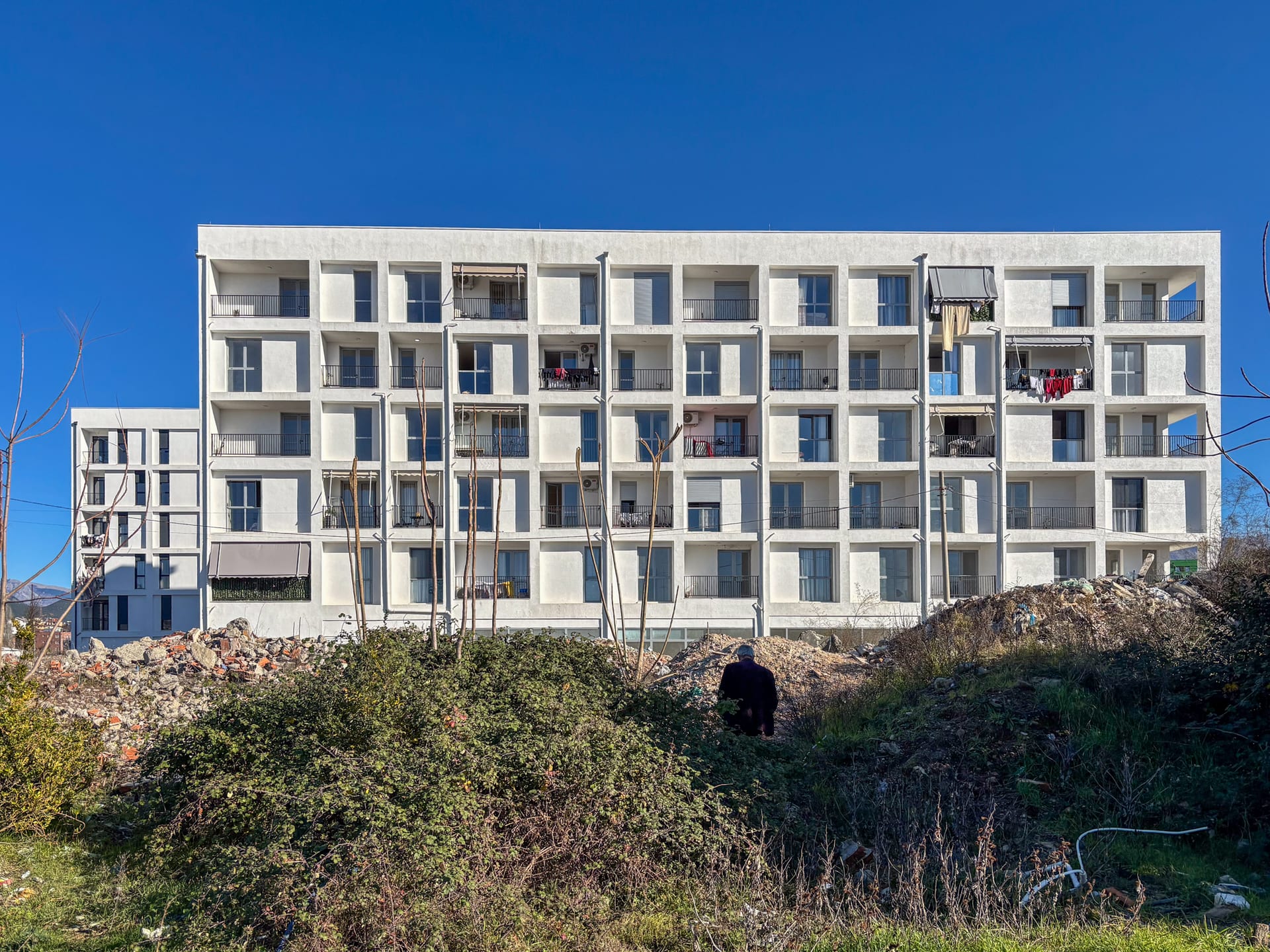
The Kombinat reconstruction shows the slower side of the same effort. Five years after the 2019 earthquake the national programme had handed over 6,139 new apartments across the affected region. In Kombinat, the former textile-mill district of Tirana, about 230 of roughly 1,000 affected families had received flats by December 2025, and the work is due to close in 2028.
Qyteti Studenti, the student city, offers a smaller template for shared living. The municipality rebuilt dormitories 9 and 10, giving 600 students 200 renovated rooms. It is the city's clearest case of an old building refitted for people who need a home for a few years rather than a lifetime. The POLIS University housing centre next door trains the planners who will decide whether that model grows. What Tirana has, in short, is land, empty flats, a public builder and a people used to building for themselves. What it does not yet have is a way for them to own and run homes together.
References
Statistics12Click on any number to see the source
Housing market
Adaptive reuse & vacancy
Population & migration
From our library14
- Albania's urban growth: the need for a strategic housing policy — Knowledge
- Tirana, the city of empty towers — Knowledge
- Housing crisis in the Western Balkans: rents soar as wages stagnate — Knowledge
- Country Profiles on Urban Development, Housing and Land Management: Albania — Knowledge
- Enti Kombëtar i Banesave (National Housing Agency of Albania) — Organisation
- #Housing2030 Effective policies for affordable housing in the UNECE region — Knowledge
- Informal Urban Settlements and Social Policy by Other Means — Knowledge
- Cooperative Housing Pioneers in Central and South- Eastern Europe: Mainstreaming Alternatives through Translocal Networks — Knowledge
- Co-PLAN Institute for Habitat Development — Organisation
- POLIS University — Center of Excellence on Housing, Planning and Development — Organisation
- Building Partnerships for Social Housing: Growing Housing Needs and Effective Solutions for Albanian Cities — Knowledge
- Dirty money in the skyline: Albania's tower boom and the laundering of criminal wealth — Knowledge
- Tirana Riverside — Project
- Tirana Riverside: demolitions at 5 Maji and the post-earthquake new neighbourhood — Knowledge
Further sources47
- housingeurope.eu — housingeurope.eu
- instat.gov.al — instat.gov.al
- voxnews.al — voxnews.al
- monitor.al — monitor.al
- instat.gov.al — instat.gov.al
- balcanicaucaso.org — balcanicaucaso.org
- albaniantimes.al — albaniantimes.al
- tiranatimes.com — tiranatimes.com
- albaniandailynews.com — albaniandailynews.com
- tiranatimes.com — tiranatimes.com
- voxeurop.eu — voxeurop.eu
- okzklhj6dqfoztwq.public.blob.vercel-storage.com — okzklhj6dqfoztwq.public.blob.vercel-storage.com
- vendime.al — vendime.al
- co-plan.org — co-plan.org
- top-channel.tv — top-channel.tv
- monitor.al — monitor.al
- kohajone.com — kohajone.com
- acp.al — acp.al
- rtsh.al — rtsh.al
- monitor.al — monitor.al
- top-channel.tv — top-channel.tv
- en.wikipedia.org — en.wikipedia.org
- hashtag.al — hashtag.al
- reporter.al — reporter.al
- euronews.al — euronews.al
- baselgovernance.org — baselgovernance.org
- citizens.al — citizens.al
- voxnews.al — voxnews.al
- citizens.al — citizens.al
- build-up.ec.europa.eu — build-up.ec.europa.eu
- balkangreenenergynews.com — balkangreenenergynews.com
- stefanoboeriarchitetti.net — stefanoboeriarchitetti.net
- citizens.al — citizens.al
- newunionpost.eu — newunionpost.eu
- voxnews.al — voxnews.al
- housingeurope.eu — housingeurope.eu
- balkanweb.com — balkanweb.com
- balkaninsight.com — balkaninsight.com
- voxnews.al — voxnews.al
- tirana.al — tirana.al
- ideas.repec.org — ideas.repec.org
- stefanoboeriarchitetti.net — stefanoboeriarchitetti.net
- voxeurop.eu — voxeurop.eu
- exit.al — exit.al
- shqiptarja.com — shqiptarja.com
- shqiptarja.com — shqiptarja.com
- tirana.al — tirana.al
·
Funding & land tenure
What a housing cooperative could actually build on hereLand tenure has not been assessed for Albania yet — that is a gap in the research, not a finding.