Owners by inheritance, tenants by necessity
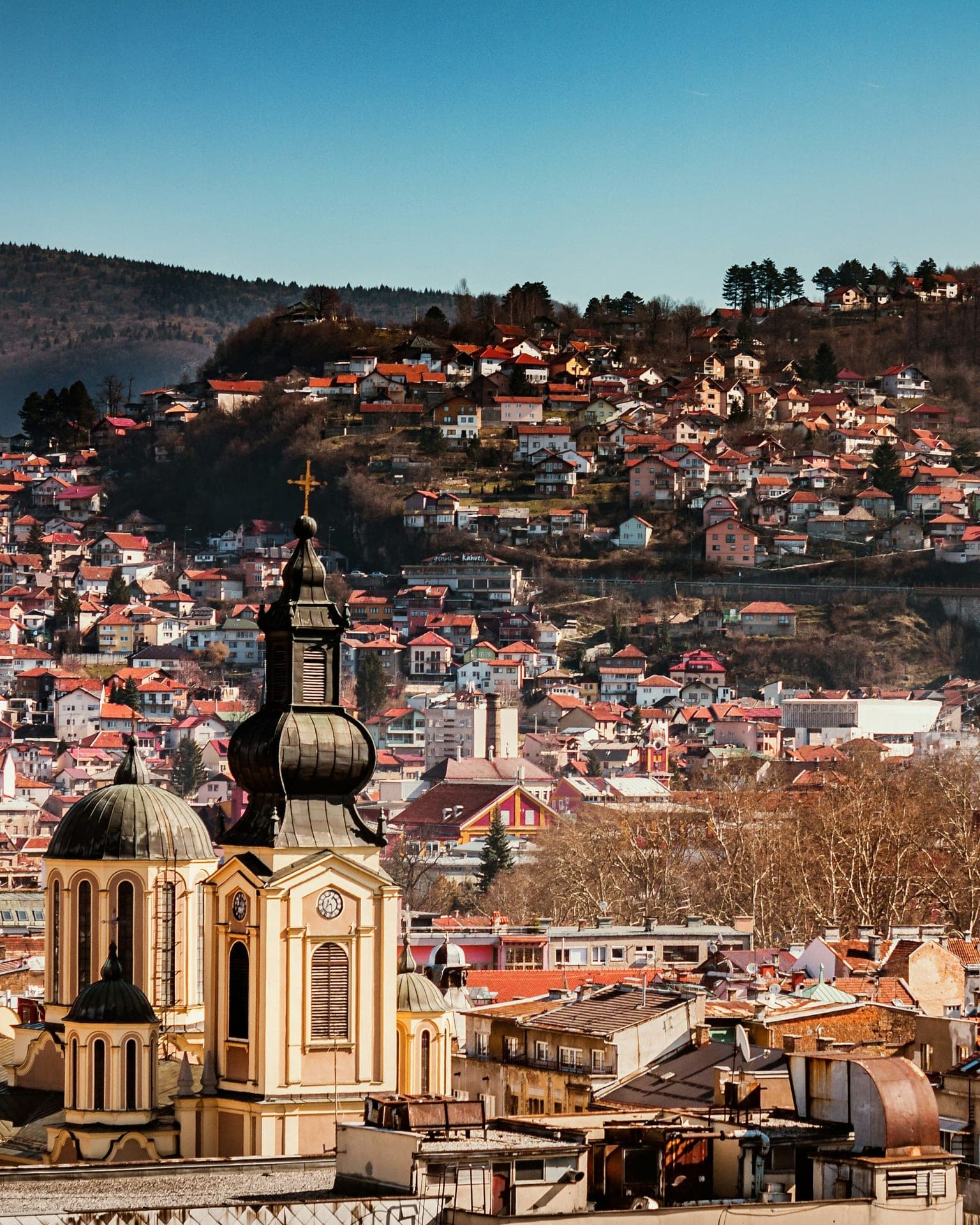
Sarajevo has been rebuilt more than once. Ottoman mahalas (the old hillside neighbourhoods) climb the slopes above the Miljacka river. Austro-Hungarian blocks line the valley floor, and socialist estates fill the western plain towards the airport. The siege of 1992 to 1996 damaged much of that stock. The privatisation that followed decided who owns it now, and most of today's housing questions start there.
The 2013 census, still the latest, counted 146,140 occupied dwellings in Sarajevo Canton, a canton of 421,531 people by 2024. Owners and co-owners lived in 78.3% of them. Another 13.4% were homes occupied by a relative of the owner, a family arrangement the census counts as a tenure of its own. Private tenants held just 5.6%. Rentals from the state or a municipality made up 0.8%, or 1,140 homes. The census has no cooperative category at all, because the cooperative tenure of Yugoslav times did not survive into its tables.
- Owner or co-owner78.3%
- Relative of the owner13.4%
- Public (state-owned) rental0.8%
- Private rental5.6%
- Other1.9%
Social housing is not a separate tenure either. It is a rule for allocating the little public stock that remains. The four city municipalities let their flats at 0.80 to 3.50 KM per m² (€0.41 to €1.79) a month, mostly to war veterans, Roma families and households in social need. That is the finding of a 2019 study of municipal flats in the City of Sarajevo. No figure exists for a social-housing share, because no law defines one. Neither the canton nor the Federation has a social-housing law in force, and the canton's development strategy still lists passing one as a task.

Rents look modest in the catalogue. Estimates put the all-stock median at €7.20 per m², new lets at €7.40 and furnished flats at €7.80. Listings in the new estates tell a steeper story. In Otoka's Avenija complex a 49 m² flat asks 1,200 KM (about €615) a month, close to €12.50 per m². Studios on the city's edges are advertised at 700 to 800 KM, and one landlord asked 1,450 KM for 35 m². The canton's average net wage was 1,910 KM (€977) in 2025. A flat in a new estate now takes more than half of it.
- Municipal flat (top of range)
- All-stock median
- New contracts
- Furnished
- New-estate listing (Otoka)
Monthly rent per square metre. Municipal rents are set by the municipalities; the middle three tiers are catalogue estimates from listings; the new-estate figure is a single advertised flat, shown to mark the top of the market.
Buying has run further ahead. The average new flat sold in Sarajevo cost 2,068 KM per m² in 2020, according to a Klix comparison of 2020 and 2025 prices, and 4,269 KM by late 2025. In the second quarter of 2026 it reached 4,304.6 KM per m² (about €2,200), against a Federation average of 2,732.4 KM. At the average wage, one square metre costs more than two months' net pay. Deloitte's Property Index had already ranked Sarajevo's 30.6% price jump in 2022 the steepest of any capital it tracks. IMF staff found apartment prices rising faster in Sarajevo than elsewhere in the Federation since 2022, driven by local savers, the diaspora and investors with few other places to put money.
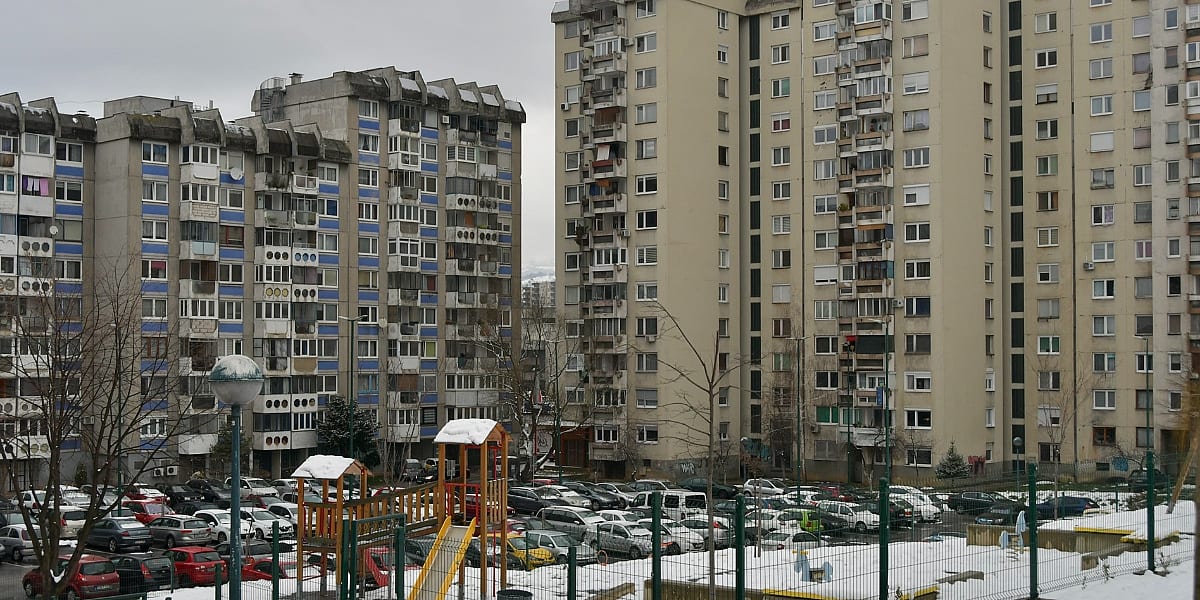
Empty homes sit beside the shortage. The 2013 census counted 209,481 dwellings in the canton, and 50,680 of them, or 24.2%, stood empty. Some were war-damaged shells, some belonged to emigrants and some were weekend homes. The canton's 2021–2027 development strategy drew a blunt conclusion from the same census: 61,466 more dwellings than households, and therefore no need for new construction. Offices have slack too. Office vacancy runs at about 9%, or roughly 0 m² of empty floor.
Growth is slow and uneven. The canton gained 1.9% between 2013 and 2024 while the four city municipalities lost 1.5%, according to the canton's planning institute. Visitors add pressure. In 2025, 854,957 guests spent 1,967,853 nights in Sarajevo, 11.8% more than a year earlier. A one-bedroom short let fetches a median €55 a night. New supply is thin: larger builders sold only 275 new flats in Sarajevo in 2024, according to official construction statistics.
The squeeze lands hardest on the young. Almost 70% of young people in the Federation live with their parents, a KULT Institute survey reported in December 2025. Students from the provinces compete for rooms, and the city's Studentski centar placed 1,099 students in its dormitories in 2024. The pressure has reached working couples and the middle class. Canton premier Nihad Uk said in August 2026 that young people find it ever harder to find a flat and to pay the rent. An N1 report on student rents captured why the rental pool is shrinking.
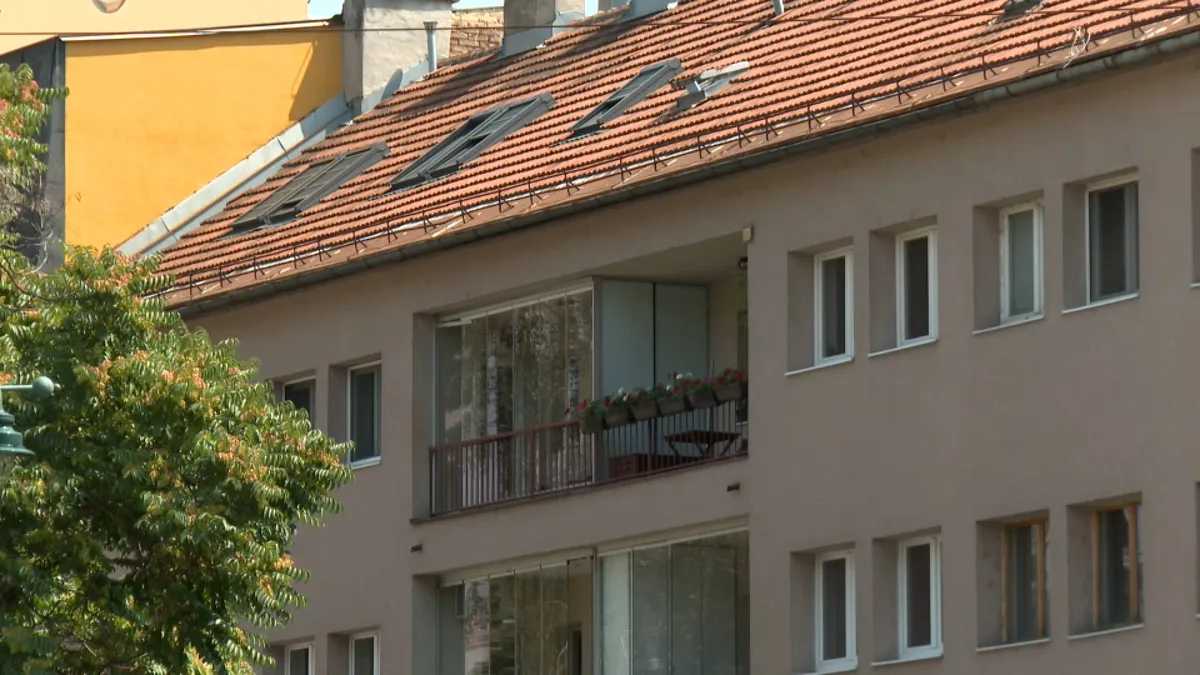
What is happening to us now is that flats that were meant for students or young professionals are now being let short-term to tourists. That is a fact: it will be harder and harder in Sarajevo to find a flat to rent, and a flat to buy.For a city whose flats were once built by housing cooperatives, the census now finds no cooperative tenure to count.
From the railway cooperative to a name on a register
Cooperative housing in Sarajevo once had a precise meaning. A stambena zadruga (a housing cooperative, usually tied to a workplace or trade union) pooled members' savings to build homes. Most urban flats, though, were socially owned and allocated by employers. Residents held a stanarsko pravo (an occupancy right: lifelong and inheritable, but not saleable at market price). Security came from the right, not from a share in a company. Today the cooperative form survives mainly in law. The Federation's Law on Cooperatives of 1997 still sets a higher bar for housing cooperatives than for any other kind: 30 founders instead of three.
The tradition is older than socialism. On 26 June 1923 Sarajevo's railway workers founded a cooperative to improve their living conditions. In 1931 it bought land on Crni Vrh for members' houses, one of the city's first planned cooperative estates. After 1945 the enterprise-linked model spread through the new estates. The war and its aftermath ended it. In 1997 the Federation's Law on the Sale of Flats with Occupancy Rights obliged state owners to sell flats to their occupants, mostly for privatisation certificates. In Stari Grad, 2,165 of 2,270 flats went for certificates and only 105 for cash. By 2019 the municipality held just 46 flats.
The sector today is a handful of actors who barely meet. The oldest is a name on a register. The Stambena zadruga Željezničara (the railway workers' housing cooperative) holds a canton certificate valid until 2030, but its activity is hard to trace. The busiest is a public developer rather than a cooperative. The Sarajevo Canton Housing Construction Fund sells flats below market with interest-free instalments for young buyers, but members have no say in how it is run. The newest cluster is regional. The MOBA network of non-speculative cooperatives in Zagreb, Belgrade, Ljubljana and Budapest included Bosnia and Herzegovina in its 2022 research on needs and financing. Its investor report argued that patient, risk-tolerant capital can bridge the short loan terms local banks offer. A study of these cooperative pioneers in Central and South-Eastern Europe traces how they share a revolving fund and an ethical bank. Sarajevo has no member yet. The three clusters face different problems. The Fund has land and public money but no member governance. The self-organised model has governance but no land, no local finance and a founding threshold that deters small groups.
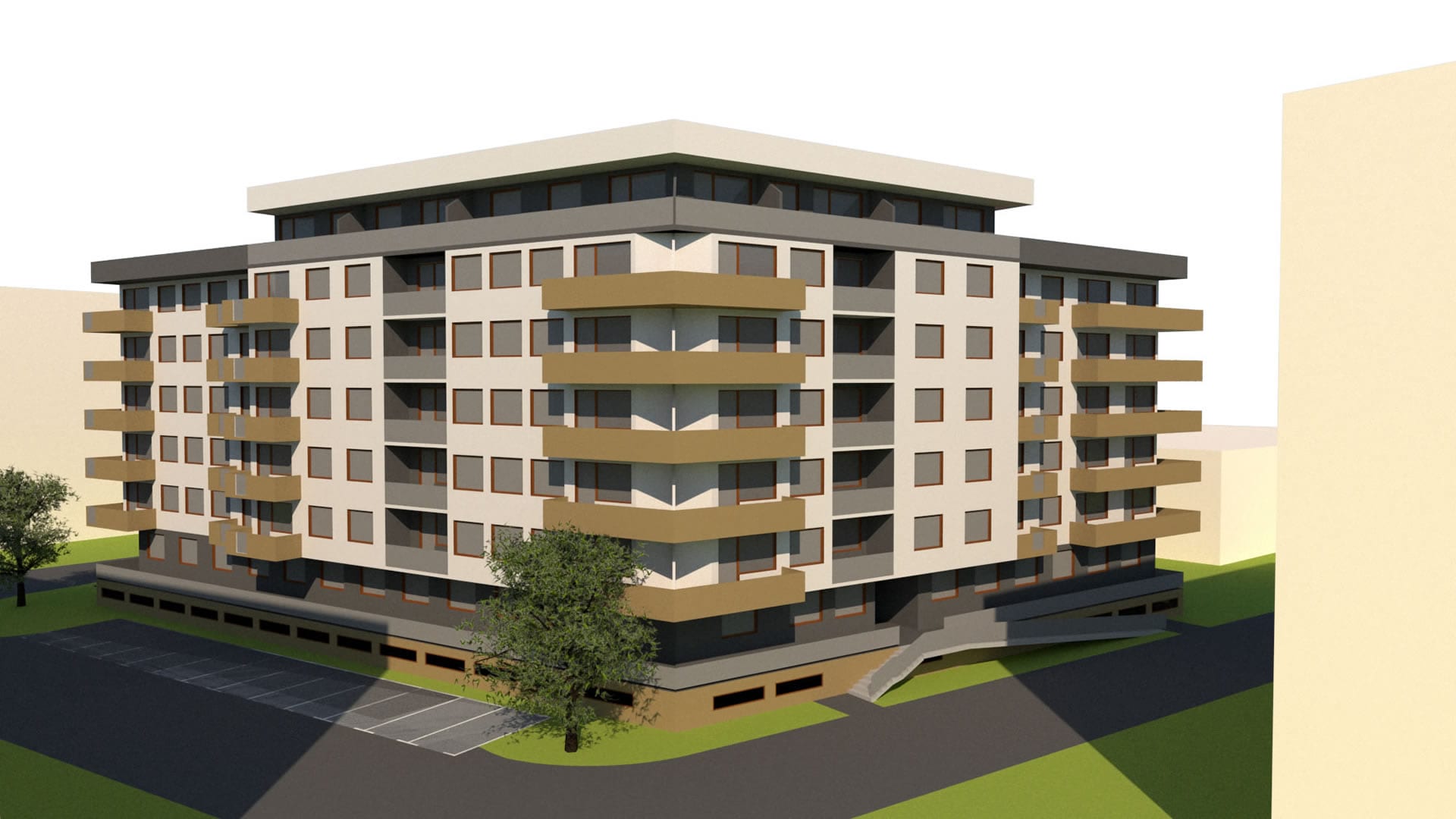
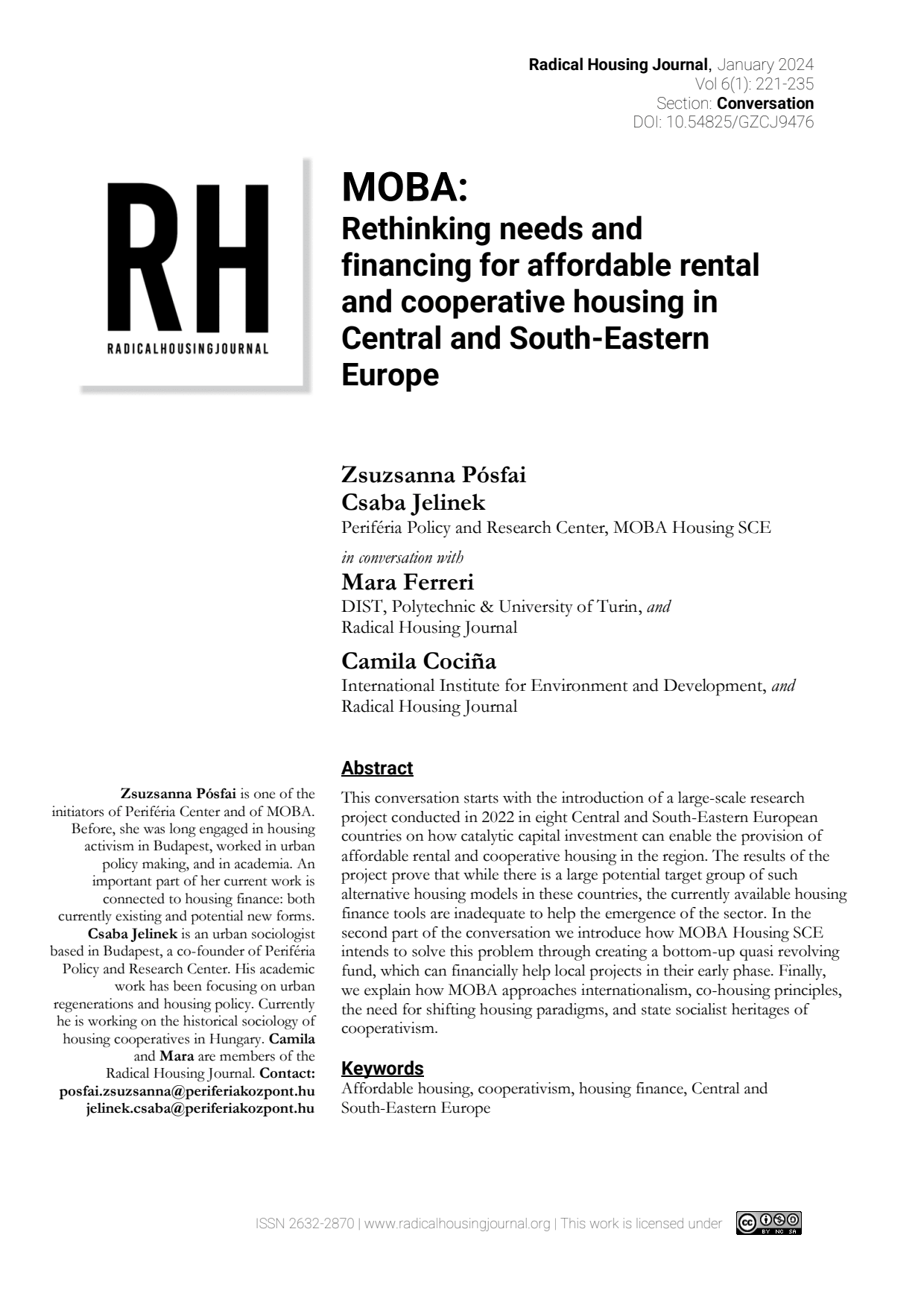
Policy offers cooperatives no role in the affordable mix. The canton's answer is a public developer plus cash subsidies. Its development strategy calls for regulated rental housing and the renewal of war-damaged estates. It mentions cooperatives only for energy schemes and veterans' employment, never for housing. That gap frames the politics.
A canton that builds, a plan that waits
Sarajevo Canton holds most of the housing levers, and its government has chosen to build and subsidise. Premier Nihad Uk has governed in a technical mandate since resigning in February 2026 after a fatal tram accident, and his programme runs on three tracks. The first is supply. The Housing Construction Fund finished almost 300 flats in the year to October 2025. It aims for 500 a year, priced 30% below market. The second is purchase subsidy. A 2023 call promised young buyers up to 12,000 KM each, but paid about 4,800 KM to 1,142 people. Recipients protested, and in June 2024 the Assembly voted to top the grants up to 10,000 KM. The third is rent. Since September 2026 couples aged 18 to 35 can claim up to 300 KM a month for a year, from a budget of 300,000 KM. All three tracks now face voters. The canton elects a new Assembly on 4 October 2026, in general elections that renew every level of government at once.
Each tier of the Dayton state holds a different piece. The state parliament passed a VAT refund on first homes in April 2025, covering 40 m² plus 15 m² per household member. Nobody could claim it by February 2026, because the board of the Indirect Taxation Authority (UIO, the state body that collects VAT) had not met to adopt the rules. The Federation of Bosnia and Herzegovina, one of the country's two entities, writes tenancy, cooperative and privatisation law. The canton plans land, funds the Housing Construction Fund and runs the subsidies. The City of Sarajevo, led by mayor Samir Avdić since July 2025, and its four municipalities manage what is left of the municipal stock.
No instrument is built for cooperatives. There is no concept-led land tender, no ground-lease pact and no dedicated funding line. The nearest tool is the canton's poticajni stanovi (incentive flats) model. In September 2024 the government bought a site on the new Ilidža–Hrasnica tram line for flats to be sold or let below market, mainly to young people. A legalisation law is also coming. Uk has announced rules to legalise more than 40,000 illegally built structures, subject to an aerial survey and settled ownership.
The answer to empty homes has now reached paper. On 26 September 2026 the canton government adopted a draft law taxing unused properties. It would levy a yearly tax on empty flats and business premises, while homes that are lived in or properly let stay exempt. Municipalities would keep half of what they collect. Uk says the revenue will build flats sold below market, above all to young married couples. The Assembly has yet to vote on it, and he had first promised the law to Klix a month earlier. A former barracks shows what reuse can achieve. The Austro-Hungarian Filipović camp, renamed Maršal Tito barracks after 1945, now houses University of Sarajevo faculties and the National and University Library. Its neighbour, the Jajce barracks in Stari Grad, has stood derelict since 2002 and is slated to become a hotel, not homes.
Climate policy reaches housing through the air. Winter smog regularly puts Sarajevo among the world's most polluted cities, and on 16 December 2025 it topped the global ranking. The canton's response targets homes. A pilot replaced coal and solid-fuel stoves in 534 households under a coal-limitation strategy that runs to 2033. For 2026 the canton set aside 1.5 million KM to insulate collective residential buildings, shared half-and-half with the municipalities and prioritising war-damaged blocks. A 2024 report on Sarajevo's forgotten façades shows how slow that work has been: 81 buildings repaired since 2005, and 32 through energy-efficiency programmes since 2007. Toplane Sarajevo (the canton's district-heating company) plans a 36 MW heat pump at the Butile wastewater plant to heat about 20,000 households. Since 2019 the canton has also belonged to EBRD Green Cities, the urban climate programme of the European Bank for Reconstruction and Development.
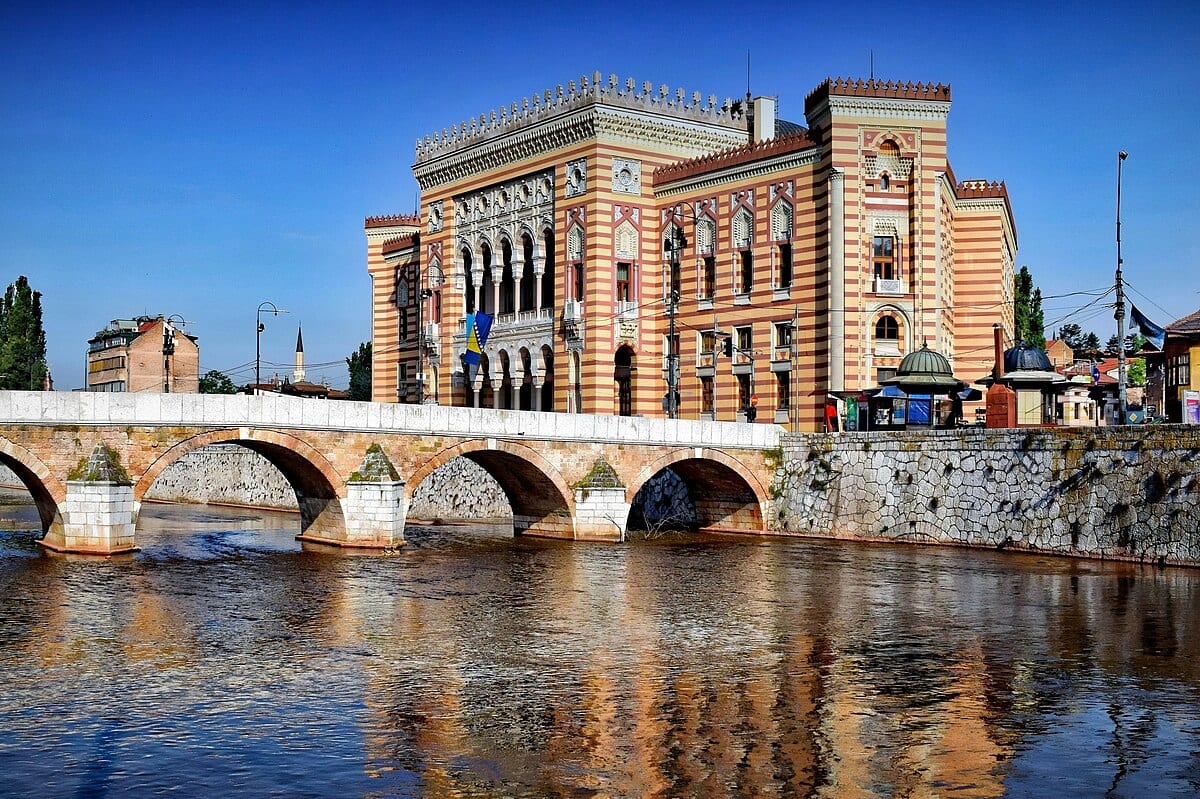
The sharpest argument is about height, and about who profits. In February 2024 the cantonal Assembly lifted limits on high-rise building in the city's ventilation corridors, adopted in 2020 to clear winter smog. Environmental campaigners called it a gift to investors. On 3 September 2026 the government adopted a new Urban Plan to 2036 and sent it to the Assembly. It replaces a plan drawn up in 1986, and its vision of a 15-minute city, with tram lines extended to Azići and Dobrinja, is meant to end what Uk calls building in a grey zone. The two camps read the same skyline differently.
This construction mafia that built mastodons around Novo Sarajevo and next to the Emergency Centre could do so in that grey-zone period. Once the Urban Plan is adopted, there will be no more buildings like that.The fact is that there are no limits on high-rise building until a new urban plan is adopted.- 1923[source]
Railway workers' cooperative founded
Sarajevo railway workers found a cooperative and later buy land on Crni Vrh for members' houses.
- 1984[source]
Winter Olympics leave two estates
The Games' media village at Dobrinja and athletes' village at Mojmilo become permanent neighbourhoods.
- 1992–1996[source]
Siege of Sarajevo
A 1,425-day siege damages much of the housing stock and displaces residents.
- 1997[source]
Occupancy-rights sale law
The Federation obliges state owners to sell flats to occupancy-right holders, mostly for privatisation certificates.
- 2013[source]
Census counts the empty stock
50,680 of 209,481 dwellings in the canton are recorded as empty.
- 2021[source]
Development strategy
The canton records 61,466 more dwellings than households and prioritises rental housing and estate renewal.
- Dec 2022[source]
EU candidate status
EU leaders grant Bosnia and Herzegovina candidate status.
- Feb 2024[source]
Ventilation-corridor limits lifted
The cantonal Assembly scraps the 2020 limits on high-rise building in the city's ventilation corridors.
- Mar 2024[source]
EU accession talks agreed
The European Council decides to open accession negotiations.
- Apr 2025[source]
VAT refund on first homes
The state parliament adopts a VAT refund for first-time buyers of new homes.
- Dec 2025[source]
Reform Agenda approved
The Commission approves the Reform Agenda, unlocking up to €976.6 million under the Growth Plan.
- Sep 2026[source]
Rent subsidy for young couples
Couples aged 18 to 35 can claim up to 300 KM a month for a year.
- Sep 2026[source]
Urban Plan goes to the Assembly
The canton government adopts the draft Urban Plan to 2036 and sends it to the Assembly.
- Sep 2026[source]
Tax on unused properties drafted
The canton government adopts a draft law putting a yearly tax on empty homes and business premises.
- Oct 2026[source]
General elections
Voters elect a new Sarajevo Canton Assembly alongside every other level of government.
- 2033[source]
Coal-limitation strategy ends
The canton's strategy for phasing down coal and solid-fuel heating runs to 2033.
- 2036[source]
Urban Plan horizon
The plan's horizon: a 15-minute city with extended tram lines, if the Assembly adopts it.
From the railway workers' cooperative to the canton's new Urban Plan horizon.
From Olympic village to incentive flat
Dobrinja began as the press village of the 1984 Winter Olympics. The design firm DOM planned it, and its first phase was finished in 1983. Today about 40,000 people live there. Next door, Mojmilo was built as the athletes' village. The pair are the clearest proof in the city that one public programme can create a whole neighbourhood, and that such a neighbourhood outlives the event that paid for it.
Ciglane, the terraced estate designed by Namik Muftić and Radovan Delalle, stepped 1,451 dwellings down a hillside between 1976 and 1979 for about 6,000 people. It reads as a mahala rebuilt in concrete, with every flat given a terrace and a view. Alipašino Polje, designed by Milan Medić, Jug Milić and Muftić, went the other way. Its towers of up to 19 storeys, built in three phases in the 1970s, housed the socialist city's workforce at scale.
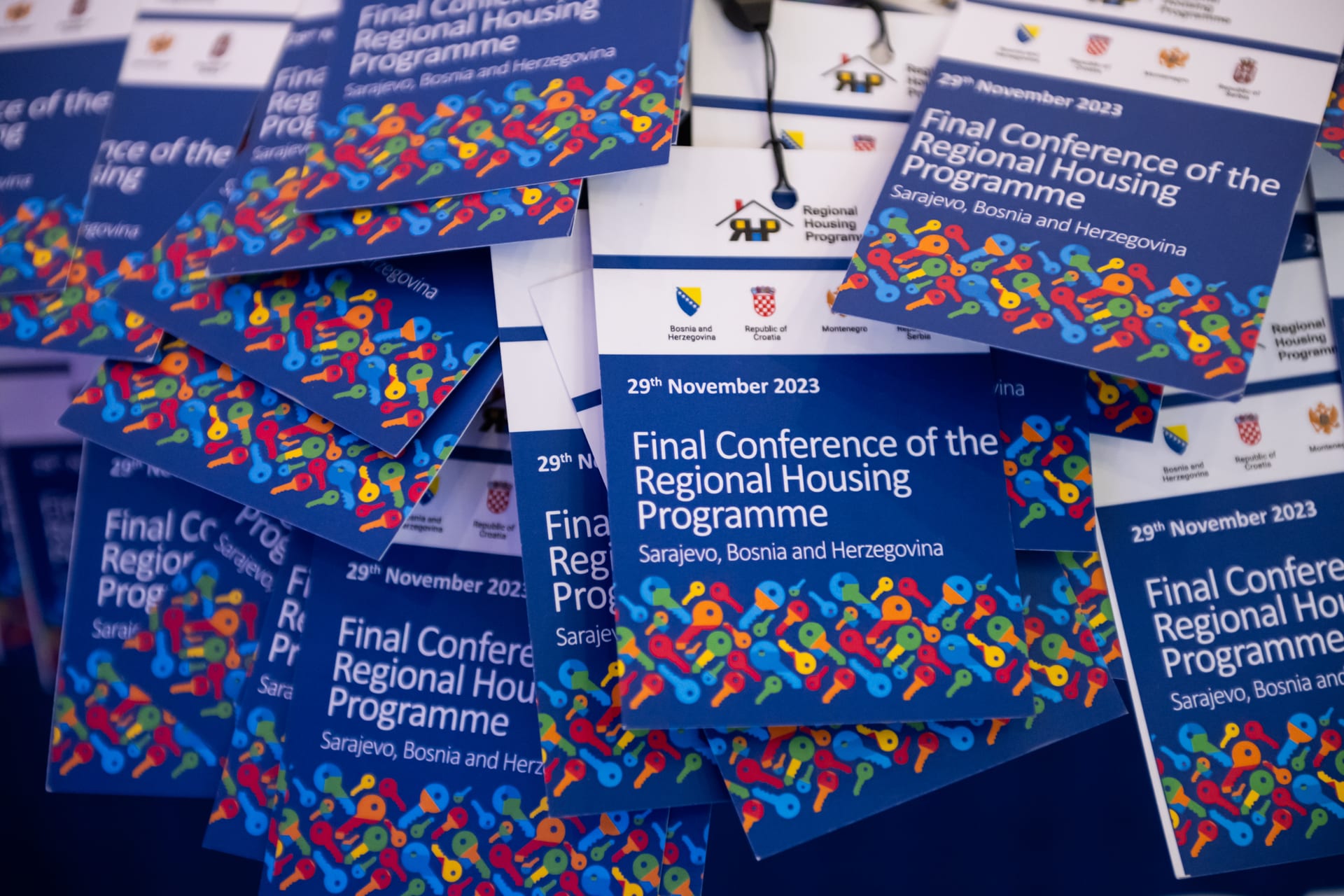
The Regional Housing Programme, funded mainly by the EU through the Council of Europe Development Bank, closed in 2023 after housing 2,778 families across Bosnia and Herzegovina. Its country factsheet puts the total at about 9,000 people. In Vogošća, on the canton's northern edge, families received keys in November 2023, among the last of the post-war displaced to be rehoused.
The Sarajevo Canton Housing Construction Fund is today's main builder, founded in 1998 to repair the post-war stock. Its Centar Ilijaš building gave homes to 64 families in a project worth 16 million KM. Of its flats, 33 went to young buyers at favourable prices and 25 to war veterans. Next comes Bijeli dvor in Sokolović Kolonija, with 35 flats under contract. A promise to start more than 300 flats at Šip and Vogošća in 2026 is rated work in progress by the fact-checker Istinomjer. The Fund's director sets the bar on quality as well as price.
We want young people to live in beautiful buildings, and we want to give them that 30 percent cheaper, not 30 percent worse.LINA Conference 2024 brought the European architecture platform to Kino Meeting Point in Sarajevo on 3 October 2024. Its theme, Community-Led Architecture, put residents rather than developers at the centre of how cities grow. It was a rare moment when the city's young architects met the European debate on who designs housing and for whom.

HOLICOB, the housing research project behind the study of municipal flats, suggests the next step. It proposes long leases of unrenovated municipal flats to young people who repair them. Sarajevo has built whole neighbourhoods by public programme before. It still owns a few hundred flats, a public developer that can build, and a strategy that asks for rental housing. What it has not yet tried is letting residents own the process together.
References
Statistics8Click on any number to see the source
Housing market
Adaptive reuse & vacancy
Population & migration
From our library12
- Općinski stanovi na području Grada Sarajeva (Municipal flats in the City of Sarajevo) — Knowledge
- Uporedili smo cijene stanova u Sarajevu iz 2020. i 2025. godine (Sarajevo flat prices 2020 vs 2025) — Knowledge
- Property Index - Overview of European Residential Markets — Knowledge
- Strategija razvoja Kantona Sarajevo 2021–2027 (Sarajevo Canton Development Strategy) — Knowledge
- Šta da radi roditelj iz provincije: najam garsonjere u Sarajevu 1.450 KM (Studio rents in Sarajevo) — Knowledge
- Fond Kantona Sarajevo za izgradnju stanova (Sarajevo Canton Housing Construction Fund) — Organisation
- MOBA: Rethinking needs and financing for affordable rent and cooperative housing in Central and South-Eastern Europe — Knowledge
- Catalytic capital investment as an enabler of affordable rental and cooperative housing - Investor Report — Knowledge
- Cooperative Housing Pioneers in Central and South- Eastern Europe: Mainstreaming Alternatives through Translocal Networks — Knowledge
- Zaboravljene fasade Sarajeva (The forgotten façades of Sarajevo) — Knowledge
- Regional Housing Programme — Bosnia and Herzegovina factsheet — Knowledge
- LINA Conference 2024 — Event
Further sources48
- popis.gov.ba — popis.gov.ba
- holicob.ba — holicob.ba
- klix.ba — klix.ba
- mo.ks.gov.ba — mo.ks.gov.ba
- jabuka.tv — jabuka.tv
- image.marketing.deloitte.de — image.marketing.deloitte.de
- imf.org — imf.org
- zis.ks.gov.ba — zis.ks.gov.ba
- zpr.ks.gov.ba — zpr.ks.gov.ba
- klix.ba — klix.ba
- fzs.ba — fzs.ba
- n1info.ba — n1info.ba
- federalna.ba — federalna.ba
- klix.ba — klix.ba
- faolex.fao.org — faolex.fao.org
- sh.wikipedia.org — sh.wikipedia.org
- mkipgo.ks.gov.ba — mkipgo.ks.gov.ba
- avaz.ba — avaz.ba
- poslovnenovine.ba — poslovnenovine.ba
- vlada.ks.gov.ba — vlada.ks.gov.ba
- istinomjer.ba — istinomjer.ba
- n1info.ba — n1info.ba
- oslobodjenje.ba — oslobodjenje.ba
- balkans.aljazeera.net — balkans.aljazeera.net
- paragraf.ba — paragraf.ba
- en.wikipedia.org — en.wikipedia.org
- vlada.ks.gov.ba — vlada.ks.gov.ba
- n1info.ba — n1info.ba
- klix.ba — klix.ba
- radiosarajevo.ba — radiosarajevo.ba
- klix.ba — klix.ba
- klix.ba — klix.ba
- vlada.ks.gov.ba — vlada.ks.gov.ba
- mkipgo.ks.gov.ba — mkipgo.ks.gov.ba
- klix.ba — klix.ba
- ebrd.com — ebrd.com
- n1info.ba — n1info.ba
- avaz.ba — avaz.ba
- bs.wikipedia.org — bs.wikipedia.org
- bs.wikipedia.org — bs.wikipedia.org
- exploresarajevo.com — exploresarajevo.com
- en.wikipedia.org — en.wikipedia.org
- regionalhousingprogramme.org — regionalhousingprogramme.org
- regionalhousingprogramme.org — regionalhousingprogramme.org
- istinomjer.ba — istinomjer.ba
- vlada.ks.gov.ba — vlada.ks.gov.ba
- klix.ba — klix.ba
- radiosarajevo.ba — radiosarajevo.ba
Funding & land tenure
What a housing cooperative could actually build on hereLand tenure has not been assessed for Bosnia and Herzegovina yet — that is a gap in the research, not a finding.