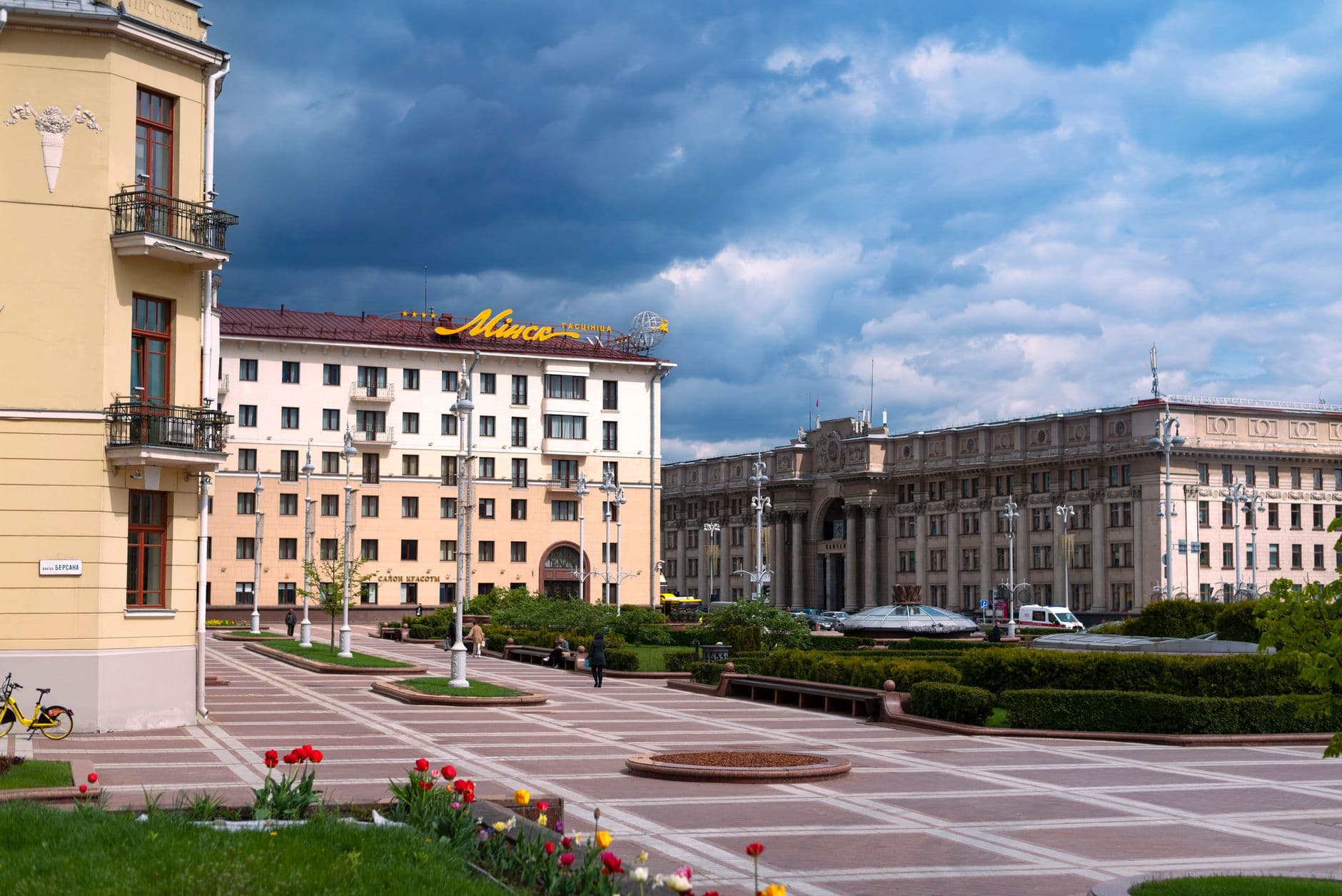
A city of owners, and the register behind it
Minsk keeps its history in its street plan. The city was rebuilt after 1944 as one continuous composition, and almost all of its post-war ambition went into a single 15 km avenue and the courtyards stacked behind it. Housing here was public works: drawn at district scale, delivered by the state, handed over at the end. That inheritance still decides who builds in Minsk and who waits.
The tenure mix is the clearest thing the 1990s left behind. Some 88% of Minsk households own the home they live in, the result of a mass privatisation that signed state flats over to their sitting tenants. Cooperatives account for 5% of the stock and the state and municipal fund for 7%. Together that is a non-market tier of 12% across roughly 600,000 dwellings. The official renter share is 11%.
Those figures do not reconcile, and it is worth saying so. Subtract the state and cooperative shares from the renter total and the private-rental wedge computes to 0%. That is a measurement gap, not a market. The owner and renter shares are an older estimate carried forward. The cooperative share sits inside ownership in Belarusian practice, because a member takes title once the share is paid off. Minsk's real lettings market is visible in agency and portal data instead.
- Owners
- Owner-occupier88.0%
- Renters
- Public & non-profit rental7.0%
- Cooperative5.0%
- Private rental0.00%
Social housing works as a label rather than a tenure. Flats classed as social sit in the same municipal fund as ordinary state rentals and go to narrow categories: children leaving care, families with a disabled child, some large families. In Minsk 1,621 households on the register hold that entitlement. Between January and August 2026 the city allocated 413 state flats in total, of which 129 were social and 284 ordinary rentals.
Rent runs on two ladders that barely touch. Across the existing stock the median is about €4 per m² a month. A municipal flat is billed by formula: floor area times a base rate times a zone coefficient. That puts a one-room flat between 51 and 315 roubles a month, or roughly €15 to €91. The open market asks far more: €326 for a one-bedroom outside the centre and €520 inside it, with agencies tracking a typical one-room let at $430 before utilities. The centre trades on a price-to-rent ratio of 19 and a gross yield of 5.26%.
- Municipal fund flat, upper end of the band
- Market one-bedroom, outside the centre
- Agency-monitored one-room let
- Market one-bedroom, city centre
Monthly rent for a one-room or one-bedroom flat in Minsk, in euros.
Empty space is an office story and a countryside story, not a housing surplus. Dwelling vacancy sits at 4%. Office vacancy in the quality segment settled at 12.8% at the start of 2026, with class B+ at 20% and about 190,000 m² more in the pipeline for 2026 and 2027. Nationally the arithmetic is stranger still: more than 17,000 state rental units sit on an unclaimed list, and nearly 6,000 have been declared unfit and marked for demolition.
Demand keeps pointing at the capital while supply is being cut on purpose. Net internal migration adds around 25,000 people a year. Minsk completed 719,900 m² of housing in 2025, then accepted an instruction from the head of state to build no more than 300,000 m² a year from 2026. Aleksandr Komendant, first deputy chair of the Minsk City Executive Committee, describes a city that has run out of large sites. The answer is infill, with the volume pushed to satellite towns and to land beyond the ring road.
The scope of the squeeze is legible in the register. In all, 168,060 people in Minsk are recorded as needing better housing conditions, 17,297 of them with a right to state support and 3,047 of them large families. Nationally the same register holds 542,000 families. Against that, 847 households in Minsk were directed to build or buy in the first eight months of 2026. This is no longer a queue; it is a standing condition. The squeeze also reaches well past the poorest. Minsk's average gross wage was 4,116.3 roubles in July 2026 while the average city metre cost $2,064. That is about one and a half months of gross pay for a single square metre, against the president's own benchmark that a subsidised metre should not exceed one month's average wage. The direction of travel is unhelpful: secondary-market prices rose 27% year on year in the first half of 2026 while the number of deals fell 17%.
Which leaves the 5% that belongs to neither the market nor the ministry, and the question of what it is now for.
The cooperative that became a mortgage
Two collective forms run Belarusian flats and they are easy to confuse. A жилищно-строительный потребительский кооператив (ZhSPK, a housing-construction consumer cooperative) is a building vehicle. Members join and pay in instalments towards the пай (pai, the share that buys their flat), taking title once it is settled. A товарищество собственников (an owners' association) is a management vehicle for a block that already stands. The first builds, the second maintains. Once the share is paid, a cooperative flat is counted as owner-occupied, which is why the cooperative wedge in Minsk overlaps the ownership one rather than standing apart from it.
The vehicle is Soviet in origin. Housing-construction cooperatives were permitted again in 1958, and decrees in 1962 and 1964 widened them. The terms were the attraction: the state lent at 0.5% a year and covered 60-70% of construction cost over 10 to 15 years, later stretched to 25. Even on those terms the form never carried more than a tenth of Soviet housing output. Belarus kept it after 1991 and leaned on it harder than most neighbours, because the state needed a legal container for construction that citizens part-financed.
Today the collective layer in Minsk is large and quiet. At the start of 2020 the city counted 1,953 owners' associations and cooperatives covering 2,330 buildings, out of 6,640 residential buildings served by municipal housing companies. Of those, 658 organisations holding 797 buildings, run their own maintenance rather than buying it from the district utility. That is a self-governing housing sector of real size, and it is the single most underrated asset in the city.
The urban structure of Minsk has impacted the ability of communities to organise for decentralised resistance. These microrayons in Minsk and other cities in Belarus, they started to be a base for the local community. And there are many of them and they are very decentralised.Three clusters sit inside that number and they do not share a problem. Legacy Soviet cooperatives hold ageing panel stock and cannot fund deep retrofit from member contributions. Newer construction cooperatives existed largely as the route into subsidised housing, and that route has just been closed. Owners' associations in privatised blocks have the governance and the meeting rights but almost no capital, because there is no balance sheet behind a building whose flats were given away.
The state has now redefined what a cooperative is for. Decrees No. 94 and No. 95, signed on 6 March 2025 and in force from 1 June, moved state support out of shared construction and cooperative membership entirely. A subsidised buyer now purchases a finished flat built to state order, with the 2% loan going to the state client organisation during construction and transferring to the household afterwards. Inna Pinkovskaya, deputy head of construction and housing policy at the Ministry of Architecture and Construction, was careful about what had changed. Building through shared participation or a housing-construction cooperative is in no way ending, she said; only the financing procedure is being adjusted. What ended is the subsidy attached to it.
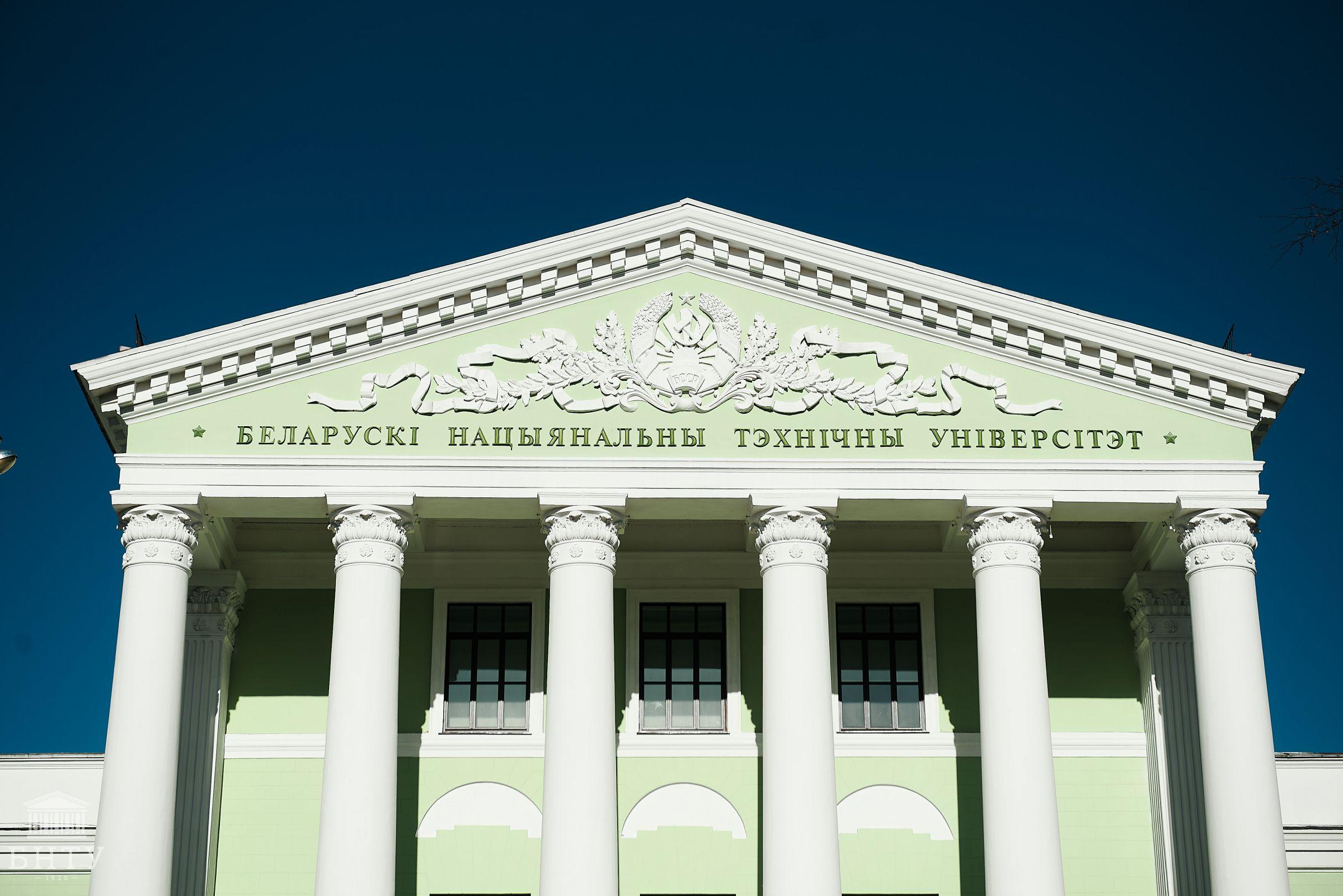
Building to order, and the flats nobody moved into
The sitting government's answer to the housing question is a five-year construction plan with one headline number. The state programme for housing construction covering 2026 to 2030 targets at least 33 m² of housing per person by 2030, up from the 30.4 m² reached in 2025. Aleksandr Studnev, Minister of Architecture and Construction, calls that the programme's consolidated indicator and says everything possible is being done to reach it. Inside it, 6.5 million square metres are to be built with state support, of which 5 million are rental. Directive No. 8 obliges the authorities to invite a large family to build within a year of its registration as being in need.
Three levels hold different pieces of the machine. The president issues the decrees that define who is supported and on what terms. The Ministry of Architecture and Construction writes and runs the programme; the Ministry of Housing and Utilities carries management, maintenance and the utility tariff. Regions receive annual commissioning targets. Minsk itself keeps the register, allocates the flats and decides where building happens. Sergey Shakel heads housing policy at the Minsk City Executive Committee, and reports the city's allocations as running totals. In the first eight months of 2026 that was 506 of a planned 660 large families sent to construction sites.

Concrete support for the cooperative form is the thing the programme does not contain. There is no concept-led land tender, no ground-lease instrument, no federation pact and no dedicated funding line. A cooperative may still build, and private developers still raise money through жилищные облигации (housing bonds), the instrument used at Novaya Borovaya. But a cooperative now finances itself at commercial bank rates. The one collective lever left with statutory force is the owners' assembly, where a two-thirds vote can commit a whole building.
The reply to vacancy arrived as a deadline rather than a tax. Decree No. 388, in force from 1 January 2026, caps the time to move a tenant into a finished subsidised rental flat at 30 working days, against up to 200 days before. It has not cleared the backlog.
According to the reports I receive, the number of vacant rental apartments is growing. Strangely, how so? Currently, there are more than 17,000 housing units on the list of unclaimed properties. We built housing, and nobody needs it? Many apartments have been sitting empty for more than a year. Where is the businesslike approach?Prime Minister Aleksandr Turchin offered a narrower diagnosis at the same meeting. The unclaimed stock, he argued, is mostly rural, mostly reclassified as rental in 2016 after a past life as departmental or service housing, and mostly not new. The rural half of the problem has its own instrument. A unified register of vacant houses now holds more than 49,000 properties; 7,000 were returned to use during 2025 and about 2,000 sold, some of them for a single base unit. In Minsk the equivalent move is brownfield: this year's flats are landing on former factory, film-studio and bus-depot land inside the ring road rather than on new ground.
Energy is where the collective governance structure still does real work. Blocks finished before 1996 burn more than 250 kWh per m² a year. Thermal modernisation bundles insulation, an automated heat substation and thermostatic controls. The state funds half of it. Residents repay the other half over 10 years through the utility bill, interest-free and without indexation. Nothing starts without that two-thirds vote. Savings run between 20% and 50% of heating energy. Scale is the difficulty: the deep-renovation rate is 0.4% a year, which would take the stock several centuries. The retrofit case and the cooperative case are the same case, and only one of them currently has an instrument.
- 1958[source]
Housing cooperatives (кооперативы) reopened
Soviet authorities reopen the cooperative route; decrees in 1962 and 1964 widen it, with state credit at 0.5% a year covering 60-70% of construction cost.
- 1945-1949[source]
Osmolovka (Осмоловка) is built
Two quarters of low-rise blocks go up by the opera house to designs by Mikhail Osmolovsky and Mikhail Ruchko, the prototype for the courtyard city that followed.
- 8 May 2013[source]
Госзаказ: the state-order mechanism is created
Decree No. 215 introduces gosudarstvenny zakaz, under which state clients build without drawing citizens in during construction. It becomes the spine of subsidised delivery.
- 2019[source]
Osmolovka (Осмоловка) wins protection
The culture ministry approves protective zones for the district, ending more than a decade of demolition proposals and citizen campaigning.
- 1 June 2025[source]
Указ No. 95 ends state support for cooperative building
Decrees No. 94 and No. 95, signed on 6 March, take subsidised lending out of shared construction and cooperative membership. The 2% loan now runs to the state client instead.
- 1 January 2026[source]
Occupancy deadline for subsidised rentals
Decree No. 388 caps the time to move a tenant into a finished subsidised rental flat at 30 working days, against up to 200 days before.
- April 2026[source]
Minsk caps its own output
After completing 719,900 m² in 2025, the city accepts an instruction to build no more than 300,000 m² a year, shifting volume to satellite towns.
- 22 September 2026[source]
Five-year plan reaffirmed, rental first
The 2026-2030 programme commits 6.5 million square metres of state-supported housing, of which 5 million are rental, with the price of a subsidised metre capped at an average monthly wage.
- 2030[source]
Target: 33 m² of housing per person
Сводный целевой показатель, the consolidated indicator of the 2026-2030 programme, up from 30.4 m² per person reached in 2025.
- 2035[source]
Смолевичи and the satellite towns take the overflow
Minsk households on the housing register are promised further construction in the satellite towns; eight blocks with 939 flats are already finished in Smolevichi and three more with 282 flats are under way.
Decrees, programmes and targets that set the terms for housing in the capital.
What Minsk builds on top of its own factories
Osmolovka is the argument Minsk has already won once. Two quarters of two- and three-storey blocks stand by the opera house, built between 1945 and 1949 to designs by Mikhail Osmolovsky and Mikhail Ruchko. They cover about 8 hectares of central land that any developer would want. Demolition schemes arrived in the 1990s, again in 2006, again in 2011 and 2012, and a full clearance proposal went to public discussion in 2017. Residents, architects and an international appeal kept answering. In 2019 the culture ministry approved protective zones and the schemes stopped. What survives is not a monument but a working low-rise neighbourhood with courtyards, which is the typology Minsk is least able to reproduce.
Oktyabrskaya street is the same instinct applied to industry. The machine-tool works founded in 1908 and the Bolshevik leather factory left a street of brick sheds a short walk from the centre. From 2010 it filled up: the ZNYATA photography studio and the NewTon cafe first, then ENZO, the Lаўka and DEPO bars, then the CEH creative space in 2015. The Vulica Brasil street-art festival, curated by Mila Kotka, is what made the street pedestrian that September. None of it is housing. All of it is proof that Minsk can convert industrial fabric without clearing it, which is the harder half of an adaptive-reuse argument.
The Agat electromechanical plant site is where that proof is being cashed at housing scale, though on different terms. Minsk's 2026 programme puts nine buildings and more than 70,000 m² of flats on the works' land. A quarter on Gurskogo street, built by Minskstroy, adds 594 flats on former repair workshops. Another 286 go up on Belarusfilm's old pavilions, around 400 on the yard of Bus Depot No. 1, and 682 more in the Kazakhstansky quarter. This is infill as policy rather than gesture, and it is what the city's new annual ceiling looks like on the ground.
Novaya Borovaya, 2 km beyond the ring road at Kopishche, is the private-sector benchmark. Built out as 11 residential quarters around car-free shared courtyards, it was financed partly through housing bonds rather than direct citizen shared-construction contracts. It is the one place near Minsk where a resident community formed around the design of the estate rather than around its maintenance schedule. That is a social asset, and it was produced by a developer rather than by a cooperative, which is precisely the gap a cooperative sector would exist to fill.
Zelyony Bor and Kolodishchi are the state's answer at the opposite end of the scale. The two districts beyond the ring road are planned at 4 million square metres for about 100,000 residents and 1.2 million square metres for 46,000 respectively. Both are aimed at households on the register. Smolevichi is the same logic already delivered: eight blocks with 939 flats finished for Minsk families and three more with 282 under construction. The trade is explicit. Leave the city and the metre gets cheaper.
So the materials are all on the table. A city rebuilt once from rubble knows how to build at scale. It has thousands of self-governing housing bodies, a protected low-rise precedent, a proven appetite for industrial reuse and a register that runs well into six figures. What is missing is the instrument that turns a building's residents into its developer. Minsk had that instrument for sixty years and retired it this June. Whoever writes the next five-year programme will decide whether it comes back.
References
Statistics10Click on any number to see the source
Housing market
Cooperative, social & public
Population & migration
From our library2
Further sources23
- Lukashenko urges local authorities to fill new rental housing — belarus.by / BelTA
- Lukashenko outlines priorities for subsidized housing construction — belarus.by / BelTA
- В Беларуси новые условия господдержки при строительстве и покупке жилья. Изучили новации — pravo.by
- Александр Студнев: цель на 2030 год по уровню обеспеченности населения жильем – 33 кв.м на человека — pravo.by
- В Минске — 168 060 очередников. Сколько из них построятся в этом году? — Onlíner
- Мингорисполком: с 2026-го в столице будут строить не более 300 тысяч «квадратов» жилья в год — Onlíner
- Для кого эта очередь? Пять причин пополнить ряды нуждающихся в улучшении жилищных условий — Onlíner
- Лукашенко — о строительстве жилья с господдержкой: «Цена метра — не выше среднемесячной заработной платы» — Зеркало
- Что происходит на рынке недвижимости в Минске с ценами и предложением и какой прогноз — Зеркало
- Динамика ставок аренды жилья в Минске — Твоя столица
- Будущее минского офиса: от квадратных метров к ценностям и сервисам — Твоя столица
- Арендное жилье в Беларуси: что известно, кому дают, как получить, цены в Минске — Комсомольская правда в Беларуси
- В Госкомимуществе рассказали, сколько пустующих жилых домов вовлечено в хозяйственный оборот — sb.by
- Более трети товариществ собственников и ЖСПК Минска находятся на самообслуживании — Минск-Новости
- Что построят в Минске в 2026 году: от кварталов на месте заводов до нового района за МКАД — domovita.by
- Октябрьская: революция. Как заводская улица превратилась в арт-объект — CityDog
- God save Asmalouka: сохранить сердце Минска — 34travel
- Тепловая модернизация вашего дома – комфортные условия проживания и экономия семейного бюджета — Департамент по энергоэффективности
- Focus on rental housing. Lukashenko convenes meeting on how and where to build — belarus.by / BelTA
- Building sustainability under repression in Minsk — Aleksanteri Institute, University of Helsinki
- Жилищно-строительный кооператив — Википедия
- Осмоловка (Минск) — Википедия
- ЖК Новая Боровая — схема реализации и кварталы — Твоя столица
Funding & land tenure
What a housing cooperative could actually build on hereLand tenure has not been assessed for Belarus yet — that is a gap in the research, not a finding.