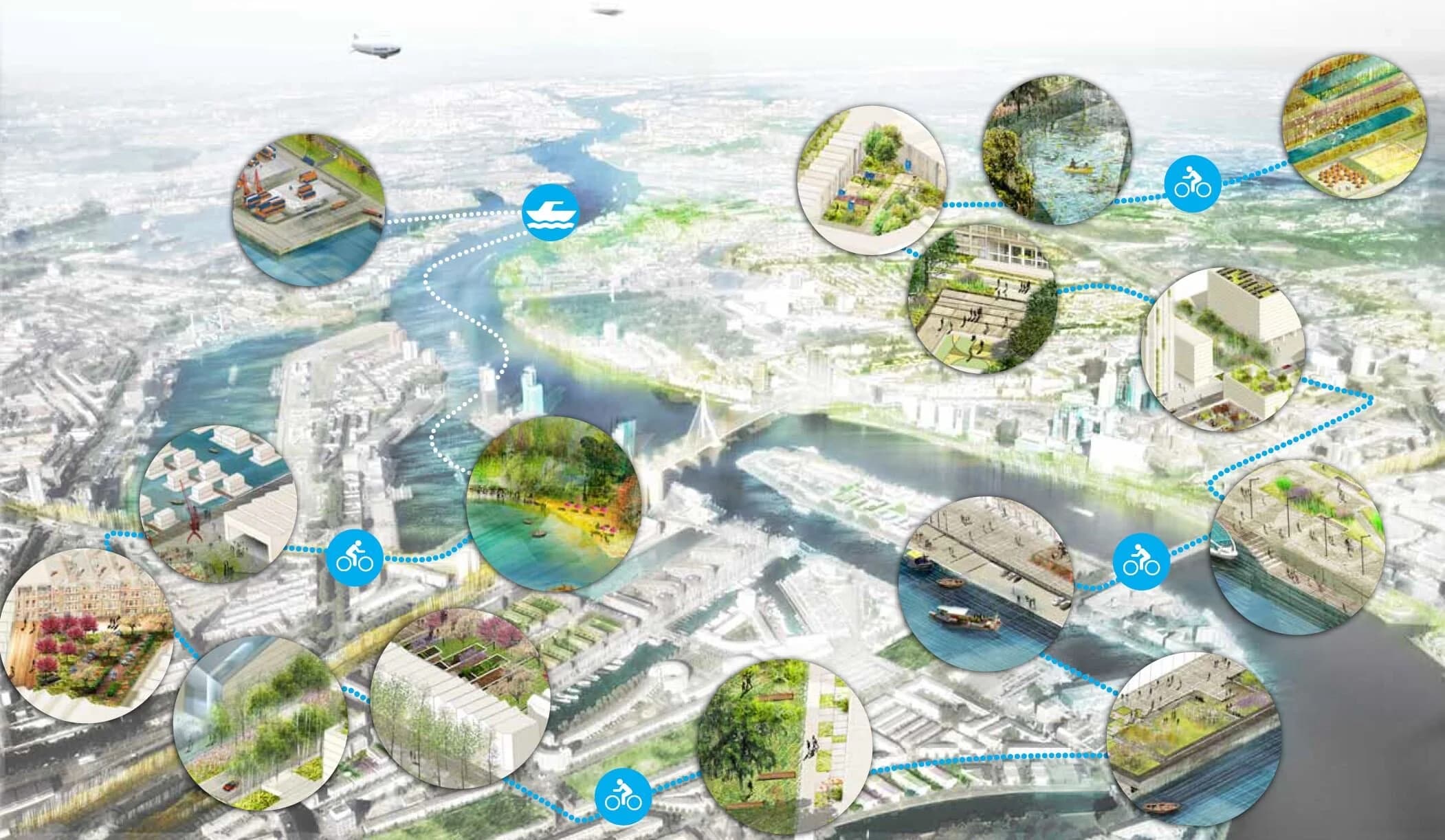
AI-Generated Summary
The Rotterdam Resilience Strategy is one of Europe's most comprehensive urban resilience frameworks, developed through the city's participation in the 100 Resilient Cities initiative pioneered by the Rockefeller Foundation. Rotterdam, situated largely below sea level in the Rhine-Meuse delta, faces extraordinary climate risks including sea level rise, river flooding, extreme rainfall, and urban heat stress.
The strategy identifies seven resilience goals spanning climate adaptation, social cohesion, infrastructure robustness, economic diversification, cyber resilience, and governance innovation. Key initiatives include extensive water management infrastructure combining traditional flood defences with innovative solutions such as water plazas, green roofs, and underground water storage that serve dual purposes as public amenities and climate adaptation measures.
Rotterdam's digital resilience programme uses IoT sensor networks, predictive modelling, and real-time monitoring to enhance the city's capacity to anticipate and respond to climate and infrastructure disruptions. The strategy explicitly connects physical resilience with social resilience, recognising that vulnerable communities bear disproportionate climate risks.
Rotterdam's approach has been widely studied as a model for how delta cities worldwide can combine engineering innovation with community engagement to build resilience, aligning with the city's broader smart city agenda.