Triodos Bank, headquartered in Zeist near Utrecht in the Netherlands, operates as an ethical bank that directs funds exclusively toward ventures benefiting people and the environment. Established in 1980 with €540,000 in starting capital and a full banking license from De Nederlandsche Bank, it grew from a 1971 foundation that supported innovative projects through gifts and loans. A group of four pioneers, including economist Adriaan Deking Dura and banker Rudolf Mees, laid the groundwork in 1968 by studying sustainable money management.
The bank maintains branches in Belgium, the United Kingdom, Spain, and Germany, employing over 1,600 people. Its ownership structure features depository receipts issued by the Stichting Administratiekantoor Aandelen Triodos Bank, limiting individual holdings to prevent takeovers and ensuring independence with backing from more than 44,000 investors. Core services include personal and business banking, investment management, lending, payment services, and portfolio advice.
Early milestones include 1984 loans for biodynamic agriculture, now covering 34,000 hectares of organic land, and financing the Netherlands' first organic supermarket in 1988. In 1990, it launched Europe's inaugural green fund, followed by sustainable energy investments post-Chernobyl. Recent efforts involve green mortgages tied to home energy labels since 2012 and commitments to Paris Agreement goals, influencing similar pacts in Spain and Germany.
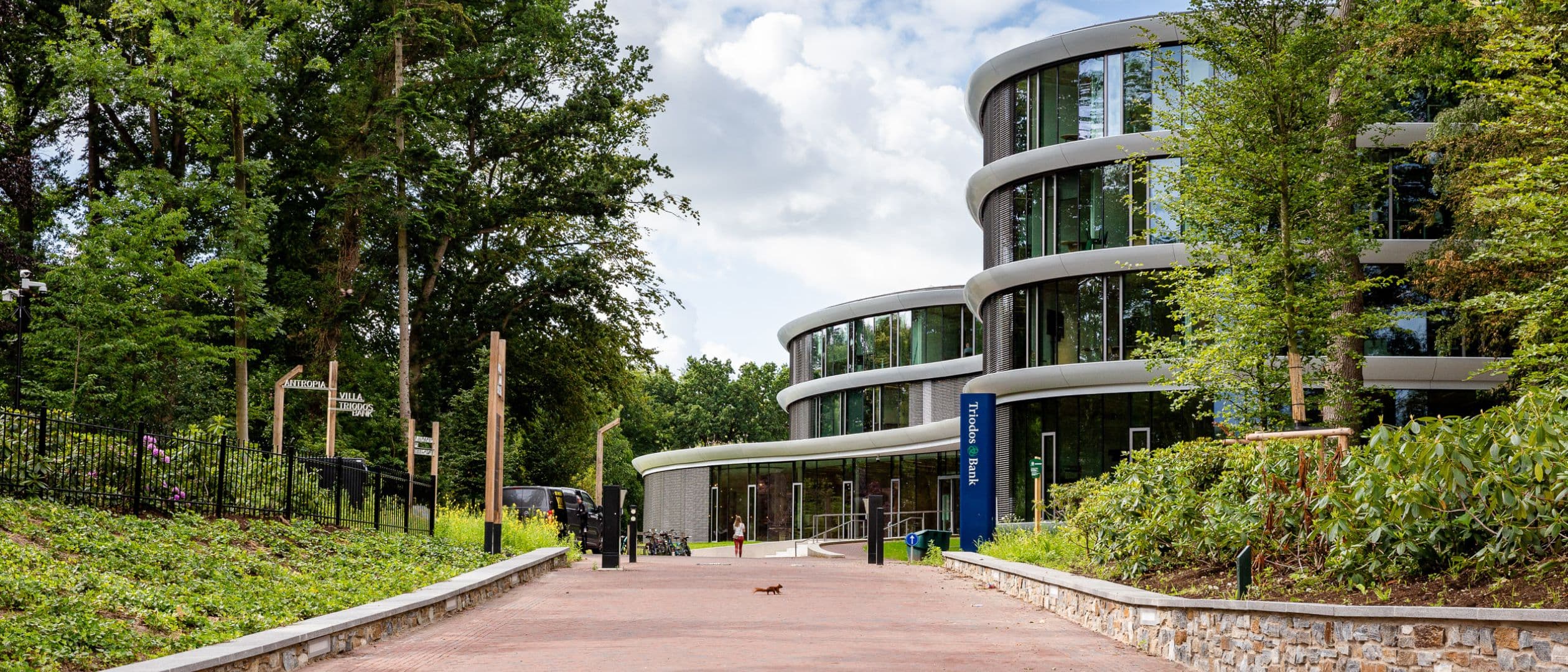
The bank's 2019 headquarters on De Reehorst Estate in Driebergen-Rijsenburg, a 13,000-square-meter timber structure, earned BREEAM Outstanding certification for its circular design, integrating with 27.5 hectares of nature. Triodos co-founded the Global Alliance for Banking on Values in 2009, now comprising 63 members serving 70 million customers.