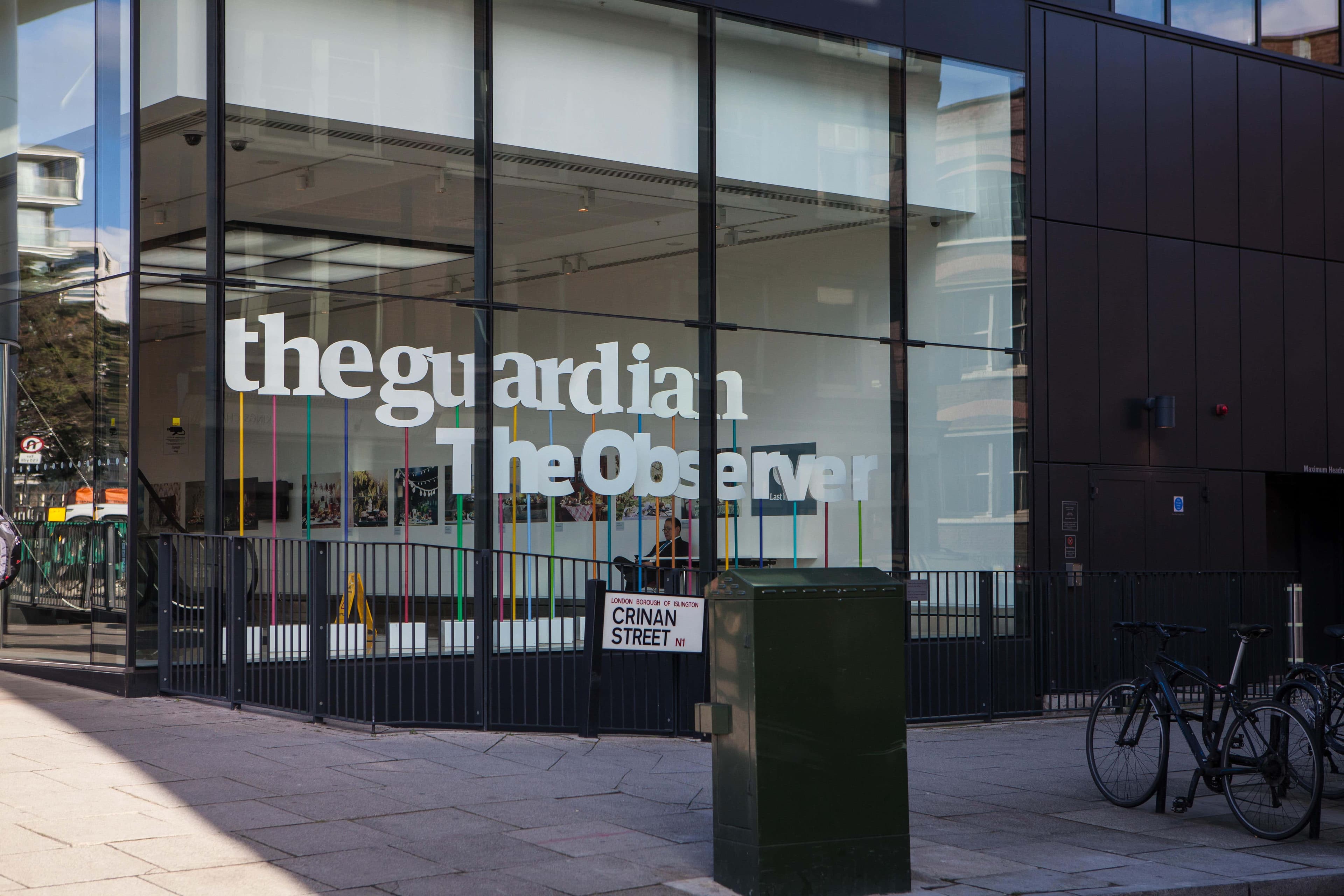
The Guardian began as the Manchester Guardian on May 5, 1821, founded by cotton merchant John Edward Taylor in response to the Peterloo Massacre, aiming to promote civil and religious liberty. Initially a weekly Saturday paper, it expanded to bi-weekly in 1836 after a tax reduction and became daily in 1855 following the abolition of the stamp duty. Circulation grew steadily, reaching 494,000 in 1987 before declining to 141,160 by 2019 amid digital shifts.
Charles Prestwich Scott edited for 57 years from 1872, buying the paper in 1907 and embedding its ethos: "Comment is free, but facts are sacred." In 1936, ownership passed to the Scott Trust, safeguarding independence within the Guardian Media Group, which includes the Observer and Manchester Evening News. The name shortened to The Guardian in 1959 as its reach expanded nationally; operations moved to London in 1964, with a Berliner format adopted in 2005 after an £80 million press investment.
Today, headquartered at Kings Place in London, it publishes Monday to Saturday with the G2 supplement covering arts, sports and technology, plus the weekly international edition launched in 1919. Known for investigative work, it recently exposed issues in UK housing policy and global climate impacts through series like "Dirty Air" on pollution deaths. Its scope spans politics, foreign affairs, culture and environment, maintaining a centre-left stance while prioritizing reader-funded journalism over advertising reliance.