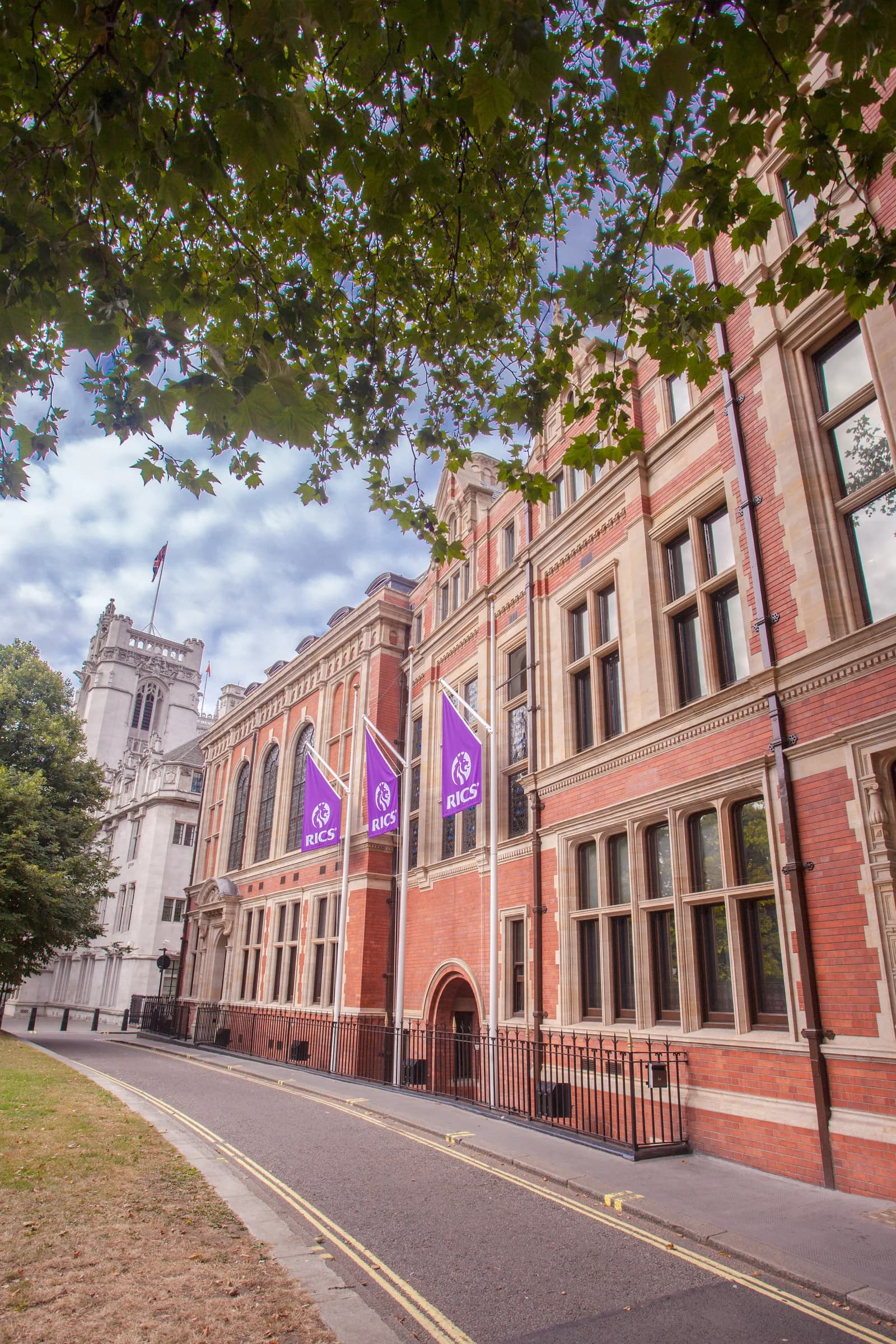
The Royal Institution of Chartered Surveyors is a professional body that regulates and represents surveyors working across property, construction, land and real estate sectors globally. Founded in London on June 15, 1868, when 49 surveyors met at the Westminster Palace Hotel, it has evolved from a small association into an organization with over 134,000 members across nearly 150 countries.
The institution received its Royal Charter in 1881 and adopted its current name in 1947 after King George VI granted it the "Royal" designation. Its headquarters remain at 12 Great George Street in London, where it has been based since its establishment.
RICS operates as a regulatory body, establishing international standards for valuation, property measurement, and professional conduct. A major initiative came in 2013 when RICS co-founded the International Property Measurement Standards coalition, launching standards for office space measurement in 2014 and residential buildings in 2016. The organization also publishes the Red Book, a globally recognized framework for property valuation consistency that influences investment decisions worldwide.
The institution recently underwent significant organizational change. In September 2021, an independent review revealed governance failures that prompted multiple leadership resignations. A subsequent review in June 2022 called for institutional transformation. Most recently, in March 2025, president Justin Sullivan stepped aside following criticism over his role as an expert witness in a high-profile property dispute involving a 32.5 million pound mansion.
Today, RICS works across the built environment and infrastructure sectors, though it has faced member criticism regarding expensive membership fees and questions about international expansion prioritizing global reach over core UK member engagement.