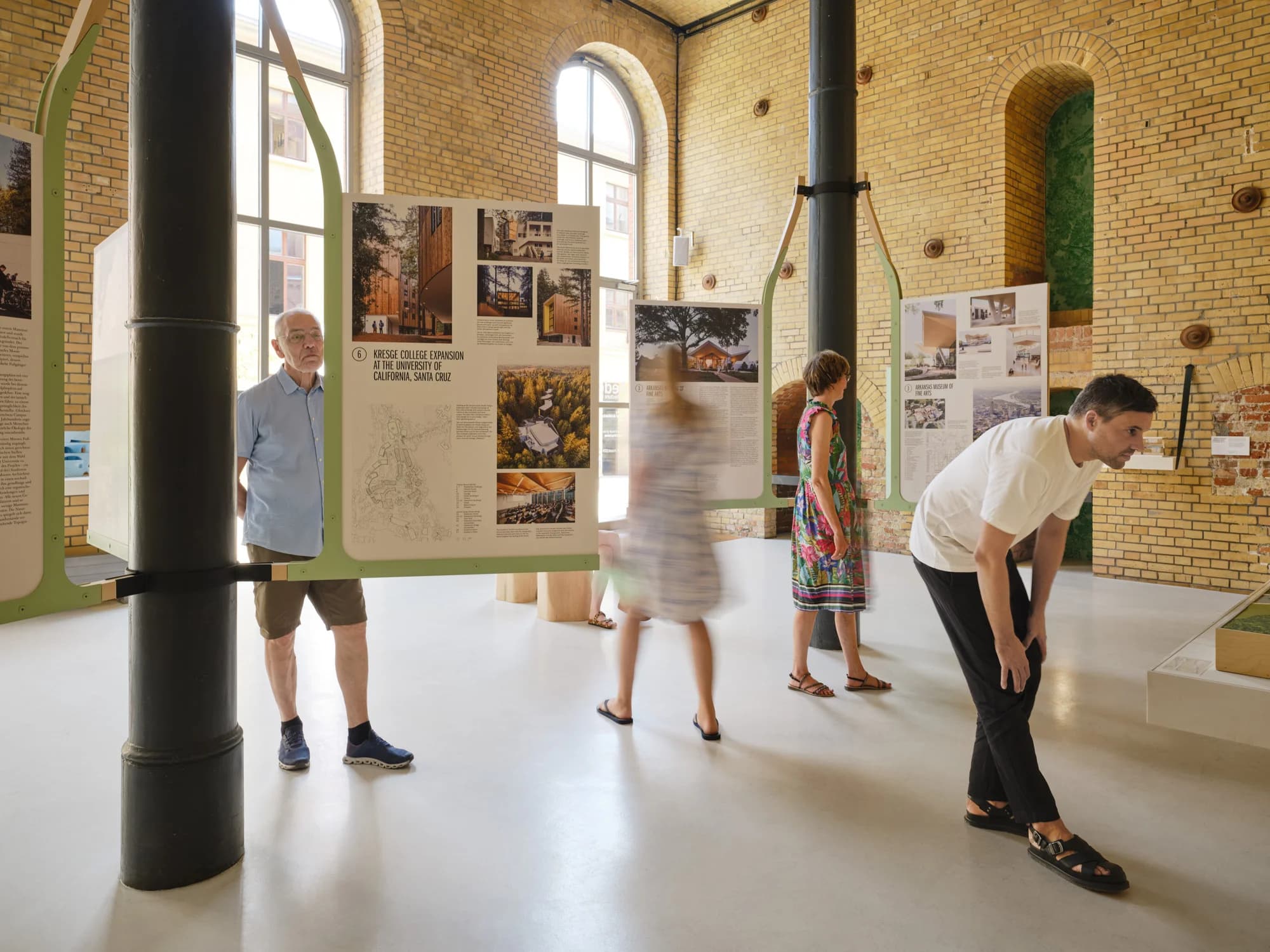
Aedes Architecture Forum, a non-profit cultural institution in Berlin, opened in 1980 as Germany's first private gallery dedicated to architecture, founded by Kristin Feireiss and Helga Retzer in a 40-square-meter space on Grolmanstrasse in Charlottenburg. It pioneered exhibiting architecture as intellectual work rather than mere shelter, starting with drawings amid Berlin's postmodern era and the IBA urban renewal projects. After Retzer's death in 1984, Feireiss led with Hans-Jürgen Commerell from 1994, relocating from Savignyplatz in 1989, to Hackesche Höfe in 1995, and settling in 2006 at Pfefferberg in Prenzlauer Berg, a repurposed industrial site now hosting creative industries. Feireiss, who passed away in 2025, earned awards like Germany's Order of Merit for fostering architectural dialogue.
Over four decades, Aedes has mounted more than 600 exhibitions, featuring early works by figures such as Zaha Hadid, Frank Gehry, Rem Koolhaas, and Wang Shu before their global rise. Key shows included a 1988 pre-Wall-fall exploration of Berlin's future with architects like Daniel Libeskind and Coop Himmelb(l)au, and post-tsunami reconstruction efforts in Japan.
Today, alongside its gallery, the 2009-founded Aedes Metropolitan Laboratory runs academic programs and urban labs partnering with universities worldwide. Recent projects encompass the 2025 "Heart and Horizon" on Helsinki's Kamppi Centre, Kalasatama, and Sello by Helin & Co; "evolving structures" on a Cologne-Berlin rail site's adaptive reuse by kister scheithauer gross; and the ongoing "Democratic Design," probing architecture's role in cooperation via European contributions, open through early 2026. These initiatives span urban planning, sustainability, and public space, linking local sites to global discourse.