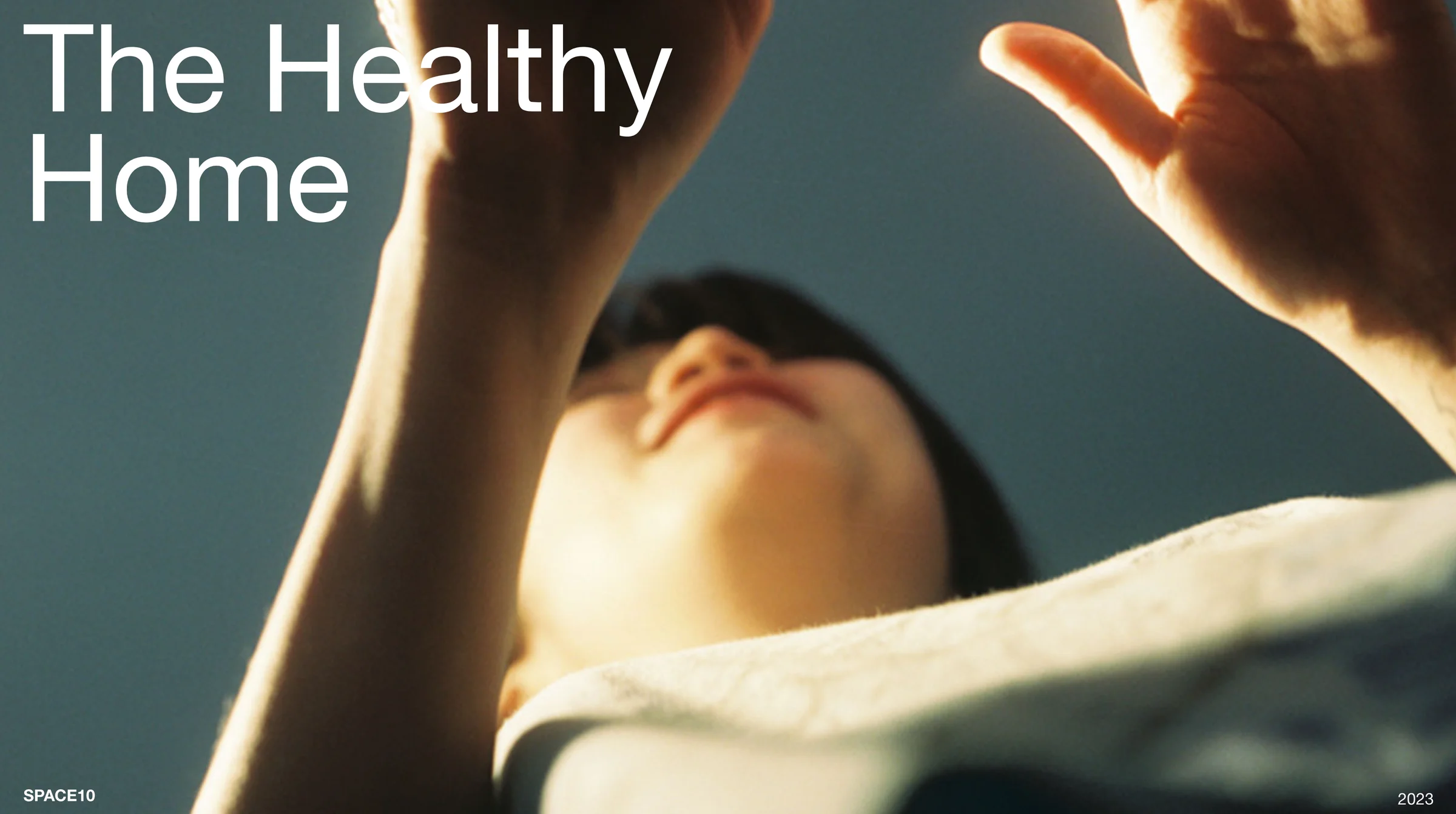
Resource overview
The report “The Healthy Home” is published by SPACE10, IKEA’s research and design lab, as the second release in its Future Home report series. It examines how domestic environments can support health and well-being while responding to sustainability-related pressures such as planetary heating, pollution, and resource constraints, and it presents examples and case studies from different parts of the world.
Publisher and contributors
SPACE10 is described as a research and design lab supported by the IKEA Brand, working to qualify new opportunities, inform strategies, and design new solutions for a better future. The report credits a set of contributors: David McGovern, Georgina Johnson, Nat Marcus, Serina Tarkhanian, Suzann Larsdotter, and Taeyoon Choi. The research and its presentation are supported by visuals developed in collaboration with Morph.
What the report investigates
The publication frames a “healthy home” as more than a strictly functional space. It focuses on three overarching themes: how homes protect residents from harm, how they can help restore bodies and minds, and how they can enable growth across life stages. The approach connects everyday domestic life to wider challenges including climate impacts, pollution, security, nourishment, and loneliness, and it positions the home as part of broader systems that influence health, care, and happiness.
Health, care, and the changing role of home
The report links its argument to societal trends such as rising healthcare expenses, an ageing population, and growing disconnection between people and their kin. In this context, it proposes that pillars of health—rest, nourishment, belonging, and personal growth—are likely to be increasingly integrated into how people live, and that housing design can play a supporting role in these outcomes. A quote attributed to Ivan Korolev (Research and Strategy, SPACE10) highlights this need to reconsider how health and care fit into daily life and how the home can contribute.
Ten design takeaways for future homes
SPACE10 distils the report into 10 takeaways aimed at architects, designers, and creatives working on domestic space. These cover: (1) Climatic—anticipating shifts in temperature and humidity to maintain safety; (2) Pollution—protecting residents from contaminated air and water through routines or products; (3) Privacy—balancing privacy and security with calmer connectivity; (4) Rest—planning for rest and sleep that considers all senses; (5) Sustenance—adapting kitchens so everybody can prepare nourishing food; (6) Hygiene—harmonising personal hygiene with the domestic biome to support well-being; (7) Play—facilitating play, exercise, and learning while promoting intergenerational interaction; (8) Community care—supporting collective care and co-healing to address loneliness; (9) Ageing—enabling reconfiguration of space and furniture with ease; and (10) Interconnected—treating the healthy home as regenerative and inclusive, benefiting people and the planet.
Related work and broader programme
Alongside this report, SPACE10 is described as running wider initiatives that explore future housing and design methods. Examples mentioned include a global design competition and open-source research programme on using AI to reimagine the home, a report examining the impact of digital design in architecture, and an open-source project focused on digital fabrication methods for creating bee homes to support biodiversity.