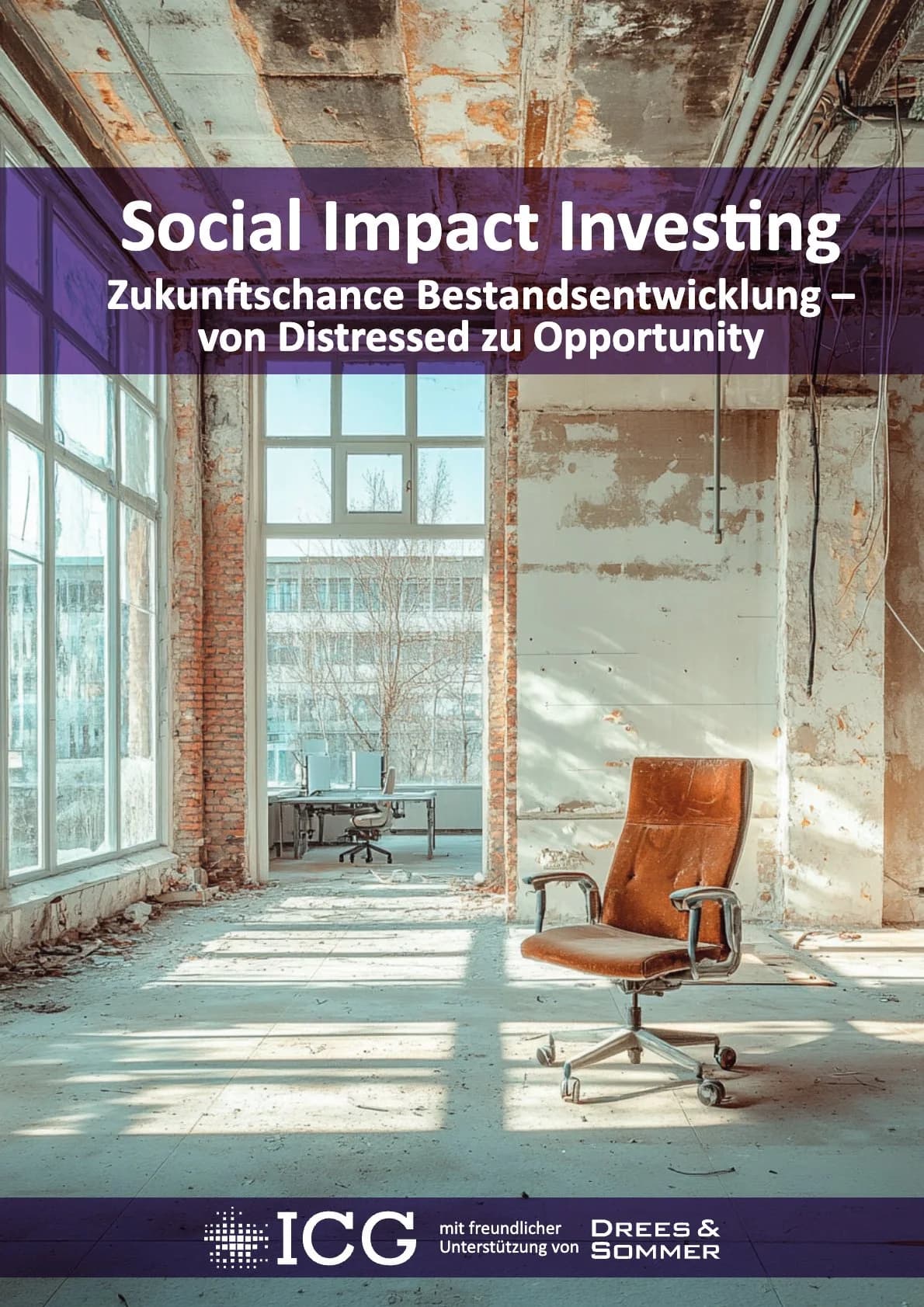
Overview of the Guide
The “Social Impact Investing – Zukunftschance Bestandsentwicklung” guide is produced by the Institut für Corporate Governance in der deutschen Immobilienwirtschaft (ICG). It is authored by a team including Susanne Eickermann‑Riepe, Sascha Kilb, Brigitte Adam, Sven Carstensen, Manuel Ehlers, Burkhard Drescher, Karin Groß, Henric Hahr and others. The institute focuses on corporate governance standards for the German real‑estate sector and promotes sustainable, socially responsible investment practices.
Scope and Purpose
The document targets stakeholders involved in the redevelopment of distressed real‑estate assets across Europe. It aims to transform “distressed” properties into “assets with opportunities” by integrating social impact criteria, economic viability, and environmental sustainability. The guide serves as a practical handbook for owners, investors, banks, municipalities, and NGOs seeking to revitalize underused urban assets.
Key Economic Findings
- Distressed assets are identified as properties at risk of severe devaluation or total loss.
- Market trends show rising interest from institutional investors in converting such assets into mixed‑use developments that generate stable cash flows.
- The guide highlights the importance of diversified revenue streams (retail, office, residential, hospitality, education, health) to reduce vacancy risk and improve asset resilience.
- Financial analysis sections stress the need for realistic cost estimates, including acquisition, refurbishment, and compliance with energy‑efficiency standards.
Stakeholder Collaboration
Successful projects require coordinated action among:
- Property owners and asset managers, who must assess risk and plan repositioning.
- Financial institutions, providing tailored financing and leveraging public‑sector incentives.
- Municipal authorities, offering regulatory support, permits, and possible subsidies.
- Community groups and NGOs, ensuring that redevelopment meets local social needs such as affordable housing and public spaces. The guide outlines a stakeholder‑management process that identifies interests, facilitates dialogue, and monitors outcomes.
Urban Regeneration Strategies
The handbook presents case studies from German cities (Recklinghausen, Frankfurt, Cologne, Herne, Berlin) illustrating:
- Adaptive reuse of former department stores, office towers, and industrial halls.
- Integration of mixed‑use functions to activate city centers and improve livability.
- Use of interim uses (pop‑up events, cultural activities) to maintain public engagement during construction phases.
- Implementation of energy‑saving measures, façade greening, and circular‑economy principles to meet EU climate targets.
Technical and Sustainability Requirements
- Buildings must comply with current German energy‑efficiency regulations and aim for high ESG certifications (e.g., DGNB Platinum, WiredScore).
- The guide recommends circular construction methods, recycled materials, and on‑site renewable energy solutions.
- It stresses the importance of thorough building surveys, including structural, hazardous‑material, and performance assessments, before design work begins.
Impact Metrics and Measurement
The document provides a framework for quantifying social impact, including:
- Creation of jobs and new public amenities.
- Provision of affordable rental units.
- Enhancement of local public realm through green spaces and community facilities.
- Reduction of carbon emissions through retrofitting and energy‑efficient operation. These metrics enable investors to report on ESG performance alongside financial returns.
Implementation Timeline and Risks
Typical project phases span:
- Early stakeholder engagement and feasibility studies.
- Detailed planning, securing permits, and financing.
- Construction and refurbishment, often staged to allow partial occupation.
- Post‑completion monitoring of economic, social, and environmental outcomes. Key risks identified include: uncertain regulatory changes, cost overruns, and potential community opposition, all mitigated through transparent communication and robust risk‑management plans.
Resources and Further Reading
The guide references additional ICG publications on ESG scoring, valuation standards, and sector‑specific sustainability handbooks. It also points to European Union policy documents on green building and social housing, providing a broader regulatory context for pan‑European readers.