
AI-Generated Summary
Learn moreContext and Purpose
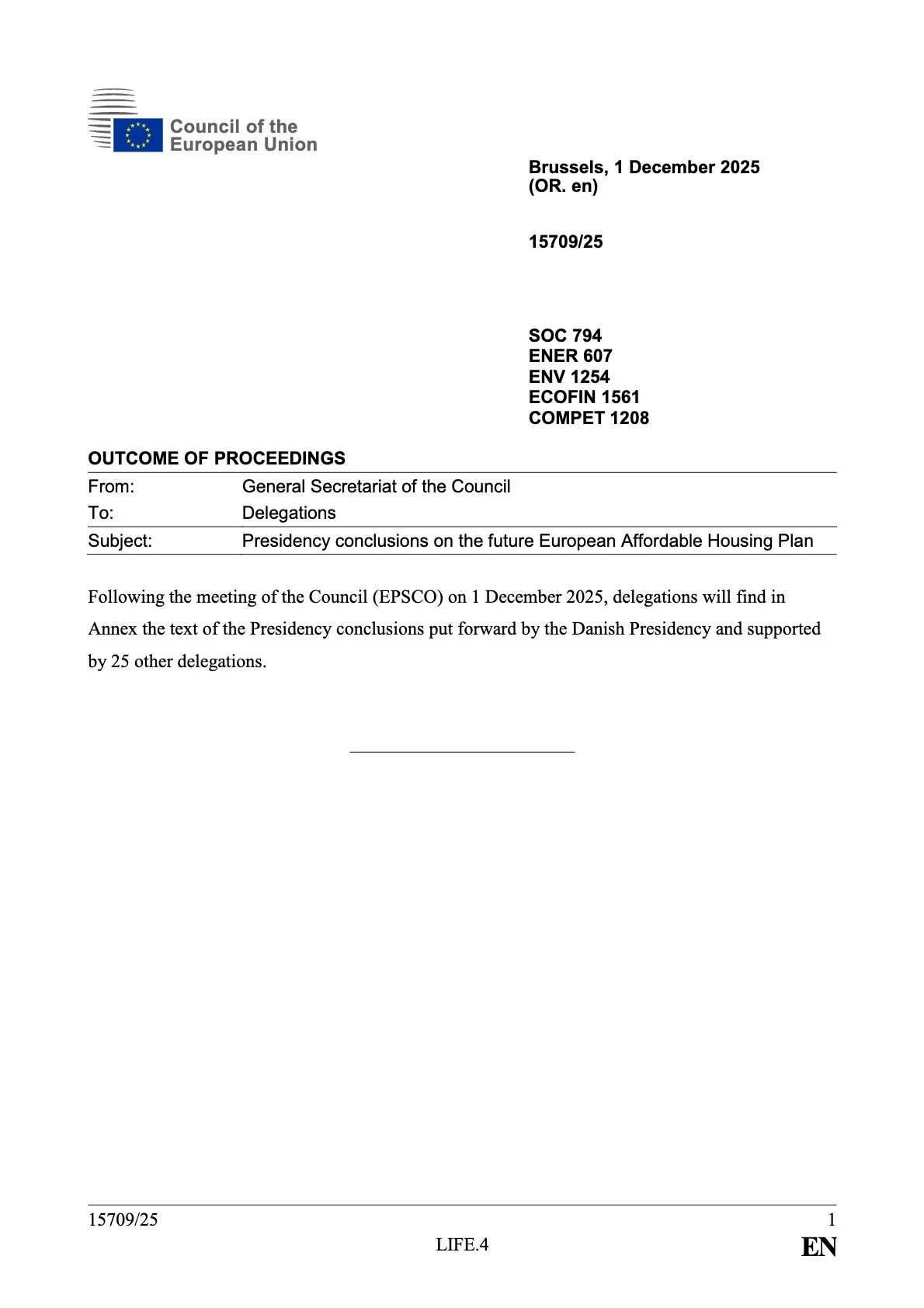
The document is a set of presidency conclusions regarding the European Affordable Housing Plan, published by the Council of the European Union. The Council plays a crucial role in EU governance, facilitating discussions among member states to shape policies that address pressing issues across Europe. The report aims to outline a coherent strategy that promotes affordable and sustainable housing, marking a significant step towards resolving the housing crisis that affects numerous citizens across the EU.
Key Developments in Housing Policy
The conclusions highlight several recent developments, including the appointment of the first-ever Commissioner responsible for housing and the European Commission's commitment to presenting an Affordable Housing Plan. This aligns with the Political Guidelines for the European Commission 2024-2029, emphasizing the importance of making housing more affordable and sustainable. The European Parliament has also taken steps by forming a Special Committee on the Housing Crisis, demonstrating a collective commitment to addressing this urgent issue.
Common Challenges and Opportunities
While housing and urban planning are primarily the responsibilities of member states, the document recognizes that common challenges persist across Europe. These include rising living costs and energy prices, which disproportionately affect low- and middle-income households, young people, and the homeless. The conclusions advocate for a coordinated approach at the EU level to complement national initiatives, thereby enhancing the effectiveness of housing policies.
Principles of Action
The conclusions underline that housing policy remains under the jurisdiction of member states, with the EU's role being supportive. It emphasizes the principle of subsidiarity, allowing member states to tailor their housing solutions according to national contexts. The document also stresses the importance of regional and local authorities in implementing housing measures, recognizing their primary or shared competencies in various member states.
A Call for Collaboration
The conclusions invite the European Commission to present a comprehensive European Affordable and Sustainable Housing Plan. This plan should consider the unique circumstances in different member states and align with broader EU objectives. The focus should be on four main themes: financing, construction and sustainability, planning, and social inclusion, ensuring that the approach is adaptable to varying local needs.
Financing and Support
The document discusses various financing strategies, including collaboration with the European Investment Bank and the promotion of innovative financing models. It calls for increased public investment in housing and the establishment of a pan-European investment platform dedicated to affordable housing. These measures aim to enhance accessibility to existing EU funds and facilitate knowledge-sharing among member states.
Construction and Sustainability
The conclusions emphasize the need for sustainable construction practices that balance affordability with environmental considerations. They outline the importance of addressing shared issues such as low productivity in the construction sector and labor shortages. The document also promotes innovation in sustainable building practices, suggesting the adoption of circular economy principles to minimize environmental impact.
Social Inclusion and Community Engagement
Finally, the conclusions recognize that housing security is vital for well-being and advocate for stronger cooperation at the EU level to combat homelessness. They highlight the importance of social housing as a tool for promoting inclusion and stress the need for tailored solutions to address various demographic needs, including those of students, young families, and senior citizens.
In summary, this document serves as a foundational step towards a comprehensive approach to affordable housing in Europe, emphasizing collaboration among member states and stakeholders to create sustainable and inclusive communities.