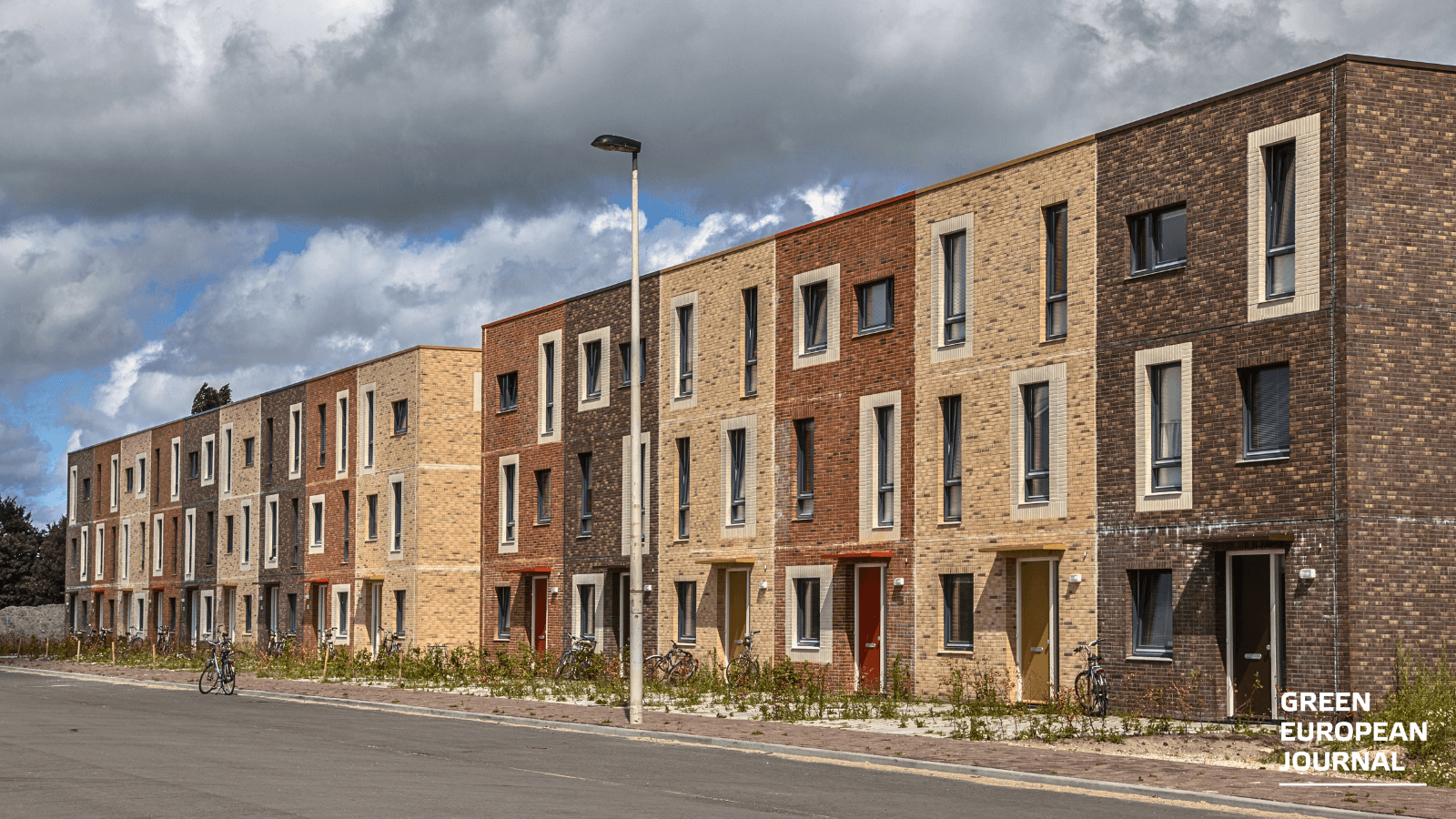
Resource context (Green European Journal; interview with Martijn Balster and Rik Thijs)
The Green European Journal publishes an interview with two Dutch municipal politicians: Martijn Balster (The Hague) and Rik Thijs (Eindhoven). They discuss how municipalities can respond to the Netherlands’ long-running housing crisis by using “active land policy” to expand municipal land ownership and steer development toward affordable housing and wider public goals.
Why municipalities argue for active land policy
Both interviewees describe land policy as a lever for objectives that do not automatically “pay for themselves” in the market—such as social housing, local facilities (including healthcare), and environmental aims. They argue that when municipalities own land, they can offer it at lower prices to social actors and set conditions (e.g., affordable housing requirements or zoning constraints). They also stress that land ownership gives local government financial and planning control, increasing influence over what gets built and for whom.
Drivers of high land prices: speculation and investor behaviour
The interview links high land prices to speculation and changing investor patterns. Thijs says Eindhoven has seen more investors and developers moving in from larger cities (Amsterdam, Rotterdam, Utrecht), often described as foreign parties, which alters negotiations compared with locally rooted actors. Balster describes “hit-and-run” investors with short-term horizons pursuing the highest returns, with limited transparency about who is behind them. Both argue that this dynamic pushes prices up and makes it harder to deliver cheap rental homes or community infrastructure at prevailing market land values.
Eindhoven’s approach: buying land and keeping it public
Thijs explains that Eindhoven has chosen to buy land and, in general, not sell it again—except to housing corporations, which can purchase at the lower end of the city’s land-price range to support affordable housing delivery. He also describes leasehold as a control instrument rather than a revenue “cash cow”: by retaining land and using leasehold, the municipality aims to preserve influence over future transfers and land use decisions.
The Hague’s position: rebuilding capacity and funding options
Balster says The Hague is not yet as advanced as Eindhoven but has increased area development capacity using proceeds from the sale of a power plant to buy land. The city is considering additional ways to finance land purchases, including using leasehold income or establishing revolving funds. Both interviewees underline that active land policy requires financial resources, risk tolerance across economic cycles, and specialist municipal expertise—capacities they say have diminished over decades and now need to be rebuilt.
National support and fiscal tools discussed
Balster argues that many municipalities have precarious finances and would need additional national government funding to play a more active role in land markets. The interview also mentions potential tools to counter speculation and vacancy and to fund public objectives: a “plan income tax” on land value gains from zoning changes; vacancy taxes; and a reference to Flanders’ vacancy-related “shack tax” as an example. Balster also encourages more frequent and smarter use of leasehold, while noting it can be complex in public debate.
Concrete projects and quantified examples
The interview provides specific cases. Balster cites The Hague’s purchase of the vacant former Red Cross hospital in the Vogel neighbourhood after a lease expiry, intended for housing vulnerable groups first and later redevelopment with affordable housing and possibly care facilities. Thijs points to “Knoop XL” near Eindhoven’s station, described as 55 hectares planned for housing and offices, where a preferential rights mechanism gives the municipality first right to buy land offered for sale. He also cites Eindhoven’s 2022 purchase of the Wielewaal estate—about 140 hectares—for roughly €30 million, with plans to turn it into a publicly accessible city park, illustrating how land acquisitions can serve environmental and public-access goals alongside housing.
Limits, governance questions, and wider relevance for Europe
Thijs rejects the idea that all land could realistically be made public but argues for selective municipal interventions aligned with social purpose. Both discuss potential governance arrangements, including the possibility that cooperatives could help ensure long-term public accessibility in some cases, while still emphasising a stronger governmental role. Overall, the interview frames active land policy—land purchase, retention, leasehold, and anti-speculation/vacancy instruments—as a practical toolkit that other European municipalities could examine when seeking affordable, sustainable housing outcomes under high land-price pressures.