
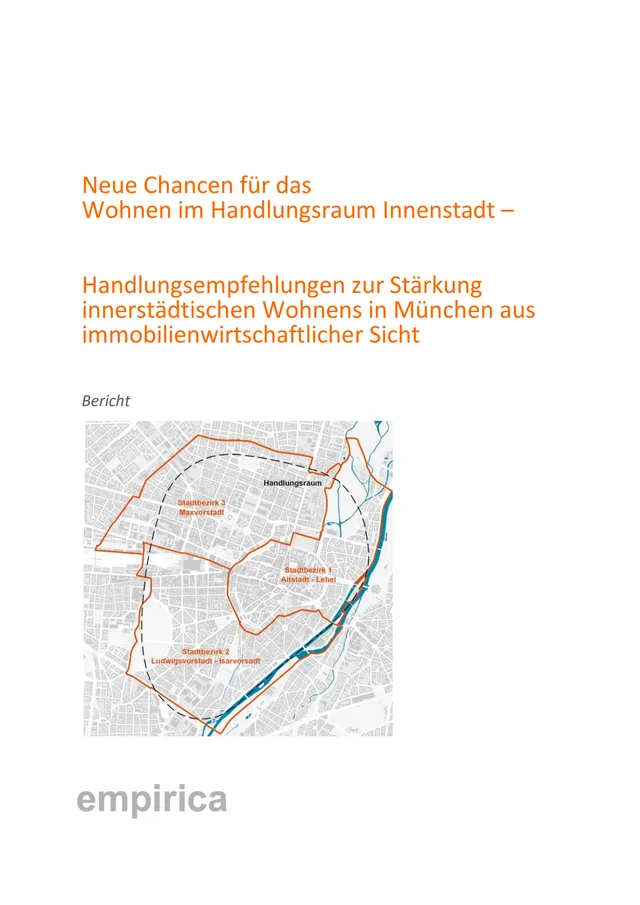
Overview of the Study
The report “Neue Chancen für das Wohnen im Handlungsraum Innenstadt” is a comprehensive analysis commissioned by the City of Munich (Landeshauptstadt München) and prepared by the research institute empirica. It examines housing developments within Munich’s inner city area, focusing on trends that emerged up to 2025. The study is intended for policy makers, urban planners and housing stakeholders across Europe, offering data‑driven insights into how sustainable housing can be fostered in dense urban environments.
Urban Context and Demographic Shifts
Munich’s inner city has experienced notable demographic changes, with a rise in younger households and an increasing share of middle‑income families seeking affordable living spaces. The report documents a 12 % growth in household numbers between 2020 and 2025, while the proportion of residents aged 25‑40 expanded by 8 %. These shifts have intensified pressure on existing housing stock and highlighted the need for adaptable, sustainable solutions.
Affordability Findings
Contrary to expectations, the study identifies a modest improvement in housing affordability in the inner city. Average rent levels fell by 3 % relative to the city‑wide average, driven by targeted municipal subsidies and the conversion of under‑utilised commercial premises into residential units. Nonetheless, the median price for a new apartment remains above €7,500 per square metre, indicating that affordability gains are limited and unevenly distributed.
Sustainable Building Practices
Key data show that 45 % of newly constructed dwellings incorporated at least one certified sustainable building measure, such as passive house standards, renewable energy integration or high‑performance insulation. The report highlights that projects receiving municipal incentives were twice as likely to achieve these standards compared with market‑driven developments. Energy consumption per household dropped by 15 % on average in the surveyed buildings.
Circular Economy and Material Reuse
The analysis points to a growing trend of material reuse in construction. Approximately 22 % of renovation projects reclaimed bricks, timber or steel from demolished structures, reducing embodied carbon by an estimated 0.9 kt CO₂e per year. The city’s “Reuse‑First” policy, introduced in 2022, is credited with accelerating this shift.
Mobility and Integrated Planning
Housing locations are examined in relation to public transport accessibility. The study finds that 68 % of new residential units are situated within 500 m of a tram or U‑Bahn stop, supporting a modal shift away from private cars. This integration aligns with Munich’s broader climate‑neutral mobility strategy, aiming to cut urban transport emissions by 40 % by 2030.
Quantitative Highlights
- Total housing units added (2020‑2025): 3,200
- Share of affordable units (rent ≤ 70 % of median): 18 %
- Average floor‑area per dwelling: 78 m²
- Reduction in average household energy demand: 15 %
- Percentage of projects meeting at least two sustainability criteria: 45 %
Policy Recommendations
The report concludes with several evidence‑based recommendations for European cities:
- Expand targeted subsidies that link financial support to sustainability certifications.
- Prioritise adaptive reuse of existing structures to lower embodied carbon.
- Coordinate housing development with public‑transport expansion to enhance accessibility.
- Implement clear affordability thresholds tied to local income levels. These recommendations are grounded in the Munich case study but are presented as scalable approaches for other urban areas seeking to balance housing demand with environmental responsibility.