Resource context (publisher and authors)
This resource is a European Investment Bank (EIB) Group press release/article about the EIB Group convening experts to address Europe’s affordable and sustainable housing challenge. The publisher is the European Investment Bank Group, and the authors are not named in the resource.
Purpose of the convening and policy backdrop
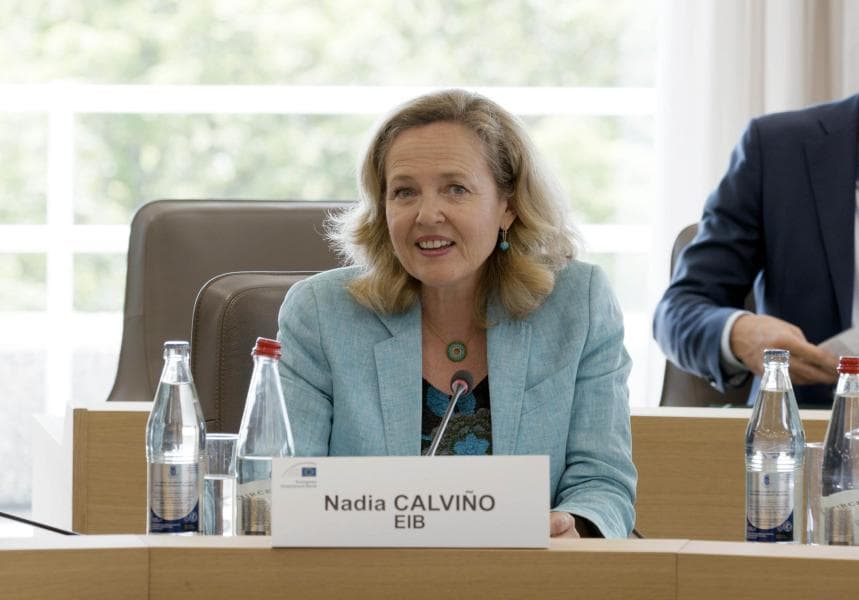
The EIB Group brought together more than 300 experts, policymakers, and representatives from EU institutions, municipalities, and national ministries to explore how to scale up financial support to increase the supply of affordable and sustainable housing across the European Union. The meeting aligns with European Commission President Ursula von der Leyen’s announcement of a pan-European investment platform for affordable and sustainable housing, to be developed in partnership with the EIB Group.
Scale of the housing investment gap
The article describes a major investment gap in housing innovation, renovation, and construction. Around half of Europe’s homes were built before 1980, implying a large retrofit need to improve energy efficiency. It also states that only 5% of Europe’s building stock has so far been renovated, highlighting the slow pace of upgrading homes to modern performance standards.
Productivity constraints and skills shortages
Based on the EIB Group’s Investment Survey covering 12,500 EU firms, the construction sector is characterised by low productivity and limited innovation investment: over 70% of construction firms report not investing in any innovation. The survey also identifies labour and skills as a key bottleneck: 85% of construction firms cite a lack of skilled staff as a constraint on investment.
Innovation priorities for sustainable construction
The EIB Group highlights research and development and the deployment of new materials and building technologies as central to increasing productivity and competitiveness in the European building industry. The resource points to digital transformation of products, processes, and services, and to the need for innovations that improve insulation, energy performance, and the circular use (circularity) of building materials, with the dual aim of reducing environmental impacts while improving economic competitiveness.
Retrofitting and energy efficiency: quantified needs
A major focus is the retrofitting of existing housing stock to add modern, efficient systems for insulation, heating, cooling, energy generation, storage, and related upgrades. The article links these renovations to meeting international climate goals, lowering energy bills for households and companies, and improving dwelling quality. It estimates investment needs for this retrofit and energy-efficiency effort at €275 billion per year.
EIB Group role, track record, and next steps
Affordable and sustainable housing is presented as a key priority in the EIB Group’s Strategic Roadmap, endorsed by EU finance ministers, and connected to work on “eight key priorities” at the EIB. The meeting is described as the first in a series organised by the EIB Group’s new Housing Task Force, intended to support a pan-European approach centred on innovation, sustainability, and affordability. The EIB Group notes 25 years of financing and advisory services in housing, and reports about €13.4 billion of support for sustainable urban development and renovation over the last five years.
Illustrative examples and wider EIB climate positioning
The event showcased examples of affordable and sustainable housing initiatives, including collaborations with institutional investors (France), measures to facilitate finance access for smaller providers (Poland), energy-efficiency investment platforms for households (Ireland), and technological innovation enabling affordable “passive” housing (Spain). The resource also reiterates the EIB Group’s broader climate and sustainability positioning, including that it does not fund fossil-fuel investments and aims to support €1 trillion in climate and environmental sustainability investment by 2030.