A city of arrivals, still filling up
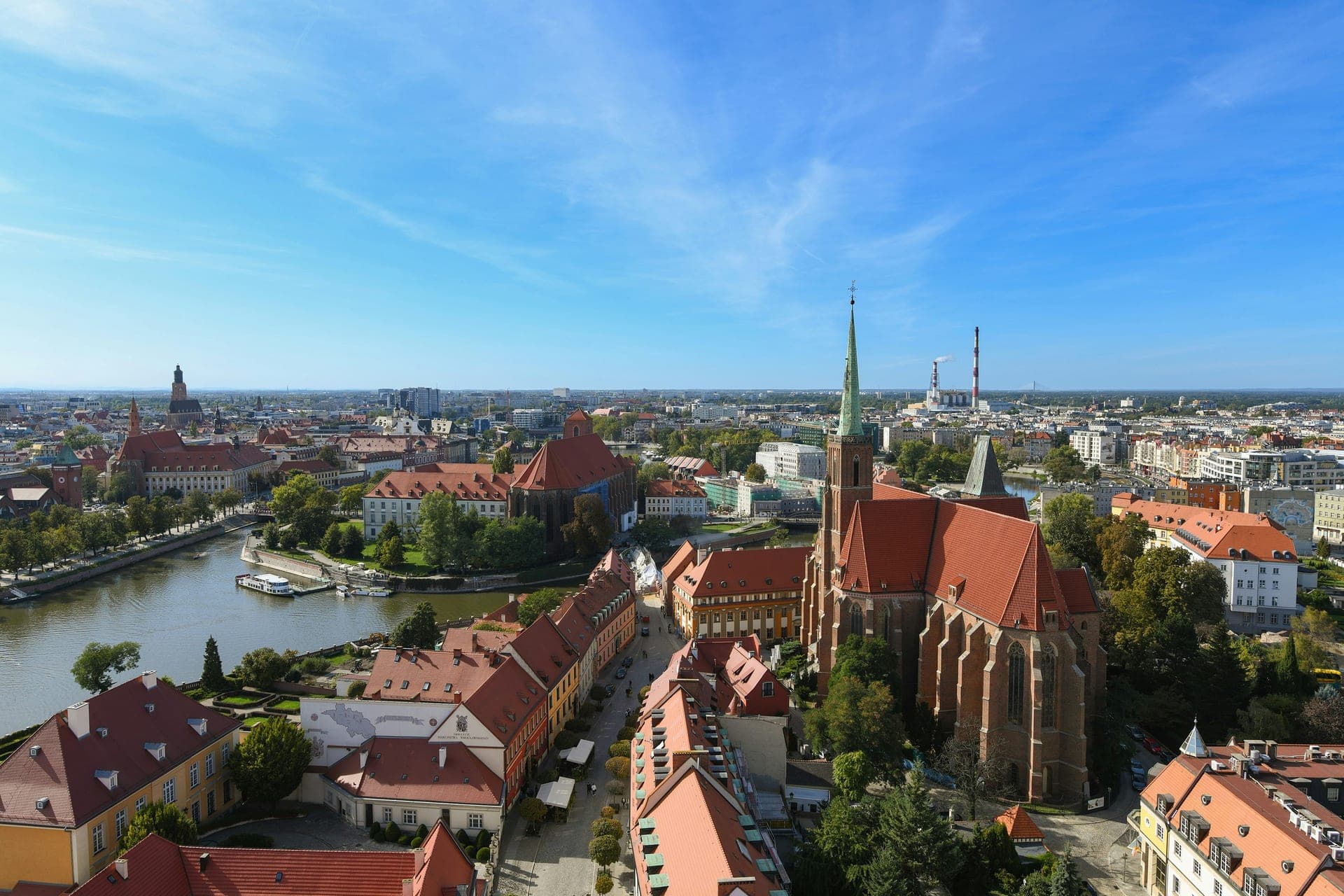
Few families in Wrocław descend from the people who lived here before the war. After the 1945 siege, the German population of Breslau was expelled between 1945 and 1949. Poles from the east and centre of the country moved into a city half destroyed by the fighting. That origin still shapes its housing. A city assembled by newcomers is now absorbing a new wave of students, Ukrainian families and young workers.
The official picture is of a city of owners, drawn from imperfect data. The best available proxy, the 2021 census for Polish cities, puts owner-occupation at 58.1%. Cooperatives hold 13.2% of the housing stock nationally. No city split is published, but Wrocław hosts 123 registered housing cooperatives. The municipal stock is run by the Zarząd Zasobu Komunalnego (ZZK, the city’s council-housing manager). It holds close to 30,000 flats, or 7.6% of the city’s 392,839 dwellings. Private rental makes up the remainder, at roughly 34.3%. That residual also absorbs the informal market of student rooms and unregistered lets.
- Owners
- Owner-occupier44.9%
- Cooperative13.2%
- Renters
- Public & non-profit rental7.6%
- Private rental34.3%
Social housing here is a rule about who may rent and at what price, not a separate tenure. About 7.8% of Wrocław’s homes fall under it. Most are council flats let to low-income households. The rest belong to TBS Wrocław, the city’s towarzystwo budownictwa społecznego (a non-profit social-rental company built with state loans). It lets 4,434 flats in 112 buildings. Its tenants pay a participation share of up to 30% of building costs on entry, then a regulated rent. The social layer therefore overlaps the public slice rather than sitting beside it.
Rents rise steeply once a household leaves the non-market floor. Cooperative members pay a basic maintenance charge of about €1.89/m² a month rather than a rent. Council tenants pay around €2.10/m². TBS raised its rate to 18.40 zł/m² in July 2026, its first rise in 4 years. On the open market, listings averaged €11.74/m² in early 2026. The central bank’s survey of signed leases put the median at €14.14/m² in 2024. The two sources measure different things, so the gap is a caution about the data rather than a trend. Furnished and serviced flats, priced gross with utilities and furniture, reach €17.26/m².
- Cooperative
- Public/municipal housing
- New contracts
- All-stock median
- Furnished / serviced (gross)
Net cold rents except the furnished tier, which is gross. The cooperative figure is a maintenance charge paid by members who hold ownership-like rights.
Empty homes are hard to find in the council stock. Vacant municipal flats have fallen to about 1,800, equal to 0.5% of all dwellings. That figure counts council vacancies only. The last full count, the 2011 census, found 18,153 empty dwellings, and no newer city-wide figure exists. Offices tell a different story. Wrocław holds 1,375,900 m² of modern office space. Regional markets averaged 21.8% vacancy at the end of 2024, which implies roughly 244,910 m² standing empty here.
The pressure comes from several directions at once. Registered in-migration brings about 8,444 people a year, and registration understates the pull. In spring 2022 the Union of Polish Metropolises counted 187,281 Ukrainian citizens in the city, 23% of its residents. More than 130,000 students study here. The city also hosts an estimated 35,000 mid-term residents staying between 3 and 12 months. Poland has no rent brake on new private lettings, so this demand passes straight into prices. Wrocław’s answer is a building programme rather than regulation: 2,450 below-market rental flats by the end of 2028.
In the term now ending we built nearly 600 rental flats, but seeing how high rents are on the commercial market, we must commit even more strongly to helping our residents.The strain falls unevenly. Poland is a nation of owners, with a home-ownership rate of 87.3% according to an analysis of the housing crisis in Central and Eastern Europe. Tenants carry the load. Nationally, 14.4% of tenants paying market rents spend more than 40% of disposable income on housing. The squeeze has also reached the middle. The government counts 4 million households in the luka czynszowa (the “rent gap”, earning too much for council housing but too little for a mortgage). In Wrocław, 51 people competed for a single 50 m² flat in Brochów, and TBS averages over 30 applicants per vacancy. A Euronews ranking of rent-to-salary ratios put Warsaw at 56%; no comparable figure is published for Wrocław.
Public opinion is more mixed than the headlines. A 2025 survey by CBOS (the state-funded Centre for Public Opinion Research) found 78% of Poles satisfied with their housing. Yet 39% of single Poles aged 25 to 34 still live with their parents, and most cite the lack of a flat. The crisis is generational, lived by renters and arrivals rather than by the owning majority.
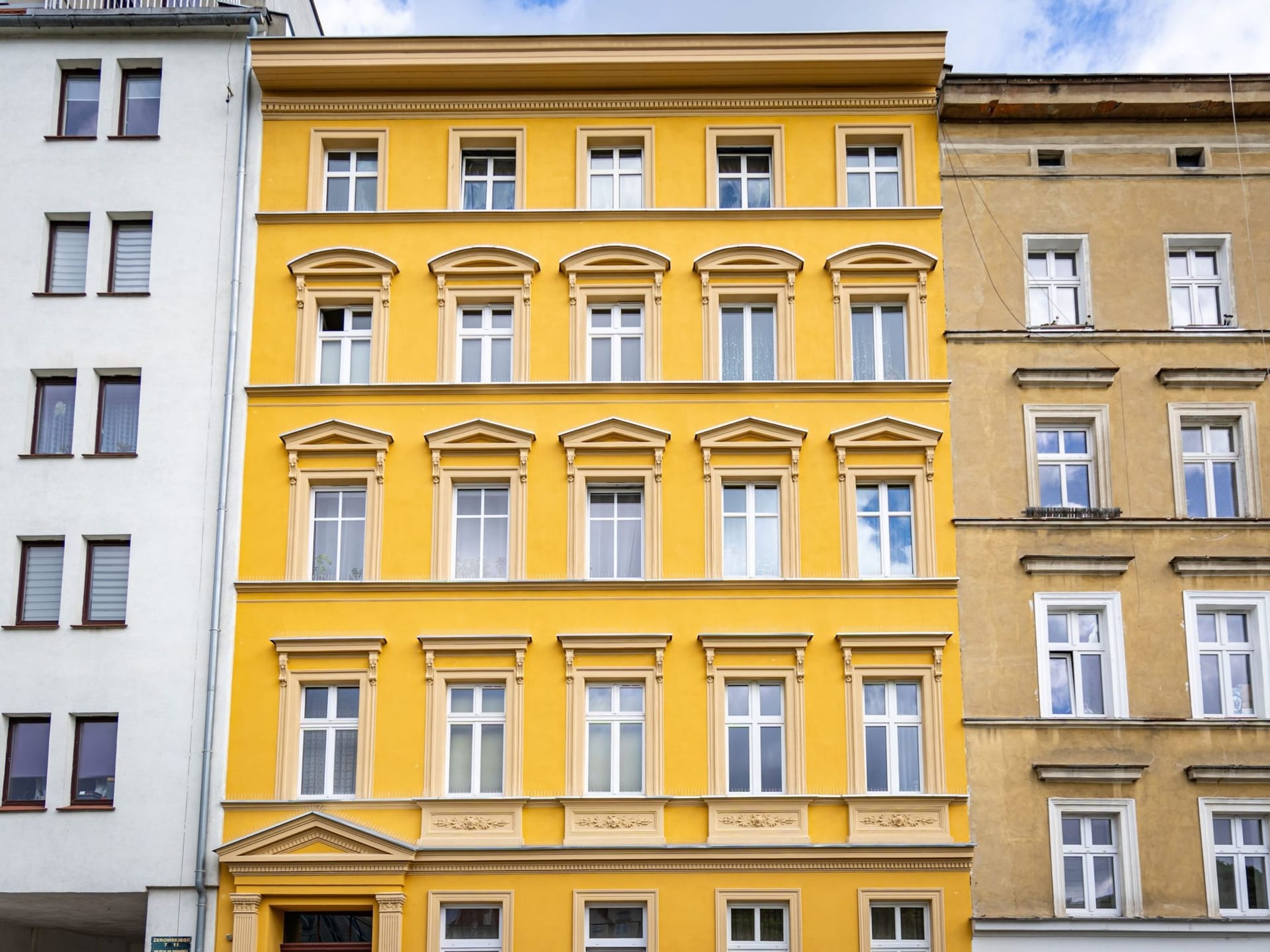
Between the market and the council sits an older non-market sector. Its cooperatives built whole districts of the city, and they are now being asked to build again.
From Breslau’s building societies to the kooperatywy
Polish housing cooperatives are ownership in all but name. A member of a spółdzielnia mieszkaniowa (SM, a housing cooperative) usually holds a spółdzielcze własnościowe prawo do lokalu. This is a cooperative ownership right that can be sold, mortgaged and inherited. A smaller group holds a lokatorskie prawo, a tenant-style right tied to membership. Since 2007 cooperatives can no longer create new ownership rights, so new flats pass to members as separate freehold units. Monthly charges pay for upkeep, not for a landlord’s return. A second, newer form is the kooperatywa mieszkaniowa (a self-build housing group). A 2022 law lets at least 3 people build together and buy municipal land on favourable terms.
The tradition here is older than Polish Wrocław. Breslau’s building cooperatives completed about 13,300 flats between 1919 and 1928, part of the Weimar-era drive for decent workers’ housing. After 1945 the new Polish city inherited those estates. Under state socialism it then built large new ones through state-backed cooperatives. Gądów is typical: SM Gądów manages 2,651 flats in 37 blocks built between 1973 and 1979. It split from SM Piast in 1996, one of many estates that left the big socialist-era cooperatives after 1989. Those years turned most cooperatives into property managers, and members bought out the rights to their flats.
Today the sector falls into three clusters, and they face different problems. The largest are the legacy cooperatives such as SM Wrocław-Południe and SM Piast. They manage post-war estates, and they face ageing members, retrofit bills and a weak mandate to build. A 2023 paper on Polish cooperatives in Studia BAS (the research journal of the Polish parliament’s analysis bureau) lists regulatory hurdles and financing gaps as the main brakes on new building. The second cluster is the kooperatywy: small resident groups on municipal land at Nowe Żerniki, where the first plot tender ran in 2014. Their obstacles are land and bridge finance, not governance. A third, still thin, is the regional movement described in a study of cooperative housing pioneers in Central and South-Eastern Europe. It pools money across borders through MOBA, a regional cooperative-housing network, to build non-speculative rental cooperatives. Wrocław has no such project yet.
Policy is starting to call the legacy cooperatives back into building. In 2017 five Wrocław cooperatives, Wrocław-Południe and Piast among them, pledged 2,000 affordable flats under a national programme. The national strategy of March 2026 again invites cooperatives into rental production with grants and cheap credit. The city, for its part, said in 2024 that it would invite housing cooperatives into its own rental programme. Whether cooperatives become builders again depends on the instruments now on the table.
Grants, land and two housing ladders
The national government’s answer to the crisis is money for municipal and social rental housing. A law approved in March 2025 plans 45 billion zł for social housing between 2025 and 2030, with grants covering up to 80% of investment costs. The 2026 budget sets a record 6.7 billion zł for housing, of which over 4 billion zł funds social and municipal homes. The strategy presented on 16 March 2026 by Andrzej Domański, the finance and economy minister, targets 18,000 affordable rental homes this year. The money flows through BGK (Bank Gospodarstwa Krajowego, the state development bank).
Each tier of government holds a different tool. The state writes tenancy law and pays the grants. The Lower Silesian region matters mainly as a channel for EU funds. The city owns the land, the council stock and the companies that build. Wrocław has drawn 329 million zł from BGK between 2022 and 2026, 210 million zł of it in 2026 alone. Its pipeline to 2028 runs through four vehicles: TBS (718 flats), SIM Wrocław (661), MDR, a “housing for development” line (891), and the social rental agency (180). SIM stands for społeczna inicjatywa mieszkaniowa, a social housing company co-owned with the state land agency KZN (Krajowy Zasób Nieruchomości).
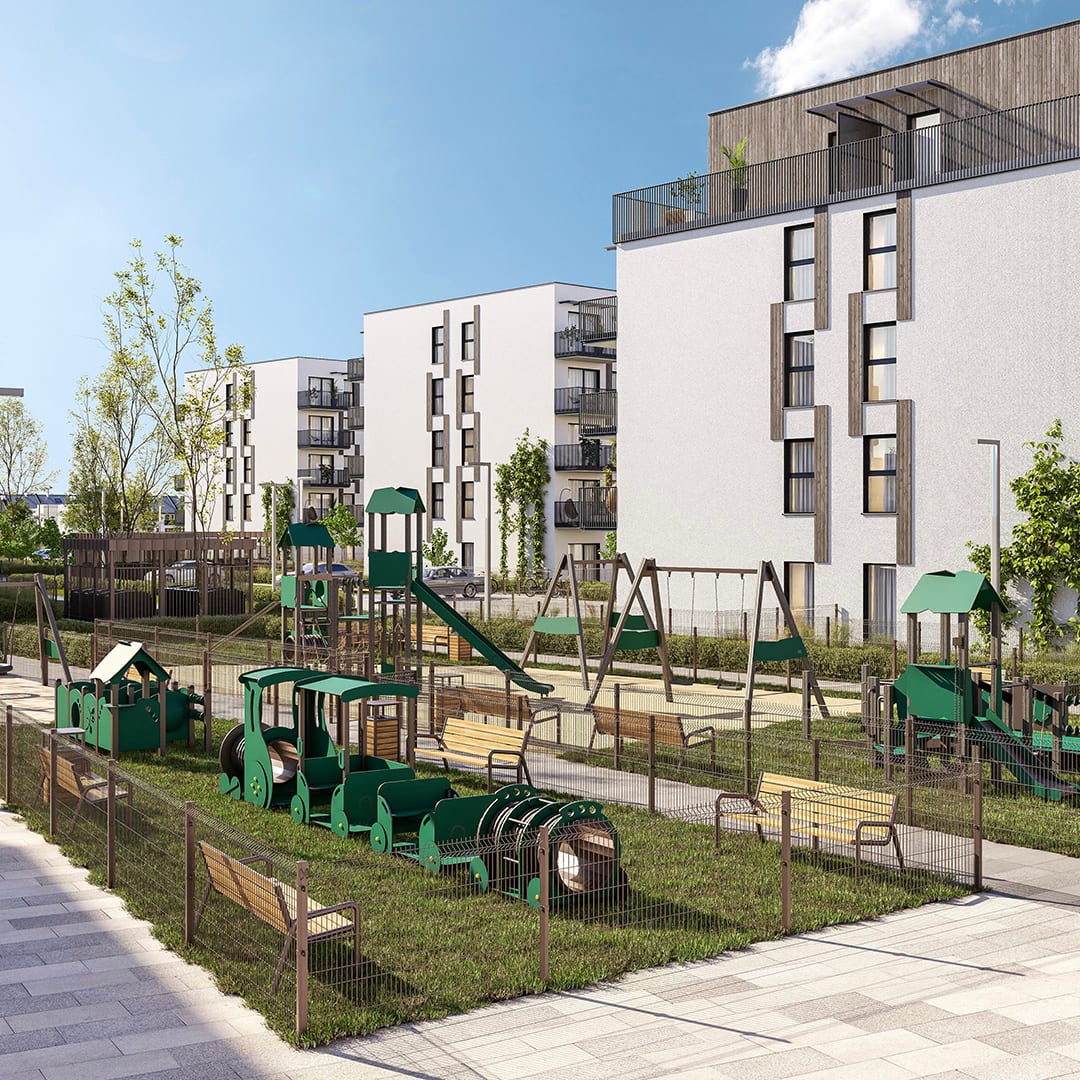
Land is the city’s strongest tool for cooperatives. At Nowe Żerniki it let plots to kooperatywy in użytkowanie wieczyste (perpetual usufruct, a long lease of public land). The opening price was therefore a fifth of the usual sale price. SIM Wrocław offers a different ladder. Tenants pay a participation contribution and a rent of about 32–34 zł/m², with the option to buy after 15 years. TBS tenants have no such path. Council tenants, meanwhile, can buy their flats at discounts of 85% to 93%. In 2024 the city sold 846 council flats for over 96 million zł.
Wrocław did not create one housing policy. It created two. One for those it turns into owners. The other for those it keeps on rent.The national argument runs along a similar line. At the European Economic Congress in April 2026, Monika Sikora, deputy minister of funds and regional policy, backed a tax on buyers of many flats. Young people, she said, “must be able to own a flat”. Zbigniew Juroszek, chief executive of the developer Atal, replied that “the priority is not to hinder investors”. Flats bought as investments, he argued, end up rented, and the capital stays in Poland. Wrocław’s own vice-president, Bartłomiej Ciążyński, framed the city’s side in 2024: it wants rents “at the lowest possible level” for young people starting out.
Empty space gets two replies. The first targets council vacancies: the 2025 law also funds the renovation of empty municipal flats. The OECD review of housing reforms in Czechia and Poland urges both countries to activate vacant dwellings alongside expanding social rental. The second targets offices. The property consultancy Colliers found that Wrocław accounted for 52% of the office space withdrawn from Poland’s regional markets over 5 years. The 1960s Budopol block on ul. Racławicka won a permit in April 2026 to anchor a 102-flat conversion. Poland has no vacancy tax, although an investigation into Europe’s empty homes shows how other countries use one. Łódź, with a far larger share of empty flats, shows the opposite problem, as Interia’s report on the city’s empty flats describes.
Climate policy runs through the same buildings. Wrocław has replaced 14,000 old coal stoves since 2019, at a cost of about 303 million zł. Council tenants who switch have their rent halved, and support runs until 2028. The national TERMO retrofit programme holds 331 million zł for 2026. Wrocław is also one of 5 Polish cities in the NetZeroCities pilot programme of the EU’s climate-neutral cities mission. Council and cooperative estates carry the heaviest retrofit load. Bruegel’s case for building decarbonisation argues that affordability and insulation are one problem, not two.
- 1919–1928[source]
Breslau’s cooperative building boom
Housing cooperatives complete about 13,300 flats in the city.
- 1929[source]
WuWA Werkbund exhibition
32 model buildings go up in 3 months, among them Hans Scharoun’s hotel house for single people.
- 1945–1949[source]
Siege, expulsion and resettlement
Half the city is destroyed; its German population is expelled and Polish settlers move in.
- 2014[source]
First kooperatywy plot tender
The city launches its housing-cooperative programme at Nowe Żerniki.
- 2016[source]
Nowe Żerniki shown as the Capital of Culture estate
The WuWA2 model district is planned as the architectural showcase of Wrocław’s year as European Capital of Culture.
- November 2022[source]
Housing-cooperatives act
A national law gives kooperatywy a legal form and lets municipalities sell them land at a discount.
- March 2024[source]
2,700 municipal rental flats announced
The mayor unveils a programme of 2,700 city-built rental homes across TBS, SIM and Nowe Żerniki.
- March 2025[source]
Social housing law
Government approves 45 billion zł for social housing to 2030, with grants of up to 80% of costs.
- March 2026[source]
National housing strategy
Target of 18,000 affordable rental homes and 2,500 dormitory places contracted in 2026.
- July 2026[source]
TBS rents rise
TBS Wrocław raises its rent to 18.40 zł/m², the first increase since 2022.
- End of 2028[source]
Below-market pipeline due
2,450 flats across TBS, SIM, MDR and SAN; first SIM keys at Wojszyce-Jagodno in the fourth quarter.
- 2030[source]
National social-housing budget peaks
Annual spending on social housing is planned to reach 10 billion zł.
Milestones in the city’s housing, with national measures that shape it.
From WuWA to Jagodno: the model-estate habit
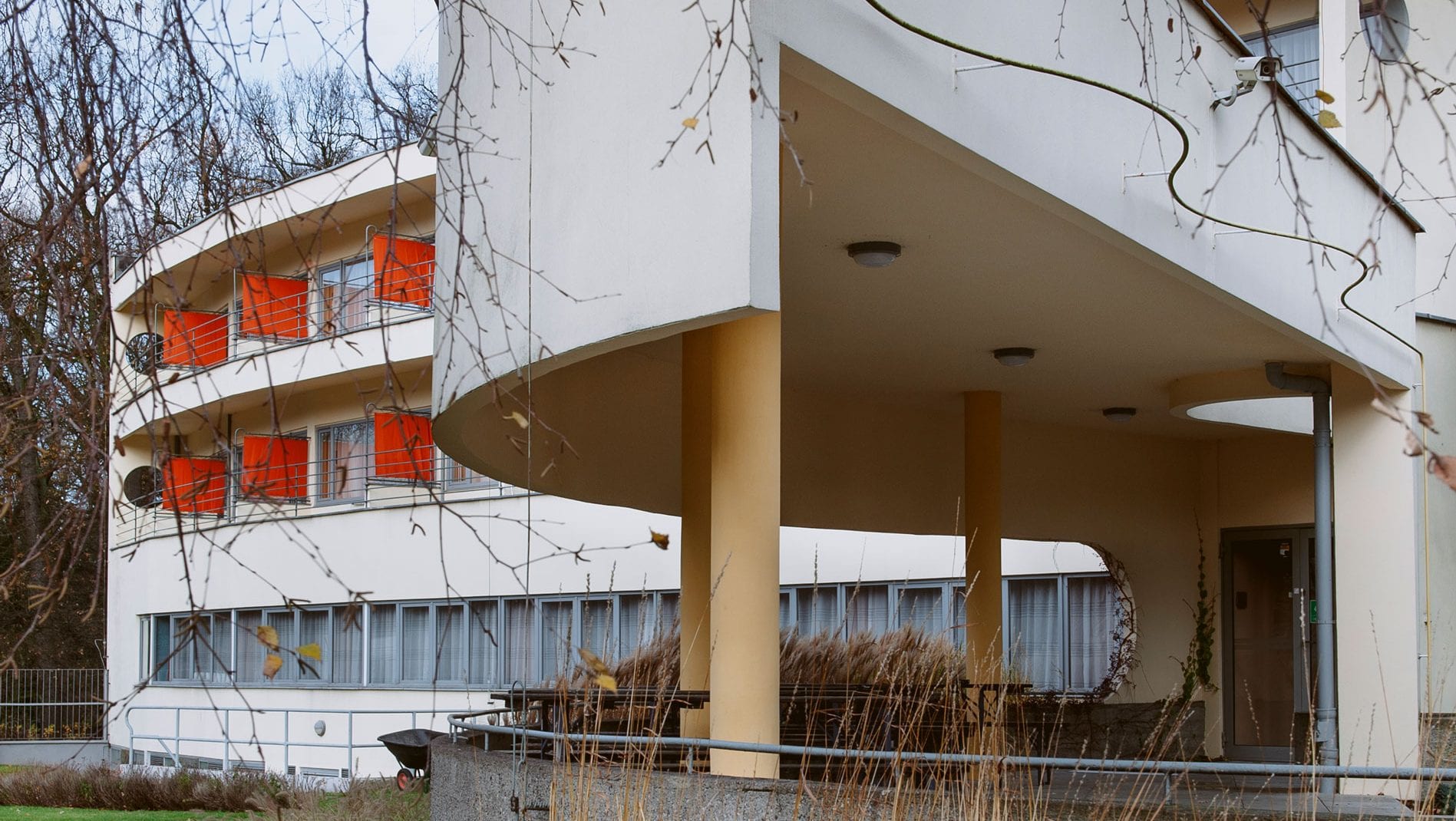
WuWA, the 1929 housing exhibition of the Deutscher Werkbund (the German association of architects and designers), is where the city’s habit of building model estates begins. Its 32 buildings went up in 3 months. They included Hans Scharoun’s hotel house for single people and childless couples, today a hotel. The estate now carries the European Heritage Label. It showed in Breslau that small flats for new kinds of household deserved serious design.
Nowe Żerniki is its conscious successor, and its nickname, WuWA2, says so. The city planned it with the Lower Silesian Chamber of Architects and the Wrocław branch of SARP (the Association of Polish Architects). It was meant as the architectural calling card of the 2016 European Capital of Culture. 45 practices worked on it. Developer flats, TBS rental blocks, a school and a senior home share the same streets. Zbigniew Maćków, its co-author and then chair of the regional chamber of architects, summed up the idea: “a good city is a strongly diversified city”. The city’s current programme adds 1,200 more flats there.
The kooperatywy at Nowe Żerniki are its most watched experiment. The city set aside three central plots for self-build groups of future residents. It published template contracts and sample designs to help them start. In 2018 Maćków admitted that “there is no legal formula for a cooperative”. The 2022 law now supplies one, and Wrocław’s plots remain the reference case for Polish self-build.
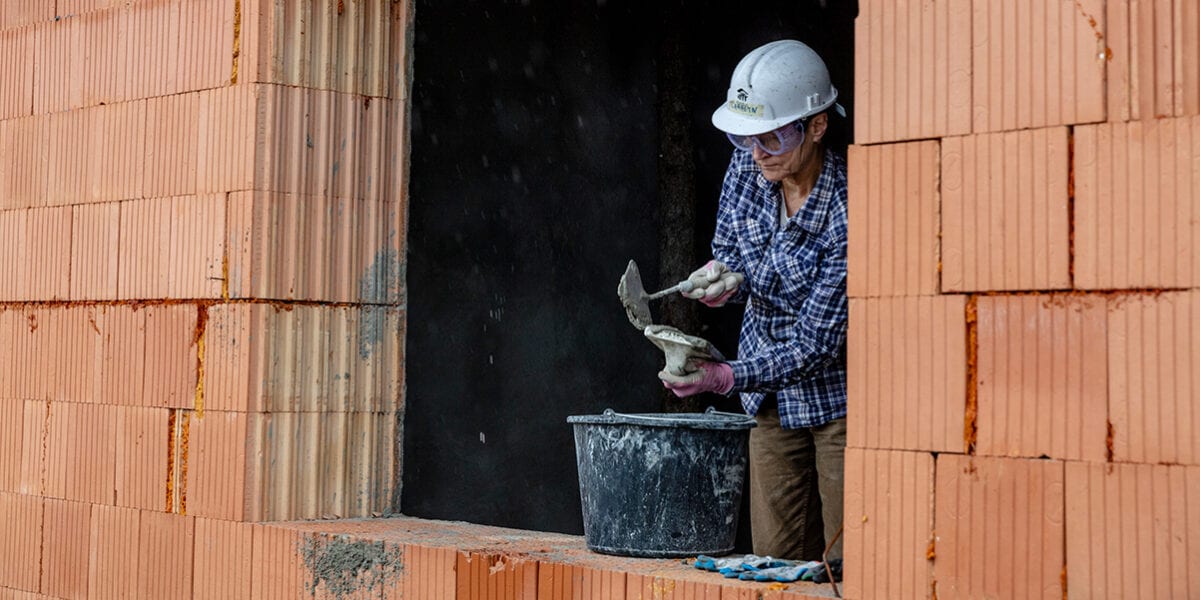
TBS Wrocław is the city’s workhorse. Beyond its existing stock it plans more than 700 new flats by 2028, the largest block of them 200 homes in Brochów. The company’s weakness is the one its critics name: tenants pay in, but never own.
SIM Wrocław answers that criticism with a slow route to ownership. Its first estate, at Wojszyce-Jagodno, will hold 605 flats, with first keys in the fourth quarter of 2028. Paweł Inglot, its president, pitches stability rather than price: “social housing guarantees a steady, low rent”. At about 1,700 zł a month for 50 m², after a deposit of about 100,000 zł, it serves the middle of the rent gap rather than its bottom.
Społeczna Agencja Najmu Wrocław, the city’s social rental agency, works with the stock that already exists. The Fundacja Inicjowania Rozwoju Społecznego (a local social-development foundation) runs it under contract. It rents private flats and sublets them at about 20% below market. It is small, but it is the one tool that turns idle private flats into affordable homes without new building.
SM Wrocław-Południe and its peers are the sleeping giant. They still manage the socialist-era estates that house much of the city, and their 2017 pledge showed an appetite to build. The Racławicka conversion shows that obsolete offices can become homes. The kooperatywy show that residents can commission their own buildings. What links WuWA, Żerniki and Jagodno is a city that builds on purpose for the people it expects. Wrocław was rebuilt that way once, by newcomers, and it is trying again.
References
Statistics13Click on any number to see the source
Housing market
Cooperative, social & public
Adaptive reuse & vacancy
Population & migration
From our library16
- Zarząd Zasobu Komunalnego (ZZK) Wrocław — Organisation
- TBS Wrocław — Organisation
- Housing Crisis Threatens to Fracture Central and Eastern Europe — Knowledge
- Can you afford to live here? Europe’s cities ranked by rent-to-salary ratio — Knowledge
- Spółdzielnia Mieszkaniowa Gądów — Organisation
- Spółdzielnia Mieszkaniowa Wrocław-Południe — Organisation
- Spółdzielnie mieszkaniowe na rynku nieruchomości w Polsce w XXI w.: Bariery i szanse rozwoju — Knowledge
- Cooperative Housing Pioneers in Central and South- Eastern Europe: Mainstreaming Alternatives through Translocal Networks — Knowledge
- SIM Wrocław — Organisation
- Housing Reforms in Czechia and Poland — Knowledge
- The empty house: a window into Europe’s vacant property problem — Knowledge
- 10 tysięcy pustych mieszkań czy raczej ruin do wyburzenia? Łódź skupia wyzwania mieszkaniowe Europy — Knowledge
- The solution to Europe’s housing affordability crisis must include building decarbonisation — Knowledge
- WuWA Werkbund Housing Estate (1929) — Project
- Nowe Żerniki (WuWA2) — Project
- Społeczna Agencja Najmu Wrocław — Organisation
Further sources29
- Wikipedia — Wrocław — Wikipedia
- wroclaw.pl — Nowe stawki czynszu w TBS Wrocław — City of Wrocław · 2026
- Dziennik.pl — "Wrocławski paradoks mieszkań społecznych TBS" — Dziennik.pl · 2026-04-27
- wroclaw.pl — Unia Metropolii Polskich report on Ukrainians in Wrocław — City of Wrocław / Unia Metropolii Polskich · 2022-04-26
- propertydesign.pl — "51 chętnych na jedno mieszkanie" — propertydesign.pl · 2026
- wroclaw.pl — "Aż 2700 gminnych mieszkań ma powstać we Wrocławiu" — City of Wrocław · 2024-03-18
- Eurostat via Trading Economics — Poland housing cost overburden, tenants at market rent — Trading Economics (Eurostat data) · 2025
- OKO.press — "Tanie mieszkania dla 4 mln rodzin. Rząd ogłasza nową strategię mieszkaniową" — OKO.press · 2026-03-16
- WNP.pl — CBOS: blisko 80 proc. Polaków zadowolonych z warunków mieszkaniowych — WNP.pl · 2025-10-23
- wGospodarce — "Już prawie 40 proc. Polaków mieszka z rodzicami" — wGospodarce.pl · 2025
- gov.pl — Kooperatywy mieszkaniowe (Act of 4 November 2022) — MRiT (gov.pl) · 2022
- SM Gądów — O spółdzielni / Historia — SM Gądów
- wroclaw.pl — Wrocławskie Kooperatywy Mieszkaniowe — City of Wrocław
- tuwroclaw.com — "Spółdzielnie wybudują 2 tys. mieszkań we Wrocławiu" — tuwroclaw.com · 2017-05-25
- Notes from Poland — "Polish government approves bill to boost spending on social housing" — Notes from Poland · 2025-03-21
- Ministry of Development and Technology — record 6.7 bn zł for housing in 2026 — MRiT (gov.pl) · 2026
- habitat.pl — Kooperatywa Mieszkaniowa Nowe Żerniki — habitat.pl
- Radio Rodzina — II tura naboru SIM Wrocław — Radio Rodzina · 2026-08-03
- PortalSamorządowy — "Rząd chce ingerować w rynek mieszkaniowy" (EEC 2026) — PortalSamorządowy · 2026-04-24
- Builder Polska — "Transformacja rynku biurowego" (Colliers data) — Builder Polska · 2025-08-26
- Urbanity — "Przebudują PRL-owski biurowiec na mieszkania" — Urbanity.pl · 2026-05-05
- wroclaw.pl — Wrocław podsumowuje akcję Zmień Piec — City of Wrocław
- CINEA — "Doing climate neutrality the Polish way" — European Commission (CINEA)
- Wikipedia — WuWA — Wikipedia
- Bryła — "Zbigniew Maćków: dobre miasto to miasto różnorodne" — Bryła · 2018-01-26
- wroclaw.pl — Kooperatywy: dla inwestora — City of Wrocław
- wroclaw.pl — Społeczna Agencja Najmu — City of Wrocław · 2025-03-10
- Wikipedia (pl) — Mosty i kładki we Wrocławiu — Wikipedia
- Wikipedia (pl) — Wrocławskie krasnale — Wikipedia