The city that privatised almost everything
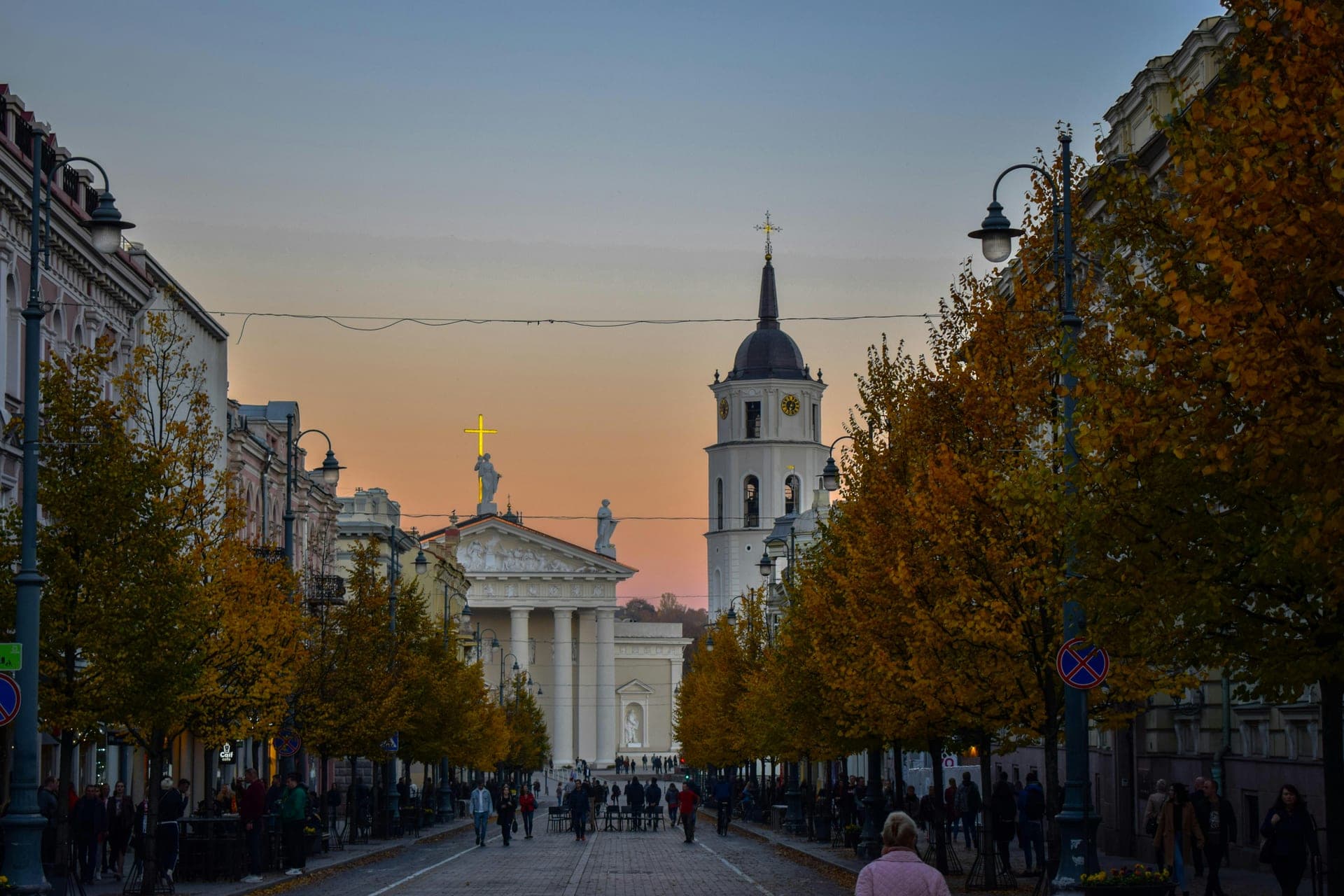
Vilnius wears its history lightly for a capital this old. It holds the largest baroque old town in Eastern and Central Europe, a UNESCO World Heritage site since 1994, and in 2025 it was the European Green Capital, with more than half its area under green cover. Yet its housing market is shaped less by baroque churches than by a single decision taken after 1991: to hand almost the entire housing stock to the people living in it, at symbolic prices. That choice still defines the city — near-total ownership, a thin rental sector, and a public stock so small the municipality is only now trying to grow it.
Privatisation left a tenure profile lopsided toward ownership. Roughly 81% of city households are owner-occupiers; barely 19% rent. The municipality holds just 2.1% of dwellings — around 6,800 flats — and the open private market lets the remaining 16.9%. The one tier most European capitals lean on is missing here: a genuine housing-cooperative tenure barely exists in Vilnius, so the non-market segment is essentially the small municipal stock alone, near 2.1% of all homes. That is among the lowest non-market shares of any capital on the continent.
- Owners
- Owner-occupier81.0%
- Renters
- Public & non-profit rental2.1%
- Cooperative0.00%
- Private rental16.9%
Social housing is a narrow safety net rather than a tenure. Only about 2.1% of dwellings are reserved for social-housing purposes, a targeting layer that sits on top of the small municipal stock rather than forming a slice of its own. Lithuania built little dedicated social housing after independence, so the main instrument is a means-tested rent compensation, the būsto nuomos mokesčio kompensacija, paid to roughly 6% of residents who qualify, with a higher minimum in the expensive cities. The sector is small, tightly rationed and, as researchers note, stigmatised.
Price the rungs and the missing cushion is obvious. Tenants in the city's social and municipal flats pay around €1.20 per square metre, a heavily subsidised floor. Across the whole let stock the median is €12.16; newly-let apartments ask a median €14.80, and furnished, serviced lets reach €18.30 per square metre gross. With no cooperative tier in between, the jump from the municipal floor to a market contract is among the steepest in Europe, and there is almost nothing affordable sitting between the two.
- Public/municipal housing
- All-stock median
- New contracts
- Furnished / serviced (gross)
Net-cold monthly rent per square metre by tier (furnished is gross, all-in). The heavily subsidised municipal floor sits far below the open market, where a new private contract runs many times the social rent; there is effectively no cooperative tier to sit between them.
Unlike the older capitals of the West, idle housing weighs lightly on Vilnius. Census-takers in 2021 logged residential vacancy near 7%, around 12,000 unoccupied flats, much of it inherited or unmodernised stock rather than withheld supply. Offices are looser: about 488,491 square metres stand vacant, roughly 11% of the office stock. The sharper, more concentrated pressure comes from tourism: a median entire-place 1-bed lists at around €80 a night, and the listings cluster in the UNESCO Old Town and the regenerated Paupys quarter, exactly the streets visitors see, thinning long-term supply where it is scarcest.
Newcomers keep arriving faster than the city can build, and the strain now climbs the income ladder. Vilnius gains roughly 18,000 people a year through net migration, drawn by jobs, universities and a metropolitan economy of well over a million people, while it issues only around 1,500 building permits a year. Vilnius apartment prices rose about 7.4% over the year to late 2025, faster than wages, so younger and first-time buyers are increasingly priced out even as headline affordability indices improve. About 12% of residents face energy poverty in an old, leaky stock, FEANTSA's Tenth Overview of Housing Exclusion finds the private market in Vilnius beyond almost every modest household, and roughly 1,100 people are counted homeless in the city. Housing has become a middle-class worry, not only a vulnerable-household one.

Housing is a fundamental human right, an important part of social policy.The cooperative tier that never took root
Vilnius is the rare European capital with almost no housing-cooperative tenure to describe. The catalogue records close to zero cooperative dwellings, and there is no Lithuanian equivalent of the Viennese rental cooperative or the Czech bytové družstvo with its transferable equity share. Where other capitals have a cooperative tier sitting between ownership and the market, Vilnius has a gap — and that gap is the whole reason the rent ladder jumps so sharply from the municipal floor to a market contract.
What does exist is collective management, not collective ownership. The closest local form is the daugiabučių namų savininkų bendrija — the apartment-owner association that runs a privatised block on behalf of the individual owners. It is a self-governing vehicle for the common parts of a building: the roof, the heating, the stairwell, the renovation loan. It is not a cooperative in the tenure sense, because each flat is privately owned outright; it is the residue of mass privatisation, the thing Lithuanians built to manage what they were suddenly all given.
The history explains the absence. The Soviet system built Vilnius's vast panel estates — Lazdynai, Karoliniškės, Šeškinė — as state housing, then independence converted nearly all of it to private ownership through the right to buy. There was no surviving inter-war cooperative tradition to revive, as there was in Prague or Warsaw, and no policy appetite to create one. For three decades the cooperative simply was not part of the Lithuanian housing vocabulary, and the apartment-association model filled the governance vacuum that privatisation left behind.
Today the question is whether the form can be imported rather than revived. The apartment associations are competent at maintenance and increasingly at energy retrofit, but they do not build, and they do not pool capital to create new affordable homes. The contemporary interest in cooperative housing in Lithuania is thin and largely academic, drawing on European models — the international comparisons and the Finnish and central-European cases set out in cross-country research — rather than a domestic lineage. Which leaves a practical Vilnius answer that, for now, runs through municipal building and renovation rather than through a cooperative tier the country never had.

Renovating the stock, rationing the safety net
Vilnius's housing politics is about managing a privately-owned stock, not directing a public one. Valdas Benkunskas of the conservatives has led the city since 2023, framing growth as the priority for a fast-expanding capital whose metropolitan area is nearing the million-and-a-quarter mark. The municipality's own levers are modest: it runs a social-housing fund of about 6,800 flats, builds small specialised projects through the Vilnius Development Company — including new group-living homes for people with disabilities in Paneriai — and compensates qualifying renters. With ownership near-total, the city's main influence over the existing stock is renovation, not allocation.
Authority over housing splits between the state and the city, with no regional tier between them in Lithuania. The national government sets the frame: the Ministry of Environment (the AM) runs housing construction and modernisation policy, the Ministry of Social Security and Labour (the SADM) legislates on social housing and rent support, and the Ministry of Finance manages state shares in housing loans and subsidies. The municipality builds and allocates social housing and pays the local rent compensation. The split — environment for bricks, social affairs for benefits — is documented in our European housing-policy survey, and it leaves the city executing programmes it does not design.
The headline programme is the renovation wave, not a cooperative push. The Environmental Project Management Agency, the APVA, runs the multi-apartment renovation (modernisation) programme, aiming to renovate close to 10,000 buildings nationally by 2030, backed by about €550 million from the EU Recovery and Resilience Facility and structural funds. A new investment platform puts €50 million of EU money to work to attract roughly €250 million in private capital for deeper retrofits. The apartment associations are the delivery vehicle: the state subsidises, the bendrija borrows and commissions, the owners repay. There is no comparable national funding line for cooperative new-build, because there is no cooperative sector to fund.
Because Vilnius's empty homes are mostly unmodernised rather than withheld, the policy reply to §1's vacancy is light-touch and market-led. There is no vacant-homes tax and no large office-conversion drive; the regenerated industrial quarters are private projects, and slow permitting — only around 1,500 a year — is the binding supply constraint rather than withheld stock. The sharper supply problem is short-term letting in the historic core, which the city has begun to watch but not yet to curb. The European Commission's Affordable Housing Plan flags both the supply gap and the tourist-flat pressure as Europe-wide priorities.
In Vilnius the climate goal and the renovation programme are one and the same problem. Vilnius's housing stock averages around 50 years old, only about 12% of dwellings are energy-efficient, and the renovation rate crawls at roughly 0.7% a year — far short of the deep-retrofit pace the EU's targets imply. The panel-estate retrofit programme is therefore the city's main lever for cutting both heating bills and carbon, which ties the climate goal directly to the apartment associations doing the work. The Green Capital year gave that effort a citywide frame, and a nature-positive, circular-construction agenda set out in a 2024 study of the EU economy is beginning to reach the building sector.
- 1991[source]
Right to buy
After independence, Lithuania transfers almost its entire municipal and state housing stock to sitting tenants for symbolic prices — one of the most complete privatisations in the former Soviet bloc, leaving roughly nine in ten households owner-occupiers.
- 2005[source]
Apartment-association law matures
The legal framework for the daugiabučių namų savininkų bendrija — the apartment-owner association that collectively manages a privatised block — is consolidated, giving residents a self-governing vehicle for the ageing Soviet stock.
- 2013[source]
Renovation programme scales up
The state multi-apartment renovation (modernisation) programme, run by the Environmental Project Management Agency, moves from pilots to mass roll-out to cut heat demand in the panel estates.
- 2019[source]
Social-housing income threshold raised
Lithuania lifts the income ceiling for rent compensation: for a single person in Vilnius it rises from 38 times the state-supported income in 2017 to 62 times by 2022, widening eligibility for the means-tested support that substitutes for a large social sector.
- 2023[source]
Benkunskas elected mayor
Valdas Benkunskas of the conservatives becomes mayor of a fast-growing capital, inheriting a metropolitan area of about 1.2 million and rising apartment prices.
- 2024[source]
Renovation investment platform
The government sets up an investment platform putting €50 million of EU money to work to attract about €250 million from private investors for deeper apartment-block renovation.
- 2025[source]
European Green Capital
Vilnius holds the European Green Capital title, with over half its area green and tree cover near 48%, tying its retrofit and land-use ambitions to a citywide sustainability programme.
- Aug 2026[source]
Lower deposit for first-time buyers
The Bank of Lithuania cuts the minimum down payment for eligible first-time buyers from 15% to 10%, as rapid price growth has outrun households' ability to save. Second and later homes still need 30%. Monthly repayments stay capped at 50% of income under a 6% stress-test rate.
- 2030[source]
Renovation target
The national programme aims to renovate close to 10,000 multi-apartment buildings by 2030, backed by about €550 million from the EU Recovery and Resilience Facility and structural funds.
From the post-independence mass privatisation to the panel-block renovation wave, the municipal social-housing fund and the Green Capital year.
Where Vilnius's commentators part company is over what housing is ultimately for. Raimondas Reginis, research manager for the Baltics at Ober-Haus, reads the market as recovering and warns that fast price growth is outpacing wages, so some buyers will have to lower their expectations. Jolanta Aidukaitė, chief research officer at the Lithuanian Social Research Centre, argues the opposite emphasis: that the social-housing sector is very small and stigmatised, that Lithuanians' near-universal home ownership has crowded out a public alternative, and that housing should be treated as a social right. They diagnose the same missing tier; the argument is whether the market or the state is the one to build it.
The fairly rapid recovery of the housing market is creating extremely favourable conditions for faster growth in housing sales prices.Brownfields, balconies and the retrofit pipeline
Vilnius's working examples are mostly private and market-rate, which is itself the story: in a city without a cooperative tier, the visible housing innovation is developer-led regeneration and a state-backed retrofit pipeline. The four cases below run from the most commercial — Paupys — through neighbourhood-scale gentrification and the panel-block retrofit to the municipality's own modest builds, each weighed by what it does for affordability.
Paupys is the clearest case of what private regeneration delivers and what it does not. Developed by the Hanner group from 2015 on a closed-off industrial site along the Vilnelė river, it turned tired warehouses into a premium, mixed-use quarter, anchored by the Paupio Turgus food hall that opened in 2021 on a €2 million, 2,000-square-metre fit-out. It is one of the city's most admired transformations — and one of its least affordable, with new stock that has fed short-term-rental saturation rather than long-term supply. It answers the design question, not the affordability one.
Naujamiestis and Šnipiškės show the same dynamic at neighbourhood scale. The former industrial belt of Naujamiestis and the glass-towered Šnipiškės business district have absorbed much of Vilnius's new-build, with prices in the gentrifying quarters rising fast and Šnipiškės gaining well over half its value across five years. The new supply is real and energy-efficient; it is also priced for the buyers least squeezed, which is why the city's affordability problem has persisted alongside a building boom. The contradiction — more homes, less affordability — is the central friction of Vilnius's market.
The Soviet panel estates are where the public ambition actually lands. Lazdynai, Karoliniškės and Šeškinė — the vast paneliniai namai that house a large share of the city — are the target of the APVA renovation programme, block by block, association by association. Each retrofit must cut energy use by at least 40% to qualify, lifting a 1970s slab toward a modern energy class. It is the closest thing Vilnius has to an affordability intervention at scale: it does not add homes, but it protects the running costs of the ones most ordinary residents live in. The friction is pace — at roughly 0.7% of the stock a year, the wave is slow, and many associations struggle to agree the loans.
The municipality's own building is small but pointed. Through the Vilnius Development Company the city is adding specialised social and supported housing — new group-living homes in Paneriai, sheltered units for vulnerable residents — rather than mass municipal blocks, a deliberately targeted approach for a budget that cannot match the open market. It is the opposite end of the scale from Paupys: a handful of homes for the households the market will never house, against a thousand that the market houses comfortably.
The institutions that would knit these projects together are sparse, and what exists is mostly European rather than local. There is no Vilnius land trust, no cooperative federation, no patient-capital foundation of the kind Berlin or Zurich can call on; the connective tissue is the apartment associations, the renovation agency and a research community — Jolanta Aidukaitė's group among them — making the case for a larger public role. The ideas being tested elsewhere reach the city through European networks: the financialisation analysis, the cooperative-housing policy comparisons, and a casebook of city-level housing-innovation. Vilnius has the engineering of renovation in hand; what it lacks, and what these sources keep pointing to, is a non-market tier to build the next generation of affordable homes.
References
Statistics15Click on any number to see the source
Housing market
Tenure & affordability
Adaptive reuse & vacancy
Population & migration
From our library8
- Tenth Overview of Housing Exclusion in Europe — Knowledge
- International policies to promote cooperative housing — Knowledge
- Cooperatives in the housing sector — Knowledge
- Housing policies in the European Union — Knowledge
- Understanding the housing crisis: Staff Working Document accompanying the European Affordable Housing Plan — Knowledge
- Building Prosperity: unlocking the potential of a nature-positive, circular economy for Europe — Knowledge
- Housing policy under the conditions of financialisation - The impact of institutional investors on affordable housing in European Cities — Knowledge
- Cities addressing the housing crisis: Innovative and integrated approaches — Knowledge
Further sources13
- Valdas Benkunskas — Mayor of Vilnius — Wikipedia
- A million people in Vilnius by 2030 — reality or utopia? — LRT
- Promoting the renovation of multi-apartment buildings — APVA (Environmental Project Management Agency)
- Multi-apartment building renovation (modernisation) programme — APVA / modernizuok.apva.lt
- Renovation Wave investment platform — Ministry of Finance of Lithuania
- Housing Sector Country Snapshot: Lithuania — OECD
- Faster price growth could make it harder for some buyers — Raimondas Reginis — Ober-Haus
- Lietuvių begalinė meilė nuosavam būstui — Jolanta Aidukaitė — LRT
- 2024 new-build apartment market — prices — Ober-Haus
- Paupys — how an abandoned district became a modern quarter — Go Vilnius / Visit Vilnius
- Vilnius residential projects — Citify
- New group-living homes in Paneriai — MadeinVilnius.lt
- Vilnius — European Green Capital 2025 — European Commission