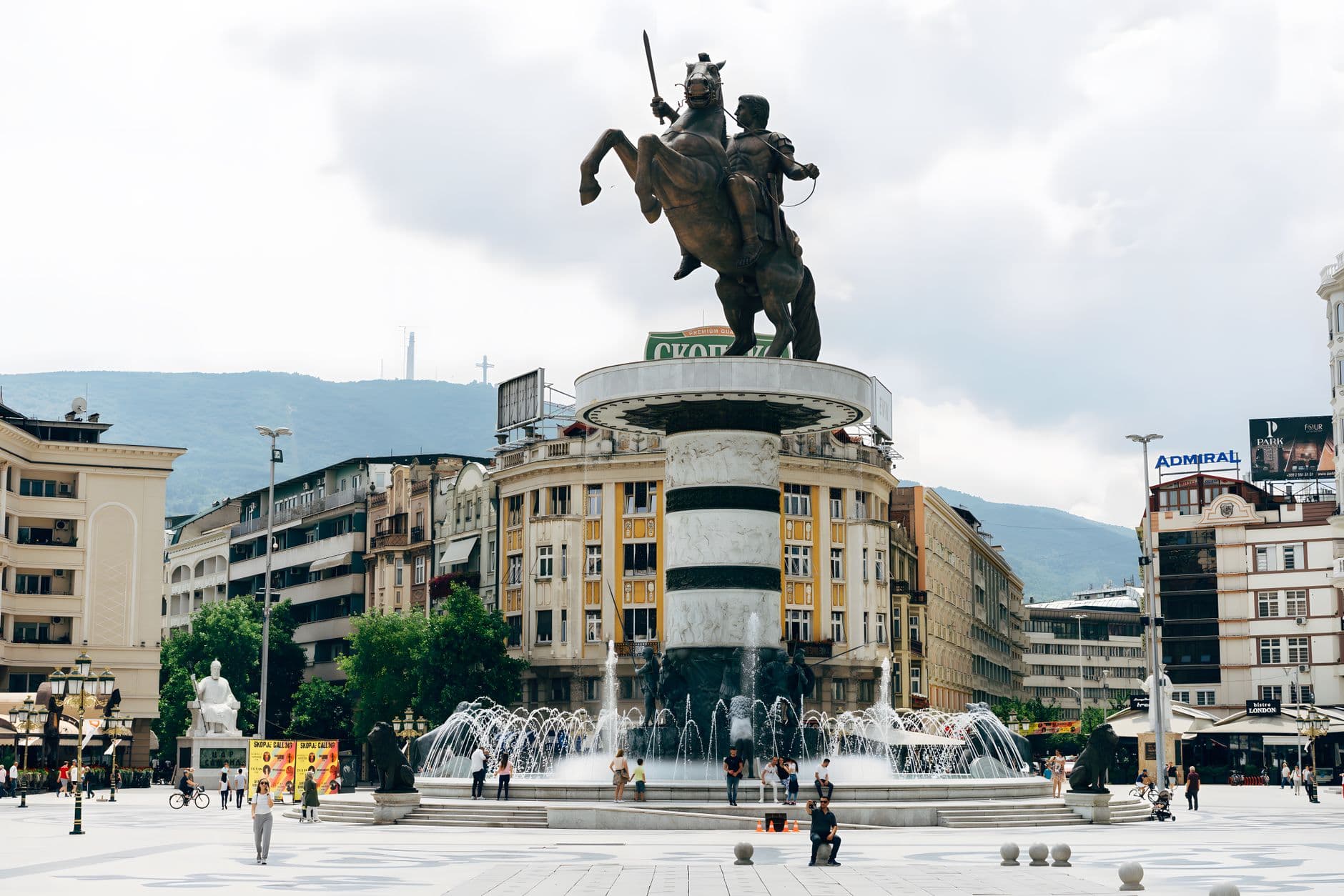
Owners, empty flats and a missing rung
Skopje is a city that has been rebuilt from scratch within living memory. The earthquake of 26 July 1963 destroyed 80% of the city and left more than 200,000 people homeless. In 1965 the United Nations invited Kenzō Tange into a limited competition for the new plan, which his team shared with a Yugoslav one. His City Wall blocks and the Transport Centre still frame the centre. In the 1990s most of the flats inside them passed from the state to the families living there. That sale shapes every housing question in Skopje today.
The 2021 census counts 526,502 residents across the 10 municipalities of the City of Skopje, living in 213,850 dwellings. Owner-occupiers make up 89% of households and only 8% rent. Private landlords house about 8.0%. Public housing is the leftover state stock run by the national housing enterprise, which publishes no count for the city. Cooperative housing does not register in the statistics at all. Nationally, Eurostat counts 87% of people as owners, and only 0.6% of the population carry a mortgage. Researchers call this pattern super-homeownership.
- Owners
- Owner-occupier89.0%
- Renters
- Public & non-profit rental0.00%
- Cooperative0.00%
- Private rental8.0%
- Unclassified3.0%
- Unknown / Other3.0%
Social housing here is a narrow allocation rule, not a sector. The government builds flats for vulnerable households and lets them at subsidised rents. A loan of €25.35 million from the CEB (the Council of Europe Development Bank, a lender for social projects) co-funds 1,708 such rental flats in 19 towns. Two new social buildings, in the Skopje municipalities of Butel and Saraj, were in their final phase of construction in August 2026, according to the minister responsible for housing. All of this sits inside the public slice of the chart. A comparative study of social housing in Denmark, Germany, Portugal and Serbia finds the same marginal position next door in Serbia.
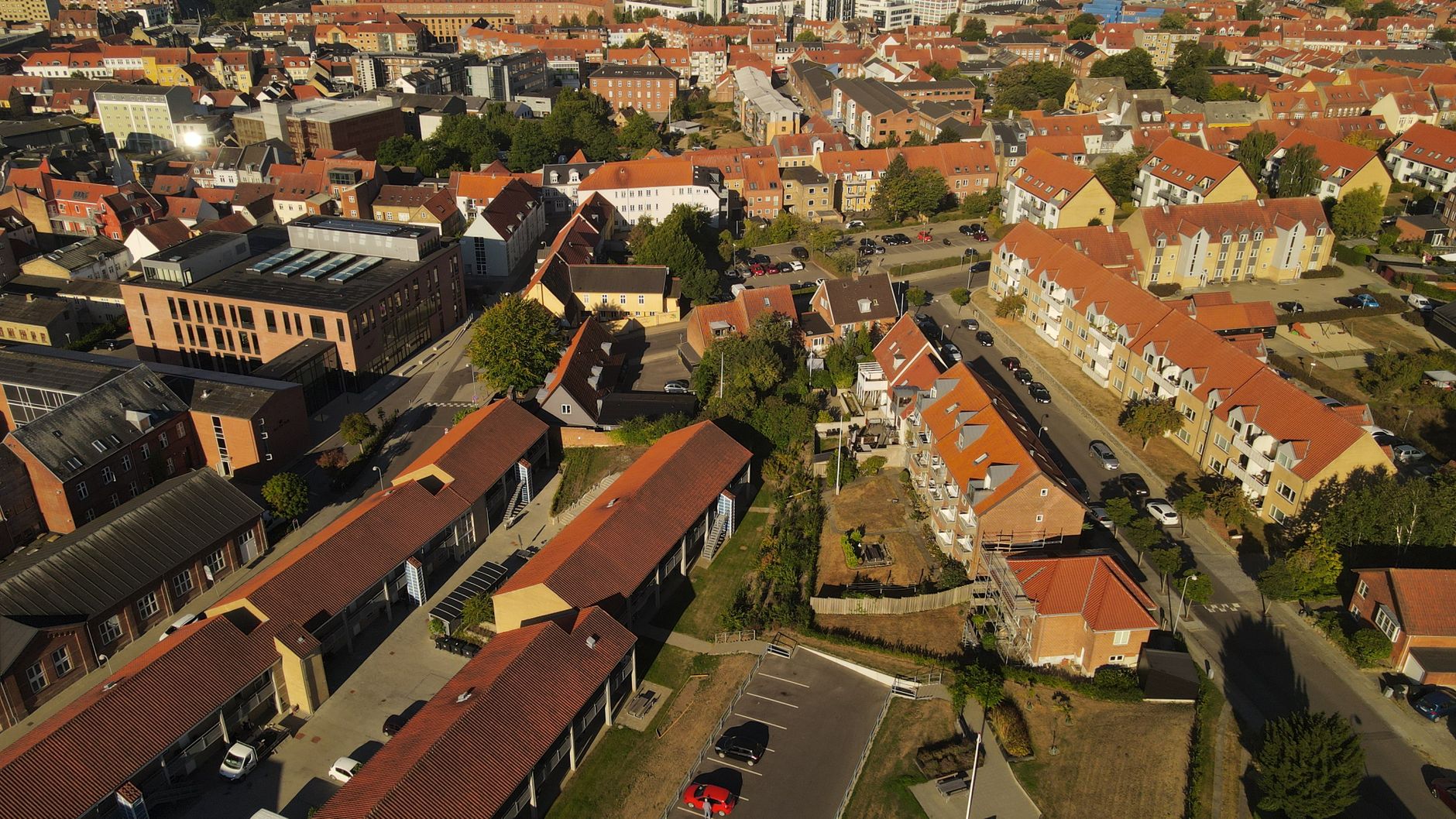
Rents look modest by European standards and heavy against local pay. Tenants of public flats pay about €0.6/m². Across the existing private stock the median is €6.5/m², and new contracts sign at €7.1/m². Furnished and serviced flats, priced gross with utilities and furniture, reach €7.5/m². A one-bedroom flat in the centre lists at about €388 a month. Between the public floor and the market there is no middle rung.
- Public/municipal housing
- All-stock median
- New contracts
- Furnished / serviced (gross)
Monthly rent per m². Net cold except the furnished/serviced tier, which is gross. There is no cooperative tier to plot.
Empty homes are the paradox at the centre of the market. The 2021 census found 27.7% of Skopje's dwellings unoccupied, some 60,000 flats. In Centar, the historic core, 10,865 flats stood empty. Many belong to emigrants or were bought as a store of savings. A 2022 investor report on catalytic capital in Central and South-Eastern Europe found that 87% of property purchases in the country were paid in cash. Offices are emptier too: about 10% of modern office space is vacant, roughly 42,000 m².

New demand keeps arriving from the rest of the country. The Skopje region gains around 7,000 residents a year through migration. Permits were issued for 16,341 dwellings in Skopje between 2020 and 2023. Construction costs about €580/m² for a mid-range shell, and building land lists at €180/m². Sale prices run far ahead of both. The Agency for Real Estate Cadastre (the national property register) recorded an average of €1,547/m² for older flats in Centar in the first half of 2026. There is no rent regulation, and a short-term let costs about €45 a night.
The strain is sharpest for the poor and the young. Eurostat finds 24.6% of people below the poverty line overburdened by housing costs, against 0.3% of everyone else. Crowding is the wider problem, affecting 38.3% of the population. Young people leave the parental home at 30.7 on average, against 26.3 across the EU. Middle earners now feel it too. A 2026 report on the Balkans' housing squeeze recorded a sale at €3,780/m² in Aerodrom, about five average monthly salaries for a single square metre.
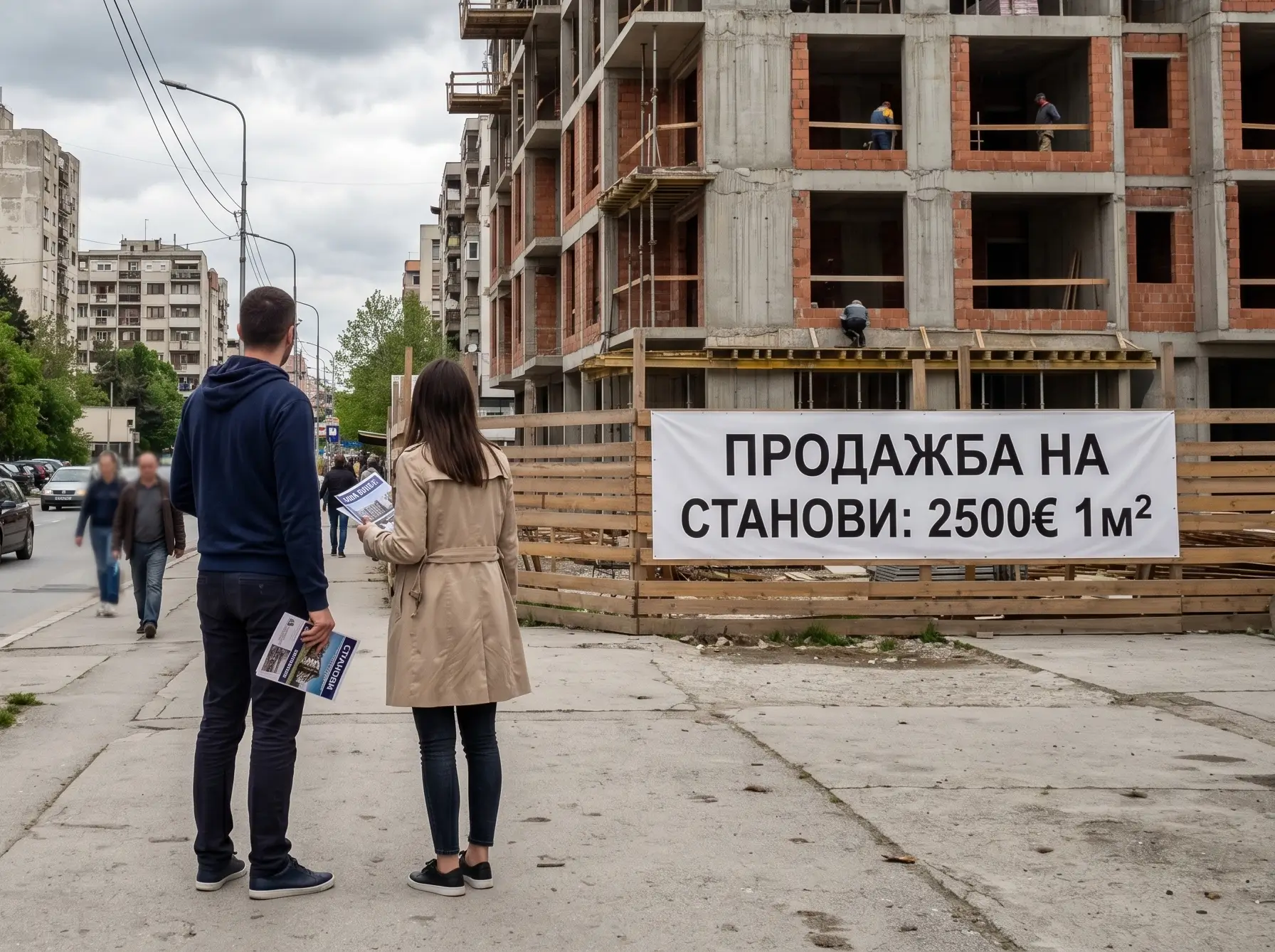
What Skopje lacks is a home that is neither bought outright nor rented from a private owner. Cooperatives once filled that gap across Yugoslavia, and today their share of the city's stock is too small to count.
Self-management without cooperatives
North Macedonia has no working housing-cooperative tenure. There is no member share, no right of use and no cooperative landlord. The collective form that does exist is the building itself. Owners of flats in a block form a community of owners and usually hire a building manager (upravitel, a licensed management firm). The rules come from the Law on Housing (Zakon za domuvanje), first adopted in 2009 and amended in July 2025. A new Law on Cooperatives (Zakon za zadrugite) followed in 2023. So far it has been read mainly as a route to energy cooperatives, not housing.
The idea is older than the law. Yugoslav housing grew from self-management, in which enterprises and municipalities built socially owned flats and workers received a right of occupancy (stanarsko pravo, a lifelong tenancy). MOBA's conversation in the Radical Housing Journal traces its own name to "moba", the Yugoslav word for neighbours building together. After 1991 that stock was sold to its occupants at a discount, and the cooperative thread was cut. A study of Zagreb's housing policies shows the same turn from Yugoslav social housing to private, debt-financed ownership in Croatia.
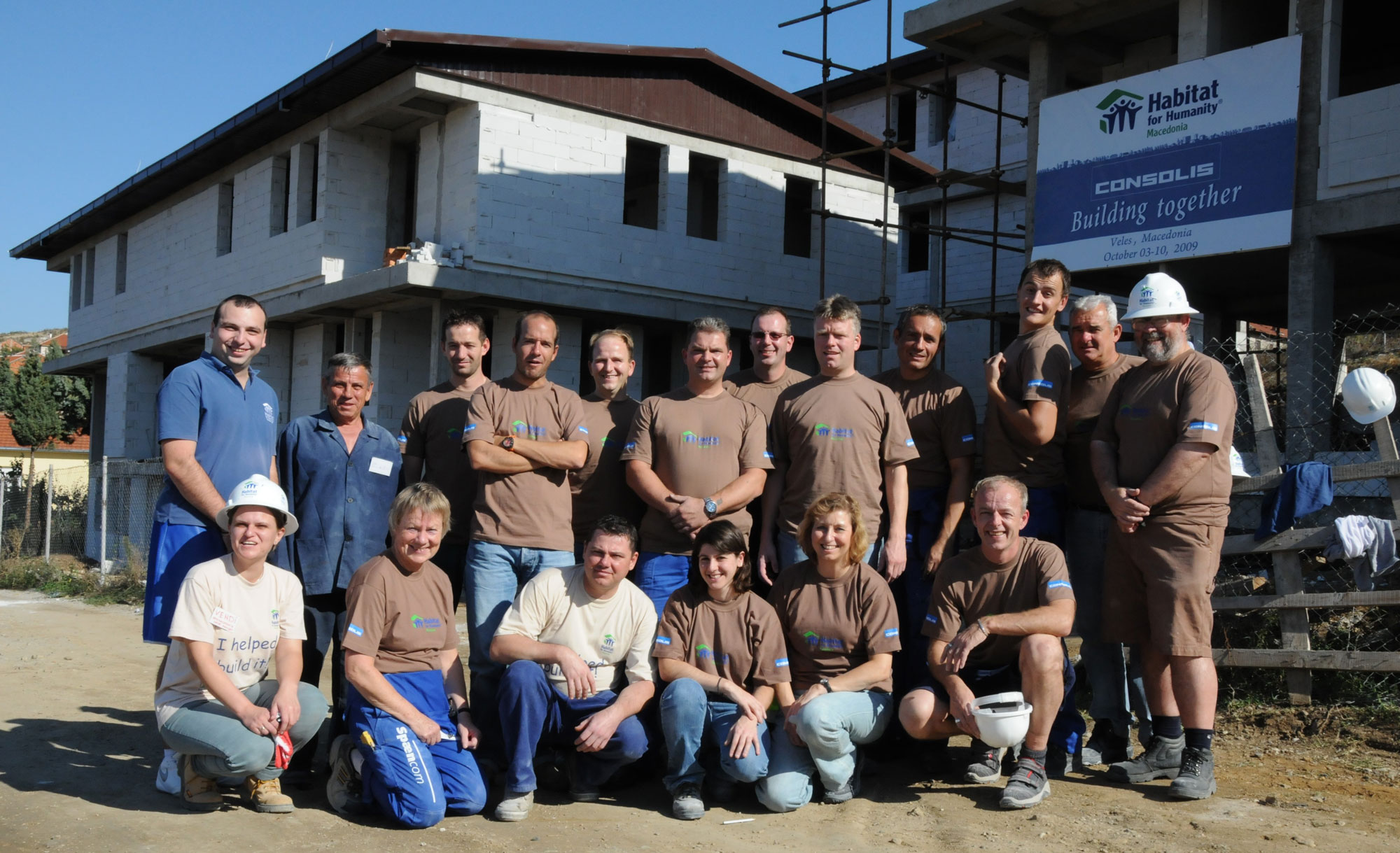
Today the non-market side of Skopje is made up of a few actors who meet at the level of the building. Habitat for Humanity Macedonia, working in the country since 2004, is the largest. It finances energy retrofits through a revolving fund and, since 2015, through its management company Habidom, which ran 128 apartment buildings in 2019. The Housing and Tenants Organization (HTO), a Skopje association founded in 2022, speaks for renters and for young people locked out of the market. Across the region, the study of cooperative housing pioneers in Central and South-Eastern Europe follows the MOBA network. Its members in Zagreb, Belgrade, Ljubljana and Budapest are building a revolving fund and an ethical bank for new cooperatives. None of them is Macedonian yet.
These groups face different problems. Habitat's obstacle is getting owners in an ageing panel block to agree and borrow together. The tenants' groups face a rental market with no protected tier. A new cooperative would face both, plus the absence of land, finance and a legal model. The state does not yet treat cooperatives as part of its answer. Its own affordability instruments are flats it builds and sells or lets itself.
A state that builds to sell
Housing policy in North Macedonia is made nationally and mostly with public money. Since 2024 the government of Prime Minister Hristijan Mickoski has run it through the Ministry of Transport and Communications, whose remit includes housing. Its minister, Deputy Prime Minister Aleksandar Nikoloski, has chosen one main lever: the state building flats and selling them below market. In November 2024 he announced that the state housing company would build for sale in Shtip, Skopje and Bitola, aiming to cut prices by 30-40%. In Bitola the flats went on sale at €1,000/m². The government also promised a "Buy a house for young people" scheme for young couples, a successor to the older subsidised-loan programme "Buy a house, buy a flat".
The next such commercial flats will be built in Ohrid, and after that we will have such a call in Skopje too, because many young couples cannot afford to pay 2,000–2,500 euros per square metre of housing.The second national task is the last of the old state stock. A pending amendment to the Law on Housing gives families still living in state-owned flats under pre-1998 use agreements until 31 December 2027 to buy or rent them. Rents would be income-linked, from 25 to 190 denars per square metre, and eviction becomes possible after the final deadline. The central government also sets the property tax that the municipalities collect.
The City of Skopje, the city-wide tier above its 10 municipalities, holds the General Urban Plan (GUP, the master plan that fixes land use and density). The plan for 2012-2022 has expired and its successor is still being drafted, according to BIRN reporting on the Kuprom site. The municipalities issue detailed plans and building permits. In November 2025 voters elected Orce Gjorgjievski of VMRO-DPMNE as mayor with 57.03% of the vote. During the campaign he pledged that "every new building" should be part of a systematic plan, with infrastructure and public services at its centre.
No programme yet supports cooperatives, whether through land, a dedicated loan line or a legal model. The nearest instruments are for owners. The EBRD (the European Bank for Reconstruction and Development) has lent €4 million to NLB Bank for homeowners and housing collectives, with cashback of up to 20% funded by the EU and Japan. Habitat for Humanity Macedonia's revolving fund lends to building communities on similar terms.
The state's answer to empty homes is the tax bill. Since January 2023 owners of a flat unused for more than six months a year pay three times the usual property tax, and five times if they fail to declare it. No register of vacant buildings or conversion programme exists, so disused sites such as the Kuprom factory are more likely to become new towers than homes made from what already stands.
Climate policy points at the same buildings. Amendments to the Energy Efficiency Law in September 2025 require a renovation strategy for residential, public and commercial buildings to 2050, and oblige the state to renovate 3% of its own buildings each year. The national energy and climate plan targets a cut in greenhouse gases of 82% against 1992. At home the gap is large: 86% of households heat with a stove, which feeds the winter smog.
The civic side of the debate asks for rights rather than prices. A 2026 report on housing across the Balkans argues that urgent state strategies are still missing, and gives the last word to Skopje's tenants.
Housing is much more than an economic question. It is a human right, and it directly affects demographics, social stability and quality of life. When flat prices and rents rise faster than incomes, young people in particular face serious limits in planning their own lives.- 1963[source]
Earthquake destroys most of the city
The 26 July earthquake destroyed 80% of Skopje and left more than 200,000 people homeless.
- 1965[source]
UN competition for the new plan
The United Nations invited Kenzō Tange and his team into the international competition for the reconstruction plan.
- 2009[source]
Law on Housing and a social-housing loan
The Law on Housing is adopted; the CEB approves a €25.35 million loan for 1,708 social rental flats.
- 2010[source]
Skopje 2014 announced
The government rebuilds the centre in neo-classical dress; by 2015 the cost had passed €600 million against €80 million announced.
- 2021[source]
Census counts the empty flats
27.7% of the City of Skopje's 213,850 dwellings are unoccupied.
- 2023-01[source]
Tripled property tax on unused homes
Flats or commercial space unused for more than six months a year pay three times the property tax.
- 2024-11[source]
State flats for sale announced
The state housing company plans buildings for sale in Shtip, Skopje and Bitola, aiming to cut prices by up to 30-40%.
- 2025-07[source]
Housing Law amendments adopted
Parliament amends the Law on Housing, focusing on the management of multi-apartment buildings.
- 2025-09[source]
Energy Efficiency Law amended
A building-renovation strategy to 2050 replaces 10-year plans; the state must renovate 3% of its buildings a year.
- 2025-11[source]
Orce Gjorgjievski elected mayor
He wins the Skopje runoff with 57.03% of the vote.
- 2027-12[source]
Deadline for legacy state flats (proposed)
Occupants of old state-owned flats must apply to buy or rent them by 31 December 2027, under a pending amendment.
- 2030[source]
National climate targets
The energy and climate plan targets 38% renewables in final energy use and 45% in heating and cooling.
- 2050[source]
Horizon of the renovation strategy
The long-term strategy for renovating residential, public and commercial buildings runs to 2050.
From reconstruction to the renovation targets of the 2020s.
From the City Wall to the building council
Habitat for Humanity Macedonia's retrofit programme is the city's clearest proof that owners can act together. Since 2010 it has renovated 72 multi-apartment buildings with 2,033 flats. The work saves 9,185 MWh of energy and 4,261 tonnes of carbon dioxide a year. It began as a USAID pilot and continues as a revolving fund, as the Periféria investor report records. Habitat also pressed for years for the 2025 amendments to the Law on Housing, which aim to put every block under proper management.
The City Wall (Gradski zid) is the housing Tange's plan left behind. Designed by the Macedonian firms Beton and Makedonijaproekt, it is a ring of horizontal blocks 24 m high, punctuated by towers of 45 m. It is still lived in, and it is the kind of large panel-era block the new renovation strategy has to reach. The Transport Centre, Tange's station completed in 1981, shows the other side of the plan: 5 of its 10 track troughs were never used.
The social buildings in Butel and Saraj bring the national social-housing programme into the capital. They are the Skopje entries in a list that has already handed over flats in Veles, Kočani, Strumica, Gevgelija and Debar. For families on the waiting list they are the only non-market rent the city offers.
Kuprom, a chrome smelter in Hrom abandoned for more than 20 years, is the test for reuse. The civic group Kulturno eho has long asked for its 21,000 square metres to become a cultural centre or student housing. The owners are waiting for the new master plan, and BIRN reports that the stage is set for new residential buildings instead.
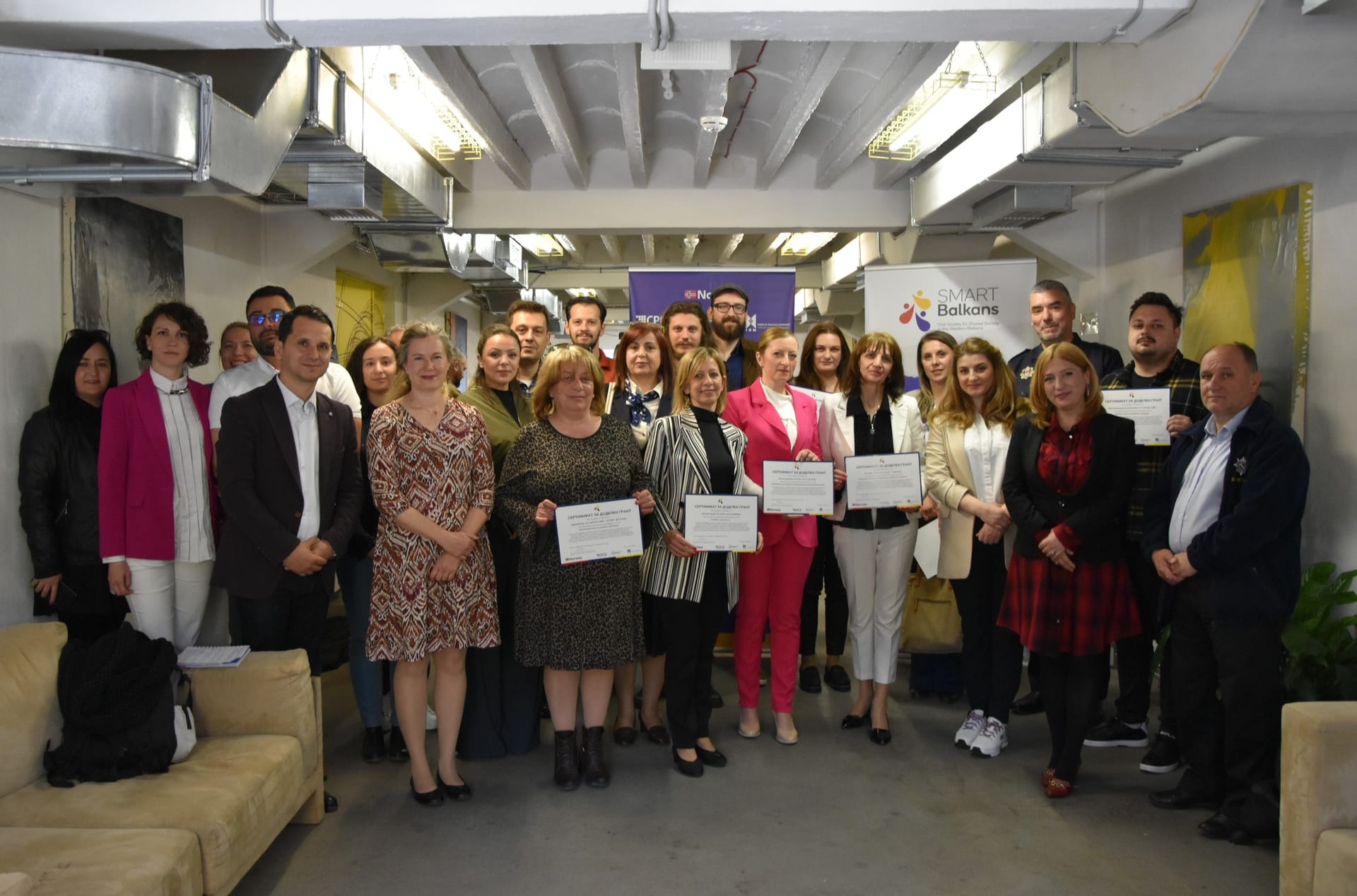
The Housing and Tenants Organization (HTO) works on the demand side. Its project with the Smart Balkans programme brings young people into the search for housing solutions in a city where they leave home in their thirties. It is the nearest thing Skopje has to the tenant federations that seeded cooperatives elsewhere.
Rasadnik, in Kisela Voda, is the planning story the new mayor tells about himself. As mayor of that municipality he replaced a plan for 99 buildings with an international competition for the detailed plan, judged by an independent jury. Whether the city-wide GUP follows that method will decide what Skopje's next generation of housing looks like.
References
Statistics14Click on any number to see the source
Housing market
Adaptive reuse & vacancy
Population & migration
From our library8
- Social housing opportunities and challenges: Perspectives from Denmark, Germany, Portugal and Serbia — Knowledge
- Catalytic capital investment as an enabler of affordable rental and cooperative housing - Investor Report — Knowledge
- Нова криза за опстанок на повидок: правото на дом на Балканот се претвора во луксуз — Knowledge
- MOBA: Rethinking needs and financing for affordable rent and cooperative housing in Central and South-Eastern Europe — Knowledge
- Housing Policies in the Service of Social and Spatial (In)Equality — Knowledge
- Habitat for Humanity Macedonia — Organisation
- Housing and Tenants Organization (HTO) — Organisation
- Cooperative Housing Pioneers in Central and South- Eastern Europe: Mainstreaming Alternatives through Translocal Networks — Knowledge
Further sources30
- 1963 Skopje earthquake — en.wikipedia.org
- Popis 2021: over a third of dwellings unoccupied — 24.mk
- Distribution of population by tenure status (ilc_lvho02) — ec.europa.eu
- I'm so grateful we have better living conditions — coebank.org
- Nikoloski allocates 47 social flats in Debar — mkd.mk
- Catalytic capital investment as an enabler of affordable rental and cooperative housing in CSEE — periferiacenter.com
- More buildings, more dark windows — fakulteti.mk
- 50 m² flat sold for €168,000 in Centar — skopje1.mk
- Housing cost overburden rate (ilc_lvho07a) — ec.europa.eu
- Overcrowding rate (ilc_lvho05a) — ec.europa.eu
- Young people in North Macedonia leave the parental home at age 30.7 — albeu.com
- New survival crisis: the right to a home in the Balkans becomes a luxury — mim.org.mk
- The long-expected amendments to the Housing Law adopted — habitat.org.mk
- SunSharing: state of the art report — euki.de
- Habitat for Humanity North Macedonia fact sheet — habitat.org
- Nikoloski announces project to cut flat prices — lider.mk
- Nikoloski: we are working to normalise flat prices — makfax.com.mk
- "Buy a house for young people" starts next year — vlada.mk
- New proposals for old state flats — nezavisen.mk
- BIRN on the abandoned Kuprom — radiomof.mk
- Orce Gjorgjievski elected Skopje's new mayor — mia.mk
- Gjorgjievski: every new building will be systematically planned — kurir.mk
- EBRD, EU and Japan support energy-saving investments in North Macedonia — ebrd.com
- North Macedonia adopts key amendments to the Energy Efficiency Law — karanovicpartners.com
- North Macedonia first in Western Balkans to adopt NECP — balkangreenenergynews.com
- Reconstruction of Skopje 1963 — en.wikipedia.org
- Skopje 2014 revamp price tag swells — balkaninsight.com
- Habitat for Humanity in North Macedonia — habitat.org
- City Wall (slab) — northmacedonia.architectuul.com
- Transportation Center Skopje — en.wikipedia.org
Funding & land tenure
What a housing cooperative could actually build on hereLand tenure has not been assessed for North Macedonia yet — that is a gap in the research, not a finding.