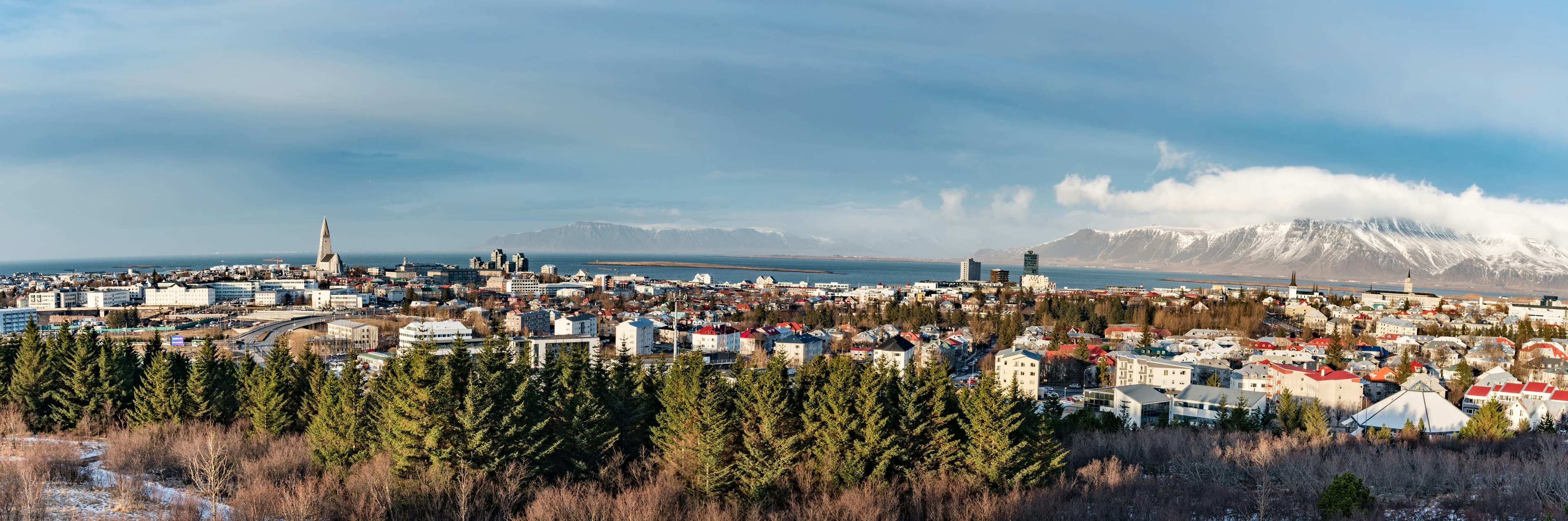
Reykjavík's housing landscape today
Reykjavík sits inside one of the most-acute housing-price-shock contexts in Europe — Icelandic home prices and rents have outpaced wage growth more than in any other European country in the past decade. The cost burden weighs heavily on both renters and buyers, particularly in urban areas. The contemporary policy response runs through a distinctive three-pillar non-market structure: Búseti húsnæðissamvinnufélag (housing cooperative, est. 1983, ~5,500 members), Bjarg íbúðafélag (non-profit rental foundation established by BSRB + ASÍ for low-income union members) and Félagsbústaðir (Reykjavík's municipal social-housing company). In 2025 the Minister for Social Affairs and Housing established a special task force to develop both emergency and long-term solutions, with core priorities including boosting affordable-dwelling supply, strengthening tenant security, and stabilising the rental market.
The tenure mix tells the rest of the story. (See chart above for the canonical breakdown; rent-spread details follow.)
- Owners
- Owner-occupier72.0%
- Renters
- Public & non-profit rental3.8%
- Cooperative1.6%
- Private rental22.6%
The cooperative + non-profit + social-housing institutional infrastructure is the subject of the next section.
- Cooperative (Búseti)
- Bjarg (non-profit)
- Private rental
- New contracts
Net-cold monthly rent per m².
Data at a glance for Reykjavík: 28% of households rent across 63,000 dwellings. Rents sit at €25.75/m² across the existing stock against €26/m² for new contracts. Non-market housing covers 1.6% in the cooperative sector and 3.8% as public housing. Residential vacancy is 4.5%; office vacancy 4.2%. Annual in-migration runs at 8,200 new residents. Source: NextAgora geo-replica, EHC tenant geo-field values.
Cooperative + non-profit + social housing in Reykjavík
Cooperative + non-profit housing in Reykjavík runs through a distinctive three-pillar model rare in the Nordic capitals. Búseti húsnæðissamvinnufélag — housing cooperative established 1983 — operates the right-of-residence (búseturéttur) model: members purchase a share (typically 10-30% of dwelling price) and pay a monthly fee covering most housing costs, with the fee adjusting to the inflation index. Often called the "third way" between renting and owning, Búseti has approximately 5,500 members and completed 417 new apartments in Reykjavík from 2019 to 2022 — by autumn 2022 nearly 900 cooperative units were under management. Búseti is a member of NBO (Nordic Cooperative Housing Federation).

Alongside Búseti, two non-cooperative non-market institutions complete the Reykjavík model. Bjarg íbúðafélag — non-profit rental-housing foundation established by BSRB (Icelandic Federation of State and Municipal Employees) and ASÍ (Icelandic Confederation of Labour) — provides housing at affordable + long-term-stable rents to low-income union-member households. Bjarg has built, is building, or plans to build 1,645 apartments in Reykjavík, making it the principal non-profit rental-housing developer in the city. Félagsbústaðir — Reykjavík's municipal social-housing company, wholly owned by the City of Reykjavík — operates the largest municipal social-housing stock in Iceland. Together with Búseti, these three institutions form the Icelandic three-pillar non-market housing response to the post-2010 affordability shock — a structure the 2025 Social Affairs and Housing Ministry task force builds on.
Reykjavík housing policy + debate
Reykjavík's housing politics runs through municipal + national channels + EU-housing-policy + cohesion-fund frameworks. Political debate runs through Morgunblaðið, Fréttablaðið, RÚV, Vísir, Stundin.
Reykjavík: institutional layer + cooperative-housing-revival pipeline
Reykjavík's cooperative + non-profit + municipal housing pipeline runs through three principal institutional anchors. Búseti húsnæðissamvinnufélag — the principal Icelandic housing cooperative (5,500 members, 417 new apartments 2019-2022) — anchors the right-of-residence cooperative-housing model. Bjarg íbúðafélag — established by BSRB + ASÍ — anchors non-profit rental housing for low-income union-member households (1,645 apartments built/in pipeline). Félagsbústaðir — Reykjavík municipal social-housing company — anchors the municipal stock for households on low incomes or with special needs.
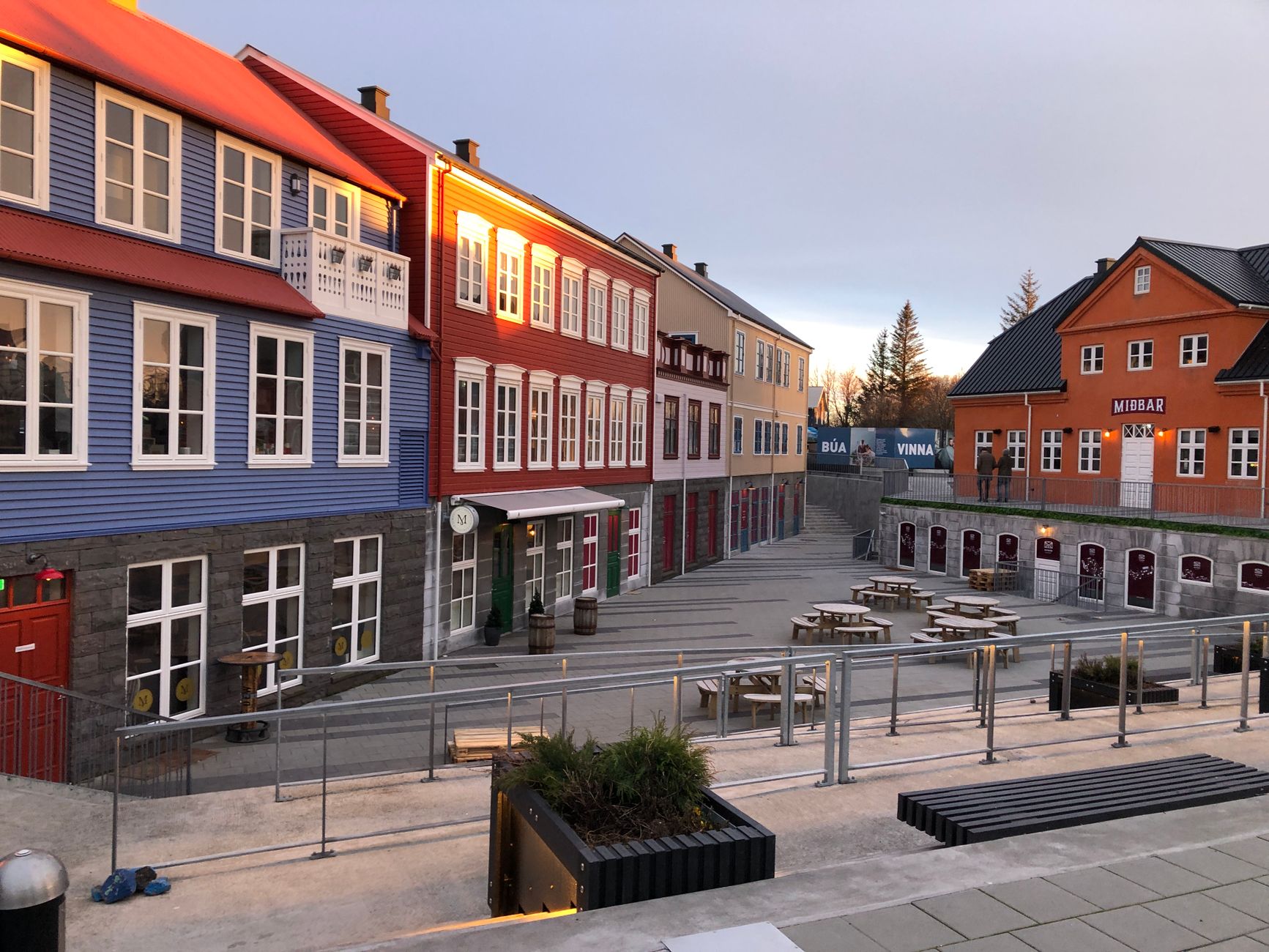

What the post-1983 Búseti + post-2016 Bjarg + Félagsbústaðir municipal layer + 2025 Social Affairs and Housing Ministry task force together demonstrate is that Reykjavík now hosts the most-developed three-pillar non-market housing infrastructure in the Nordic periphery. The combination — cooperative + non-profit rental + municipal — gives the city a comparatively rich palette of non-market levers to respond to the post-2010 affordability shock.