A city of owners, priced out
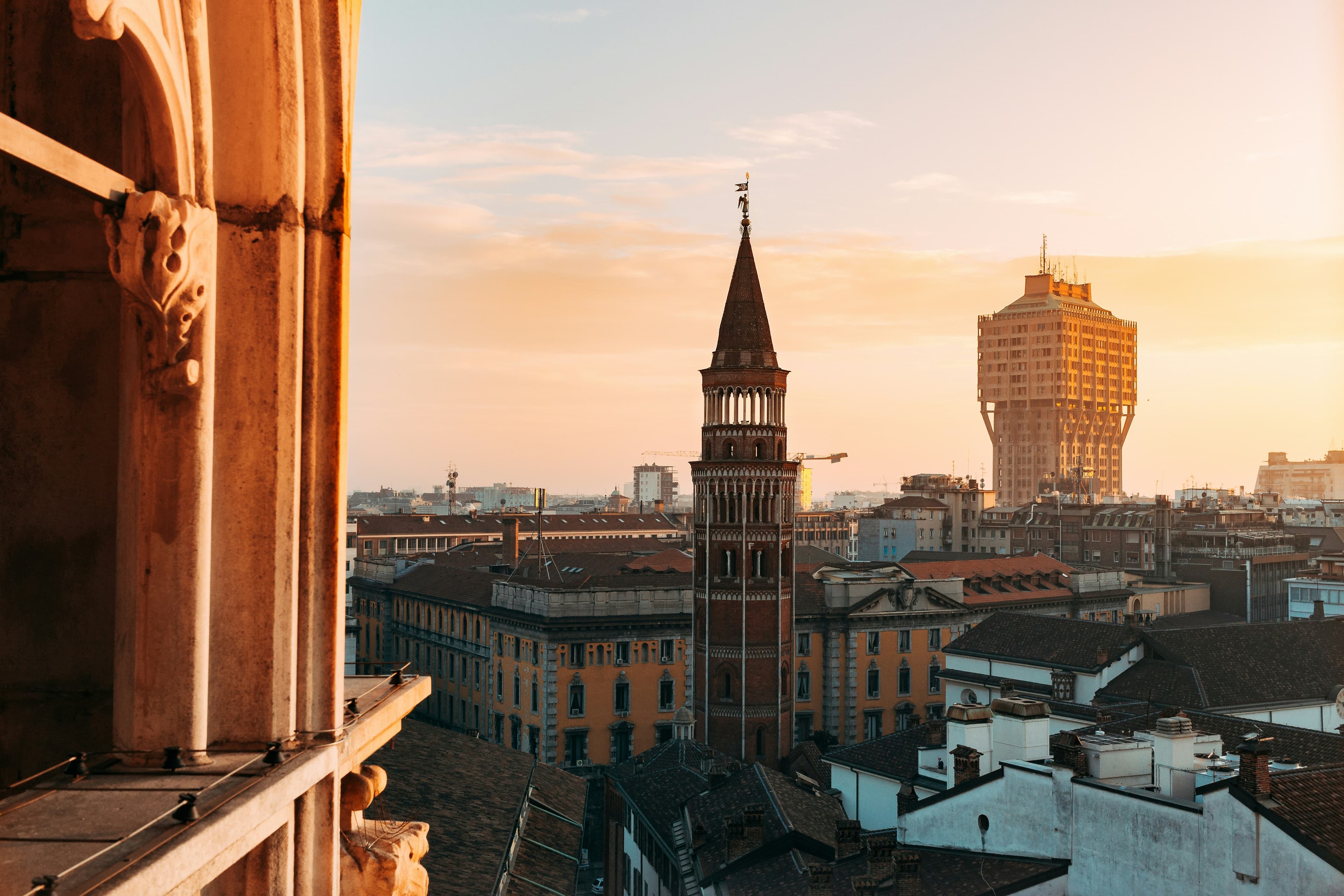
Milan is Italy's financial and design capital, a city of 1.4 million people whose Gothic cathedral, fashion houses and start-up offices pull in money and talent from across the country. It is also, for housing, a paradox. Most Milanese own their homes, yet the city has become the place in Italy where renting is hardest and dearest. A wide owner class sits on top of a thin, costly rental market and a public housing stock that has barely grown in a generation.
Ownership is what Milan does with housing: 68% of households own their home, and only 40% rent. Within that rental share, public landlords hold around 8% of all dwellings — roughly 64,000 flats, split between the regional agency ALER Lombardia and the municipal manager MM SpA. Housing cooperatives hold a further 1.2%, some 12,000 flats across about 80 cooperatives, and private landlords let around 22.8% of the stock. The non-market tier of cooperative plus public housing therefore covers about 9.2% of dwellings: narrow by northern-European standards, and far smaller than Vienna's or Berlin's. The remaining 4% sits outside the standard categories, in institutional and employer-provided housing.
- Owners
- Owner-occupier68.0%
- Renters
- Public & non-profit rental8.0%
- Cooperative1.2%
- Private rental22.8%
- Unclassified8.0%
- Source disagreement8.0%
Social housing is a regulatory rule, not a separate tenure. Around 8% of Milan's dwellings carry a social-housing allocation, and almost all of it overlays the public stock rather than forming a slice of its own. Italy built little dedicated social housing outside that public estate, so the rule and the public tenure largely coincide here. Demand dwarfs supply: roughly 45% of the city's households would qualify on income for a public flat, against the small stock that exists, and the waiting list runs to tens of thousands.
What a Milanese tenant pays depends almost entirely on which door they came through. Tenants in the means-tested public stock pay around €4.50 per square metre, and members of older cooperatives about €6.80. Signing a fresh private lease is a different city: newly-let apartments ask a median €22.30, furnished and serviced lets reach €25.65 per square metre gross, and even the all-stock median sits near €19. From the public floor to a new market contract is a jump of almost five to one. That single gap is why a city of owners can feel, from the inside, like a renters' crisis.
- Public/municipal housing
- Cooperative
- All-stock median
- New contracts
- Furnished / serviced (gross)
Net-cold monthly rent per square metre by tier (furnished is gross, all-in). The means-tested public floor and the older cooperative rent sit far below the market median; a newly-let private contract runs almost five times the public rate.
Vacancy looks large on paper and shrinks on inspection. At the 2021 census about 12.4% of homes stood empty, around 115,000 unoccupied flats — but most are second homes, inherited flats and unmodernised stock, not usable supply. The office picture is tighter than the headline: roughly 724,500 square metres are immediately available, about 7% of the office stock, with prime space genuinely scarce. The harder squeeze comes from tourism. Around 9,404 dwellings now run as full-time entire-home short-term rentals, clustered in the historic centre and along the Navigli — thinning long-term supply in precisely the streets visitors crowd into.
The arithmetic of the squeeze is simple: people arrive faster than homes do. Net inbound migration runs at roughly 48,000 arrivals a year, drawn by jobs, universities and the wider Lombardy economy, while the city issues only about 4,500 housing permits a year. The pain no longer stops at the poorest. Research on housing financialisation calls Milan the poster child of Italy's metropolitan crisis, with rising market rents pushing the middle class into hardship and a decade-long population inflow now reversing as costs bite. The Affordable Housing Observatory at the Polytechnic finds purchase prices up 8.5% and rents up 6.8% in a year while wages rose 4.2%. Around 4,800 eviction proceedings run each year, and roughly 2,700 people sleep rough.
About 80% of salaried workers in Milan are in a band of hardship.The proprietà indivisa that held the line
Milan's cooperative tradition runs along two tracks, and the difference matters. A cooperativa a proprietà divisa (a divided-ownership cooperative) builds flats and then sells them to its members, who become outright owners — in practice a route to ownership. A cooperativa a proprietà indivisa (an undivided-ownership cooperative) keeps the building in collective hands and grants members a secure, low-rent right to occupy that they never own outright. It is the undivided form that behaves like the rental cooperatives of Zurich or Vienna, and it is the one that has kept rents low for decades.
The tradition is more than a century old. Milan's first housing cooperatives formed around 1900 in the industrial belt, part of a wider Lombard movement that built worker housing alongside the Humanitaria and the early municipal estates. Through the twentieth century the divided-ownership branch grew into a mass route to home ownership, while a smaller undivided-ownership branch held a permanent affordable stock. The post-war decades layered public estates and cooperative blocks across the periphery, giving Milan a denser non-market memory than most Italian cities — even if the numbers today are modest.
Today the sector clusters into three groups with different problems. The large undivided-ownership societies — UniAbita, Delta Ecopolis and others federated through Legacoop Abitanti — manage ageing post-war stock and face slow, capital-hungry retrofit, the same squeeze a scoping review of cooperative models traces across Europe. A second cluster is the social-purpose cooperative working with the public landlord: DAR=CASA lets affordable flats to lower-income and migrant households and has refurbished public buildings under long agreements. A third is the contemporary collaborative-housing wave delivered through the investment-fund model, where Cooperativa Unitaria Abitare Milano and others organise residents into the new social-housing schemes. The legacy coops struggle with retrofit cost and ageing membership; the new ones struggle with land and capital, because Italy still lacks a strong national framework for not-for-profit housing providers.

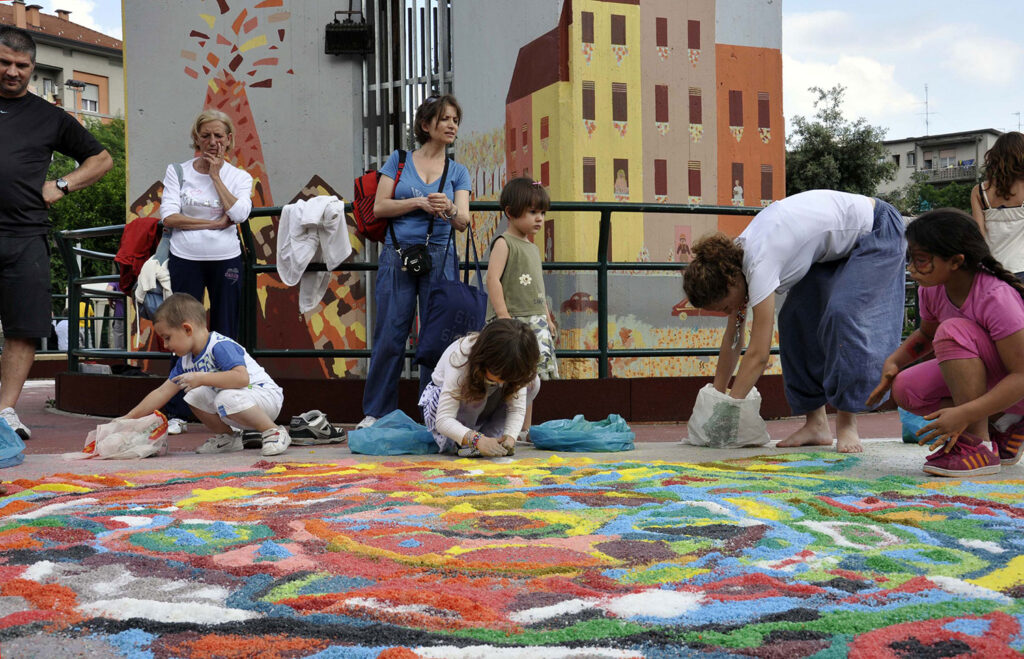
Where the cooperative stands in Milan's housing strategy is what carries this section into its politics. Milan now treats the cooperative and the social-housing fund as a deliberate affordable channel rather than a private leftover: it offers public land through design-led tenders, leans on cooperatives to organise residents, and points to rents well below the market for the households who join. That revival increasingly reaches across borders — the resilience of cooperative housing under pressure is the subject of a pan-European study that counts Milan among its cases.
The Piano Casa, under a magistrate’s shadow
Milan's housing politics is the politics of building affordable supply without a budget to pay for it. Beppe Sala of the centre-left Democratic Party has led the city since 2016, with Guido Bardelli, a planning lawyer, now holding the housing brief. Their headline answer is the Piano Casa, a plan for 10,000 below-market homes over ten years — 6,500 in the city and 3,500 in the hinterland — let at €40 to €80 per square metre a year. The city lacks the estimated €2 billion the plan needs, so it offers public land and rules and asks private operators to build and manage the homes.
Control over housing in Milan is split three ways, and the city holds the fewest of the levers. Milan owns land and writes the rules; the Lombardy region runs the public agency ALER and sets eligibility for public flats; the national government holds the tenancy law and the money. The plan's new category, edilizia residenziale sociale calmierata (capped social-rental housing), binds private builders to permanent below-market rents in exchange for land and faster permits. Its first four sites went out to private operators in 2025, and several must also deliver public flats.
The cooperative sits deliberately inside this programme. The city uses design-led tenders and the social-housing fund to channel land to cooperative and non-profit builders, and treats the collaborative-housing model as a way to add affordable homes the budget could not build directly. Banks and funds matter here too: the state lender Cassa Depositi e Prestiti backs the national social-housing fund, and ethical financiers such as Banca Etica and the cooperative fund Coopfond supply patient capital to the smaller projects.
Milan's reply to its empty space is to build on it, though that reply is now contested. The plan leans on redeveloping rail yards, the former slaughterhouse and other brownfields rather than the green edge, and Europe's wave of office obsolescence offers a conversion frontier the city is starting to use. But the whole pipeline now runs under a shadow. In 2025 prosecutors opened an investigation into what they called a planning system tailor-made for private developers, placing the mayor under investigation and freezing many large schemes — a reminder that in Milan the binding constraint is as much administrative and legal as financial.
- 1998[source]
Rents liberalised
Italy's Law 431/1998 abolishes rent control and creates two private-rental tracks — free-market contracts and the canone concordato, an agreed-rent contract with lighter tax in exchange for capped rents.
- 2004[source]
Social-housing fund model born
Fondazione Cariplo and Fondazione Housing Sociale build the first ethical real-estate fund for affordable housing, seeding the investment-fund model that later funds Cenni di Cambiamento and ARIA.
- 2013[source]
Cenni di Cambiamento opens
Four nine-storey timber towers deliver 123 affordable flats in the city's north-west — Europe's first solid-timber residential blocks above 25 metres and a pilot for collaborative social housing.
- 2015[source]
Expo and the property boom
The Expo world fair accelerates a decade of redevelopment and price growth; new rents in the city climb steadily, outrunning wages through the late 2010s.
- 2019[source]
L'Innesto wins Reinventing Cities
The L'Innesto bid wins the C40 Reinventing Cities tender for the Scalo Greco-Breda rail yard, promising Italy's first net-zero social-housing district with 400 homes.
- Oct 2024[source]
Piano Casa approved
The city approves an extraordinary housing plan for 10,000 below-market homes over ten years, at €40-80 per square metre a year, to be built and managed largely by private operators under municipal rules.
- 2025[source]
Urban-planning enquiry
A Milan prosecutors' investigation into what it calls a planning system tailor-made for private developers freezes much of the redevelopment pipeline; mayor Beppe Sala is placed under investigation.
- Dec 2025[source]
L'Innesto plan adopted
Six years after the competition win, the council finally adopts the Scalo Greco-Breda implementation plan, clearing L'Innesto to proceed — a measure of how slow Milan's pipeline has become.
- ~2028[source]
ARIA Ex-Macello completion
The carbon-negative redevelopment of the former slaughterhouse, with more than 1,200 mostly below-market flats and a design-school campus, is due to complete around 2028 after remediation delays.
- 2034[source]
Piano Casa horizon
The ten-year window of the extraordinary plan closes; whether the 10,000-home target is met turns on private appetite, the planning enquiry, and the city finding the roughly €2 billion it does not itself hold.
From the liberalisation of Italian rents and the founding of the social-housing fund model, through the post-Expo property boom, to the Piano Casa, the planning enquiry and the carbon-negative pipeline.
In Milan, decarbonising the housing stock and making it affordable have become one problem with one answer. The city's homes average around 55 years old, only about 12% of dwellings are energy-efficient, and the renovation rate crawls at roughly 1.2% a year — far short of the EU's deep-retrofit targets. The carbon-negative and timber schemes the social-housing funds are building, and the retrofit the cooperatives must run on their post-war blocks, are the main vehicles for cutting the sector's carbon, which ties the climate goal directly to the non-market tier the city is trying to grow.
What Milan argues over is not whether to build affordable homes but who they should reach. Pierfrancesco Maran, who held the housing brief for years before moving to the European Parliament, framed the task as making Milan include every social band rather than becoming a city for the rich. Massimo Bricocoli, who runs the Polytechnic's Affordable Housing Observatory, sharpens the warning with data: most salaried workers in the city, he argues, are now in a band of hardship, so the crisis has reached deep into the middle class. Tenants' unions add that a plan built on private operators and capped-but-not-cheap rents may still miss the households in greatest need.
Milan has to manage to include every social band.Rail yards, slaughterhouse and timber: the fund-built city
Milan's working examples run from giant brownfield districts to small social-purpose cooperatives, and the thread that connects them is the investment-fund model invented here: an ethical real-estate fund, seeded by a banking foundation, that finances affordable homes a developer alone would not build. The examples below run from the city's most ambitious district scheme down to its most decommodified cooperative practice, before naming the actors trying to make the model repeatable.
L'Innesto is the clearest sign of the new ambition. Planned for the disused Scalo Greco-Breda rail yard, it promises Italy's first net-zero social-housing district — around 400 affordable homes plus 300 student beds, in prefabricated timber, on four hectares of public green. Built by REDO SGR with Fondazione Housing Sociale, it is a genuine lighthouse for low-carbon affordable housing. Its caveat is the pace: it won the Reinventing Cities tender in 2019, but the council adopted the implementation plan only in December 2025, a six-year wait that shows how slow Milan's pipeline has become.
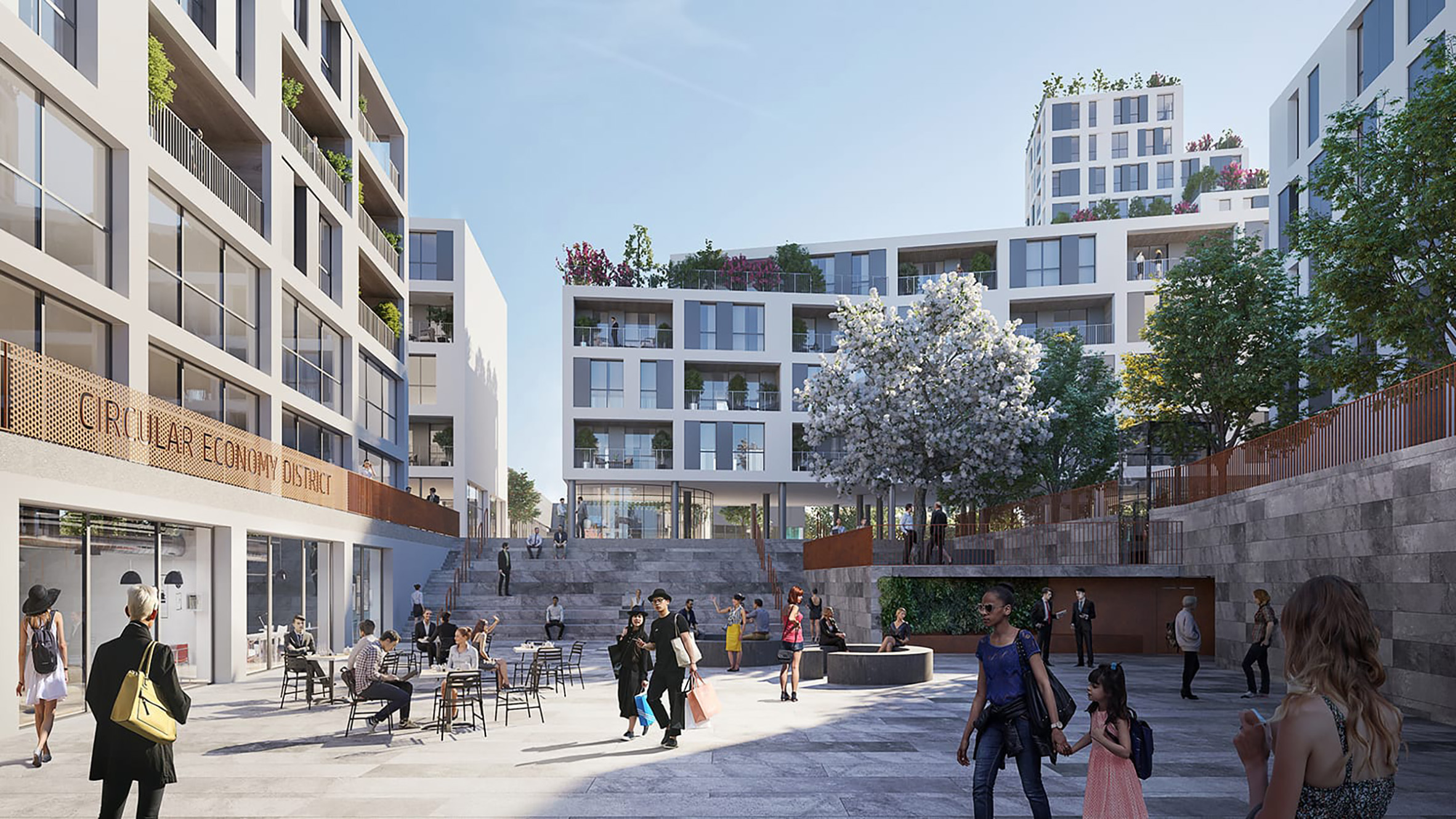
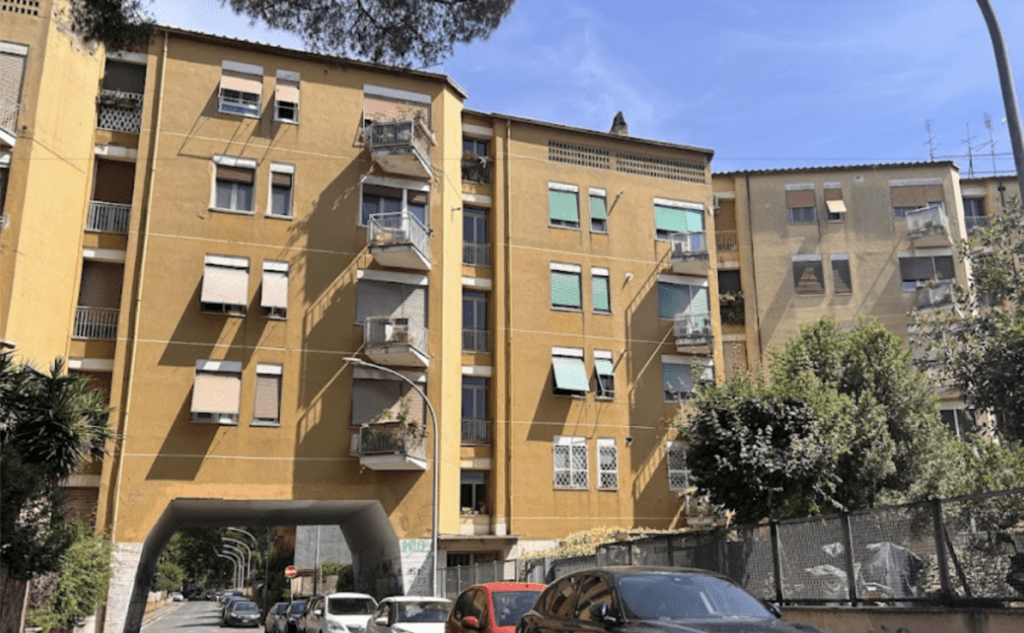
ARIA is the largest of them. The redevelopment of the former municipal slaughterhouse on viale Molise will bring more than 1,200 mostly below-market flats, a 600-bed student residence and a design-school campus, billed as Milan's first carbon-negative district. It is the boldest test of whether the fund model can work at neighbourhood scale. The friction is in the timetable: after lengthy site remediation, completion has slipped to around 2028, and the share of genuinely low rents within a project this large remains the open question.
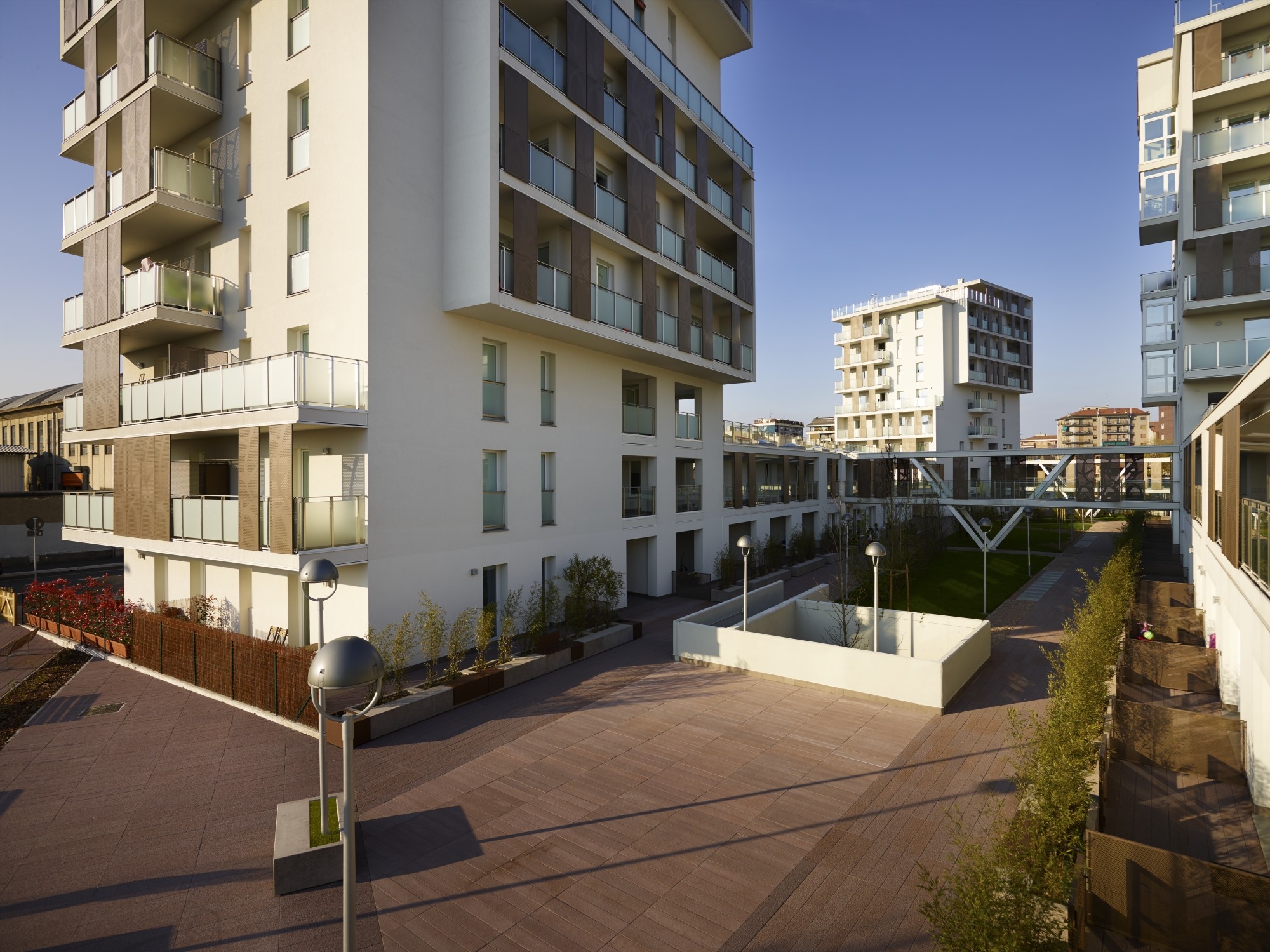
Cenni di Cambiamento is the prototype the others descend from. Completed in 2013, its four nine-storey towers were Europe's first solid-timber residential blocks above 25 metres, holding 123 affordable flats organised around shared spaces and resident self-management. It proved the fund-built, collaborative model could be built. The caveat is that, more than a decade on, it remains a celebrated one-off: the timber-and-cohousing template has been admired far more often than it has been repeated at scale.
DAR=CASA runs the most decommodified version of the idea. The social cooperative lets affordable flats to lower-income and migrant households, and at the run-down ALER Stadera estate it took on the Quattro Corti buildings under a long agreement, refurbishing 97 dwellings and adding lifts in exchange for managing them for 25 years — a model documented in a study of Europe's social economy. The scale is small and the financing improvised, but it is the closest Milan has to a resident-rooted, anti-speculative practice inside the public estate.
Holding these projects up is a small set of institutions doing decisive work. Fondazione Cariplo, the banking foundation, seeded the first social-housing fund and still anchors the model; Legacoop Abitanti federates the cooperatives; and the state lender Cassa Depositi e Prestiti supplies the national fund the local schemes draw on. It is a thinner layer than Vienna's or Zurich's, and almost everything new here flows through a handful of funds rather than a broad movement. But it is real, and it is being built on the one foundation Milan still has: a century-old cooperative memory, a belt of rail yards and brick shells waiting to become homes, and a financial capital that knows how to move capital when it chooses to.
References
Statistics19Click on any number to see the source
Housing market
Tenure & affordability
Cooperative, social & public
Adaptive reuse & vacancy
Population & migration
From our library16
- Housing policy under the conditions of financialisation - The impact of institutional investors on affordable housing in European Cities — Knowledge
- Legacoop Abitanti — Organisation
- Housing Needs and Cooperative Housing Models: A Scoping Review — Knowledge
- DAR=CASA Società Cooperativa — Organisation
- Cooperativa Unitaria Abitare Milano — Organisation
- Housing Cooperatives in Europe - Resilience and Adaption to Changing Need — Knowledge
- Cassa Depositi e Prestiti S.p.A. — Organisation
- Banca Etica — Organisation
- Coopfond — Organisation
- Rethinking European Offices 2030 - Risks and Opportunities from Obsolesence — Knowledge
- L'Innesto — Project
- REDO SGR — Organisation
- Fondazione Housing Sociale (FHS) — Organisation
- ARIA — Project
- Cenni di cambiamento — Project
- Fondazione Cariplo — Organisation
Further sources13
- Milan Piano Casa — mayor Sala presents the plan — Sky TG24
- The Piano Casa in ten points — Il Giorno
- 10,000 low-cost homes in ten years — Il Giorno
- First four Piano Casa sites — exploratory notice — Comune di Milano
- Guido Bardelli, the new housing councillor — Il Giorno
- Maran: Milan must include every social band — Il Giorno
- Affordable Housing Observatory — rents, prices, wages — MilanoFinanza
- Milan urban-planning enquiry — reactions — Il Sole 24 Ore
- Students protest high rents at Università Statale — Il Giorno
- L'Innesto — net-zero social-housing district — Fondazione Housing Sociale
- Scalo Greco-Breda implementation plan adopted — Urbanfile
- ARIA Ex-Macello — 1,200 homes + IED campus — Comune di Milano
- Cenni di Cambiamento — timber social housing — Fondazione Housing Sociale