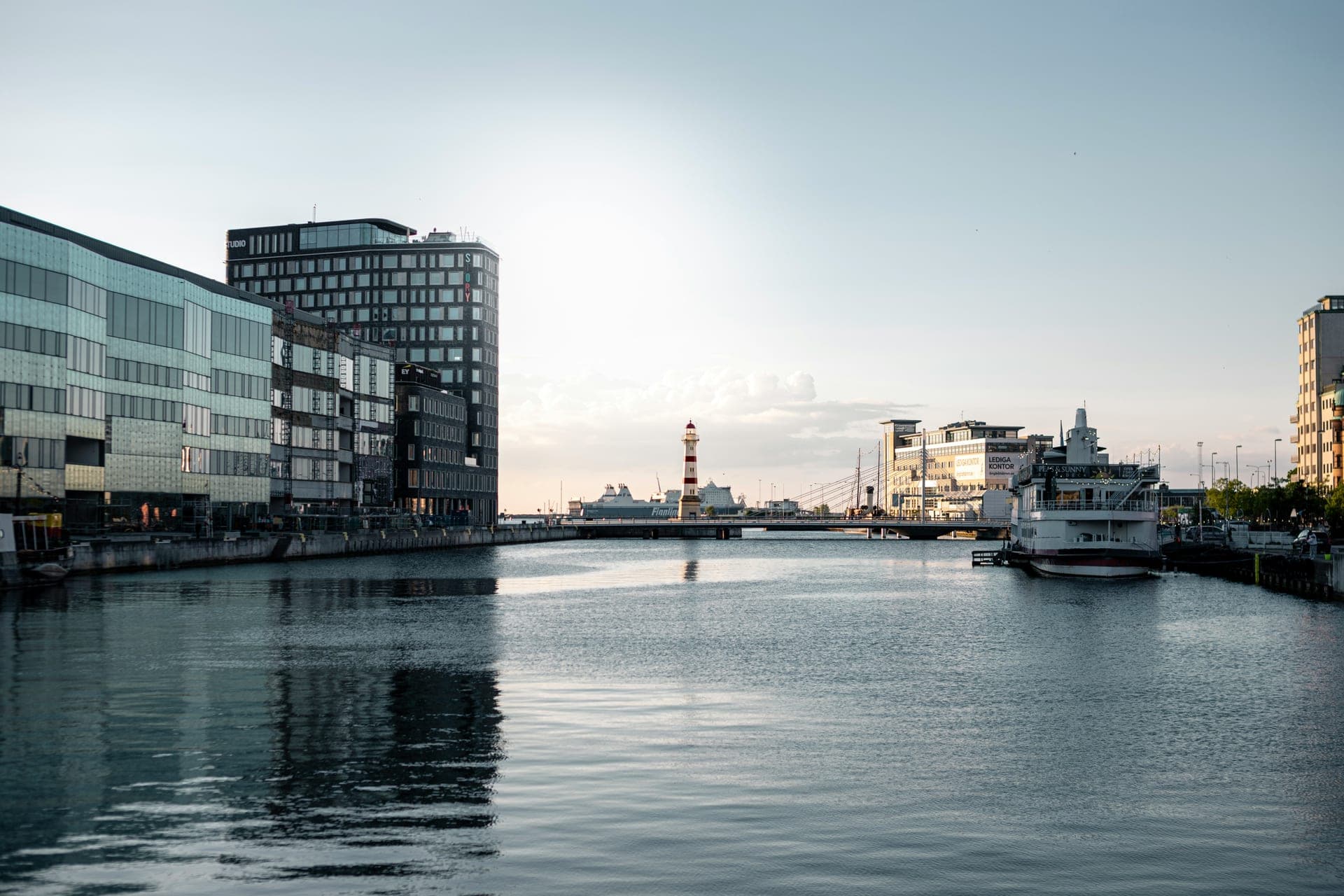
A young city in a long queue
Malmö was a shipbuilding town for most of the 20th century, and it still thinks like one: in big, planned batches. Today it is Sweden's third city and one of its youngest. People from 187 countries besides Sweden live here, and 47% of residents are under 35. A city that young and that mixed makes its housing question a question about first homes and first leases.
Of Malmö's 183,757 dwellings, the largest block is rental: 47% are hyresrätter (rental flats let on a permanent lease). Another 40% are bostadsrätter, homes held through a tenant-owner cooperative. Only 13% are owned outright, almost all of them houses. The public share belongs to MKB, the city-owned housing company, with about 27,000 flats, or roughly 14% of all homes. A 2024 analysis of municipal housing in Malmö put its share at 16% of flats in apartment blocks, a share that has been shrinking. The rest of the rental stock, around a third of all homes, belongs to private landlords such as Heimstaden, Victoriahem and Trianon.
- Owners
- Owner-occupier29.0%
- Cooperative3.0%
- Renters
- Public & non-profit rental14.0%
- Private rental54.0%
Share of dwellings by tenure, resolved live from the geographic catalogue.
Social housing in the usual European sense does not exist here. Swedish allmännyttan (municipal housing open to everyone) is universal, not means-tested. Households the market refuses are helped instead through bostadssociala kontrakt, secondary leases the social services hold on ordinary flats, spread across both MKB and private buildings. It is a safety net laid across the rental slices, not a tenure of its own, and the city publishes no single share for it.
Rents are set by negotiation rather than by the market. Under the bruksvärdessystem (the utility-value system, which ties a flat's rent to comparable flats), MKB's warm rent averages €11.20 per m² a month. The all-stock average is €12.42 and a newly negotiated lease €13.30. The spread is narrow by European standards. The real premium sits in the furnished and serviced segment, sublets priced with furniture and utilities included, at about €18.50. The yearly increases have added up: MKB rents rose 5.7% in 2024, 4.5% in 2025 and 3.19% from March 2026.
- Public/municipal housing
- All-stock median
- New contracts
- Furnished / serviced (gross)
Swedish rents are quoted warm, with heating and water included. The furnished tier is gross, with furniture and utilities priced in.
Almost nothing stands empty. Just 0.3% of rental flats in greater Malmö were free to let in September 2024, and about 4,800 dwellings are registered as uninhabited. Offices tell a different story. Some 12.7% of office space was vacant at the end of 2024, roughly 193,200 m² of floor area. In central Malmö the rate climbed to 11.3% by spring 2025.
The city keeps growing into that tight stock. About 14,200 people move in each year, most of them in their early twenties, and the population rose by 2,280 in 2025 alone. Completions reached 3,347 homes in 2023. Building starts, though, fell to just 842 as interest rates rose, which stores up a thin pipeline for the years ahead.
The squeeze lands hardest at the bottom. In October 2025 the city counted 1,470 homeless adults and 328 homeless children. Of the adults, 598 had no addiction or care needs and simply could not get a home. Crowding is common too: 16.2% of residents live in overcrowded homes. For the middle, the barrier is the queue rather than the price. Boplats Syd, the city's housing queue, grew to 168,104 people in 2025, and the average wait was 3.2 years. Even settled tenants feel it. In January 2026 an arbitrator set a 3.6% rise for some 18,000 households whose landlords had broken off talks, above the 3.19% agreed at MKB. Rent then became an election issue: the Left Party campaigned on a one-year rent freeze at MKB and took its best result yet.
It is hard to see how this could be fair. Why should two identical flats have different rents?Between the owned houses and the rented flats sits the form that defines Swedish city living: the cooperative. Two homes in every five in Malmö are held that way, and how that came about is a story older than the modern welfare state.
The tenant-owner century
The Swedish cooperative comes in 2 quite different shapes. The dominant one is the bostadsrätt (tenant-owner right). A member buys an insats, the share that gives the right to live in one flat, from a bostadsrättsförening (the tenant-owner association that owns the whole building). Members then pay a monthly fee that covers the association's loans and upkeep. Since price controls lapsed in 1968, that share trades at market value, so in practice the form behaves like ownership. The second shape is the kooperativ hyresrätt (cooperative rental), a legally defined middle form between renting and owning. Only 60 or so such associations exist nationwide.
The movement grew out of tenant protest. HSB, the Tenants' Savings and Building Society, was founded in 1923 by Stockholm's tenants' association. HSB Malmö followed in 1925. Riksbyggen, the second national federation, was founded by the building-trade unions of the LO trade-union confederation. Sweden's first tenant-owner law came in 1930, and the tenant-owner flat became the default for urban households who wanted security without a private landlord. The 1968 end of price control turned it into a market asset. A path-dependence study of Swedish housing cooperatives by Bo Bengtsson traces how that shift moved the form away from its social-movement roots. Nationally there were just over 1,200,000 tenant-owner flats by 2022.
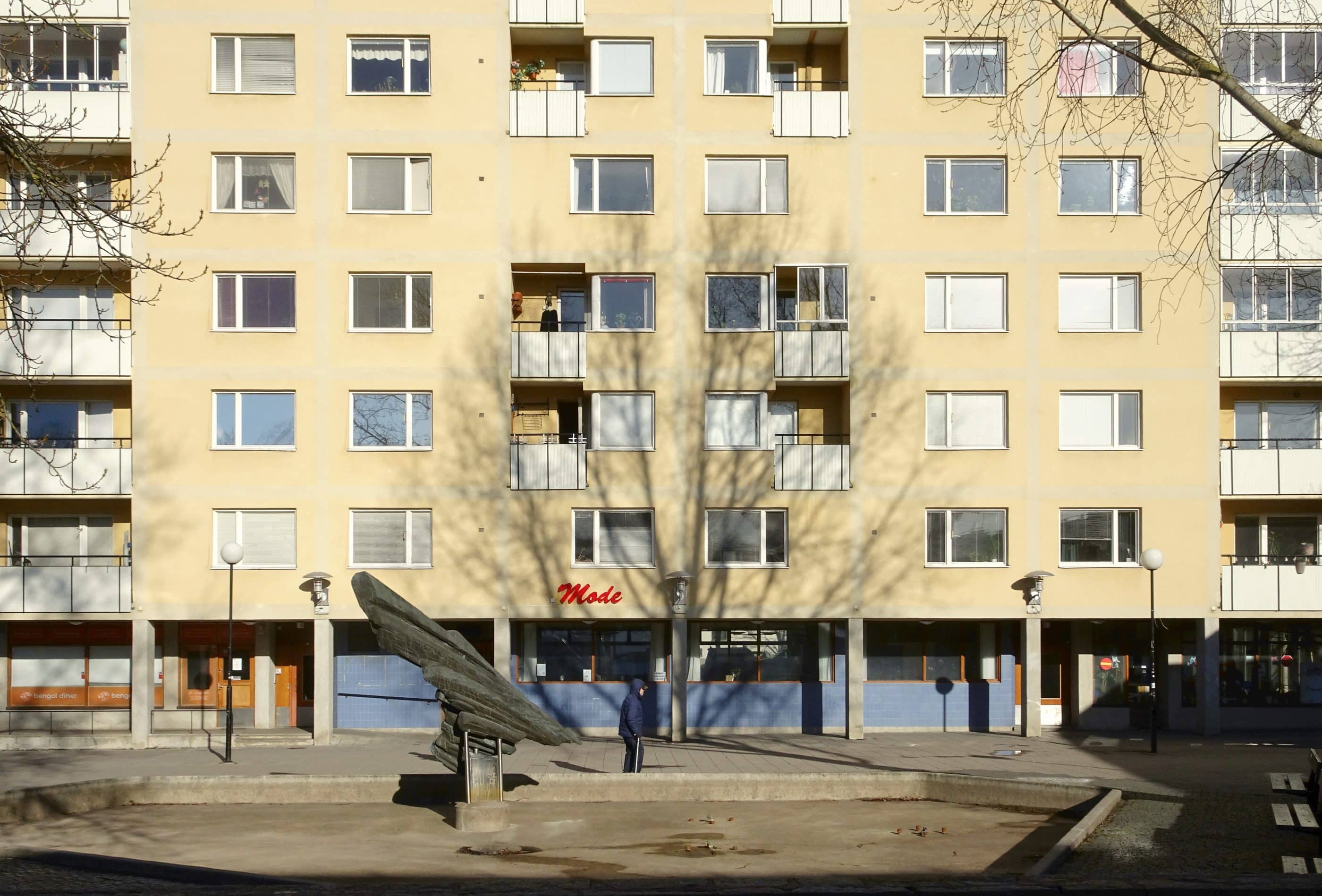
Malmö's sector today falls into 3 clusters that face different problems. The federations are the largest. HSB Malmö has 55,000 members, manages 260 tenant-owner associations and still lets 2,400 rental flats. Its challenge is new-build finance, which stalled when interest rates rose. The second cluster is the hundreds of independent associations formed by commercial developers or by tenants buying out a rental building. Their risk is debt, because an association that borrowed heavily passes every rate rise straight to its members. The third cluster is small and self-organised: collective houses such as the one in Sofielund and building communities (byggemenskaper, groups of future residents who commission their own building). Its problem is access to land and early finance. A Lund University study of collaborative housing argues these groups deliver social integration that neither federations nor developers offer. It also finds them fragile without public backing.
The city frames cooperatives mostly through the tenure mix it wants in each district, not as a sector of their own. Its land allocation policy normally awards city-owned plots by a comparison procedure, scored on what a developer proposes rather than on price alone. When the city allocated 11 plots in Sege Park in 2017, one went to a housing community of private individuals. Whether that opening becomes a routine channel for cooperatives is now a question for the new council. An American look at Sweden's housing co-ops makes the case from outside that it should.
A red-green council, a market-minded state
National policy has spent 4 years betting on the market. The Kristersson government, with Andreas Carlson as housing minister, ended the investment support for new rental homes from 1 January 2023. It then widened the presumption rents landlords may charge on new-builds, and raised the mortgage cap from 85% to 90% from April 2026. A new law from July 2026 makes it easier to let out a tenant-owner flat. Voters then changed the frame. In the election of 13 September 2026 the 4 centre-left parties won 176 of the Riksdag's 349 seats, and Magdalena Andersson was asked to form a government. Her housing programme is not yet known.
The levers are split between Stockholm and the city hall. The state writes rent law, housing finance and subsidies. Malmö holds the planning monopoly, its land, MKB and the Boplats Syd queue. Since the 2011 municipal housing act MKB must run on business-like principles, which limits how far the council can use it to hold rents down. The city's own housing supply programme for 2026 to 2030 admits that Malmö cannot reach its goals by itself. The local election moved the council left. The Social Democrats took 29.4%, the Left Party 17.4% and the Greens 8.5%. Katrin Stjernfeldt Jammeh, chair of the city executive board, has opened talks on a red-green majority with the Left and Greens, after the Liberals ended their partnership with her party.
Support for cooperatives runs through land, not money. The comparison procedure in the land allocation policy is the main instrument, and Sege Park shows how it can reserve room for resident-led groups. Mallbo, the city's programme for rental homes at reasonable rents, applies the same logic to rentals. On one Hyllie plot of about 100 homes, at least half must be Mallbo flats, with the first due in 2031. Support for resident-led groups has been thin. The building community Röda Oasen was granted SEK 400,000 in start-up support in 2020, a small sum next to the cost of a building. Underneath sits a rental model that Jim Kemeny made famous: a unitary rental market, in which non-profit rents set the level that private landlords can charge.
Malmö's empty offices have begun to turn into homes. Its best-known conversion is the Eon building on Regementsgatan, a 1965 office block by Klas Anshelm. Its owner plans about 170 flats on floors 3 to 10. Larger answers are brownfield rather than office. Nyhamnen, the old ferry port, is planned for 7,000 to 9,000 homes. Varvsstaden, on the former Kockums shipyard, is planned for 2,500 homes. Sweden has no vacant-homes tax, and with rental vacancy this low the policy debate is about unused land and offices rather than empty flats.
Climate policy runs through the same buildings. Malmö's environmental programme for 2021 to 2030 reports that the city's greenhouse-gas emissions have fallen by 70%. Hyllie has been built under a climate contract since 2011. Nationally, the government has proposed its implementation of the EU buildings directive without a renovation duty for individual homes. New buildings must carry a climate declaration of their embodied carbon. MKB's retrofit of Augustenborg remains the local proof that public housing can carry those goals.
The argument over rents divides the two sides of the table. Marie Linder, national chair of Hyresgästföreningen (the Swedish Union of Tenants), attacked the Centre Party's market-rent plan in April 2026. She called it "a proposal that belongs in the wastepaper basket", adding that Swedes reject market rents "survey after survey". The landlords answer that freedom need not mean insecurity. When the Left proposed a statutory rent freeze, both landlords and the tenants' union pushed back. Cathrine Holgersson, chief executive of Sveriges Allmännytta (the federation of municipal housing companies), called it a far-reaching intervention in a negotiated system. Locally, the Malmö University housing researcher Martin Grander warns that relying on new building alone to end segregation "will take generations".
Allowing landlords and tenants to agree between themselves on the rent and content of a newly built flat does not threaten the security of any tenant.- 1923[source]
HSB founded
Stockholm's tenants' association founds HSB, the tenant-owner cooperative federation. HSB Malmö follows in 1925.
- 1930[source]
First tenant-owner law
The first bostadsrätt law lets tenant-owner associations be formed.
- 1968[source]
Utility-value rents; price control ends
The bruksvärdessystem ties rents to comparable flats, and the price control on tenant-owner flats lapses at the end of the year.
- 2001[source]
Bo01 housing expo
The Bo01 housing expo runs in the Western Harbour, the Västra Hamnen district, from May to September.
- 2011[source]
Business-like municipal housing
The municipal housing act requires companies such as MKB to run on business-like principles. Hyllie signs its climate contract the same year.
- 2023[source]
Investment support ends
No new state investment support for rental homes is granted from 1 January.
- 2026-04[source]
Mortgage cap raised
The mortgage cap rises from 85% to 90% and the stricter amortisation rule is removed.
- 2026-09[source]
Elections move Malmö left
The Left Party wins 17.4% in Malmö on a rent-freeze pledge; a red-green majority is under discussion.
- 2030[source]
Housing and climate programmes end
The city's housing supply programme 2026–2030 and environmental programme 2021–2030 reach their horizon.
- 2031[source]
First Mallbo homes
The first homes in the Mallbo programme for reasonable rents are due in Hyllie.
- 2040[source]
Hyllie at full size
Hyllie is expected to house 25,000 residents.
Milestones in the city's cooperative, rental and planning history, and the targets it has set itself.
The working answers to that argument are already built, from a waterfront tower to a converted hospital ward.
From Turning Torso to Röda Oasen
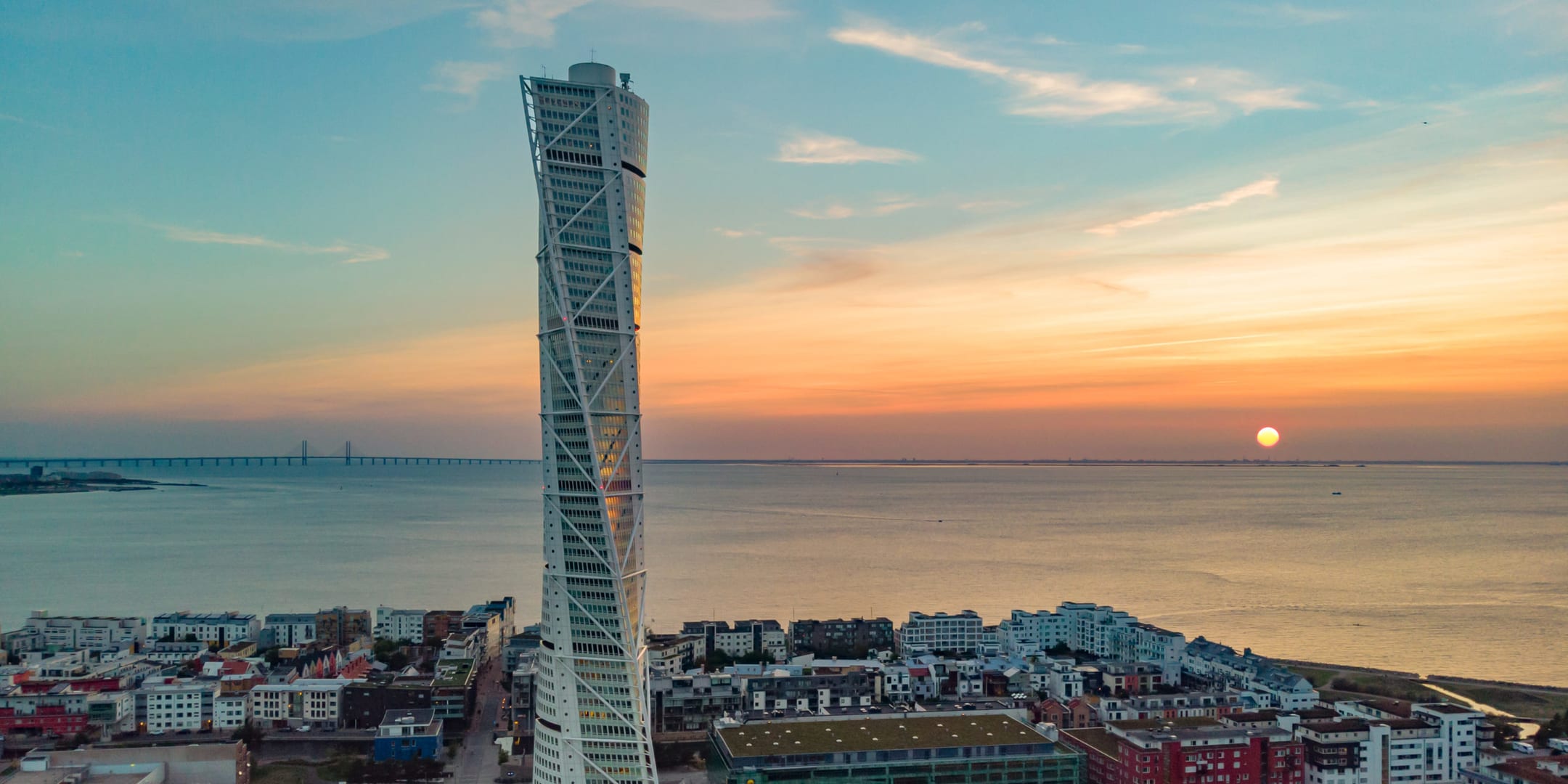
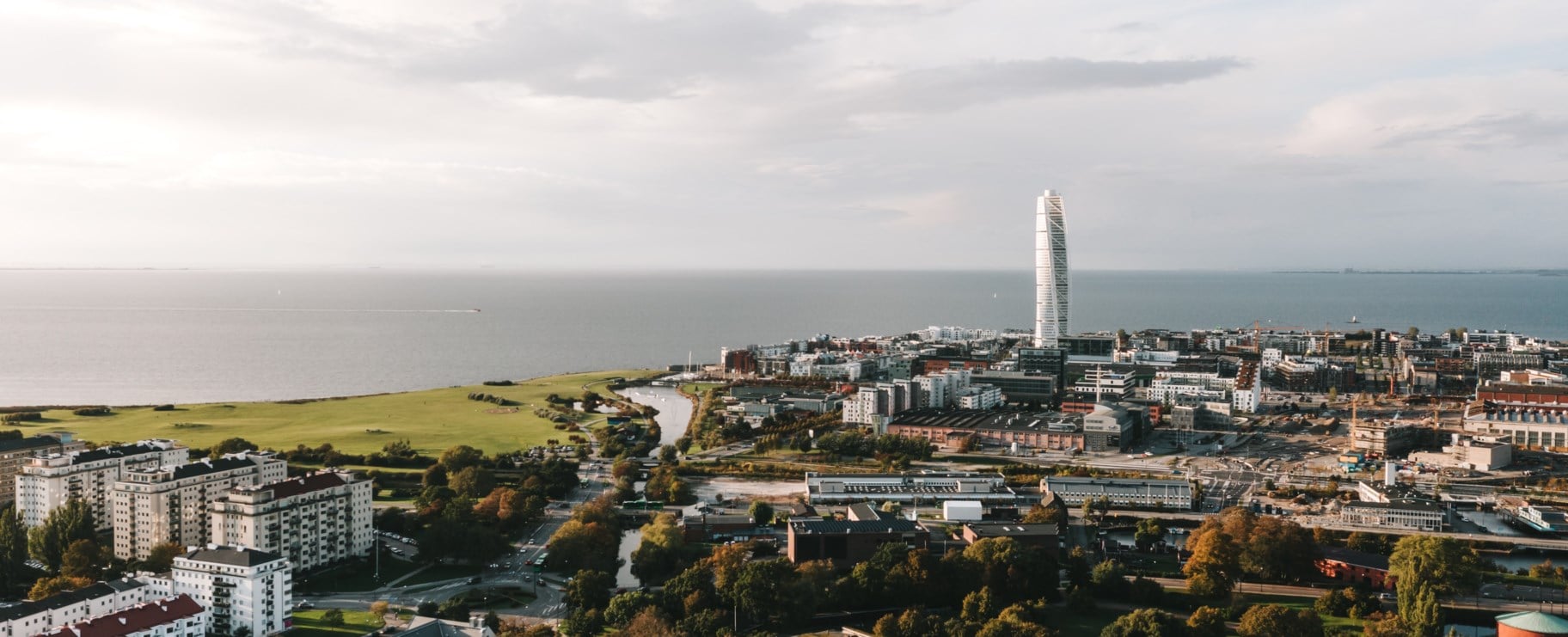
Turning Torso is the building every visitor sees first. HSB Malmö built the twisting tower, 190 metres tall, and residents moved in in November 2005. That a cooperative federation built one of Scandinavia's best-known residential towers says a lot about the movement's ambition. What happened next says a lot about its limits. The 147 flats were let as rentals rather than sold as tenant-owner homes, and in 2012 HSB Malmö put the tower up for sale. It stands at the edge of Bo01, the 2001 housing expo that opened the Western Harbour on former industrial harbour land, with homes ranging from student flats to senior housing.
Ekostaden Augustenborg shows public housing carrying climate policy. The city, MKB and the water utility VA Syd retrofitted an ageing estate as an eco-district, finished in 2005. A 9,000 m² research roof on an industrial building became a test bed for the rest of the city. Its showcase building, the Greenhouse, followed only in 2016, a reminder of how slowly even a flagship retrofit moves.
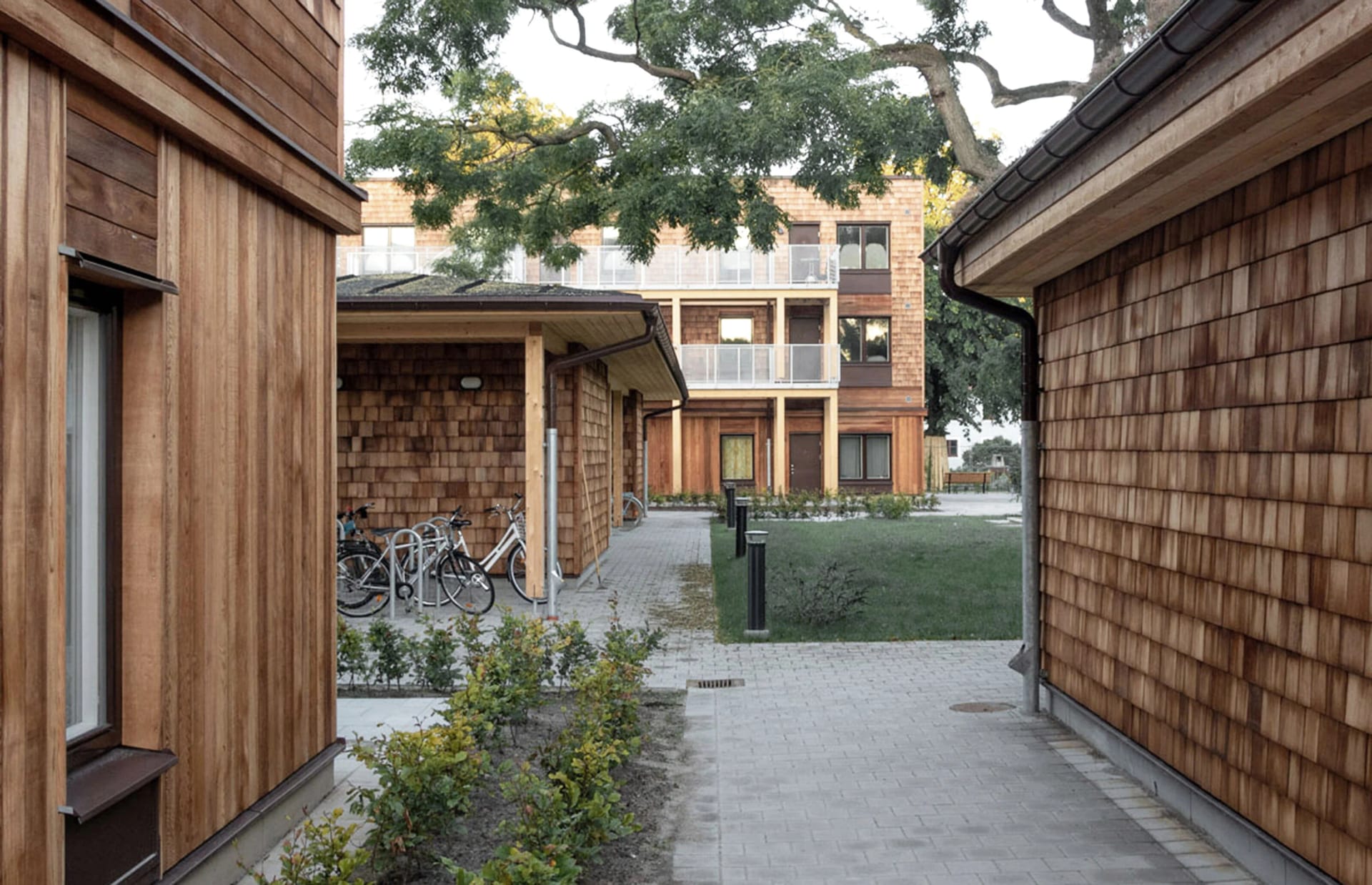
Sofielunds Kollektivhus is the collective-house model made to work with municipal help. The residents' association Kollektivhus i Malmö developed it with MKB and the builder NCC, and tenants moved in in December 2014. Its 45 rental flats share kitchens and common rooms across all ages. It followed BoAktiv Landgången, finished in 2007. Neither could have been financed by the residents alone, which is the friction every self-organised project in Malmö meets.

Urbana Villor proved the building community could work in a Swedish city. The architects Cord Siegel and Pontus Åqvist, with the landscape architect Karin Larsson, acted as their own developer. They stacked 7 family homes on a small plot and won the Kasper Salin Prize, Sweden's top architecture award, in 2009. Cord Siegel's firm SIEGEL went on to design, build and manage larger tenant-owner buildings, among them Ohboy, with 55 flats and a bicycle hotel. Kamikaze Arkitekter, a small Malmö practice founded in 2008 after two graduates won a competition, belongs to the same generation of hands-on offices. At 7 homes a building, the model has yet to reach the scale of an HSB block.
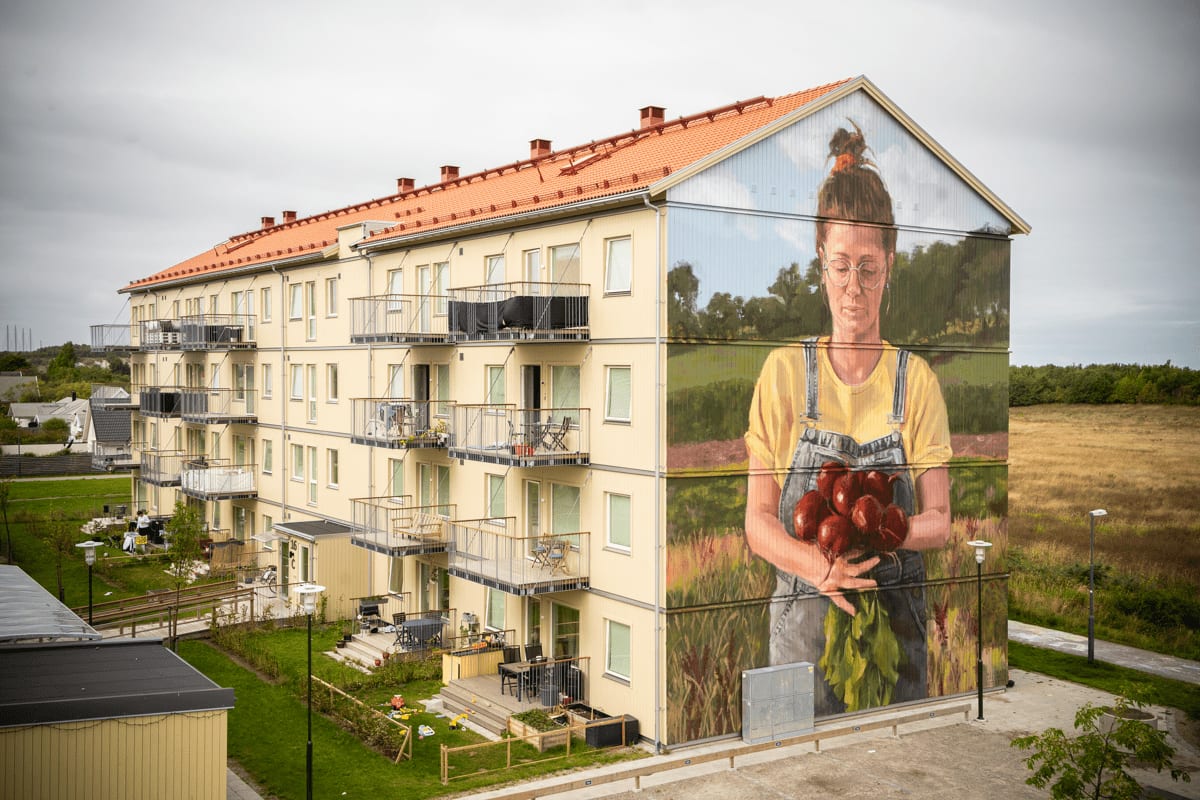
Sege Park is where the city tried to plan that variety in from the start. The old Östra hospital closed in 1995, and the city divided its grounds among developers in 2017, including a housing community of private individuals. By now 810 homes are finished, and the last streets are due in 2030 or 2031. Röda Oasen, a building community, got its land here in 2016 to convert a hospital building in stages. A decade later, it is still working through them.
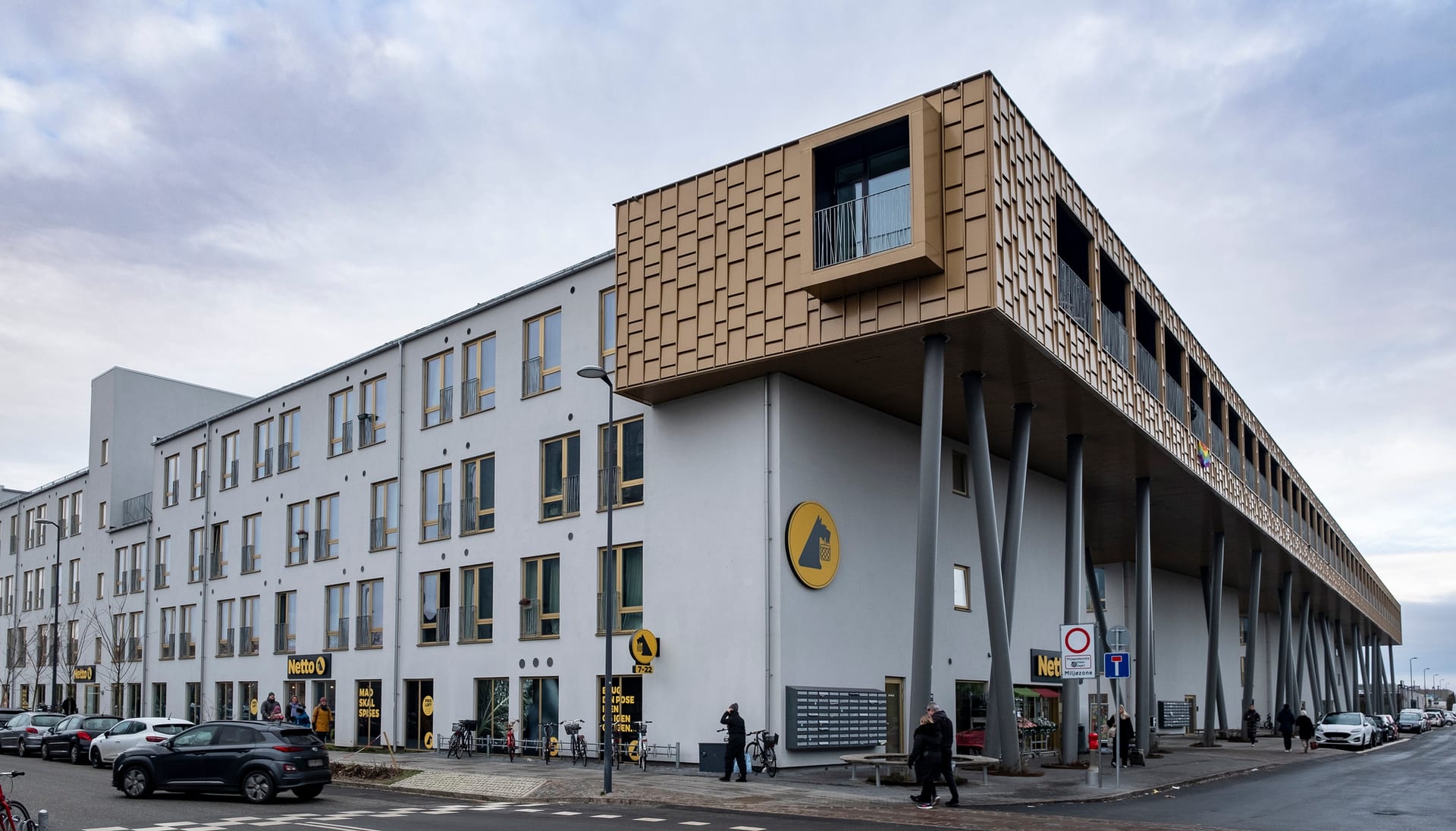
Culture Casbah is Rosengård's long-promised renewal. The landlords Heimstaden, Balder, MKB and Victoriahem formed Rosengård Fastigheter in 2017 to deliver it, 4 years after the design won its prize. Construction is scheduled to begin in 2027. That is 14 years between the competition and the first spade, in the district where the Left Party won more than 40% of the vote. In Lindängen, another Million Programme estate, a new school has freed its old site for 200 more homes.
Around these projects works a small group of watchdogs. Hyresgästföreningen Region Södra Skåne negotiates rents each year with MKB and the large private landlords. Pushback Talks, a podcast produced in Malmö by the filmmaker Fredrik Gertten with the former UN housing rapporteur Leilani Farha, carries the city's name into the global debate on financialised housing. Heimstaden and Victoriahem, two of Malmö's biggest private landlords, are exactly the kind of corporate owner that Cities for Rent, a cross-border investigation of corporate landlords in Europe, set out to trace. The projects above are its counter-examples, most of them small, all of them slow, none of them speculative.
References
Statistics9Click on any number to see the source
Housing market
Adaptive reuse & vacancy
Population & migration
From our library23
- MKB Fastighets AB — Organisation
- Allmännyttan står för allt mindre del av lägenheterna – så ser det ut i Malmö — Knowledge
- Boplats Syd — Organisation
- HSB Malmö — Organisation
- The changing role of cooperatives in the Swedish housing regime — Knowledge
- Building issues — Knowledge
- Sweden's Housing Co-ops Offer a Model for Moderate-Income Housing — Knowledge
- Non-profit Housing Influencing, Leading and Dominating the Unitary Rental — Knowledge
- Krav på frysta hyror kritiseras av både fastighetsägare och HGF — Knowledge
- Turning Torso — Project
- Bo01 — Project
- Ekostaden Augustenborg — Project
- Sofielunds Kollektivhus — Project
- Urbana Villor — Project
- SIEGEL — Organisation
- Kamikaze Arkitekter — Organisation
- Sege Park — Project
- Röda Oasen — Project
- Culture Casbah — Project
- Rosengård Fastigheter — Organisation
- Hyresgästföreningen Region Södra Skåne — Organisation
- Pushback Talks — Organisation
- Cities for rent — Knowledge
Further sources54
- Malmö stad, Befolkning
- Kommunio (SCB BO0104), 2025
- SCB, BO0104T04 (2025)
- MKB årsredovisning 2025
- Newsworthy, 29 Apr 2024
- Hyresgästföreningen, 11 Dec 2025
- Citymark, 23 Apr 2025
- Malmö stad, bostadsmarknadsuppföljning 2024
- Malmö stad, hemlöshetskartläggning okt 2025
- Bostadsfakta, Malmö
- Boplats Syd, 2025
- Fastighetsvärlden, 19 Jan 2026
- Joel Nordström, vice chair of Hyresgästföreningen Region Södra Skåne, the regional tenants' union
- Wikipedia, Kooperativ hyresrätt
- HSB, Historia
- Wikipedia (SCB), Bostadsrätt
- HSB Malmö, Om HSB Malmö
- https://malmo.se/Stadsutveckling/For-dig-som-bygger-och-utvecklar/Styrning-och-strategier/Markanvisningspolicy.html
- Malmö stad, 30 May 2017
- https://www.regeringen.se/pressmeddelanden/2022/11/bostadspolitiken-laggs-om/
- https://www.regeringen.se/pressmeddelanden/2025/05/forutsattningarna-for-nyproduktion-av-hyresbostader-ska-forbattras/
- Regeringen, 18 Dec 2025
- https://www.regeringen.se/pressmeddelanden/2026/03/regeringen-foreslar-modernare-regler-for-att-oka-tillgangen-pa-hyresbostader/
- Valmyndigheten, 19 Sep 2026
- https://www.france24.com/en/europe/20260918-sweden-s-centre-left-leader-andersson-tasked-with-forming-government-after-election
- https://www.sverigesallmannytta.se/allmannyttan/allmannyttan-viktigare-an-nagonsin/allbolagen/
- https://malmo.se/Stadsutveckling/Sa-utvecklar-vi-staden/Stadsplanering-och-bostader/Bostadsplanering.html
- SVT Valresultat 2026, Malmö
- https://www.svt.se/nyheter/lokalt/skane/malmo-socialdemokraterna-oppnar-for-att-styra-med-vansterpartiet-valresultatet-ar-glasklart
- https://malmo.se/Stadsutveckling/Det-har-ar-pa-gang-i-Malmo/Mallbo.html
- Malmö stad, 25 Mar 2025
- Arkitekten, 5 Mar 2020
- Citymark, 29 Aug 2023
- https://malmo.se/Stadsutveckling/Stadsutvecklingsomraden/Nyhamnen.html
- https://malmo.se/Naringsliv/Pa-gang-i-Malmo/Varvsstaden.html
- https://malmo.se/Miljo-och-klimat/Malmo-stads-miljoprogram.html
- https://malmo.se/Stadsutveckling/Stadsutvecklingsomraden/Hyllie.html
- https://www.regeringen.se/pressmeddelanden/2025/12/regeringen-tar-nasta-steg-mot-mer-energieffektiva-byggnader/
- https://www.byggvarlden.se/gransvarden-for-utslapp-infors-2027/
- https://via.tt.se/pressmeddelande/4343451/jag-blir-uppriktigt-rasande-hyresgastforeningen-skarpt-kritiska-till-c-s-krav-pa-marknadshyror?publisherId=3236613&lang=sv
- https://www.svt.se/nyheter/lokalt/skane/hyresratter-uppror-i-limhamn-delade-meningar-om-socialt-blandade-omraden
- Anders Holmestig, chief executive of Fastighetsägarna Sverige, the Swedish property owners' federation
- Riksdagen, 1980/81:CU19
- Malmö stad
- HSB Malmö, fakta om Turning Torso
- HSB Malmö, 17 Mar 2012
- Malmö stad, Ekostaden Augustenborg
- Kollektivhus i Malmö
- https://kollektivhus.wordpress.com/tva-kollektivhus-i-stan/
- Wikipedia, Urbana Villor
- SIEGEL
- Malmö stad, Sege Park
- Vänsterpartiet Malmö, 14 Sep 2026
- https://malmo.se/Stadsutveckling/Stadsutvecklingsomraden/Lindangen.html
Written · last revised