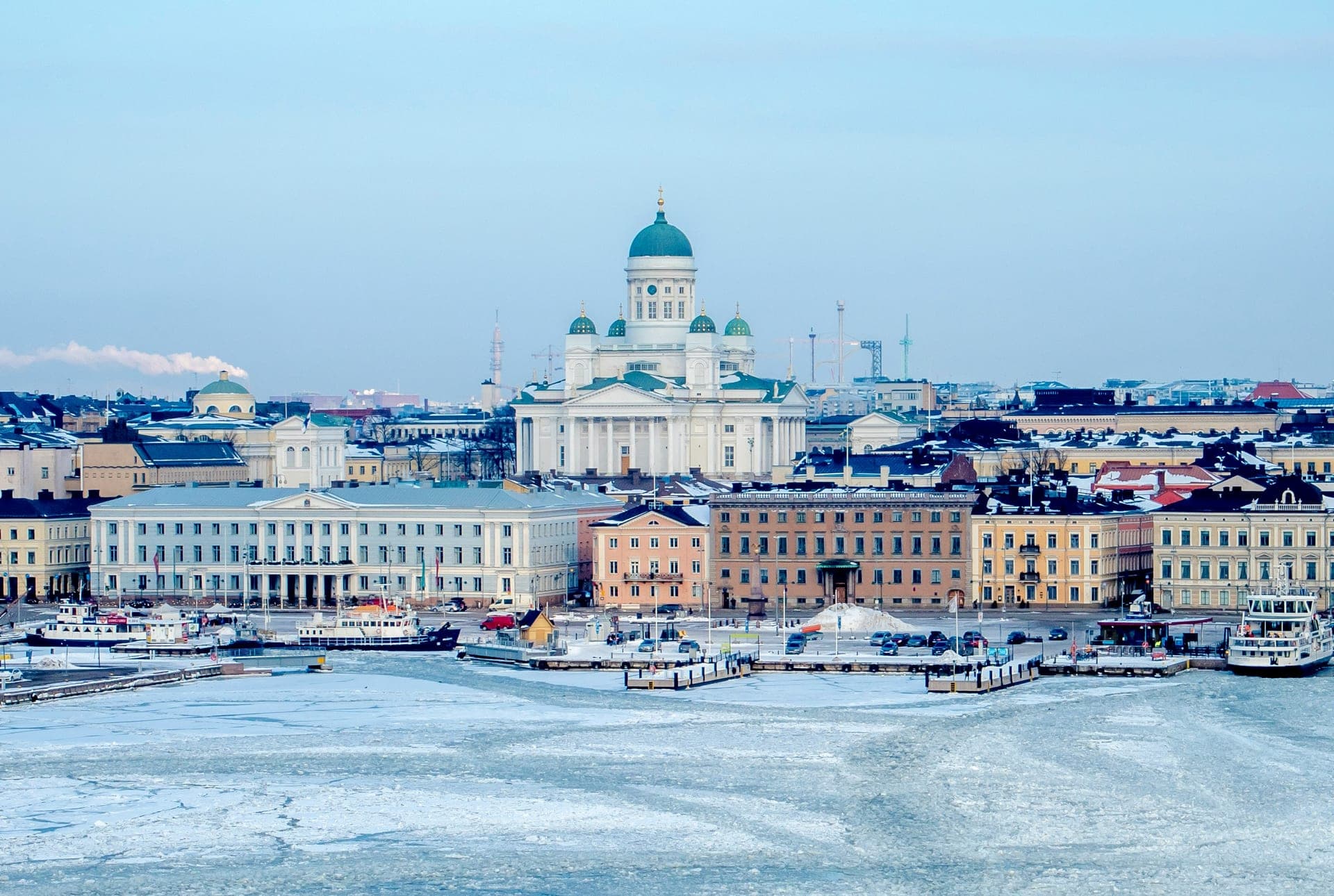
The city that kept the land
Helsinki is a sea city of around 300 islands, a young capital that grew up around a harbour and made design and public space its civic signature. It is also unusual in how it is owned. The city holds most of its own land and leases it out on affordability conditions, which gives the council a lever over the housing market that few European cities still have. That lever shapes everything that follows.
Read the tenure mix and you read a land-rich council. Renting edges ownership here: 50% rent, while 43% of households own their home, an unusually even split for a Nordic capital. The city landlord, Heka, owns roughly 13.5% of dwellings — some 53,000 flats — and lets them at cost-based rents. The right-of-occupancy form, a cooperative-style tenure run by operators such as HASO, accounts for about 3.3% — around 13,000 homes across 8 operators. Private landlords let most of the rest, about 33.2% of the stock, and the genuinely non-market tier — city-rental plus right-of-occupancy — comes to roughly 16.8%, large for a market this expensive.
- Owners
- Owner-occupier43.0%
- Renters
- Public & non-profit rental13.5%
- Cooperative3.3%
- Private rental33.2%
- Other7.0%
- Right-of-occupancy / other7.0%
Social housing here is a rule, not a tenure of its own. About 16.5% of Helsinki's dwellings carry a state-subsidised ARA covenant — the Housing Finance and Development Centre of Finland caps the rent and means-tests the tenant. That layer sits across the tenure pie rather than beside it: most of it is inside Heka's city-rental stock, with the rest spread over right-of-occupancy and privately-built subsidised rental. Roughly 40% of Helsinki households would qualify on income for an ARA flat, far more than the supply can house.

Walk up the rent tiers and the land model becomes legible. Tenants in Heka's city-rental flats pay around €13.60 per square metre, and right-of-occupancy residents a use-charge near €14. The all-stock median sits at about €19.40, while a newly-let private contract asks roughly €21.50 and furnished, serviced lets reach €30 per square metre gross. The distance from the regulated floor to a new market contract is real, but narrower than in cities with a thinner public stock — and that is exactly the point of keeping the land.
- Public/municipal housing
- Cooperative
- All-stock median
- New contracts
- Furnished / serviced (gross)
Net-cold monthly rent per square metre by tier (furnished is gross, all-in). The regulated city-rental and right-of-occupancy floor sits well below the market median, and a newly-let private contract runs well above it. The gap is narrower than in cities with a thinner public stock — that is the point of the land model.
Where Helsinki has slack, it sits in offices, not homes. On the residential side the census put vacancy near 9.4%, about 12,000 unoccupied dwellings, much of it second homes and stock between tenancies, and live availability is scarce: the rental-vacancy rate is a tight 3.2%. The commercial picture is the inverse. Around 1,100,245 square metres stand empty, roughly 18.2% of the office stock and the highest office vacancy in the Nordics, across about 288 buildings. Holiday-style letting barely registers against that backdrop: an estimated 1,205 dwellings operate as full-time entire-home short-term rentals, clustered in the inner districts rather than spread city-wide.
What holds the squeeze in place is the gap between who arrives and what gets built. The city absorbs net inbound migration near 39,000 moves a year, yet issues only about 4,500 housing permits annually, short of an ambitious municipal target it consistently misses. The crisis here is less rough sleeping than affordability and queues. Finland is one of the few European countries where homelessness has fallen for years — the city counts around 1,100 homeless people, and almost nobody sleeps rough — but a comparative European Parliament study still ranks growth pressure on Helsinki rents among the sharpest in the Nordic capitals. The squeeze lands on students, young movers and single-earner households first, and a comparative study of Vienna and Helsinki has tracked how even a strong social-rental system slowly loses ground when waiting lists outrun supply.
It is impossible to solve problems without housing, regardless of whether people’s issues are related to health or social care.Asumisoikeus: the half-step between renting and owning
Finland's nearest thing to a housing cooperative is asumisoikeus — the right-of-occupancy tenure, a deliberate half-step between renting and owning. A resident pays a one-off deposit worth about 15% of the flat's value, then a monthly käyttövastike (a cost-based use-charge), and gains a secure, indefinite right to live there. They do not own the flat and cannot speculate on it: the deposit is index-linked and returned on leaving. It is closer to the rental cooperatives of Vienna or Zurich than to the equity-share cooperatives of Central Europe.
The form is younger than the country's social-rental tradition. Finland built its non-profit rental sector on the Arava state-loan system from 1949, and added asumisoikeus in the early 1990s as a middle tenure for households who wanted security without a mortgage. It was never mass housing. While Sweden and Germany grew large equity-cooperative sectors, Finland kept its cooperative impulse mostly inside the ordinary asunto-osakeyhtiö — the housing company that holds the shares of an apartment block — and inside this small, state-financed right-of-occupancy tier.
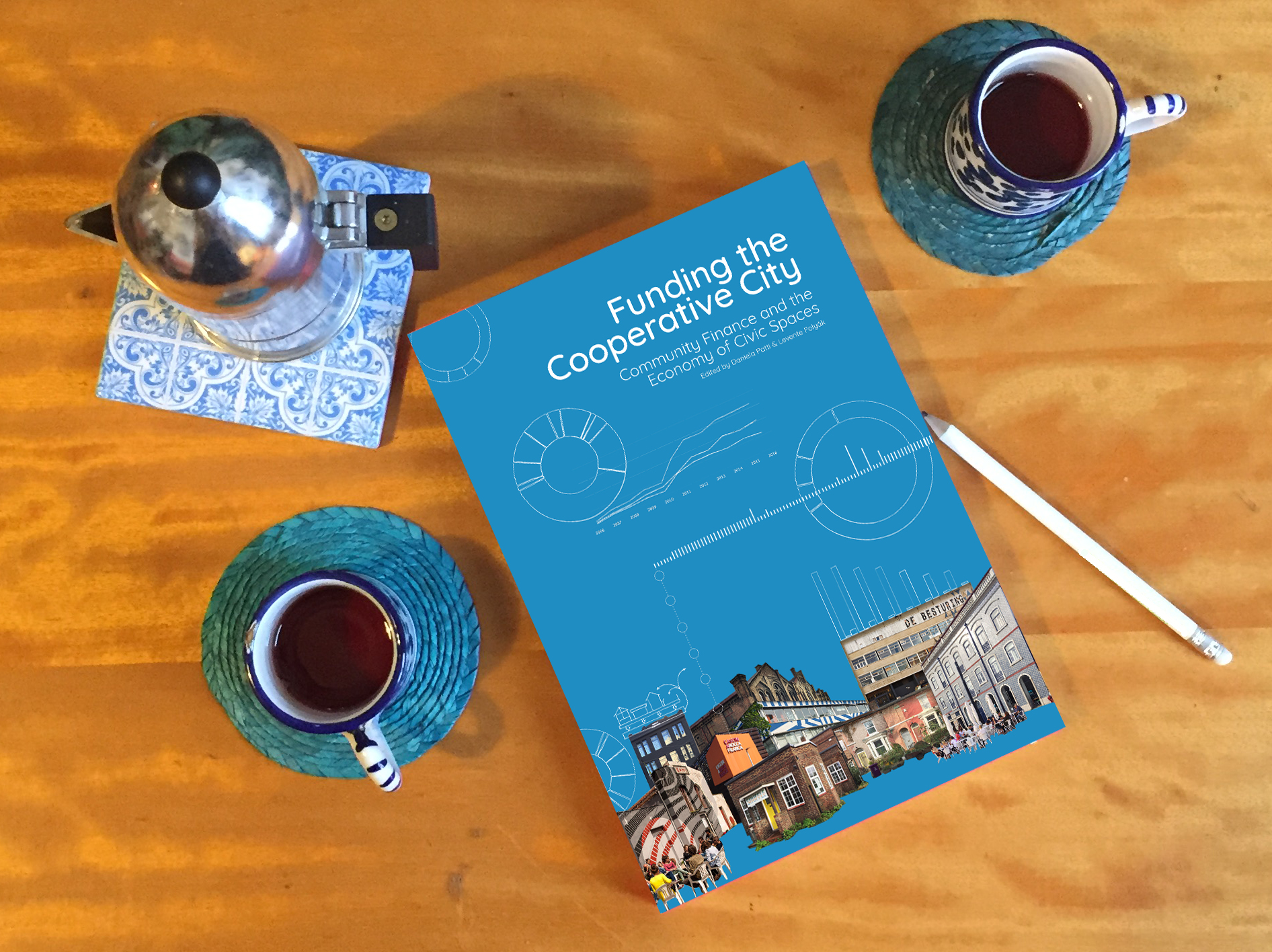
Today the sector clusters into three groups. The right-of-occupancy operators are the largest and most institutional: HASO, the city's own right-of-occupancy company, alongside national bodies such as TA-Asumisoikeus and Asuntosäätiö, all financed through ARA loans and now allocating homes through a single national waiting-number register run by Varke. A second cluster is the co-housing and group-build scene, smaller and more experimental, which a study of co-housing initiatives traces from Passivhaus engineering to resident-led design. A third strand is the civic, crowd-funded experiment — Helsinki's Kulttuurisauna and the Brickstarter work showed how residents could finance and build city space directly. The institutional operators face the problem of land cost and a queue far longer than supply; the self-organised groups face the harder problem of finance and an absence of a clear legal home, a tension a study of Finnish land and housing policy sets out plainly.
What the city does with this tier is a political choice, and Helsinki makes it deliberately. Right-of-occupancy and city-rental are treated as instruments, not residual categories: the council leases its own land to ARA-financed operators on affordability terms, and writes fixed shares of regulated rental and intermediate housing into every new district. A comparative review of cost-based rental in Austria, Denmark and Finland places the country's model among Europe's most durable, precisely because the land and the finance stay in public or non-profit hands.
Owning the land, allocating the homes
Helsinki's housing politics runs through its land. Daniel Sazonov of the centre-right National Coalition Party became mayor — the city's pormestari — in June 2025, with Anni Sinnemäki of the Greens continuing to hold the urban-environment brief that covers planning, land and housing. The lead instrument is the Implementation Programme on Housing and Related Land Use, the AM-ohjelma, which the council adopted in 2024. It sets a target of 7,000 new dwellings a year and fixes the tenure split: roughly a quarter of new rental as long-term regulated ARA housing, and a further slice in intermediate tenures, with the city's own land the means of enforcing it.
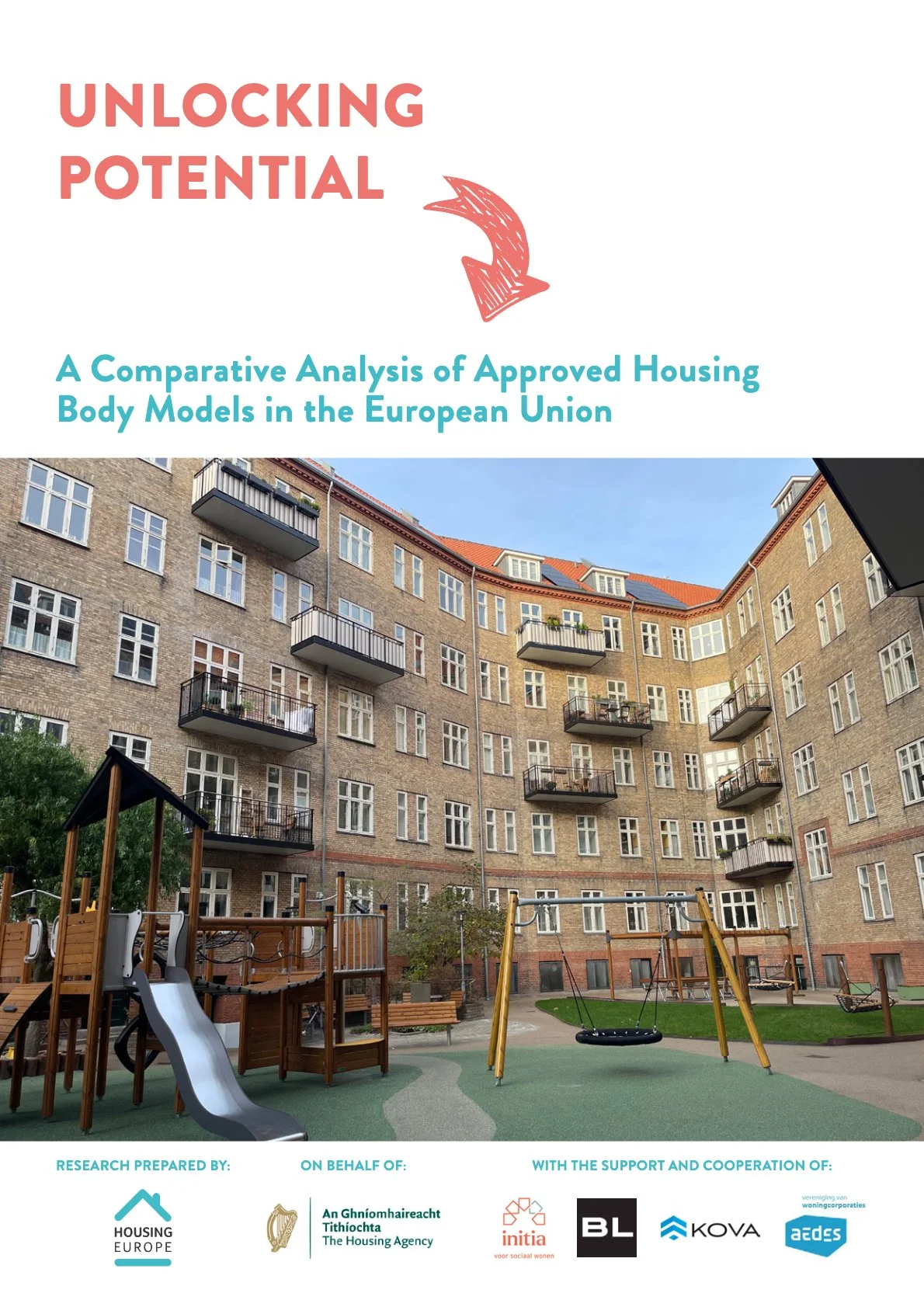
Authority over housing is split between city hall and the state. The city owns the land, runs Heka and writes the tenure quotas; the state sets the money and the law. ARA, the Housing Finance and Development Centre of Finland, lends below market rates and guarantees loans for non-profit rental and right-of-occupancy building, drawing on the off-budget Housing Fund of Finland. Between city and state sits the MAL agreement — a land-use, housing and transport pact in which the government co-finances rail and metro in exchange for the region's commitment to subsidised-housing targets. A study of approved-housing-body models across the EU reads Finland's set-up as one of Europe's more deliberate non-profit systems.
Cooperative-style tenure is written into the same programme. Right-of-occupancy and ARA rental are not left to chance: the council allocates land to operators such as HASO on long, affordability-bound leases, and the 2023 Right-of-Occupancy Act tightened the national rules so the tier serves applicants who genuinely need it. The federation KOVA speaks for the affordable and non-profit providers nationally, and pushes for the steady ARA funding line the model depends on. The instruments are concrete; the contested part is how much land and subsidy the next budget will carry.
The empty space from the harbour-front offices has a partial answer. The city's growth plan steers new housing onto former port and industrial land — Jätkäsaari, Kalasatama, Kruunuvuorenranta — rather than the green edge, and the record office vacancy has opened a conversion frontier the council and developers are only starting to use. There is no vacant-homes tax, and slow permitting against an ambitious target remains the binding constraint, so the supply answer is as much about planning capacity as about money.
The climate brief now runs straight through the affordable stock. Helsinki's housing stock averages around 50 years old, about 32% of dwellings are energy-efficient, and the renovation rate runs near 1.6% a year — short of the deep-retrofit pace the EU targets. The city has committed to carbon neutrality, and the non-profit landlords are the main vehicle: the European Investment Bank lent the non-profit operator SATO €80 million to deep-retrofit residential blocks in Helsinki and other Finnish cities, cutting energy use by at least 30%. That ties the climate goal directly to the cost-based tier the city is trying to protect.
- 1949[source]
Arava state housing finance
Finland sets up the Arava system of state loans for non-profit rental housing — the institutional ancestor of ARA and the spine of the country’s cost-based social-rental sector.
- 1970s[source]
Hitas introduced
Helsinki creates the Hitas scheme: owner-occupied flats on city-leased land with regulated handover prices, allocated by lottery, to keep central ownership within reach of ordinary earners.
- 2008[source]
Housing First adopted nationally
Finland makes Housing First the basis of national homelessness policy. Long-term homelessness then falls by roughly 70% over the following decade, and rough sleeping all but disappears.
- 2016[source]
“Home Town Helsinki” land policy
The city adopts a long-term policy for a balanced tenure mix on its own land. It owns about 70% of the land area and leases it on affordability conditions, producing thousands of dwellings a year directly.
- Nov 2020[source]
Hitas wind-down agreed
The city’s parties agree to phase out Hitas for new construction, ending decades of lottery-allocated price control and shifting the affordability effort towards rental and right-of-occupancy housing.
- Sep 2023[source]
New Right-of-Occupancy Act
A reformed Right-of-Occupancy Housing Act takes effect, and a national waiting-number register run by Varke replaces local queues for asumisoikeus homes across Finland.
- Aug 2024[source]
Implementation Programme 2024
The city council adopts the new housing and land-use programme: a target of 7,000 new dwellings a year, of which 20-25% long-term regulated ARA rental and 10-15% intermediate tenures.
- Jun 2025[source]
New mayoral team
Daniel Sazonov (National Coalition Party) takes office as mayor, with Anni Sinnemäki (Greens) continuing to hold the urban-environment brief that covers planning, land and housing.
- ~2031[source]
MAL agreement horizon
The land-use, housing and transport agreement between the state and the Helsinki region runs to 2031, tying state co-financing of rail and metro to municipal targets for subsidised housing supply.
From the founding of the city landlord and the land-leasing model to Housing First, the Hitas wind-down, and the current implementation programme.
Where Helsinki's parties split is on which subsidies to keep, not on whether to intervene. The clearest recent argument was over Hitas, the price-regulated ownership scheme. Daniel Sazonov, then a National Coalition Party councillor, argued it was time to end what he called a lottery that subsidised the well-off, and the city agreed in 2020 to wind it down for new building. Reetta Vanhanen, a Greens city councillor, countered that Hitas had played a key role in preventing segregation, and that it mattered to develop a working system to replace it. Both sides accept the land model; they disagree on which tenures it should subsidise.
It is time to say goodbye to the lottery that is Hitas.On reclaimed harbours: timber, towers and the Housing First record
Helsinki's working examples sit, almost all of them, on land the sea or the port gave back. The former harbours of Jätkäsaari and Kalasatama, the old oil terminal at Kruunuvuorenranta, the disused yards along the eastern shore — these are where the city tests its tenure mix, its timber ambitions and its design culture at once. The projects below run from the ones Helsinki markets hardest to the quiet operators that house the most people, each carrying its own friction.
Wood City in Jätkäsaari is the showcase the city points to first. Built by the contractor SRV with the forestry group Stora Enso, it pairs an all-timber office block — now a corporate headquarters — with two residential buildings of around 98 flats each, framed in laminated veneer lumber and cross-laminated timber. It is a genuine advance in low-carbon construction and a piece of marketing for Finnish wood. The caveat is the tenure: the residential blocks are market-rate rental, so Wood City answers the carbon question and the supply question without answering the affordability one.
Kalasatama is the cautionary tale next door. The REDI complex — a shopping centre under a planned cluster of eight residential and office towers, the tallest a high-rise tower — was the largest project in SRV's history, with a value above €1 billion. It became a financial wound: the contractor booked a €71.5 million impairment on the shopping centre and sold its stake prematurely, before rental income had stabilised. The towers continue to rise as private housing, but REDI is the local byword for how high-rise, market-led regeneration can outrun its own economics.
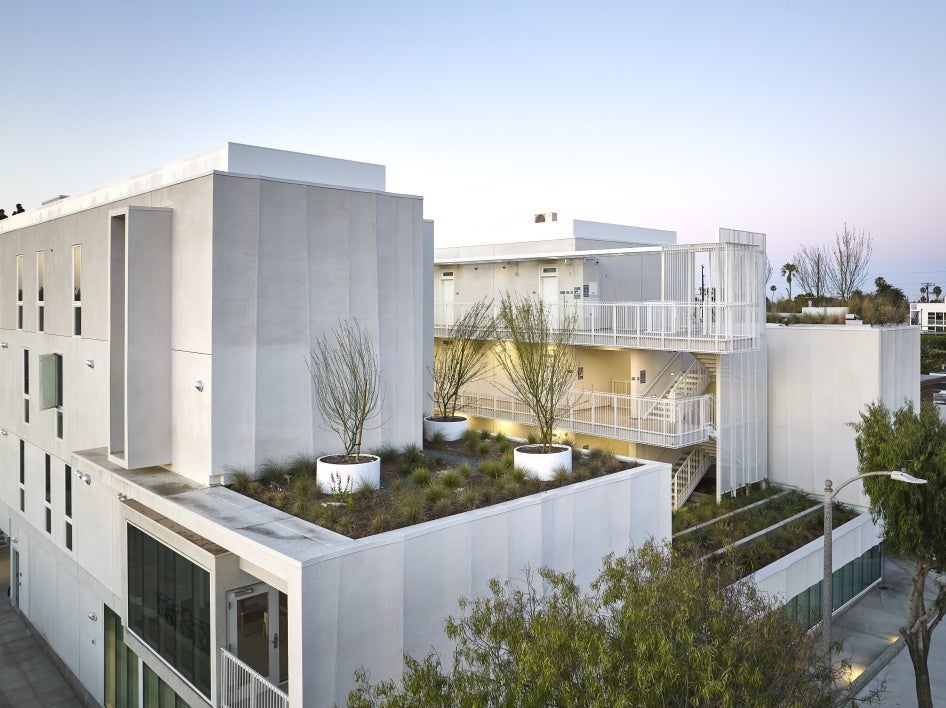
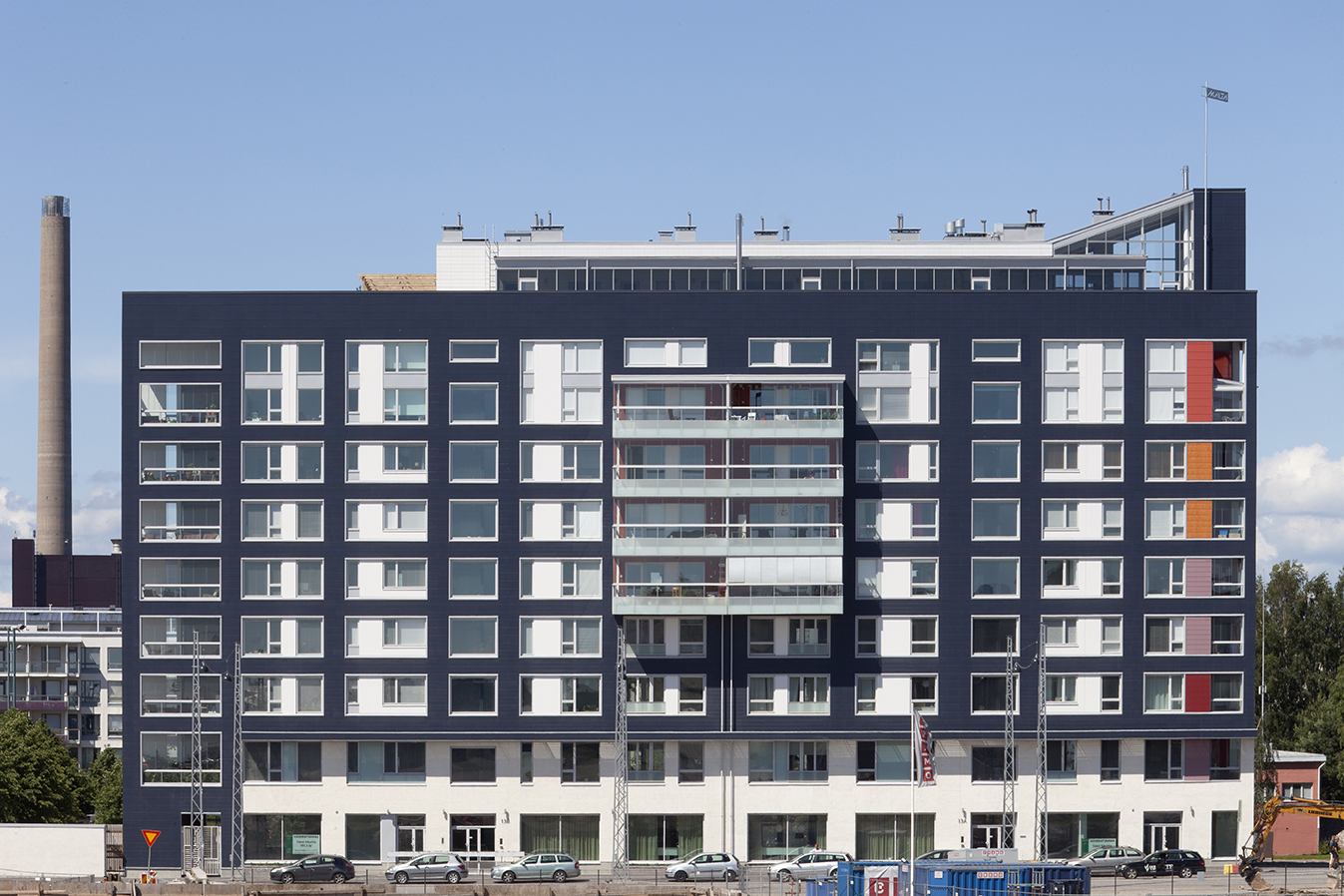
Malta, in eastern Helsinki, is the gentler counter-example. A Tetris-faced block of owner-occupied flats with a rooftop greenhouse, a shared sauna and adaptable layouts, it shows the design-led, community-minded end of Finnish housing — the kind of project the World Design Capital city likes to put forward. Its friction is the familiar Helsinki one: as owner-occupied housing on prime ground, it does little for the ARA queue, and the shared spaces that make it distinctive add cost that a cost-rent operator would struggle to carry.
The right-of-occupancy operators do the unglamorous volume work. HASO and its national peers build the asumisoikeus blocks that thread through every new district, and the city landlord Heka holds the 53,000 cost-rental flats that anchor the affordable tier. Their constraint is not design but arithmetic: a waiting-number queue far longer than the pipeline, land that keeps rising in value, and an ARA funding line that has to be defended budget by budget. The 2023 reform tightened allocation but did not enlarge the supply.
Holding all of this up is a small civic layer that does outsized work. The Y-Foundation, the national housing body that built the stock behind Finland's Housing First record, is the institution that turned the country's homelessness curve downward and that the rest of Europe now studies. KOVA federates the non-profit and affordable providers; the think-tank Demos Helsinki and design practices such as Helin & Co Architects feed the planning culture that keeps tenure mix and sustainability in the same brief. It is a smaller institutional ecosystem than Vienna's, and it leans hard on one asset the city refuses to sell. But on the one measure that matters most — keeping people housed — Helsinki has a record almost no other capital can claim.


References
Statistics21Click on any number to see the source
Housing market
Tenure & affordability
Cooperative, social & public
Adaptive reuse & vacancy
Population & migration
From our library15
- ARA (Housing Finance and Development Centre of Finland) — Organisation
- Part 1: Mapping the housing needs in the EU, assessing the impacts of scarcity and providing an overview of relevant EU legislation — Knowledge
- Housing policies in the European Union — Knowledge
- Learning from co-housing initiatives — Between Passivhaus engineers and active inhabitants — Knowledge
- Funding the Cooperative City: Community Finance and the Economy of Civic Spaces — Knowledge
- Housing cooperatives and the contradictions of Finnish land and housing policies — Knowledge
- Cost-based Social Rental Housing In Europe — Knowledge
- Unlocking Potential - A Comparative Analysis of Approved Housing Body Models in the European Union — Knowledge
- KOVA (Finnish Affordable Housing Companies' Federation) — Organisation
- Malta — Project
- Y-Foundation (Y-Säätiö) — Organisation
- Demos Helsinki — Organisation
- Helin & Co Architects — Organisation
- Helsingin Asumisoikeus Oy (Haso) — Organisation
- Setlementtiasunnot — Organisation
Further sources18
- Helsinki City Council elects new mayor and deputy mayors (2025) — City of Helsinki
- Daniel Sazonov — Mayor of Helsinki — Wikipedia
- Anni Sinnemäki — Deputy Mayor for the Urban Environment — Urban Future
- Implementation Programme on Housing and Related Land Use (AM-ohjelma) — City of Helsinki
- New AM-ohjelma guides Helsinki housing construction — City of Helsinki / STT Info
- Helsinki to scrap the Hitas owner-occupied housing scheme — Helsinki Times
- Hitas — price-regulated owner-occupancy scheme — Wikipedia
- Right-of-occupancy housing — the new 2023 Act — TA-Asumisoikeus Oy
- Right-of-occupancy housing — Ministry of the Environment — Ministry of the Environment (Finland)
- HASO — how to apply for a right-of-occupancy apartment — Helsingin Asumisoikeus Oy
- Finland is saying goodbye to homelessness — interview with Juha Kaakinen — INSP
- Housing First — Finland — Housing First Europe
- REDI (Kalasatama) — shopping centre and towers — Wikipedia
- Urban centre REDI opened at Kalasatama (SRV impairment + divestment) — SRV Yhtiöt Oyj
- Wood City Jätkäsaari — timber quarter — SRV
- EIB Investment Report 2025/26 — SATO retrofit loan — European Investment Bank
- Suomenlinna — UNESCO World Heritage sea fortress — Wikipedia
- Sauna culture in Finland — UNESCO Intangible Cultural Heritage — UNESCO
·