
On the Elbe: a port city that kept its non-market floor
Hamburg is Germany's second city and its great northern port, a place of warehouses, canals and merchant wealth on the Elbe. It is also a city-state: the regional and the municipal government are one and the same, so housing policy is decided and delivered by a single authority. That combination — civic wealth plus a strong, undivided administration — left Hamburg with something most German cities lack: a large slice of housing that never went to the open market.
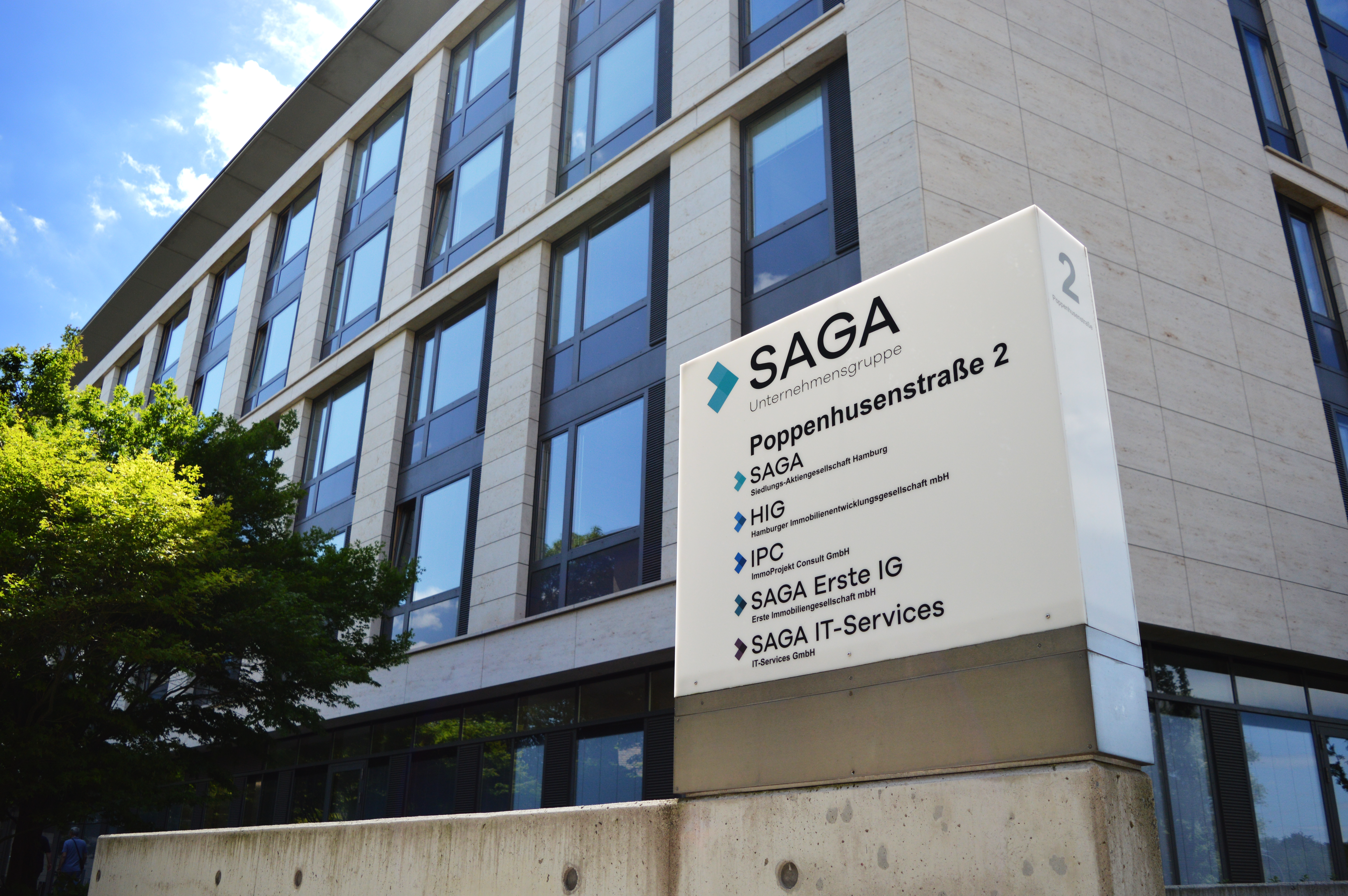
Count the tenures and that inheritance is visible. Among Hamburg households, 77.1% rent and just 20.5% own their home, one of the highest renter shares of any large German city. Within that renting majority, the municipal landlord and the cooperatives both loom unusually large. Public landlords hold 13.9% of all dwellings — around 130,000 flats, most of them owned by SAGA, the city's housing company. Wohnungsbaugenossenschaften, the housing cooperatives, hold a further 13% — about 130,000 flats across roughly 30 societies. Private landlords let the remaining 50.2%. Cooperative and public housing together therefore keep about 26.9% of the stock out of the open market, a wider non-market tier than almost any other German big city can claim.
- Owners
- Owner-occupier20.5%
- Renters
- Public & non-profit rental13.9%
- Cooperative13.0%
- Private rental50.2%
- Unclassified2.4%
- Unknown / Other2.4%
Social housing sits on top of that mix as a rule, not a tenure. About 7.9% of Hamburg's dwellings carry a Sozialbindung — a covenant that caps the rent and limits who may move in for a fixed period. That layer overlaps the slices in the chart rather than forming one of its own: most of it inside SAGA's stock, some on privately financed Sozialer Wohnungsbau, a little on cooperative new-build. The eligibility net is far wider than the bound stock: roughly 45% of Hamburg households earn little enough to qualify for a subsidised flat, many more than the supply can house.
Price the same stock tier by tier and the gap opens fast. Tenants in SAGA's municipal flats pay around €7.30 per square metre cold, and cooperative members about €7.69 — the two regulated floors sit almost level. Step into the open market and the city's 2025 Mietenspiegel puts the all-stock median at €9.94, while newly-let apartments ask a median €15.58 and furnished, serviced lets reach €25.58 per square metre gross. A fresh private contract therefore costs more than twice the regulated floor — the affordability problem written as a single ladder.
- Public/municipal housing
- Cooperative
- All-stock median
- New contracts
- Furnished / serviced (gross)
Net-cold monthly rent per square metre by tier (furnished is gross, all-in). The regulated municipal and cooperative floor sits well below the all-stock median; a newly-let private contract runs more than double the municipal rate.
Where homes sit empty matters more here than how many. Residential vacancy is very tight at about 2%, and the 2022 census counted only some 19,950 dwellings standing empty — mostly second homes and flats between lets. The slack is in offices instead: around 964,000 square metres stand vacant, roughly 5.2% of the office stock, a pool the city is starting to eye for conversion. Holiday letting barely registers across the city as a whole, with an estimated 1,077 dwellings run as full-time entire-home short-term rentals, yet it clusters in the inner districts and the tourist core around the harbour — thinning long-term supply on exactly the streets visitors see.
The pressure comes from people arriving faster than homes are finished. The port, the media and logistics economy and the universities pull in roughly 106,000 moves a year of net inbound migration, while building permits cover only about 7,500 new homes a year — short of the city's own target. The shortfall no longer bites only at the bottom. The European Commission's affordable-housing plan singles out Hamburg, Munich and Frankfurt as cities where urban rents sometimes exceed even the capital's, and the city tenants' association reports that even average earners now struggle to find anything they can afford. Around 4,500 people are recorded as homeless, and surveys repeatedly place housing cost near the top of residents' everyday worries.
Every rent increase hits the affected households hard and pushes more and more people into hardship.A hundred years of shared roofs on the Elbe
The cooperative form in Hamburg is the German Genossenschaft. A member buys a Genossenschaftsanteil — the share that secures a tenancy rather than a tradable flat — and the cooperative lets at cost, holding the home affordable across generations. Unlike the equity cooperatives of Prague or the limited-equity models of Scandinavia, a Hamburg cooperative member is a secure lifelong tenant, not an owner. That is why the form has stayed broad and stable: about 14% of Hamburg's residents live in a cooperative flat, one of the deepest cooperative footprints of any German city.
The tradition is old and continuous. Hamburg's first housing cooperatives were founded around the turn of the twentieth century, in response to the cramped courtyard tenements the Gängeviertel typified, and they expanded through the Weimar reform years and the post-war reconstruction. The decisive thing is what did not happen: unlike the cooperative stock in much of central Europe, Hamburg's was never privatised away. The big societies kept building and kept their flats in common ownership, so the form arrived in the present as a living delivery system rather than a heritage relic.
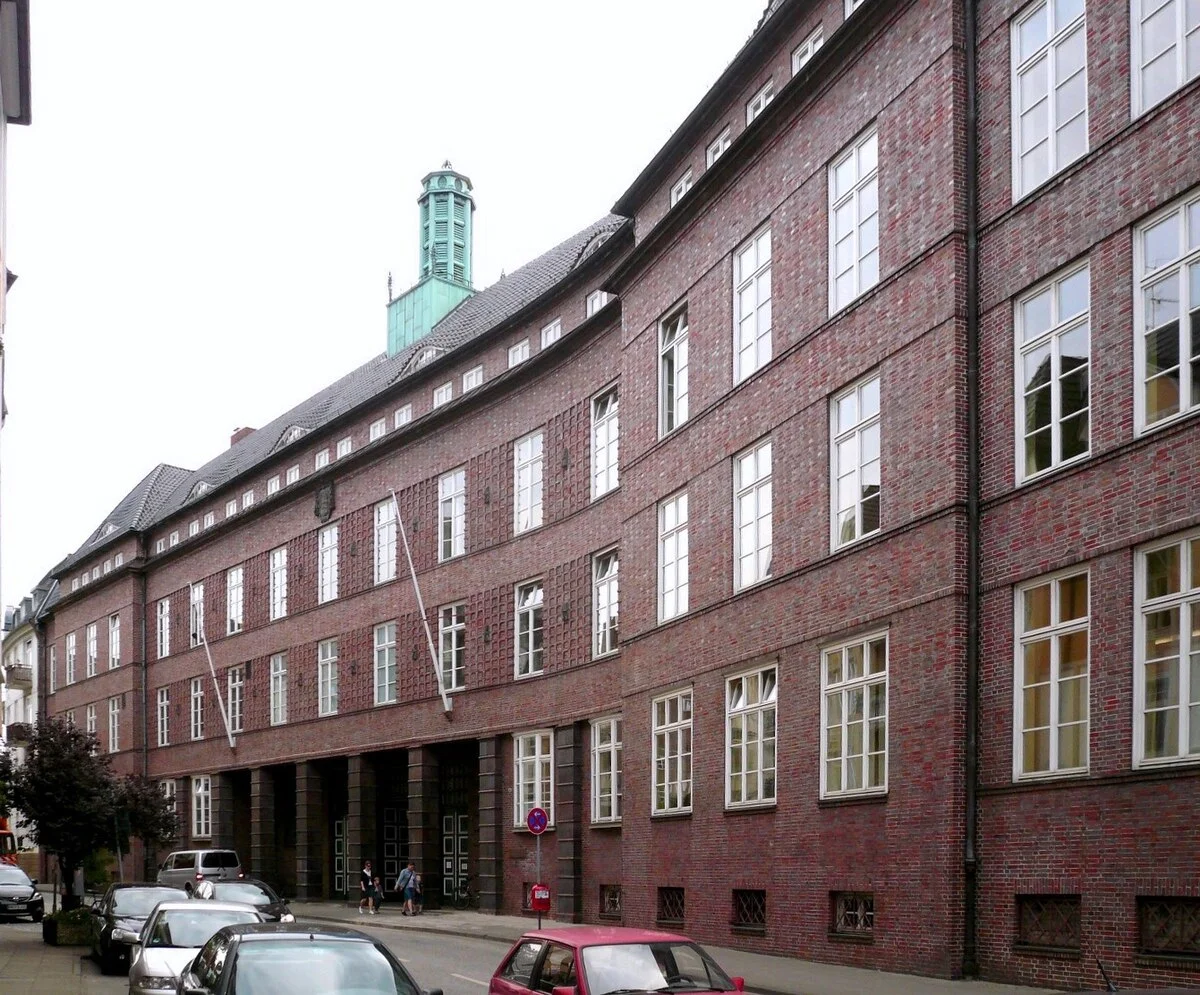
Today the sector clusters into three groups with different problems. The large traditional societies — Bergedorf-Bille, the Bauverein der Elbgemeinden and Baugenossenschaft Hamburger Wohnen among them — run tens of thousands of flats each and now spend much of their energy on energy-retrofit and densification of ageing estates. A second cluster is the smaller, member-led project cooperative and Baugemeinschaft, organised by future residents and often built on city land won through a concept tender; Gemeinwohlorientierte Wohnungspolitik, a study of public-good housing strategy, names Hamburg societies like FLUWOG-Nordmark and ALTOBA running exactly these bidder-group projects. A third is the self-organised, permanently-non-saleable house in the tradition of the squatter movement and the Gängeviertel. The big coops struggle with retrofit cost and ageing membership; the new ones struggle with land and finance, even with the city's help.

Where the cooperative sits in the city's plans is what carries this section into Hamburg's politics. Hamburg treats the cooperative as a core delivery channel for affordable housing, not a private leftover. It allocates public land through Konzeptvergabe — concept-led tenders scored on quality and social criteria rather than price — and increasingly on a long Erbbaurecht, a ground lease that keeps the land in public hands. Cooperatives and Baugemeinschaften win a reserved share of these plots, and the IFB Hamburg, the city's housing bank, carries dedicated finance for them. The cooperative tier is written into the affordable-housing strategy as a partner, which is where the city's politics picks the story up.
The Drittel-Mix, and the answer to the empty offices
Hamburg's housing politics runs through one long-standing pact. Peter Tschentscher of the SPD has led the city-state since 2018 and, after the March 2025 election, renewed his coalition with the Greens; Karen Pein of the SPD holds the urban-development and housing brief. Their lead instrument is the Bündnis für das Wohnen, the Alliance for Housing first signed in 2011, which commits the city and the housing industry to permit at least 10,000 new homes a year and to fund at least 3,000 subsidised flats a year. For 2025 and 2026 the IFB Hamburg has set aside roughly €1.774 billion for that subsidised programme.
The clearest local rule is the Drittel-Mix, the one-third model. On new building land the city asks for a third publicly subsidised, a third freely financed rental and a third owner-occupied, so affordable homes are mixed into every new quarter. On private land it requires 35% of new flats to be subsidised rental where it grants new zoning. Being a city-state lets Hamburg pull almost all of these controls from one desk: it owns much of the land, runs SAGA and the IFB, and sets the local quotas. Only the tenancy framework and federal subsidy rules are decided above it.
The cooperative sits deliberately inside that programme. The city reserves concept-tender plots for cooperatives and Baugemeinschaften, leases them on a long Erbbaurecht, and channels IFB finance into their building — the concrete instruments a study of public-good housing strategy describes city-states using to bind cooperatives into a broader public-good aim. The framing picks up §2's bridge: cooperatives are asked to grow alongside the municipal stock, not to replace it. The newest pressure point is cost: the city and the social-housing federation agreed a simplified Hamburg-Standard in 2025, meant to cut build costs enough that cooperatives and SAGA start again.
Those vacant offices from §1 now have a policy in front of them, if only a partial one. Hamburg's empty office floors are a conversion frontier the city is only starting to use, helped by the federal Bauturbo, which lets municipalities approve housing outside the usual planning rules until 2030. A national study of home-working and the future of offices finds hybrid working has left enough surplus office floor that conversions could yield tens of thousands of homes, though only a minority of buildings convert cleanly. The binding constraint is planning law and floorplates, not goodwill, which is why Hamburg's most-watched conversions are pilots rather than a programme.
Carbon and cost have folded into one brief here. Hamburg's housing stock averages about 60 years old, only around 19% of dwellings are energy-efficient, and the renovation rate crawls at roughly 1.1% a year. The municipal and cooperative landlords are the main vehicles for cutting the sector's carbon, through estate retrofit and timber new-build. The office-conversion drive doubles as a climate move, because keeping a building's structure avoids most of its embodied emissions.
- 1982[source]
Stattbau Hamburg founded
A development agency is set up to help self-organised groups and cooperatives turn squatted and derelict buildings into legal, community-led housing — an early Hamburg model for participatory urban renewal.
- 2009[source]
Gängeviertel occupation
Artists and activists occupy the surviving Gängeviertel blocks in the city centre; the city later buys them back for community use, a landmark in Hamburg's right-to-the-city movement.
- 2011[source]
Bündnis für das Wohnen begins
The Senate and the housing industry sign the first Alliance for Housing, committing to a large annual building target and a fixed subsidised quota — the model that becomes a national reference.
- 2011[source]
Leerstandsmelder launched
A web platform for citizens to report vacant buildings starts in Hamburg under the architect Michael Ziehl, and spreads to thirteen German cities within two years.
- 2020[source]
Gröninger Hof transferred
The city hands a 1963 multi-storey car park in the Altstadt to a newly founded cooperative to convert into roughly 90 subsidised flats — a flagship adaptive-reuse cooperative.
- Feb 2025[source]
Hamburg-Standard launched
The city and the VNW agree a simplified building standard meant to cut construction costs from around €4,600 to about €3,000 per square metre, to revive stalled social and cooperative building.
- Mar 2025[source]
Red-green coalition continues
After the city-state election the SPD under First Mayor Peter Tschentscher renews its coalition with the Greens, keeping housing supply a defining theme of the term.
- 2025-2026[source]
€1.774bn for affordable housing
The IFB Hamburg sets aside roughly €1.774 billion across 2025 and 2026 to fund at least 3,000 new subsidised apartments a year through its three funding tracks.
- by 2027[source]
Gröninger Hof completed
The car-park conversion is due to finish in 2027 after chloride damage forced the cooperative to remove almost all the above-ground structure it had hoped to keep.
- 2030[source]
Bauturbo window closes
The federal fast-track building law lets municipalities approve housing outside the usual planning rules until the end of 2030, the horizon Hamburg is building its supply push against.
From the squatter-led Gängeviertel tradition and the city-states’ early concept-tender experiments to the Bündnis für das Wohnen, the Hamburg-Standard and the office-conversion frontier.
Nobody in Hamburg argues against more affordable housing; the argument is over the speed and who carries the cost. Dr Rolf Bosse, who chairs the Mieterverein zu Hamburg, the city tenants' association, warns that even modest official rent rises push more households into hardship and that average earners can no longer find affordable flats. Andreas Breitner, who directs the VNW, the federation of north-German social and cooperative landlords, frames the problem as build cost: only if the Hamburg-Standard brings the per-square-metre price down will his members build again. One side reaches first for tenant protection, the other for cheaper construction — but both want the non-market stock to grow.
If, with the help of the Hamburg-Standard, we manage to reach 3,000 euros per square metre of living space, then I am optimistic that the social landlords organised in the VNW will build more often again.From car park to courtyard: where the Hamburg model is being built
Hamburg's working examples run from giant municipal estates to tiny self-built houses, and the thread that connects them is a city converting what it already has rather than spreading onto the green edge. The projects below are ordered by who leads them — city-owned first, citizen-built last — before the section turns to the actors trying to make the model repeatable.
Gröninger Hof is the conversion that captured the city's imagination. A cooperative founded in 2018 took over a 1963 multi-storey car park in the Altstadt from the city and is turning it into roughly 90 subsidised flats above a public ground floor of culture, crafts and co-working. Reusing the structure was meant to cut the carbon footprint by more than 40% against a new build. The friction is literal: decades of parked cars left chlorides in the concrete, and tests forced the cooperative to demolish almost all of the above-ground structure it had hoped to keep, pushing completion to 2027.

We-House Baakenhafen carries the same idea into new-build. A timber-hybrid block of 54 flats in the HafenCity, it runs a rooftop hydroponic greenhouse that yields several tonnes of vegetables a year and folds food-growing into the building's economy. As market-rate HafenCity housing it answers the supply question more than the affordability one, the recurring caveat of the docklands quarter: the architecture is exemplary, but the rents are not where the crisis bites.
vonwegenleer takes the office-conversion argument to its most experimental edge. The Hamburg collective turns vacant office floors into temporary housing, blending design, research and activism, and works with HafenCity University, whose students have lived for a month inside a converted office floor to test what office-to-home conversion actually demands — daylight, kitchens, showers, plumbing. It is small and provisional, but it is the clearest live answer to §1's empty-office question, and a direct descendant of the city's Leerstandsmelder vacancy-mapping tradition.
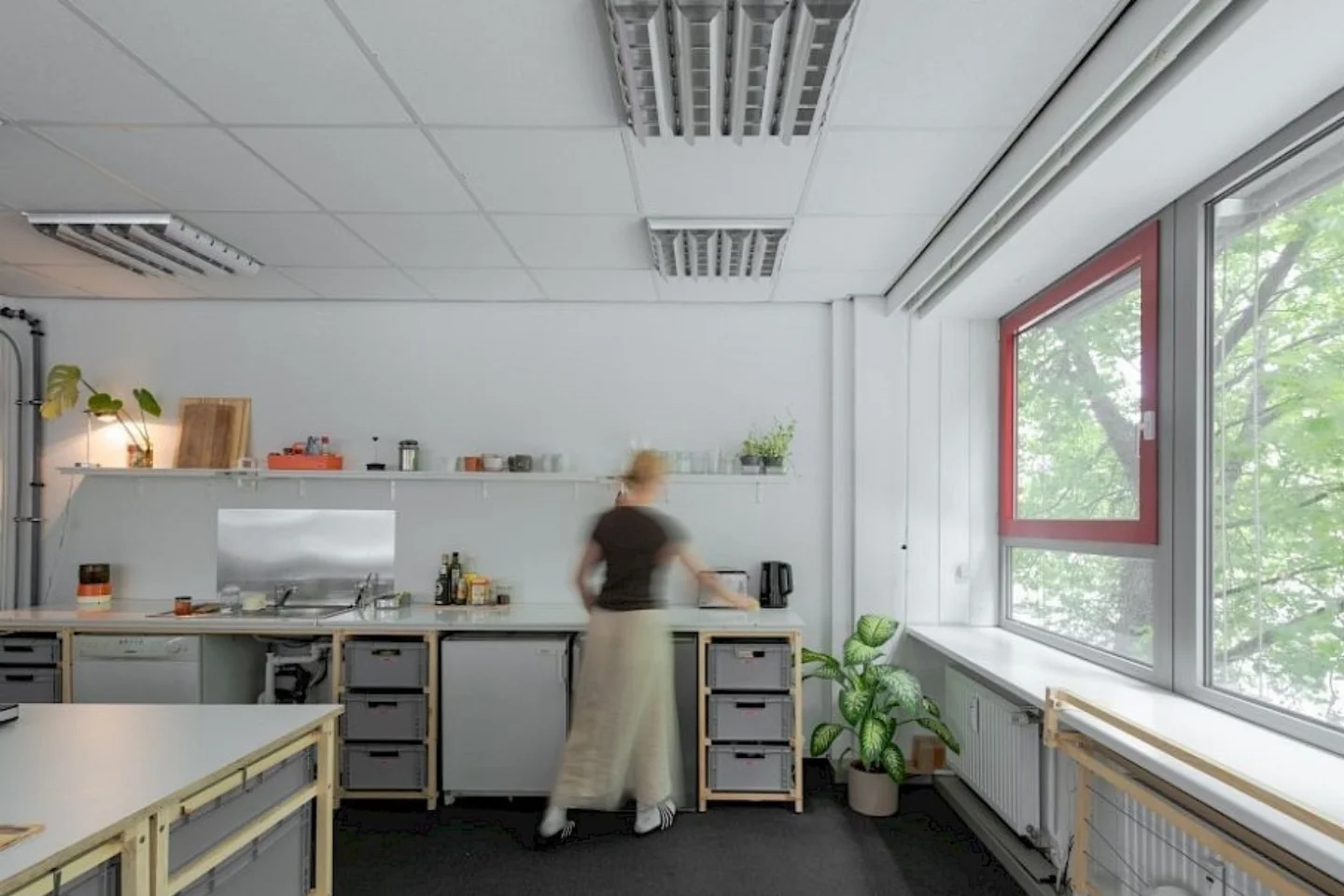
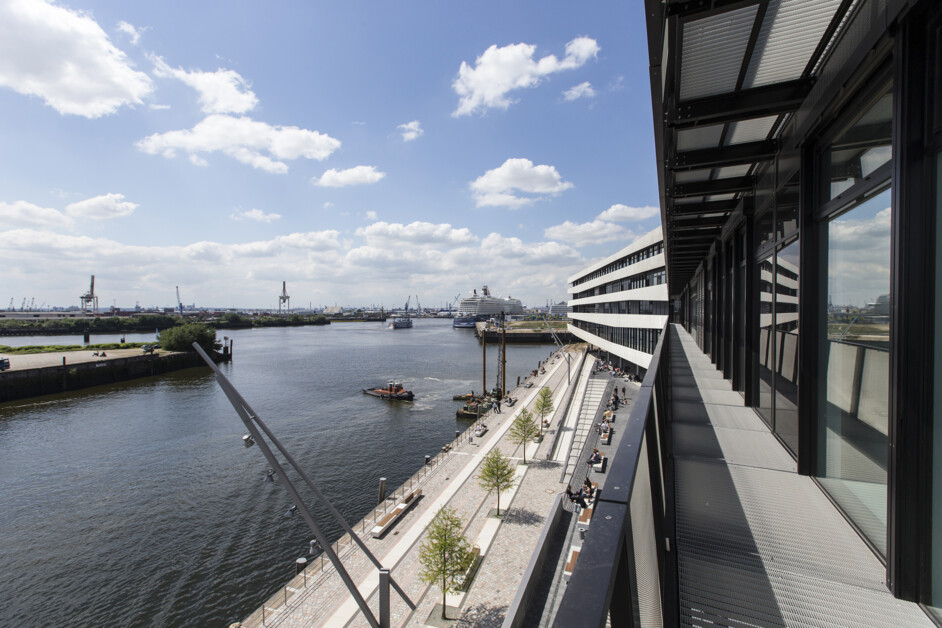
The self-organised tradition still runs strongest in the Gängeviertel. When activists occupied its surviving blocks in 2009, the city eventually bought them back for community use rather than redevelopment — documented in detail in a case study in community finance and the reuse of urban heritage. It showed that Hamburg could turn a contested squat into a permanent commons, though the model stayed small and the negotiations with the city ran for years. It remains the reference point every newer self-build project measures itself against.
None of these projects stands on its own; each leans on a settled layer of Hamburg institutions. SAGA, the municipal landlord, is the largest single actor, holding the public floor of the whole tenure mix and carrying most of the city's retrofit load. STATTBAU Hamburg, the development agency founded in 1982, still shepherds self-organised groups through land, finance and planning, and the Johann David Lawaetz-Stiftung does the same for community-led schemes like Gröninger Hof. homer organises new cooperative communities for user-designed homes, and the Körber Stiftung convenes much of the city's urban-futures debate. It is a denser civic layer than most German cities can show — and it rests on the one thing Hamburg never sold: a cooperative and municipal floor more than a century in the making.
References
Statistics20Click on any number to see the source
Housing market
Tenure & affordability
Cooperative, social & public
Adaptive reuse & vacancy
Population & migration
From our library16
- SAGA Unternehmensgruppe — Organisation
- Understanding the housing crisis: Staff Working Document accompanying the European Affordable Housing Plan — Knowledge
- Bergedorf-Bille eG — Organisation
- Bauverein der Elbgemeinden (BVE) — Organisation
- Baugenossenschaft Hamburger Wohnen eG — Organisation
- Gemeinwohlorientierte Wohnungspolitik - eine Studie — Knowledge
- Homeoffice und die Zukunft der Büros: Flexibilisierung, Reduzierung und Umnutzungspotenzial — Knowledge
- Gröninger Hof — Project
- We-House Baakenhafen — Project
- vonwegenleer — Organisation
- HafenCity University Hamburg (HCU) — Organisation
- Funding the Cooperative City: Community Finance and the Economy of Civic Spaces — Knowledge
- STATTBAU Hamburg — Organisation
- Johann David Lawaetz-Stiftung — Organisation
- homer — Organisation
- Körber Stiftung — Organisation
Further sources16
- SAGA Unternehmensgruppe — SAGA
- Bündnis für das Wohnen in Hamburg — Stadt Hamburg
- €1.774bn for affordable housing 2025/2026 (IFB) — Hamburger Wohnstifte / IFB Hamburg
- Drittel-Mix — one-third housing model — Stadt Hamburg
- Konzeptvergabe — concept-led land tenders — Stadt Hamburg
- Hamburg-Standard — VNW-Direktor Andreas Breitner — VNW (Presseportal)
- VNW — "Wir stecken in der Baukrise" (Breitner) — VNW (Presseportal)
- Mieterverein zu Hamburg — Mietenspiegel 2025 (Rolf Bosse) — Mieterverein zu Hamburg
- Federal Bauturbo (§246e BauGB) — Deutscher Bundestag
- Karen Pein — Senator for Urban Development and Housing — Stadt Hamburg
- Hamburg renews red-green coalition (2025) — ZDF
- IBA Hamburg — IBA Hamburg
- Gröninger Hof eG — the project — Gröninger Hof eG
- Gröninger Hof — Quartierfonds funding — Stadt Hamburg
- Gröninger Hof — car-park transformation (Lawaetz) — Johann David Lawaetz-Stiftung
- Port of Hamburg — Wikipedia