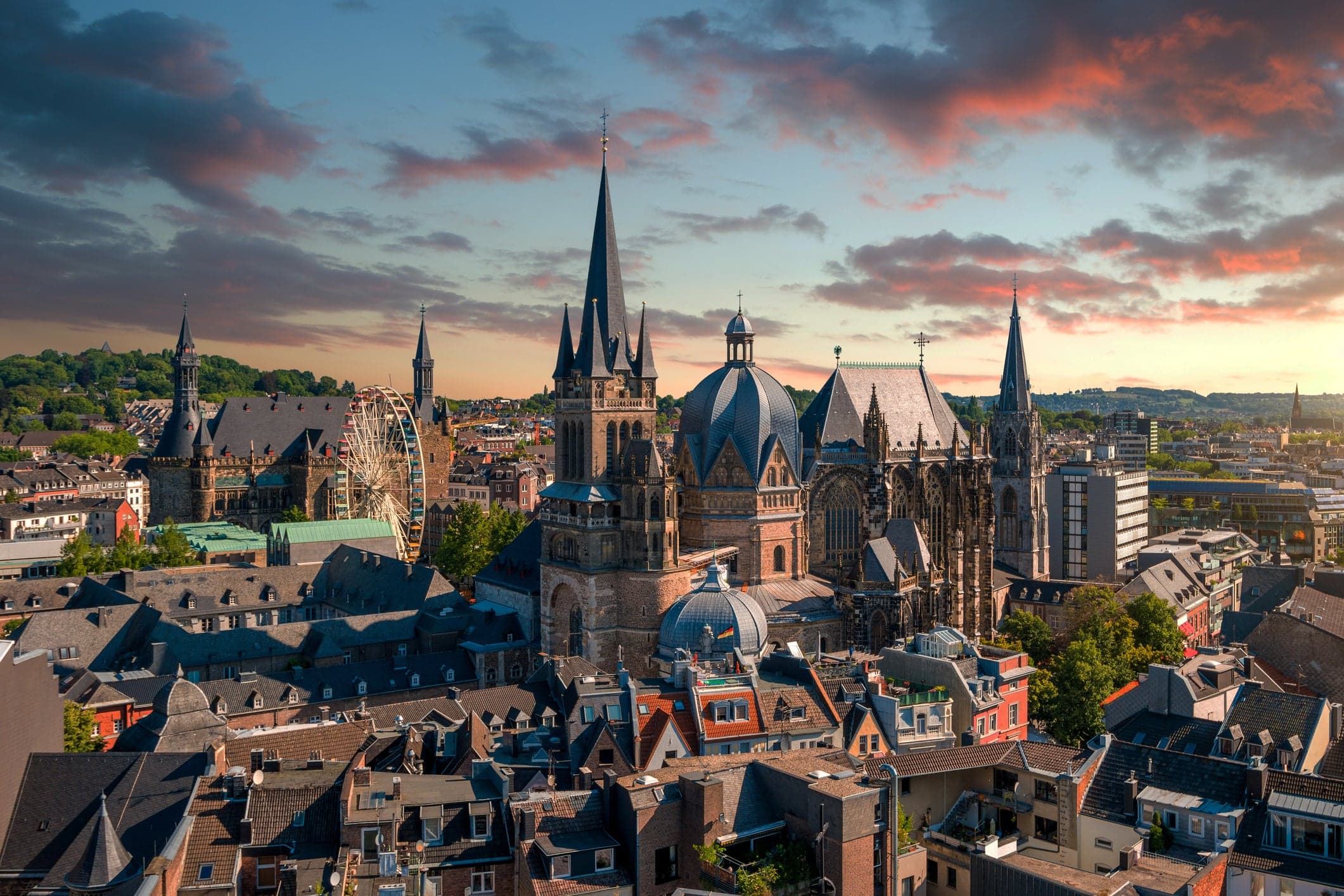
A crowned city, rented by students
Aachen was built on hot water and crowns. Charlemagne settled beside its thermal springs, and his chapel became the coronation church of the German kings. Today the city's pull is a different kind of prestige: RWTH Aachen alone counts 44,382 students, and they compete for the same flats as nurses, families and pensioners in a city of 263,703 people on the Dutch and Belgian borders.
Renting is the norm here. 70% of households rent and 30% own their home, out of 141,000 dwellings counted in the 2022 census. Cooperatives hold an estimated 7% of the stock. Public housing, meaning homes owned by the city and its majority-owned company gewoge AG, accounts for 8.5%. That leaves private landlords with 54.5% of all homes, the largest single slice by far.
- Owners
- Owner-occupier30.0%
- Renters
- Public & non-profit rental8.5%
- Cooperative7.0%
- Private rental54.5%
Social housing is best read as a rule attached to a flat, not as a tenure. A home built with state subsidy carries a Sozialbindung (a covenant capping the rent and reserving the flat for lower-income tenants) for a fixed period, whoever owns it. The city's 2026 housing-market report puts these bound homes at 5.5% of the stock, down from 17.8% in 2005 and 24.5% in 1990. Yet 45% of households earn little enough to qualify for one.
Rents climb steeply from the subsidised floor. A gewoge flat lets for about €6.20/m² net of heating and service charges. The median asking rent across the city reached €11.19/m² in 2025, 57.4% above 2012. New-let contracts average €12.14/m², and new-build flats ask €14.64/m². At the top, furnished and serviced flats, with utilities and furniture priced in, run to about €20.60/m². Even sitting tenants feel it: the new rent index in force since January 2026 shows a mean rise of 6.3%.
- Public housing (gewoge)
- All-stock median (asking)
- New contracts
- New build (asking)
- Furnished / serviced (gross)
Net cold rent per m² per month, except the furnished tier, which is gross and all-in. The gap between a gewoge flat and a new-build asking rent is more than double.
Empty homes are scarce. The census found 3.5% of dwellings standing empty, about 3,900 homes, which is close to the minimum a market needs to let people move. Office vacancy is estimated at 4%, roughly 0 m² of floor space. That is a modest reserve by the standards of Frankfurt or Düsseldorf, though not one to ignore.
Demand keeps arriving. Around 18,000 people move to Aachen each year, many of them students, and the city counts about 60,000 students across its universities. Building has not kept up. In 2025 the city region completed 1.33 new homes for every thousand residents, against 1.98 across North Rhine-Westphalia. The city's housing action plan had counted a need for about 10,000 new homes between 2019 and 2035.
The squeeze falls first on those with the least room to absorb it. Aachen's student-housing provider has the longest waiting list in Germany, with 11,170 students queuing for a room in September 2026. First-year students pay rents that a national survey of university towns finds above the federal student grant's housing allowance in most cities. The GREIX asking-rent index, reported by t-online, put Aachen at €11.58/m² at the end of 2025, 39% above 2015. With close to half of households eligible for a subsidised flat, the pressure has plainly reached the middle. The German Tenants' Association's 2026 rent report finds 11.2% of people nationally spending more than two-fifths of disposable income on housing, and 58% reporting higher costs within a year. Aachen's new mayor now calls affordable housing the social question of the coming years.
People looking for a home are having a hard time right now. The classic supply is shrinking, prices are rising, and the conditions are getting tougher through more and more fixed-term contracts or furnished offers.Against that backdrop, the cooperative share looks small for a German university city. Whether it can grow is the question the city's newest housing groups are trying to answer.
From a charitable building society to five building groups
A German housing cooperative, or Wohnungsgenossenschaft, is owned by the people who live in it. Each member buys a Genossenschaftsanteil (the share a member pays to join, refunded on leaving) and gains a lifelong right to rent a home at a cost-based price. Nobody can sell a flat for profit. Aachen adds two variants. Some new groups set up as small community-living cooperatives. Others follow the Mietshäuser Syndikat model, in which a residents' association and a national federation jointly own each house so it can never be sold. The city's 2026 report also flags a KfW (Germany's state development bank) loan that lets households finance their cooperative shares on cheap terms.
The city's non-profit tradition began with a company rather than a cooperative. In 1891 Aachen gained the Gemeinnützige Baugesellschaft für Aachen und Burtscheid, a non-profit building society meant to give poorer families healthy homes. By 1897 it held 192 homes in 17 buildings. The city became a shareholder in 1941, and when a later council tried to sell that stake, public protest stopped it. The company is today's gewoge. The Catholic church added a second non-profit landlord after the war: the Aachener Siedlungs- und Wohnungsgesellschaft, founded in 1949 and owned by six dioceses including Aachen's, though its work centres on Cologne, Düsseldorf, Essen and cities further afield.
The cooperative sector itself falls into four clusters. The oldest is the Aachener Wohnungsgenossenschaft eG, a traditional cooperative that builds, renovates and manages estates. The second is a group of community-living cooperatives: LebensWeGe Aachen eG, founded in 2013 as the city's first cooperative for solidarity-based neighbourhood living, and PatchWorkHaus eG, a multigenerational house in Forst. The third is self-organised: Wohnsinn has lived in Syndikat ownership since 2002, and Gentristop joined the network in 2019. The newest cluster is federation-led. Several building groups now pool their projects inside one cooperative, or under the umbrella cooperative Ko-Operativ eG NRW. The clusters face different problems. The older cooperative's task is keeping and retrofitting existing estates. The newcomers need land and finance for their first building, at a time when the land-value index for apartment blocks has risen by more than half since 2015. The city also notes that older people tend to look for shared housing late, when the long planning a new project needs is hard to face.
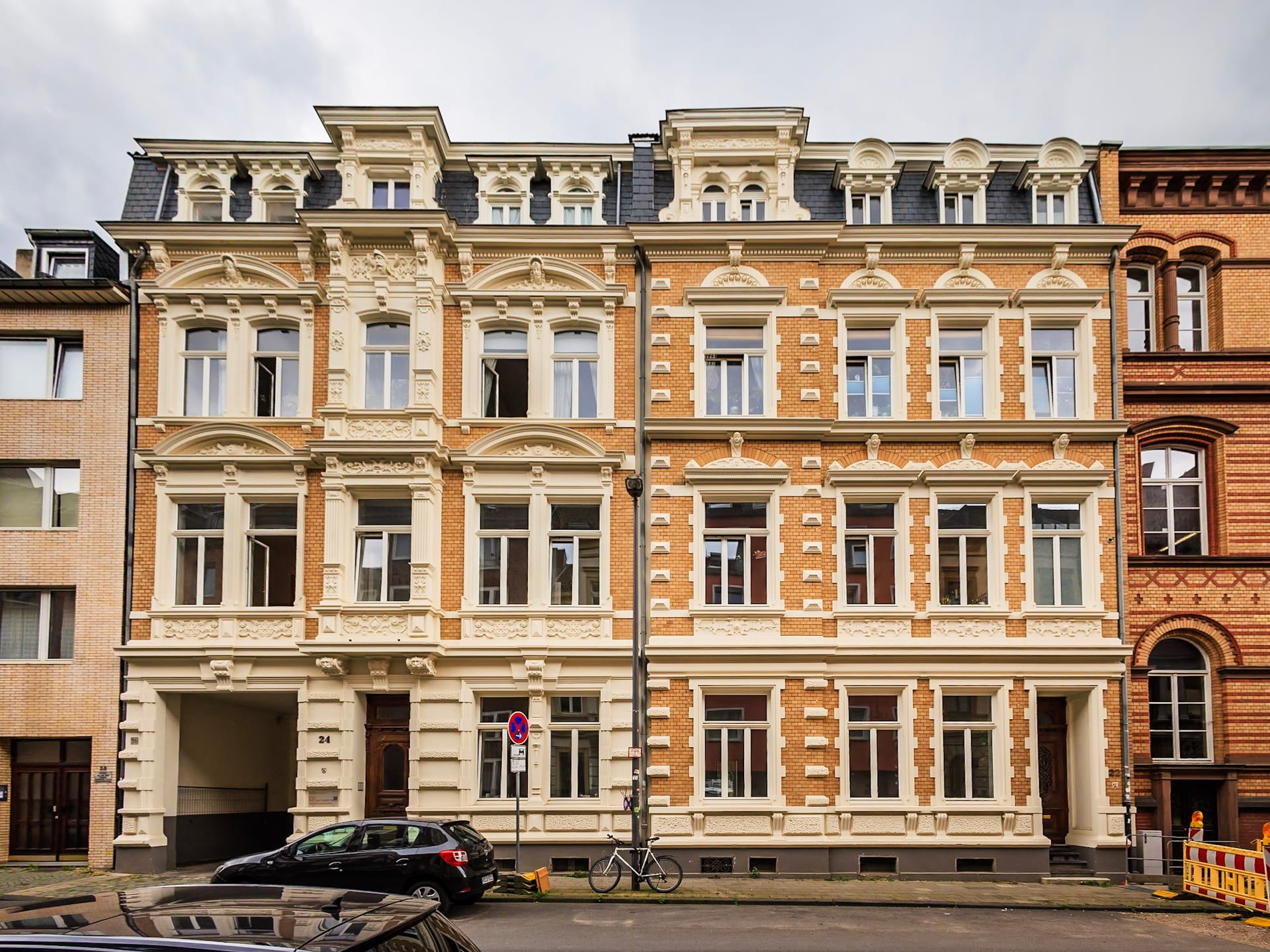
The city has begun to treat cooperatives as a delivery partner. Its 2026 report says more land must pass to municipal, common-good and cooperative housing providers. It pairs that aim with tools that reward concept over price. A federal study of cooperatives as municipal partners shows how such alliances work in other German cities. In Aachen the tools are hereditary leasehold, concept tenders and a quota for subsidised housing. Each is set in the town hall.
A new mayor, a 40% quota and a missed climate target
Aachen changed direction in September 2025. Michael Ziemons of the CDU (the centre-right Christian Democrats) beat the Green incumbent Sibylle Keupen in the run-off with 56.0% of the vote. In July 2026 the CDU, SPD (Social Democrats), Volt and FDP (Liberals) signed the city's first four-party coalition, with a five-seat majority. Ziemons opened his term with a housing summit and a target of about 7,000 homes in 15 years. He also promised to "really switch on the Bau-Turbo" and named over 3,000 homes that could be built soon. The 2026 housing-market report shows the scale of the gap. In one year, more than 1,000 homes left their rent and occupancy covenants, while only 318 new subsidised homes were approved, backed by about €68 million of state funding.
Each level of government holds a different lever. Berlin sets the tenancy framework: the Bundestag extended the Mietpreisbremse (the brake capping new-let rents at 10% above the local reference rent) to the end of 2029. Its Bau-Turbo law adds a temporary rule, § 246e of the Building Code, letting councils approve housing without a new development plan until 2030. Federal social-housing commitments reach €4 billion in 2026. North Rhine-Westphalia decides where those rules apply. Its tenant-protection ordinance grew from 18 to 57 municipalities in 2025, with Aachen listed first. It caps rises for sitting tenants at 15% over three years until February 2030. The state also runs subsidy, with €12 billion budgeted for 2023–2027 and a record year in 2025. Yet the regional housing federation reports that construction costs still stall new building across the state.
The town hall controls land. Since 2019 larger developments must deliver 40% of their floor area as subsidised housing. Under the same land policy, owners of big sites must first offer the city a third of the future building land. The 2020 Aachener Modell goes further: the city now grants its own plots only on Erbbaurecht (hereditary leasehold, where the city keeps the land and charges a yearly ground rent) and pays a subsidy of up to that rent for subsidised flats. Plots are awarded by Konzeptvergabe (concept tenders, judged on the quality of the project rather than the price). The latest are at Karl-Kuck-Straße in Brand and the Büchel in the old town.
It is an important instrument to protect tenants from excessive rent increases.Aachen's answer to empty space is regulation first. Its Wohnraumschutzsatzung (a bylaw protecting housing from misuse), in force since 2019, limits holiday letting of a home to 90 days a year. It also requires permission for leaving a flat empty beyond six months, with fines of up to €500,000. Residents can report empty buildings online, anonymously if they wish. Converting commercial space appears in the action plan only as an aim to test. A national architects' handbook on office-to-housing conversion sets out the technical and legal path such projects must take.
Climate policy has hit its own reckoning. In January 2022 the council adopted a citizens' motion to make Aachen climate-neutral by 2030, and the EU named it one of its 100 climate-neutral mission cities. In April 2026 the city's climate chief, Heiko Thomas, conceded that 2030 cannot be held as a target year, and Ziemons asked for new, realistic goals. Buildings sit at the centre of that debate. A federal study on reconciling affordable housing with climate protection argues that mandates only work when paired with targeted subsidy. Aachen's newest cooperative projects, built in timber to high efficiency standards, show one way to meet both.
Believe me, as a civil engineer: you build homes with diggers, not with brakes.- 2019[source]
Subsidised-housing quota and housing-protection bylaw
The council sets a 40% subsidised share for larger developments and adopts the Wohnraumschutzsatzung against misuse and vacancy.
- 2020[source]
Aachener Modell
City land for housing is granted only on hereditary leasehold, with a subsidy of up to the ground rent for subsidised flats.
- 2022[source]
Climate neutrality by 2030
The council adopts the citizens’ motion to make Aachen climate-neutral by 2030.
- March 2025[source]
NRW tenant protection covers Aachen
The state ordinance extends the tighter 15% cap on rent rises for sitting tenants to 57 municipalities, Aachen among them.
- September 2025[source]
New mayor
Michael Ziemons (CDU) wins the run-off with 56.0% of the vote.
- February 2026[source]
First housing summit
The mayor sets a need of about 7,000 homes over 15 years.
- April 2026[source]
2030 climate target abandoned
The city concedes that climate neutrality by 2030 cannot be reached and seeks new targets.
- December 2029[source]
Rent brake expires
The federal cap on new-let rents runs out unless extended again.
- 2030[source]
Tenant-protection and Bau-Turbo deadlines
The NRW cap on rent rises ends in February; the fast-track planning rule for housing ends in December.
- 2035[source]
Horizon of the housing action plan
The end date of the plan’s estimate of about 10,000 new homes needed since 2019.
From the subsidised-housing quota to the expiry dates of today’s federal and state rules.
Timber, leaseholds and a factory for ideas
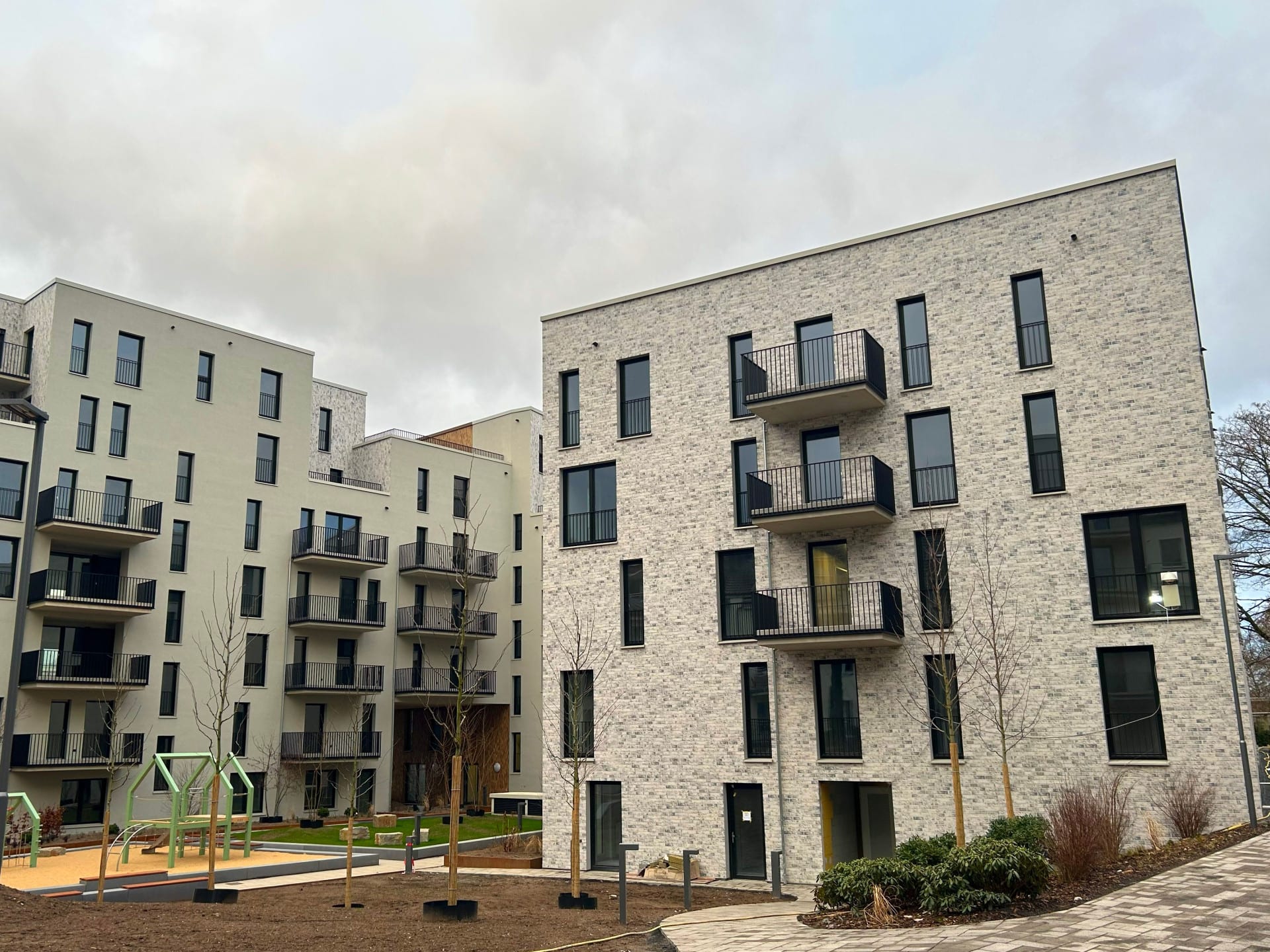
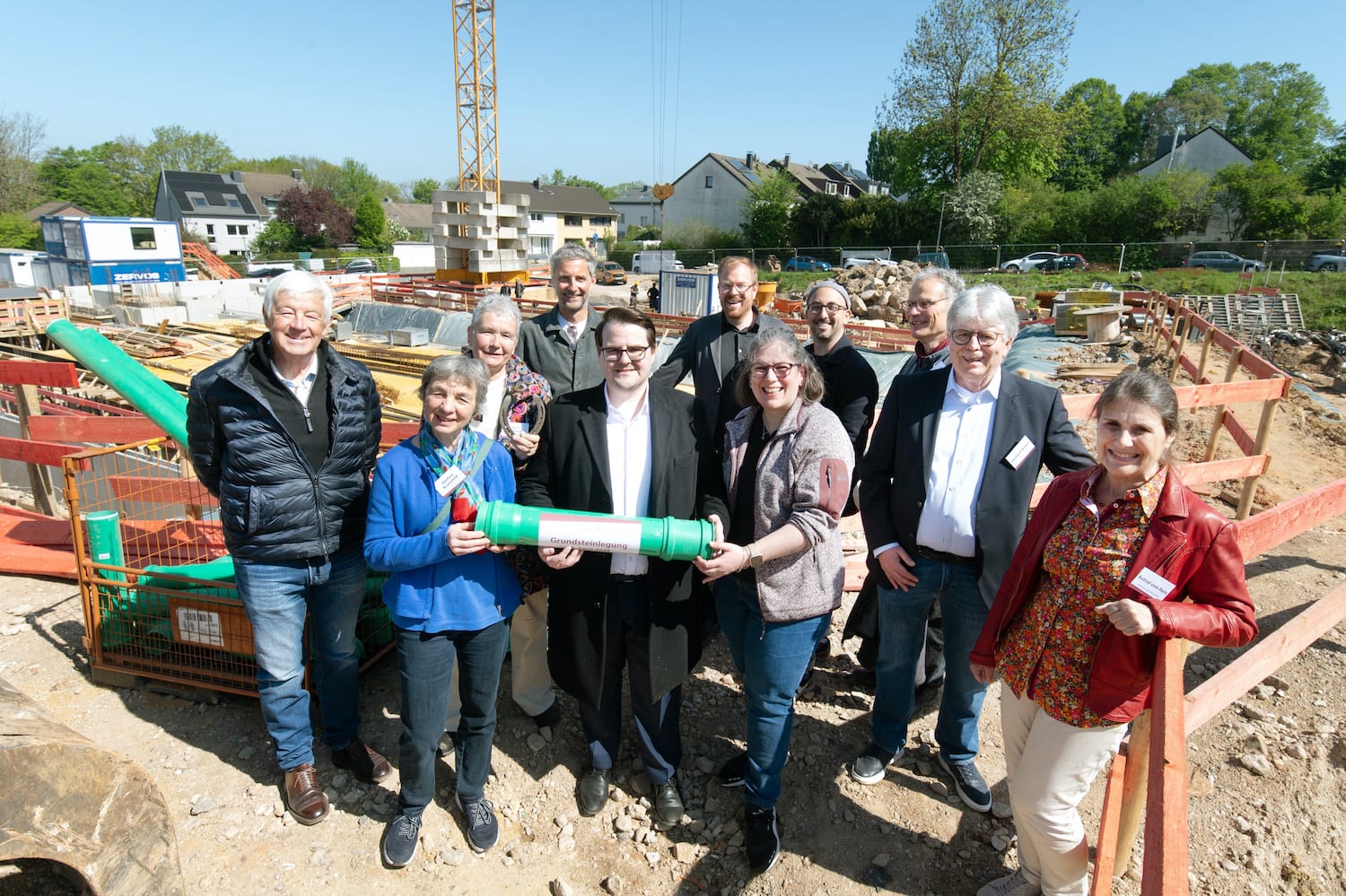
Gut!Zusammen Aachen eG is the city's boldest cooperative bet. Five building groups have joined forces at Branderhof in Burtscheid to build 69 homes in timber-frame construction for about 100 residents. More than half will go to households holding a Wohnberechtigungsschein (the certificate that entitles lower-income tenants to a subsidised flat), and the buildings meet KfW's high Efficiency House 40 standard. The ground was broken in April 2026, with completion planned for early 2027. The route there was slow: the groups first met as a loose partnership in 2020, and five groups with their own plans had to agree on a single budget of about €18.5 million.
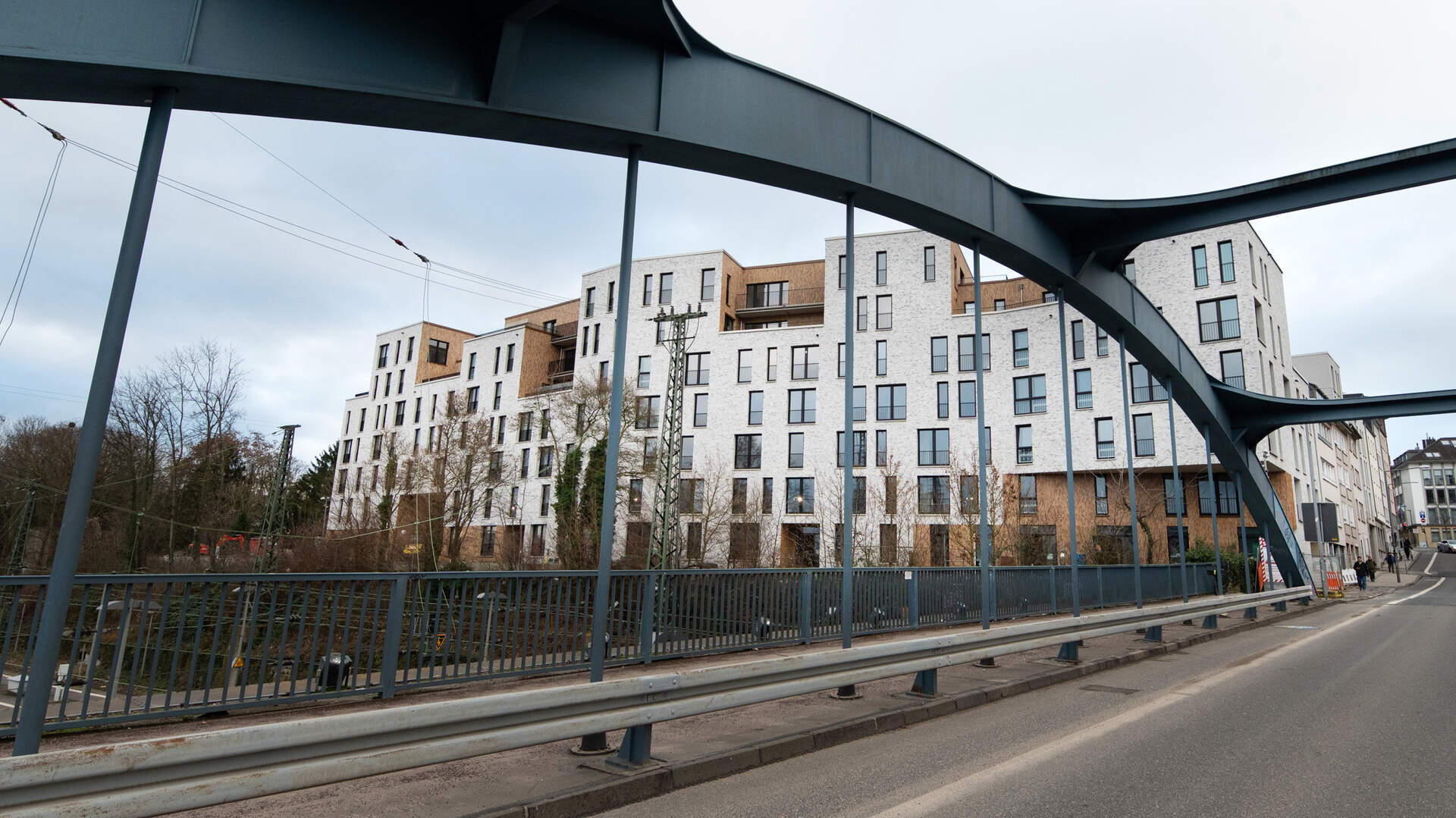
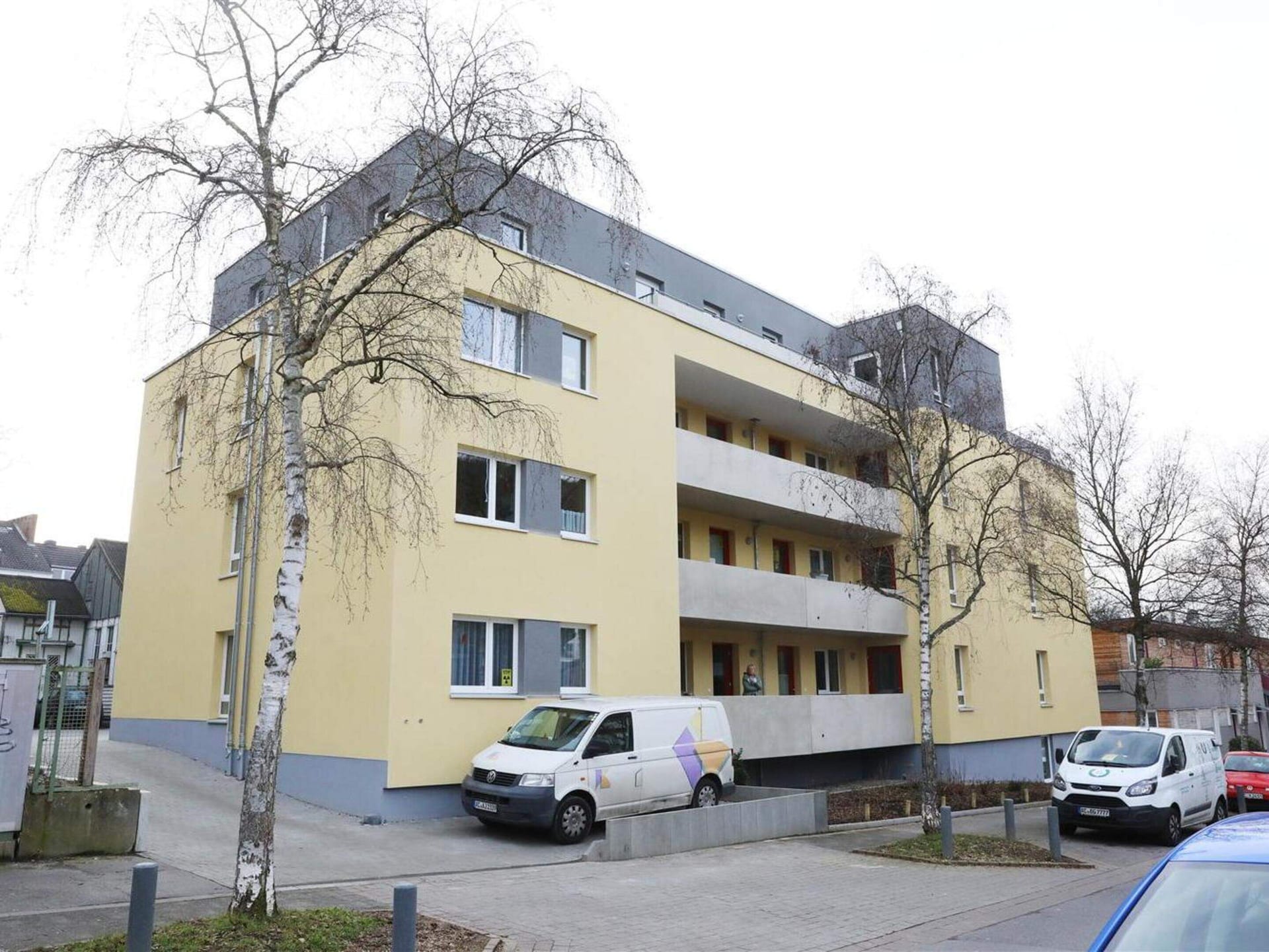
Miteinander im Wiesental shows how small groups can borrow scale. The five-storey multigenerational house in Aachen-Nord, with about 1,300 m² of living space, was built by the umbrella cooperative Ko-Operativ eG NRW with state subsidy and occupied in November 2023. It sits in a district that spent 15 years in the federal Soziale Stadt programme for struggling neighbourhoods. The cost is dependence: without the umbrella cooperative and NRW.BANK (the state development bank) finance, the house would not have been built.
gewoge AG remains the city's largest affordable landlord. Its 2025 annual report counts 5,217 homes of its own, nearly half of them subsidised, at an average rent of €6.61/m². The company completed 106 homes in 2025 and has 700 more in construction or planning. Its Talbothäuser estate in Aachen-Nord, a listed 1920s ensemble more than half empty in 2016, now holds 96 new and modernised homes. Beside it the city offered a plot on hereditary lease to a building group planning to become a cooperative. The warning is in the same report, which counts 5,193 subsidised flats whose binding ends by 2034.
Wohnsinn and Gentristop carry the Syndikat idea into the city centre. Wohnsinn, on Stephanstraße, houses about 35 people on 1,400 m², and it co-founded its owning company with the Freiburg-based federation. Gentristop, on Oberstraße, has 11 residents and a name that states its politics: stop gentrification. Das Zusammenhaus, a co-housing project of 28 homes on the site of the old Tivoli football stadium, completed in 2016, shows the same impulse in a different legal form. A study of community-led housing and self-organised building traces this movement across German-speaking cities. It stays small in Aachen because each house needs years of volunteer work and a plot someone is willing to sell.
Studierendenwerk Aachen is turning a vacant RWTH institute building on Rochusstraße into a residence with 120 new places, after a design competition that drew 25 architecture practices. It is the clearest adaptive-reuse project in the city's housing pipeline, and it meets the demand where it is most acute. Even so, 120 places barely dent a waiting list that runs to five figures, and the city's 2026 report records that a new 233-place residence had let 203 places by the time it went to press.
The Altstadtquartier Büchel is where the city's land tools meet a contested past. The old car park in the heart of the old town was demolished in 2022 to make room for homes and culture. Then courts struck down the redevelopment ordinance in 2024 and 2025, and the council had to adopt a new one in April 2026. A concept tender for the “Ausblick” plot followed. The Commoning Spaces Network, an Aachen-based association for self-managed urban space, argues for exactly this kind of shared ground. The Nadelfabrik, a 1911 needle factory the city turned into a community centre, proves that Aachen can reuse an old building well. The next step is to put homes in one.
References
Statistics13Click on any number to see the source
Housing market
Tenure & affordability
Cooperative, social & public
Adaptive reuse & vacancy
Population & migration
From our library20
- gewoge AG — Organisation
- Wohnungsmarktbericht 2026 der Stadt Aachen — Knowledge
- Handlungskonzept Wohnen 2022 der Stadt Aachen — Knowledge
- Rund 105.000 Studierende warten auf Wohnheimplatz bei einem Studierendenwerk — Knowledge
- Studentische Wohnkosten an Hochschulorten, Wintersemester 2025/26 — Knowledge
- Wohnungssuche in Aachen: Mieten steigen stark (GREIX) — Knowledge
- Mietenreport 2026 - Deutscher Mieterbund — Knowledge
- LebensWeGe Aachen eG — Organisation
- Wohnsinn-Aachen e.V. — Organisation
- Bündnis für bezahlbares Wohnen und Bauen – Wohnungsgenossenschaften als Partner der Kommunen — Knowledge
- Wohnungsbaugipfel in Aachen: Wohnungsbau soll beschleunigt werden — Knowledge
- Bundestag: Mietpreisbremse verlängert — Knowledge
- Aus 18 werden 57 – Nordrhein-Westfalen weitet Mieterschutzverordnung aus — Knowledge
- Der Förder-Boom für bezahlbare Mieten und Eigentum geht weiter – Rund 2,4 Milliarden Euro für 13.356 Wohnungen bewilligt — Knowledge
- In Nordrhein-Westfalen: Baukosten bremsen Wohnungsneubau weiter aus — Knowledge
- Office to Housing — Knowledge
- Analysen und Empfehlungen zur Vereinbarkeit von bezahlbarem Wohnen und Klimaschutz — Knowledge
- Gut!Zusammen Aachen eG — Organisation
- Gemeinschaftliches Wohnen und selbstorganisiertes Bauen — Knowledge
- Commoning Spaces Network e.V — Organisation
Further sources30
- RWTH Aachen
- new rent index
- Stadt Aachen — Studentisches Wohnen
- IT.NRW, completions 2025
- Gemeinnützige Baugesellschaft für Aachen und Burtscheid
- Aachener Siedlungs- und Wohnungsgesellschaft
- Aachener Wohnungsgenossenschaft eG
- PatchWorkHaus eG
- Gentristop
- gewoge AG, Geschäftsbericht 2025
- IT.NRW, Kommunalwahl 2025 Aachen, Stichwahl
- the city's first four-party coalition
- Stadt Aachen press release, Wohnungsbaugipfel 2026
- 2026 housing-market report
- § 246e of the Building Code
- Deutscher Bundestag, budget 2026
- MietSchVO NRW 2025
- Land NRW press release, 12 Dec 2025
- Lebendiges Aachen, 14 April 2019
- Aachener Modell
- Stadt Aachen, Wohnraumschutzsatzung FAQ (02/2026)
- Aachen climate-neutral by 2030
- 2030 cannot be held as a target year
- 69 homes in timber-frame construction
- planned for early 2027
- Soziale Stadt Aachen-Nord — Stadt Aachen
- Das Zusammenhaus
- Studierendenwerk Aachen
- Altstadtquartier Büchel
- Nadelfabrik