AI-Generated Summary
Circular Buiksloterham is an ambitious neighbourhood-scale project transforming a former industrial area in Amsterdam North into a fully circular urban district. The project serves as a living laboratory for sustainable urban development, integrating smart building technology, closed-loop waste and water systems, local renewable energy generation, and data-driven resource management into a comprehensive model that demonstrates how circular economy principles can be applied at the scale of an entire neighbourhood.
The district's closed-loop water systems are among its most innovative features. Decentralised water treatment facilities process wastewater locally, recovering nutrients for urban agriculture and returning clean water for non-potable uses such as irrigation and toilet flushing. This approach significantly reduces the volume of wastewater sent to centralised treatment plants and demonstrates how urban water cycles can be shortened and made more resource-efficient.
Buildings in Buiksloterham are designed for modularity and demountability, meaning that construction materials can be recovered and reused at the end of a building's useful life rather than being sent to landfill. IoT-monitored resource flows track energy consumption, water usage, and waste generation across the district in real time, providing residents, building managers, and researchers with the data needed to optimise resource use and identify further circularity opportunities.
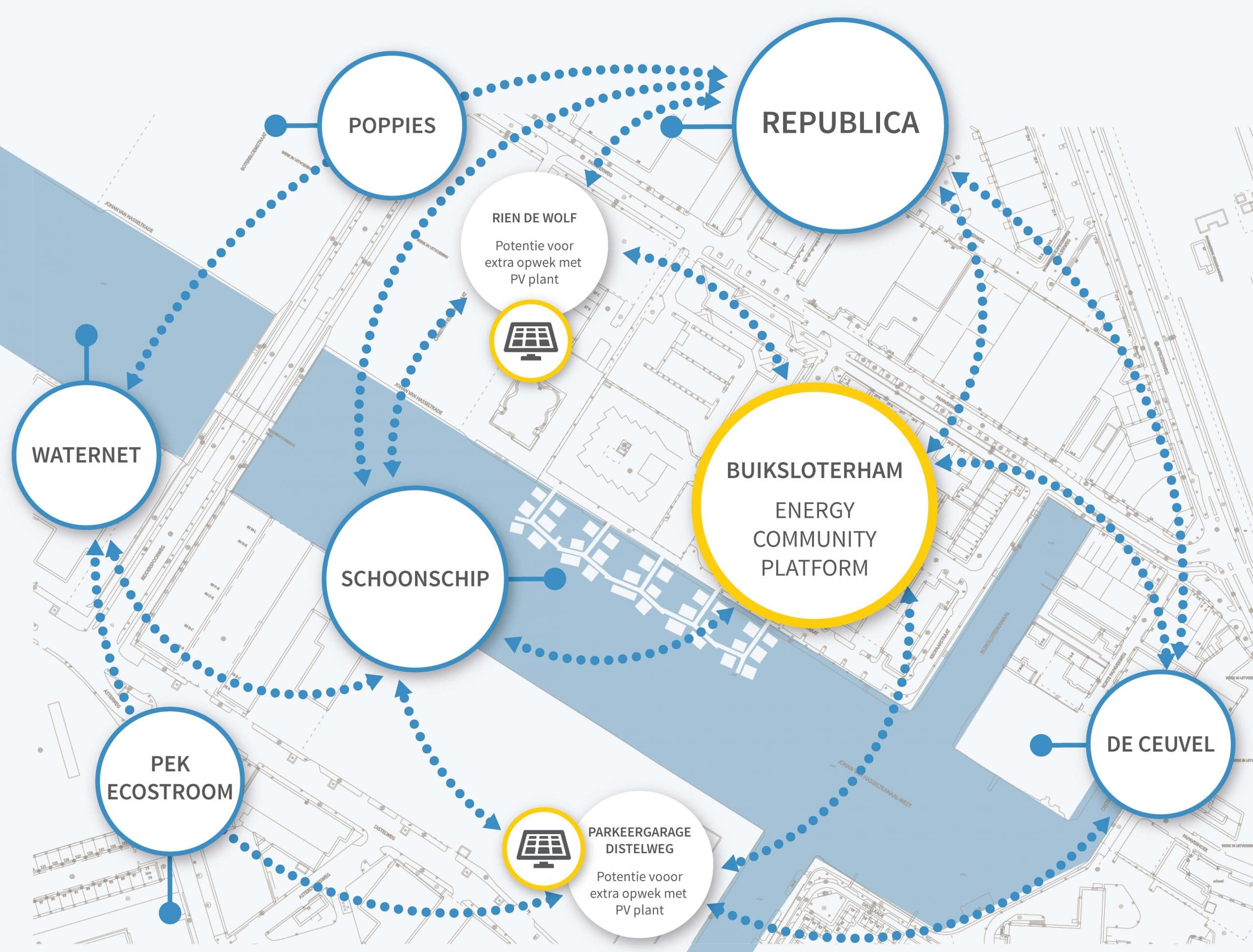
Local energy generation from rooftop solar panels and shared battery storage systems reduces dependence on centralised fossil fuel generation, while shared mobility hubs replace private parking with car-sharing, bike-sharing, and cargo bike services. Community composting and urban farming initiatives close the organic waste loop and strengthen social connections among residents.
Circular Buiksloterham has attracted international attention as one of Europe's most comprehensive circular neighbourhood projects, offering practical insights and transferable models for cities seeking to embed circular economy principles into the fabric of urban development.