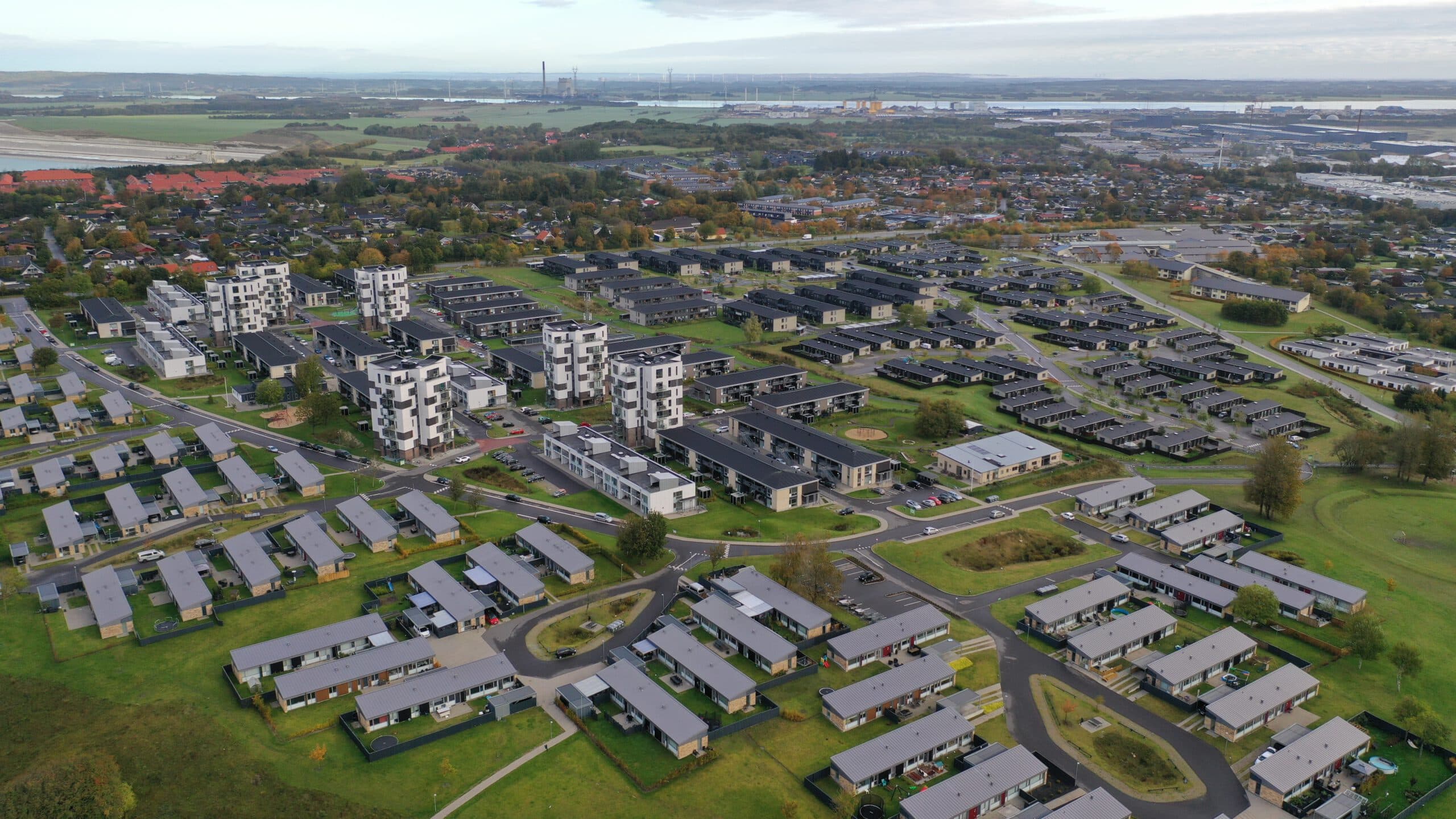
Aalborg East is a major urban regeneration project located in Aalborg, Denmark's fourth-largest city. The initiative transformed a vulnerable residential district built in the 1970s as a satellite city into a mixed-use, sustainable community. The project was developed by Himmerland Boligforening, a social housing company that led the district regeneration between 2011 and 2021 with support from multiple stakeholders including Aalborg Municipality, the Danish National Building Fund, and a business network of over 180 members.
The renovation addressed significant social and physical challenges that had plagued the area, including poor housing quality, social segregation, and unemployment. The project fundamentally renovated approximately 1,500 homes and added about 500 new housing units, increasing total dwellings from 1,050 to 1,220. The total renovation cost reached 200 million euros, with 50 percent funded by the Danish National Building Fund and 50 percent from Himmerland's own resources.
Multiple architecture and design firms contributed to the project, including C.F. Møller Architects and Vandkunsten. The interventions included replacing concrete facades with prefabricated wooden ones, improving insulation and windows, and reforming urban design with diverse materials such as wood and brick. A health center and community center were constructed to serve residents.
The project achieved remarkable results, with households reducing energy consumption by up to 50 percent after renovation. The available dwelling types increased from 3 to 30, and biodiversity improved through enhanced green spaces. The Aalborg Model, emphasizing resident co-creation and cross-sector collaboration, became a replicable framework for sustainable district transformation. Himmerland received a New European Bauhaus award in 2023 for this groundbreaking work.