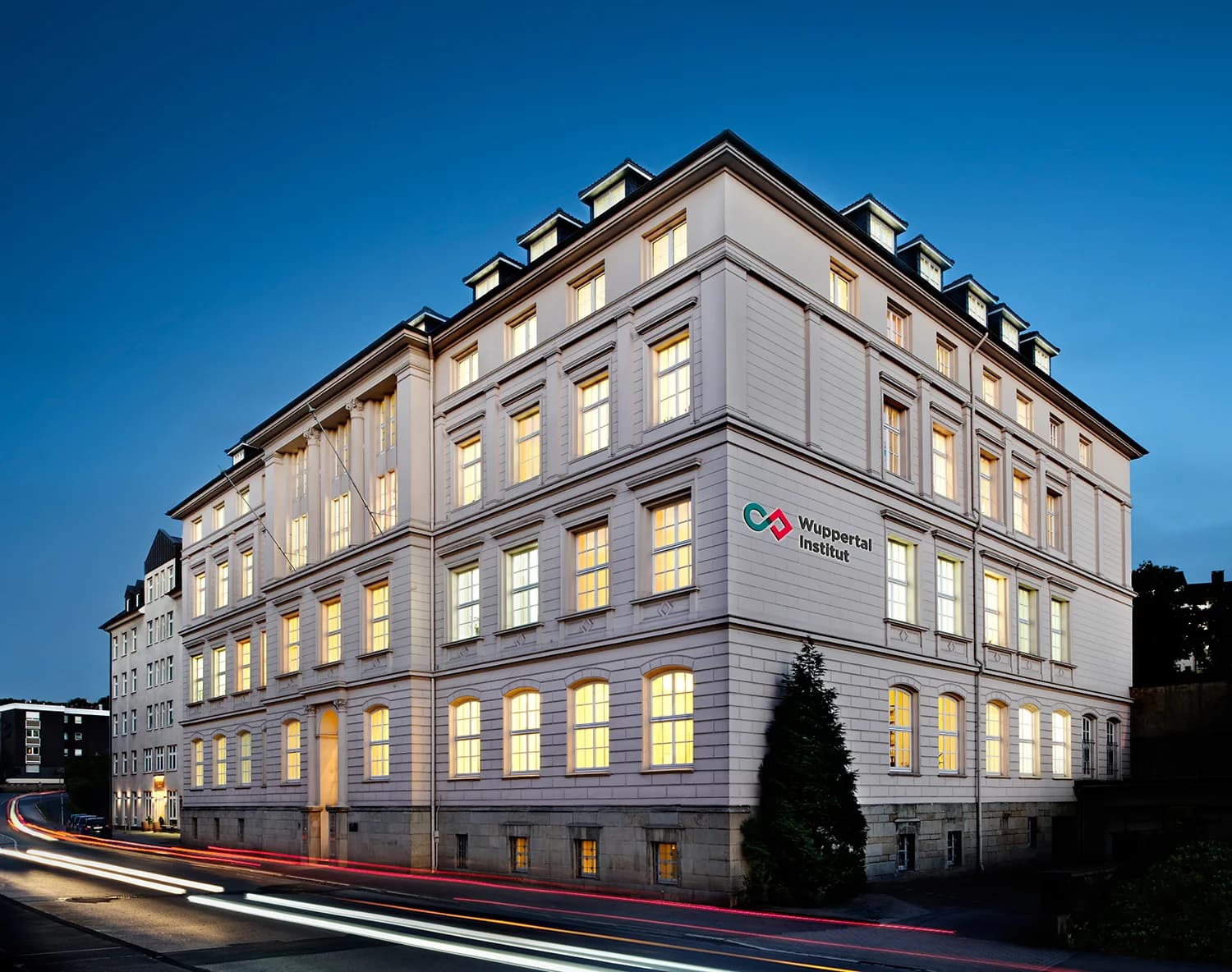
The Wuppertal Institute for Climate, Environment and Energy, headquartered in Wuppertal, Germany, was founded in 1991 by Ernst Ulrich von Weizsäcker, with significant backing from North Rhine-Westphalia’s state government. The institute began with around 40 scientists and has since grown to employ more than 300 staff members across its sites in Wuppertal and Berlin, making it one of the largest entities of its kind in Europe.
Its original mission focused on bridging scientific research and actionable policy in response to heightened awareness of global environmental and climate challenges in the early 1990s. Over the years, the Wuppertal Institute has played a significant role in shaping sustainability discourse, introducing concepts such as the “ecological rucksack,” and working on projects commissioned by governmental bodies, international agencies, municipalities, and industry clients.
Today, the institute’s work is structured into divisions including Future Energy and Industry Systems, Energy, Transport and Climate Policy, Sustainable Production and Consumption, and Circular Economy. Recent projects address topics like decarbonizing energy-intensive industries, developing circular economy infrastructures in Germany and the EU, and assessing international carbon markets.
Current leadership includes President and Scientific Managing Director Prof. Dr. Manfred Fischedick. The Wuppertal Institute’s approach is interdisciplinary, combining natural and social sciences to tackle complex socio-ecological transitions. It remains closely linked to broader policy discussions, as shown by its involvement in events like the COP climate conferences. Its core work is defined by evidence-based research aimed at supporting decision-makers in transforming energy, industry, and urban systems toward more sustainable pathways.