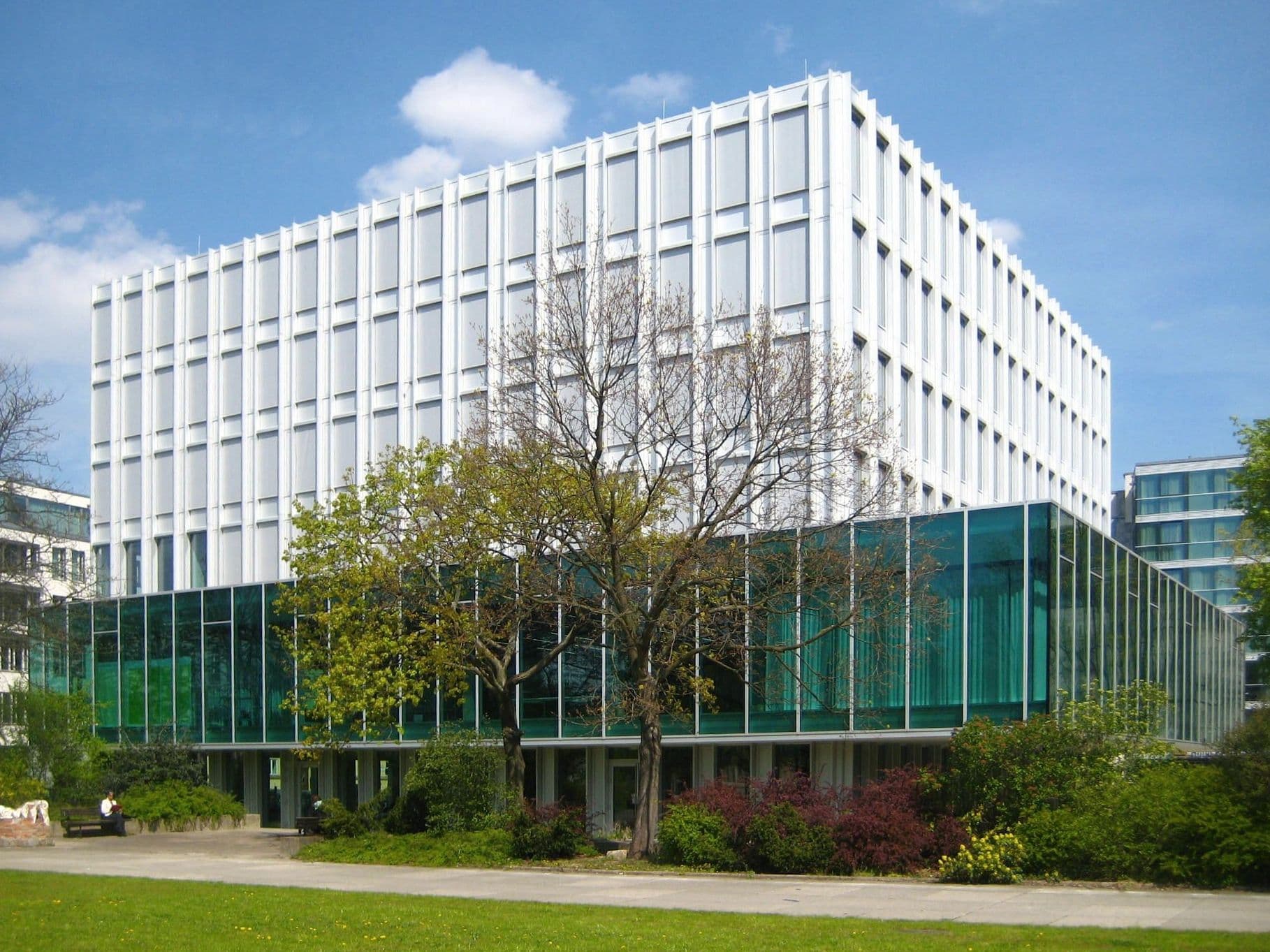
The Heinrich-Böll-Stiftung, a political foundation linked to Germany's Greens, took its current form in 1997 through the merger of predecessor organizations dating back to the 1980s, including peace and women's groups. Named after the Nobel Prize-winning author Heinrich Böll, known for his civil courage and advocacy for human dignity, it moved its headquarters to Berlin's Hackesche Höfe in 1997 and to Schumannstrasse 8 in Mitte in 2008. With 34 offices abroad as of 2023, it operates regional branches across Germany.
Its core focuses include ecology and sustainability, democracy and human rights, gender democracy, minority rights, immigrant participation, and non-violent peace policy. The foundation runs affiliated entities like the Studienwerk for student scholarships, Gunda-Werner-Institut for feminism, and GreenCampus for training.
Recent activities encompass events on sustainable hydrogen governance, Syria post-Assad, coal phase-out via the Kohleatlas 2026, and agrarian lobbying critiques. A March 2026 event addresses retrofitting Europe's building stock to tackle housing shortages, climate goals, and economic shifts, linking to sustainable housing debates without direct affordable housing programs. Berlin hosts many workshops, films, and discussions on antifascism, migration, and ecology.