Resource context (publisher and authors)
“Wanted: Daredevils for housing cooperatives” is an article published by IRU – International Raiffeisen Union e.V., a cooperative-focused organisation based in Bonn, Germany. It is written by Lieve Jacobs (lawyer, working on cooperative entrepreneurship with Cera) and Peggy Totté (architect and urban planner, affiliated with Architectuurwijzer). The text discusses how housing cooperatives can contribute to affordability, quality, flexibility, and long-term stewardship of buildings, drawing on examples from Flanders (Belgium) and Switzerland.
What a housing cooperative is
Using the Belgian Companies and Associations Code (WVV) and the International Cooperative Alliance definition, the article describes a housing cooperative as an autonomous, voluntarily formed association that meets shared economic, social, and cultural needs through a jointly owned and democratically controlled enterprise. A core point is that cooperatives are “mission-driven”: members do not wait for the market or government to solve a housing problem but organise collectively, guided by values such as self-reliance and self-responsibility.
How the model works for residents
In the “pure” model, residents buy shares in the cooperative, which uses these contributions to acquire or develop housing. In return, residents receive a right of residence (often structured similarly to a lease) and participate in democratic governance and oversight. The cooperative owns the entire building (homes and common areas), and management typically sits with an elected Board of Directors that may appoint a manager. The article contrasts this with individual homeownership and condominium co-ownership, where decision-making about common areas can be contentious.
The three linked relationships in cooperative housing
The article frames cooperative participation through three relationships: (1) a transactional relationship (user-benefit) where members receive housing “at cost price”; (2) an investment relationship (user-owner) where members provide capital, often proportionate to the size of their dwelling (e.g., Zürich practice based on square metres leased); and (3) a control relationship (user-control) based on democratic governance (one person, one vote), with members monitoring whether the cooperative continues to serve the shared mission.
Affordability, rents, and long-term financial logic
Affordability is presented as the central driver: rents reflect real cooperative costs (financing, management, and upkeep) rather than profit maximisation. The article argues that allowing shares to gain speculative value on exit would raise entry barriers and potentially increase rents. Instead, cooperatives tend toward “goal maximisation” (meeting member needs) and may reinvest positive results into lower rents or reserves for maintenance and solvency. It notes that in Zürich cooperative rents are reported to be around 20% lower than comparable market rents, and attributes part of this gap to municipal land policies (leasing or selling land on favourable terms to cooperatives).
Flexibility, typologies, and examples from Switzerland
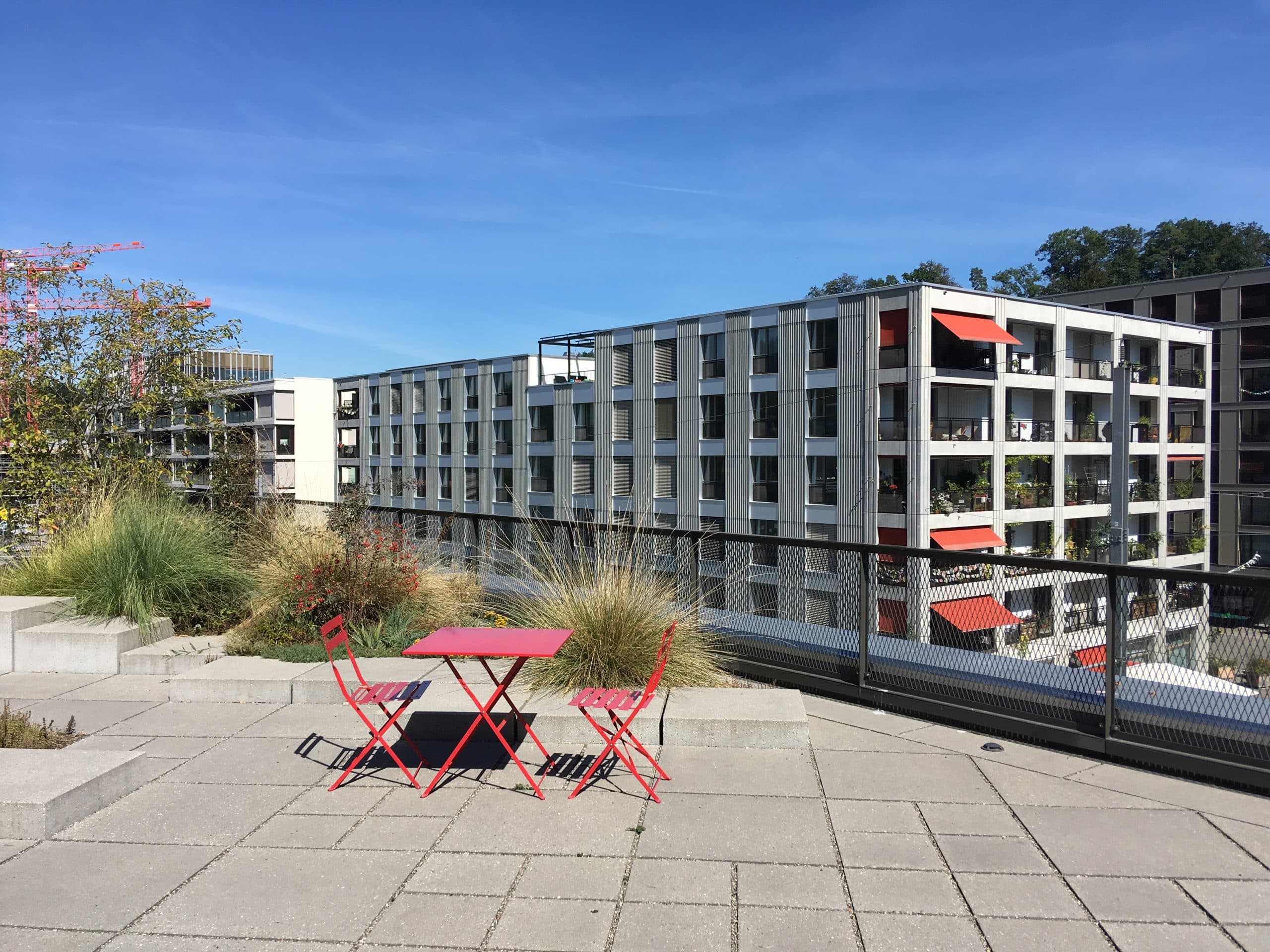
The text highlights “economies of scale” in larger cooperatives that enable household mobility between unit sizes as family needs change. It also describes flexible, small-scale arrangements such as temporarily rentable rooms with basic facilities, and shared work or activity rooms that extend living space without being permanently attached to a single dwelling. Examples include Kalkbreite (Zürich) and Hagmann Areal (Winterthur), illustrating how cooperative governance can support shared amenities and adaptable use of space.
Stakeholders and the call for “daredevils” in Europe
The article concludes that wider adoption depends on committed actors: municipalities willing to provide land for long-term affordable supply, authorities willing to refine cooperative legislation, citizens and social investors ready to provide capital and time, and professionals across real estate, construction, architecture, and finance prepared to collaborate. It also points to emerging Flemish initiatives (e.g., wooncoop, Oak Tree Projects, Collectief Goed) and the potential for cooperative models to support reuse of heritage estates, neighbourhood-scale stewardship, and smaller-scale care and senior living settings.