AI-Generated Summary
Overview of Tallinn's Master Plan
The "Tallinn Master Plan 2026" outlines an ambitious framework for the spatial development of Estonia's capital, focusing on creating a high-quality, human-centered living environment. The plan seeks to ensure that everyday services are readily accessible to residents, while also expediting urban planning processes and incorporating digital tools into decision-making.
Accelerated Urban Planning
Under the leadership of Deputy Mayor Madle Lippus and department head Martin Karro, Tallinn's Urban Planning Department has significantly enhanced the speed and efficiency of planning procedures. A new work model introduced in spring 2025 allows for the direct initiation of detailed plans by the planning department, reducing average processing times by approximately 700 days. Notably, in the first half of 2025, 44 detailed plans were approved, matching the total for all of 2023. Additionally, Tallinn is set to launch a citywide comprehensive plan (üldplaneering), aligning the city’s development strategy with spatial planning, enabling quicker decisions on building rights while clearly defining expectations for high-quality urban spaces.
Old City Harbour Redevelopment
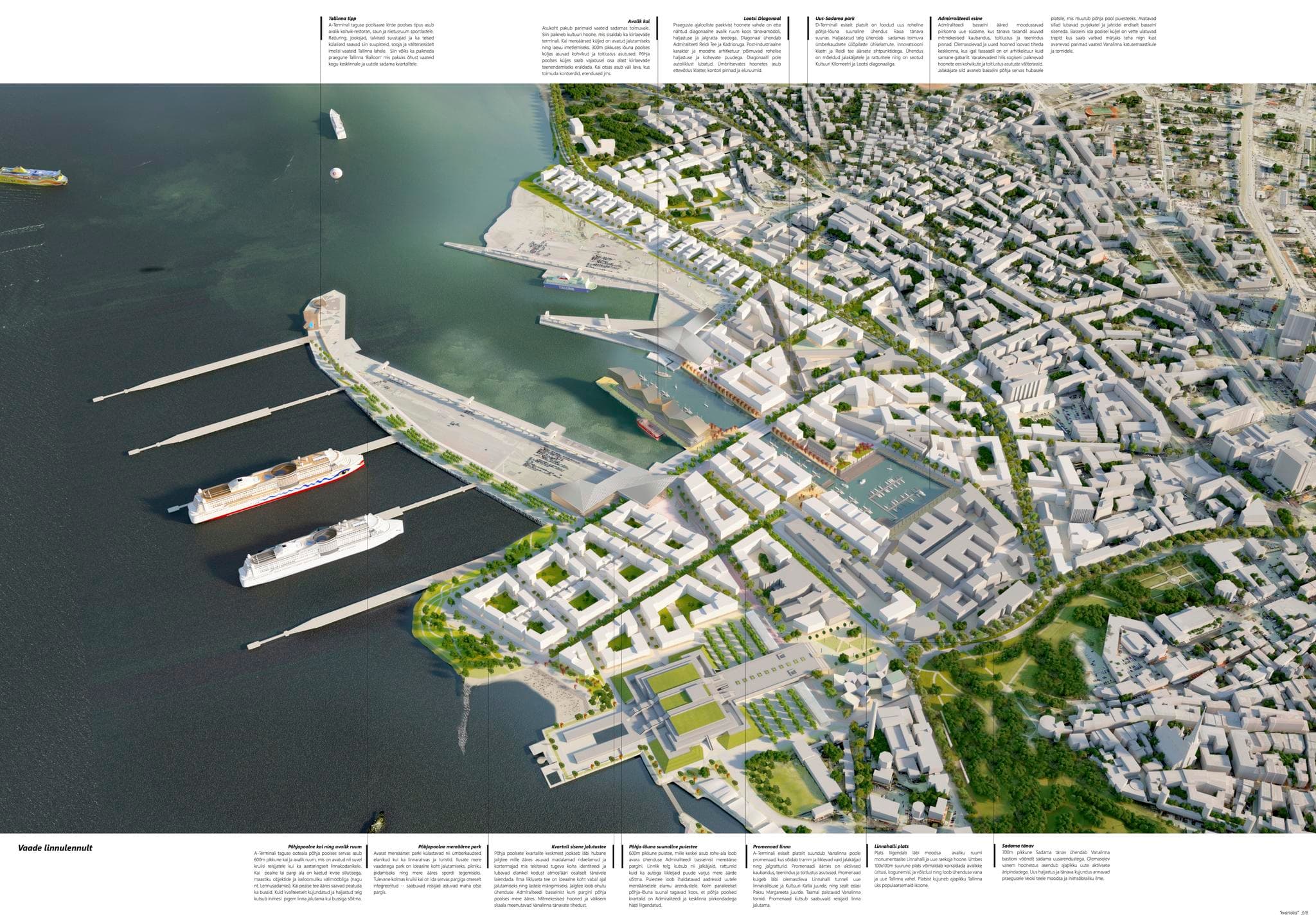
A key initiative within Tallinn's spatial development agenda is the redevelopment of the Old City Harbour, a 54-hectare project managed by Zaha Hadid Architects. The Masterplan 2030+ aims to reconnect the port area with the city center, transforming underutilized harbor land into an integrated urban district. The full build-out envisions over 800,000 square meters of new gross floor area, comprising office space, hotels, retail, market-rate and affordable housing, schools, cultural amenities, and institutional facilities. This project not only positions real estate development alongside shipping as a core business for the Port of Tallinn but also stands as one of the largest urban regeneration efforts in the Baltic region.
Tallinn Pattern Buildings and Modular Construction
The Tallinn Pattern Buildings project promotes sustainable and circular construction practices for public buildings. Initially developed by the Estonian Academy of Arts (EKA) Faculty of Architecture, this system employs standardized, reusable timber components to create kindergartens, schools, and small office buildings. Tallinn has initiated design competitions for wooden modular kindergartens using this system, which minimizes construction waste, shortens building timelines, and aligns with the city’s climate goals. A 2026–2027 experimental development phase, led by EKA, aims to further integrate this knowledge into the public sector.
Digital Planning and Data-Driven Decision-Making
Tallinn is increasingly integrating digital tools into its spatial planning processes. The city has created map-based forecasting tools to predict demand for kindergartens, schools, and sports infrastructure, facilitating smarter land-use decisions. A new Tallinn planning register, set to launch in summer 2026, will enhance transparency by providing public access to planning data, including an open-data statistics module. These initiatives are in line with Tallinn's broader smart city ambitions, emphasizing data-driven urban governance and citizen participation. The incorporation of digital planning tools throughout all stages of urban development positions Tallinn as one of the more digitally advanced planning authorities among European capitals.