Resource context
This resource is an article published by Dezeen, a design and architecture media outlet. It reports an interview with Hélène Chartier, Head of Zero-Carbon Development at the C40 Cities network, and is authored by Jennifer Hahn. The piece focuses on the role of cities in enabling lower-carbon lifestyles and on the need to address climate risks affecting urban areas.
Why cities matter for sustainable living
Chartier argues that, in terms of reducing emissions, urban living is the most viable option for housing a growing global population because cities can support efficient, decarbonised infrastructure at scale. The article links this to systems that are typically more feasible in dense areas, such as public transport, cycling networks, and coordinated energy, waste, and water management. In contrast, it notes that rural living often involves higher car dependency and larger, less energy-efficient buildings that require more energy to heat and power.
Key data from the IPCC framing the challenge
The article references the latest report from the UN’s Intergovernmental Panel on Climate Change (IPCC) to highlight the scale and urgency of urban climate action. According to the report, cities currently house about 55% of the world’s population while accounting for around 60% of emissions. It also states that the urban share of the global population is expected to rise to nearly 70% by 2050. In this framing, poorly planned urban growth is presented as a major contributor to worsening climate impacts, making urban design and governance central to mitigation efforts.
Buildings, construction, and architects’ responsibilities
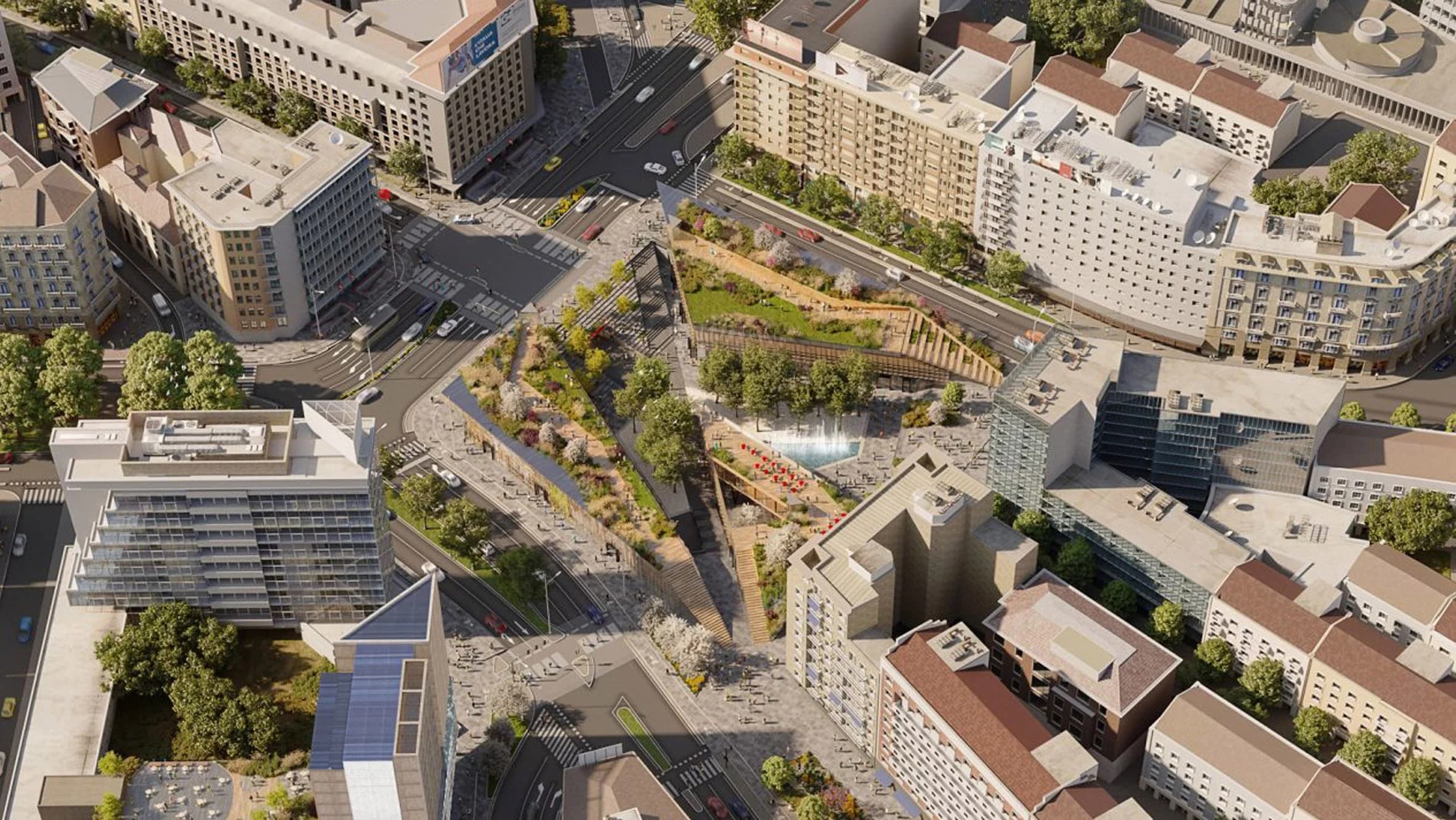
Buildings are described as contributing around half of a city’s carbon footprint, which the article ties to two main sources: operational emissions from heating and energy use, and embodied emissions from materials and construction. Chartier is quoted emphasising that architects and designers have significant responsibility because today’s building decisions shape future emissions and resilience outcomes. The article also describes C40 Cities’ work to accelerate low-carbon development through initiatives such as the Reinventing Cities competition, which aims to deliver experimental low-carbon developments across multiple cities as part of broader net-zero strategies.
Planning strategies to reduce transport emissions and sprawl
Beyond buildings, the article points to road transport as a major contributor to urban emissions. One proposed response is enforcing growth boundaries to reduce travel distances and limit urban sprawl. It also outlines a shift toward more polycentric cities, organised around “15-minute neighbourhoods” where daily necessities are accessible by walking or cycling. In the article’s logic, compact and self-sufficient neighbourhoods can reduce car reliance while freeing space to regenerate and protect ecosystems in and around cities, described as potential carbon sinks.
Climate adaptation and city resilience measures
The IPCC report is cited as finding that cities have not adequately prepared for climate impacts already being felt across regions, with future risks including more frequent and severe heatwaves, flooding, droughts, and storms. Chartier argues that adaptation must complement mitigation because climate effects are already present and expected to intensify. The article highlights the need for climate change risk assessments as a starting point for all new building and urban development projects, evaluating hazards over coming decades under different emissions scenarios. It also notes that construction in vulnerable locations such as flood plains and coastal areas should be banned or limited.
Nature-based and bioclimatic design solutions
For resilience in denser cities facing heat-island effects and flood risks, the article describes measures such as integrating greenery, passive cooling, and bioclimatic design to reduce dependence on air conditioning during heatwaves. Nature-based solutions mentioned include green roofs, greenways, and green belts, presented as approaches that can both absorb rainwater and lower local temperatures. The article also discusses making land-use allocations for green space and permeable soil compulsory for new projects, and mentions the possibility of local bylaws requiring roofs or walls above a certain size to include a minimum percentage of green area.