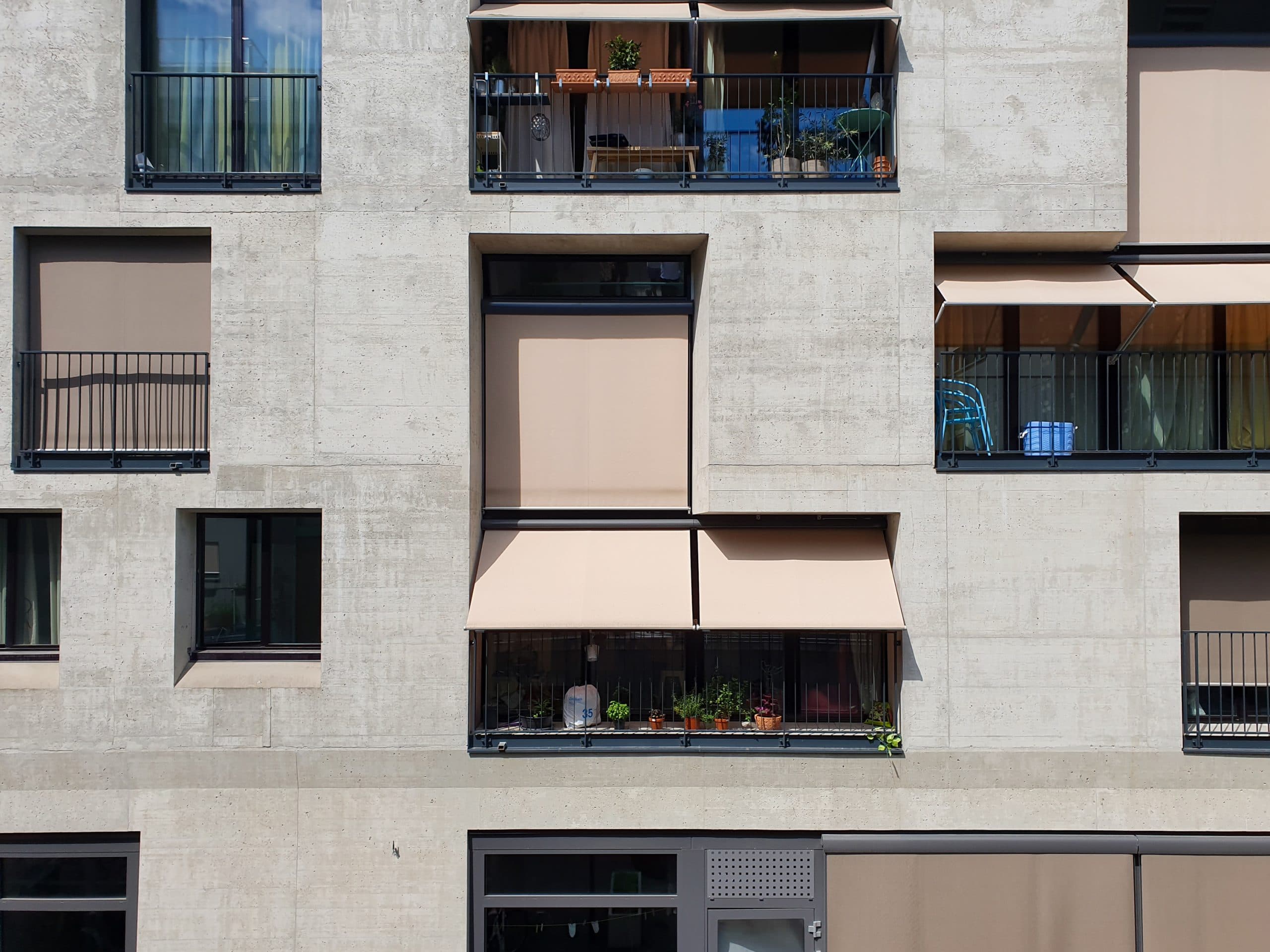
Resource overview (Assemble Papers; Manuel Lutz)
This resource is an article published by Assemble Papers and written by Manuel Lutz. It examines housing co-operatives in German-speaking Europe and describes how the model is used to combine long-term affordability with quality of living, including how co-operatives are financed, governed, and supported (or constrained) by public policy.
What a housing co-operative is (purpose and governance)
Housing co-operatives are described as non-profit companies created by pooling the small resources of many members, with the sole aim of providing housing to the benefit of members rather than generating profit. The article contrasts “use value” versus “exchange value”: co-operatives prioritise the use value of housing and treat profit as non-objective. Members buy shares, receive long-term security of tenure that can be passed on, and rents are set to cover building and maintenance costs (not to maximise returns). Members can exit and sell shares only to other members, receiving their value back with interest while preventing speculative individual profit. Governance is democratic: each member has one vote irrespective of the number of shares owned.
Why the model matters for affordability and stability
In the context of Europe’s housing affordability crisis, the article argues that co-operatives can “square the circle” of affordability and quality, combining low cost with high quality. They also blend features of renting and home ownership: lower entry costs and flexibility associated with renting, and the stability and autonomy associated with ownership. The article also notes international recognition of co-operatives as a tool for sustainable development, including a 2012 statement by UN Secretary-General Ban Ki-moon emphasising the possibility of combining economic viability with social responsibility.
Historical roots and policy position in German-speaking Europe
Historically, housing co-operatives emerged in the 19th century as a self-help response to housing crises, often supported by local governments, philanthropic organisations, or socially responsible employers. In contemporary German-speaking countries, governments consider co-operatives alongside rent and home ownership as a “third pillar” of housing policy. Since 2016, the German co-operative model has been recognised on UNESCO’s Intangible Cultural Heritage list.
Key numbers on tenure and market share (Germany, Switzerland, Austria)
The article provides comparative data on tenure and co-operative prevalence. Rent is a major tenure form in Germany (55%), Switzerland (62%) and Austria (43%), and co-operative housing is often counted statistically among rental housing. In Germany, co-operative housing makes up about 10% of rental housing units and around 5% of total housing units, providing housing for approximately 5 million people. In Switzerland, co-operatives make up about 5% of all housing units. In Austria, around 15% of all households live in co-operative and similar non-profit housing.
Urban concentration and city-level shares
Co-operatives are presented as predominantly urban and largely multi-storey. In Vienna and Zurich, they comprise almost one quarter of the housing stock. The share is reported as lower in German cities, with examples given as 14% in Hamburg, 10% in Berlin, and 4% in Munich, while Dresden is noted as reaching around 20%.
Barriers to expansion and the “stock co-operative” challenge
A central challenge highlighted is growth: many established (“stock”) co-operatives have focused on maintaining ageing buildings and serving ageing tenants rather than expanding supply. The article links this to Germany’s 1989 loss of a special legal, tax-relevant status for non-profit housing “for the common good,” after which much of the sector prioritised maintenance. Many older co-operatives have long waiting lists, and the article notes that only about 6% of new housing units built in Germany between 2009 and 2011 were built by co-operatives.
New co-operatives, finance, and the role of public land
Alongside established organisations, smaller new co-operatives (comparable to co-housing initiatives) are emerging, typically driven by local groups seeking sustainable and affordable housing. However, they face rising construction costs and limited access to affordable land, especially in large cities. Newly built co-operative projects can have rents close to market averages, and, as non-profits, they often cannot compete with for-profit developers without additional support. The article describes support mechanisms in Germany such as subsidies for social housing, specific loans for co-operatives, and—crucially—access to land. Some cities allocate public land through quotas for co-operatives or by evaluating concept quality rather than highest price, but these approaches are described as exceptions rather than the rule.
Design and social innovation: shared spaces and diverse households
Case examples including Spreefeld (Berlin), wagnisART (Munich), and mehr als wohnen (Zurich) are presented as demonstrating “state-of-the-art” co-operative housing, with ambitious participatory planning and extensive shared facilities (gardens, laundry rooms, community spaces, workshops, studios, and more). The projects offer diverse housing types for changing lifestyles beyond the standard nuclear family, including “cluster apartments” designed to balance privacy with community. The article emphasises that co-operative structures help negotiate tensions between collective and individual needs and influence how inclusion of lower-income residents is financed (for example through internal cross-subsidy), with affordability and inclusivity shaped by the financing model. An example rent range is given for wagnisART (about 5.65 to 13 euros per m²), while maintaining the same unit quality across social and privately financed homes.