Overview of the Resource
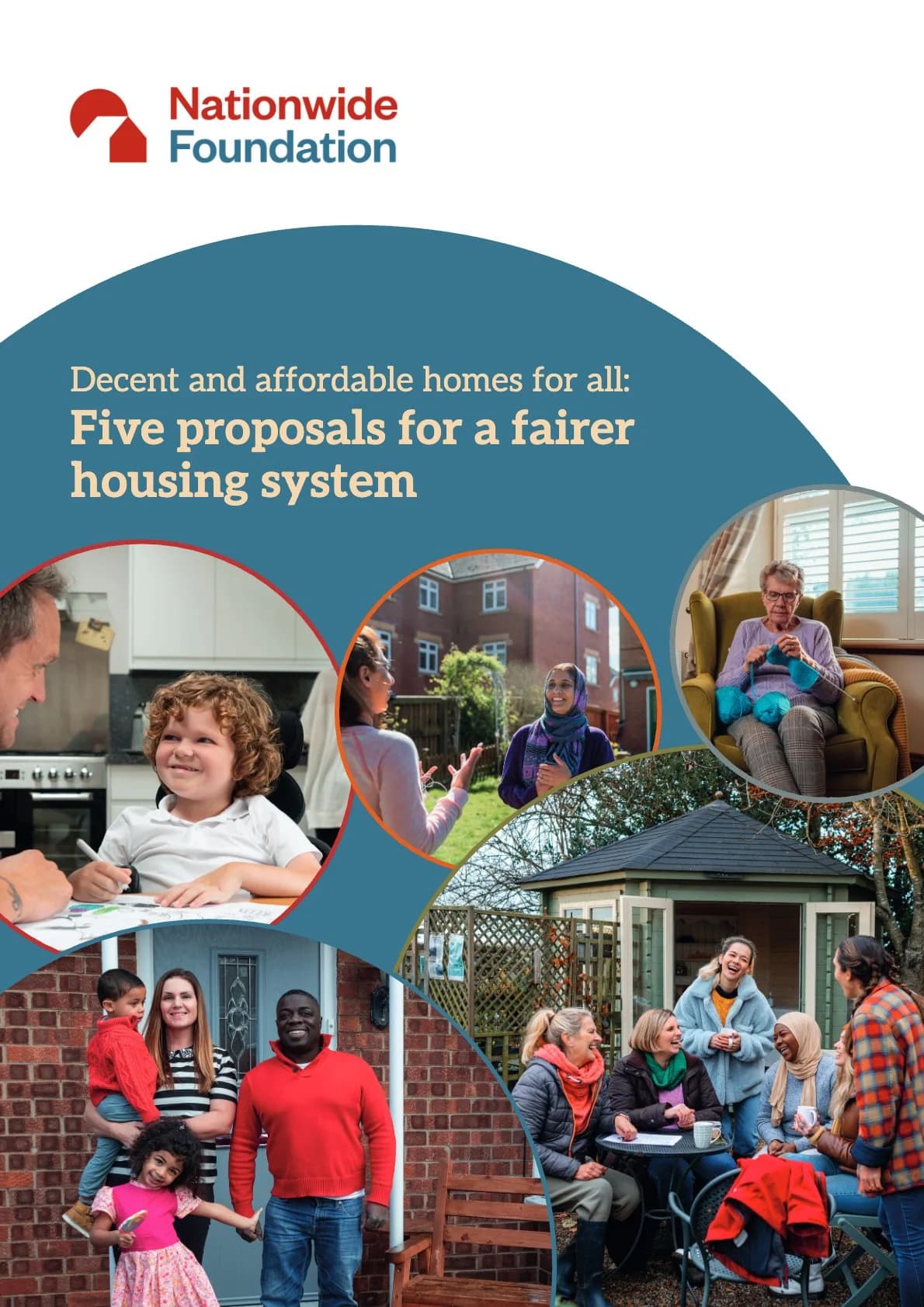
The document “Decent and affordable homes for all: Five proposals for a fairer housing system” is produced by the Nationwide Foundation, a charitable organization founded by Nationwide Building Society in 1997 to improve lives of those most in need in the UK. Authored by Kate Markey, Chief Executive of the Foundation, the report presents research‑based recommendations aimed at reforming the UK housing system to deliver decent, affordable, and healthy homes.
Key Recommendations at a Glance
The report outlines five strategic proposals: (1) Reimagine the housing system with a long‑term “Homes for All” vision; (2) Increase supply of genuinely affordable homes, including conversion of private‑rented properties; (3) Transform the private rented sector to protect tenants, notably by banning no‑fault evictions; (4) Support community‑led housing to diversify the market; and (5) Embed health‑inequality considerations into housing policy.
Critical Housing Statistics
- 1 in 182 people in the UK are currently homeless.
- Over 130,000 children live in temporary accommodation.
- One‑fifth of privately rented homes fail basic safety and decency standards.
- 21 % of private rentals fail to meet decent‑home standards.
- 3.7 million homes (15 %) in England did not meet the decent homes standard in 2021; 2.6 million homes (11 %) were classified as poor quality or hazardous.
- People in poor‑quality homes are twice as likely to have poor general health (22 % vs 11 %).
- 22 % of the lowest‑income quintile live in poor‑quality homes compared with 4 % of the highest‑income quintile.
Funding and Financial Proposals
The report cites a proposed £1.3 billion National Housing Conversion Fund that could deliver 42,500 new social and affordable homes through conversion of existing private rentals. It also recommends ring‑fenced funding for community‑led housing at every development stage and suggests that micro‑site infill could add up to 100,000 new homes in London alone.
Evidence‑Based Research Base
The Foundation’s work draws on multiple research collaborations, including the Affordable Housing Commission (Smith Institute), Centre for Housing Policy, Centre for Social Justice, and the “Living Rent” report. It also references a study by Indigo House on the impact of private‑rented sector reforms in Scotland and data from Shelter, the Department for Housing, Levelling Up and Communities, and the Health Foundation.
European Relevance and Sustainable Focus
While centred on the UK, the report’s emphasis on decarbonising housing stock, retrofitting for energy efficiency, and creating community‑owned models aligns with broader European sustainability goals. The recommendations advocate for integrated policy across housing, health, environment, and social care, mirroring EU directives on green building and social inclusion.
Implementation Mechanisms
Proposed governance changes include establishing a Housing Strategy Committee akin to the Climate Change Committee, a permanent Land Commission for England and Wales, and a national landlord register to improve enforcement. The report also calls for stronger local authority powers, ring‑fenced enforcement funding, and selective licensing reforms.
Expected Outcomes
If adopted, the proposals aim to: increase the supply of genuinely affordable homes; reduce homelessness and temporary accommodation; improve health outcomes by eliminating poor‑quality housing; and foster a more resilient, inclusive housing market that supports sustainable urban development across Europe.