AI-Generated Summary
Context and Purpose
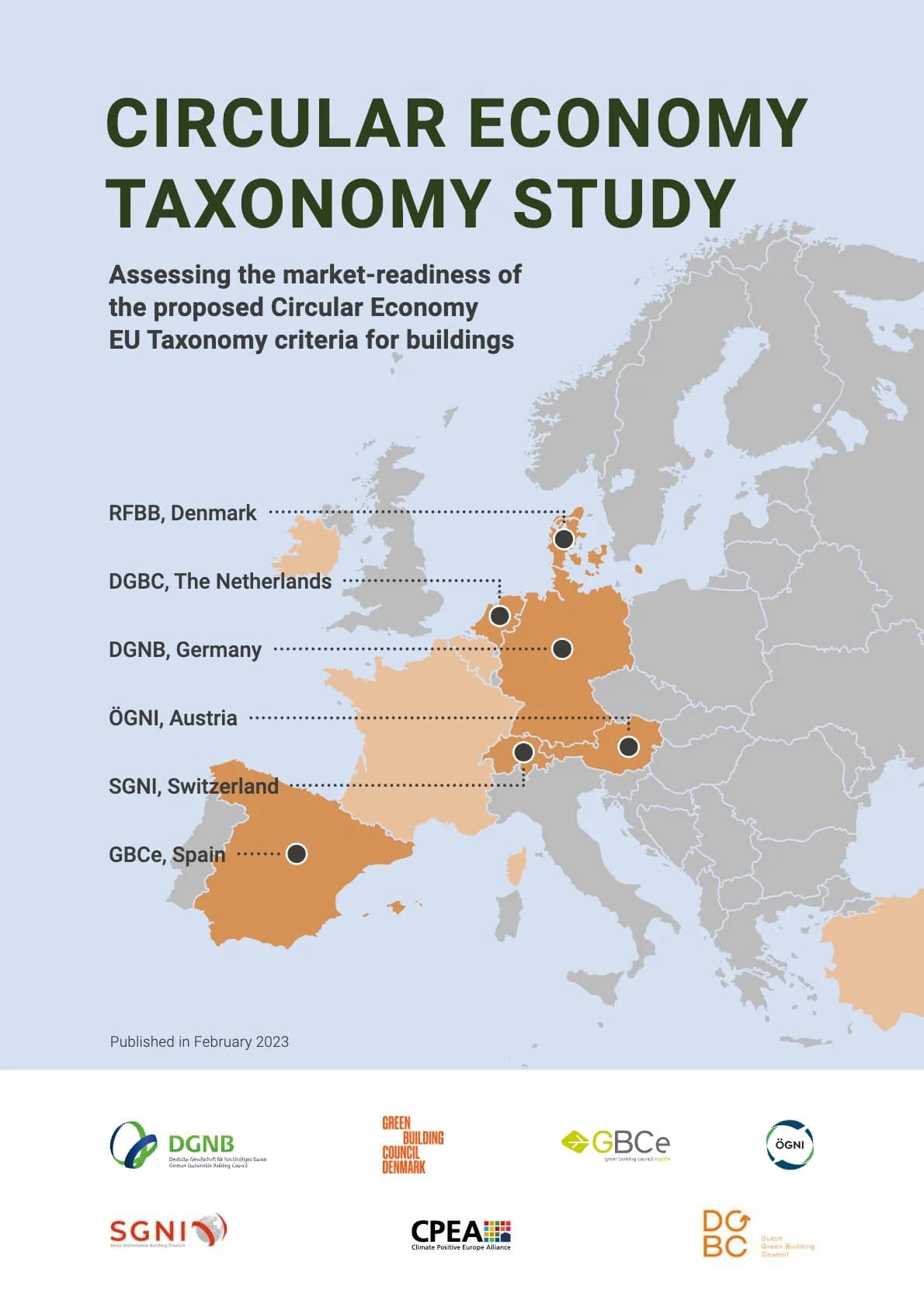
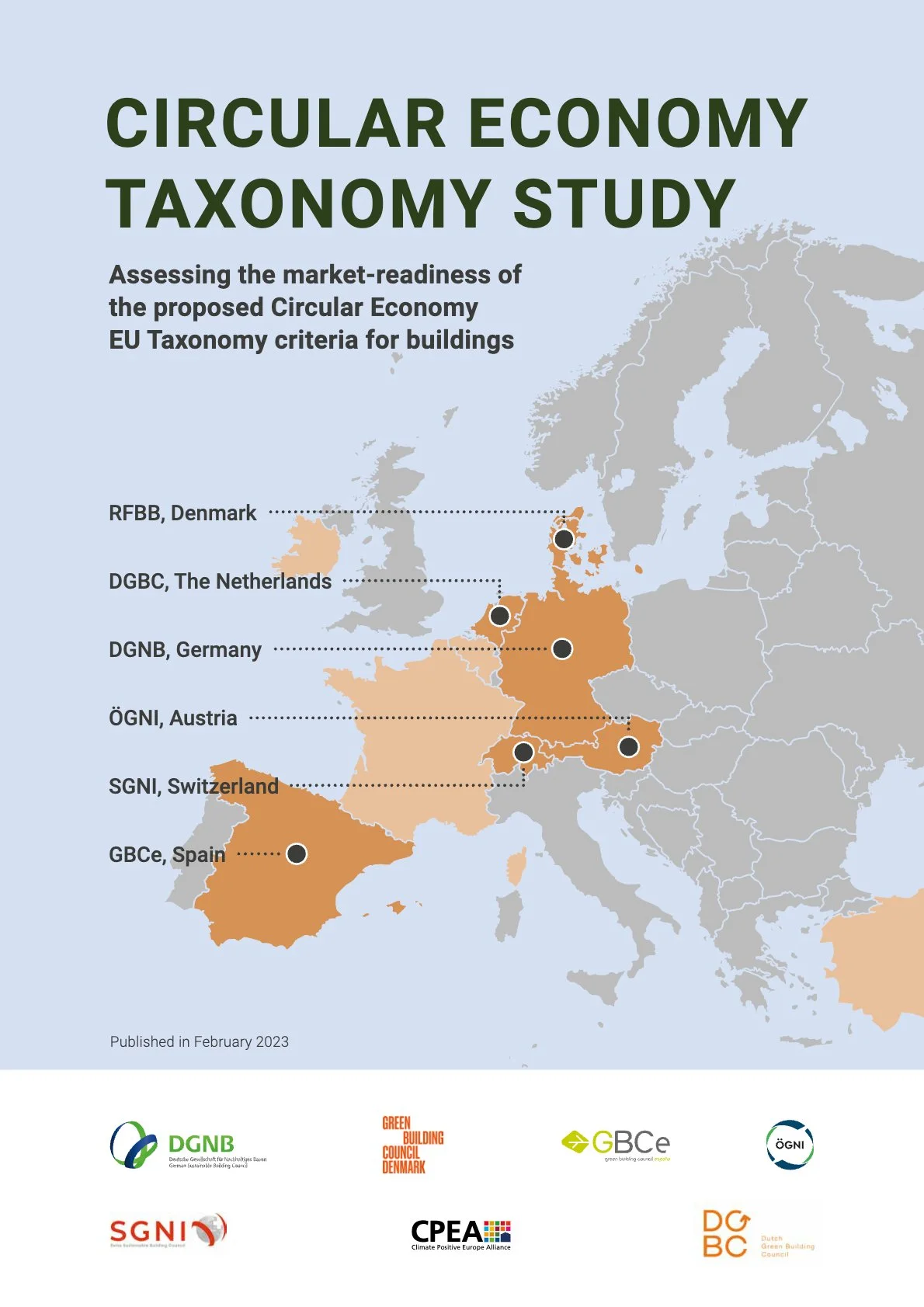
The "Circular Economy Taxonomy Study" was published by a consortium of European Green Building Councils, including the German Sustainable Building Council (DGNB), Green Building Council España (GBCe), and others. The study assesses the market readiness of the proposed EU Taxonomy criteria aimed at promoting a circular economy in the building sector. It involved participation from 29 market entities across various European countries, highlighting the collaborative effort to align building practices with sustainability goals.
Study Overview
The study examined 38 real building case studies across Austria, Belgium, Denmark, France, Germany, Ireland, Spain, Switzerland, the Netherlands, and Turkey. It aimed to understand the applicability of circular economy principles within construction and real estate sectors, focusing on evaluating compliance with the EU Taxonomy's circular economy criteria. Despite high expectations, the study found that none of the assessed projects were fully aligned with the proposed circular economy criteria.
Key Findings
Market participants reported that while they recognize the circular economy as a strategic objective, there are significant gaps in data availability, knowledge, and clear action plans. Most projects scored below the required benchmarks for compliance with the EU Taxonomy, primarily due to a lack of relevant data focused on circular economy practices. Although around 90% of evaluated projects complied with the EU Demolition and Construction Waste Protocol, fewer than 40% met the requirement for recycling at least 90% of non-hazardous construction and demolition waste.
Challenges Identified
The study identified several barriers to implementing circular economy principles. These include the absence of standardized frameworks, a lack of digital tools for data management, and inadequate indicators for monitoring circularity. Many organizations reported the need for a centralized data platform to improve transparency and accessibility regarding the use of circular materials and practices. Additionally, project developers expressed concerns about the perceived additional costs associated with adopting circular practices.
Recommendations for Future Action
Recommendations from the study emphasize the importance of establishing clear methodologies, frameworks, and indicators for assessing circularity in building projects. The authors suggest that the EU Taxonomy should incentivize renovation projects to facilitate a smoother transition towards circular economy practices. The study also advocates for the development of digital Building Material Passports, which would provide comprehensive data about materials used in buildings, enhancing transparency and enabling better recycling and reuse strategies.
Conclusion
The "Circular Economy Taxonomy Study" serves as an essential resource for stakeholders in the construction and real estate sectors looking to align with EU sustainability objectives. By offering insights into the challenges and opportunities for integrating circular economy principles, the study aims to support the broader goal of transitioning towards a more sustainable built environment across Europe.