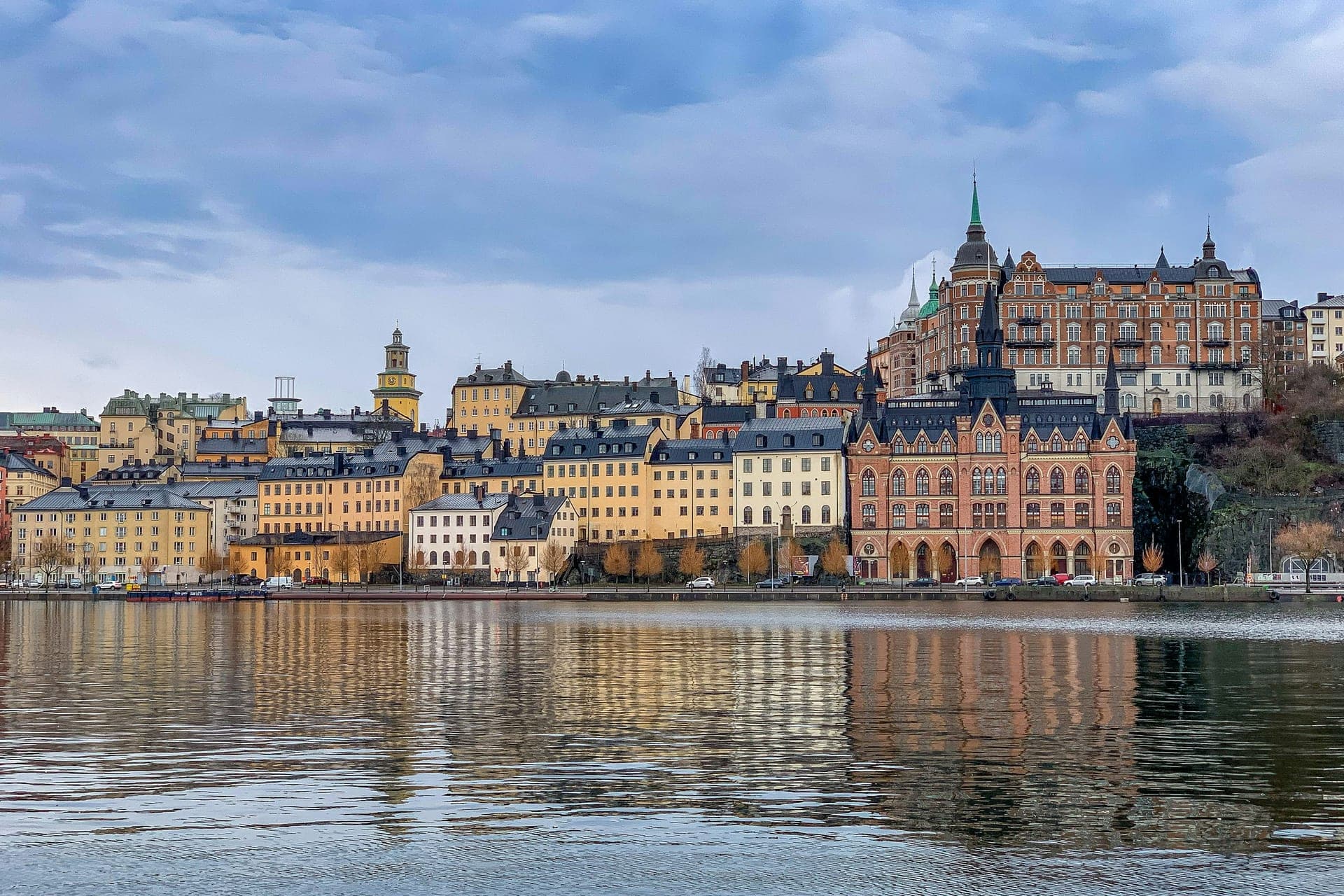
The city where owning and sharing are the same thing
Stockholm is built on 14 islands where the lake meets the Baltic, a capital of roughly 999,239 people that grew rich on engineering, design and finance. It guards that beauty closely: water and parkland each cover roughly a third of the city. The same protective instinct runs through its housing. Here the line between owning a home and sharing one has almost dissolved, and that single fact shapes everything else about the market.
The tenure mix looks, at first glance, like an owner's city. Read off the census, 60% of households own their home and the 39% rent figure trails behind. But the Swedish bostadsrätt — a cooperative-ownership share that gives a member the right to a specific flat — is counted among the owners, and it alone is roughly half the stock. By that legal measure cooperatives are 50.8% of dwellings, even though only about 54% of residents live in a genuine non-equity cooperative. Municipal landlords hold around 17% of dwellings, some 81,000 flats, and private landlords let the remaining 22%.
- Owners
- Owner-occupier9.2%
- Cooperative50.8%
- Renters
- Public & non-profit rental17.0%
- Private rental22.0%
- Unclassified1.0%
- Unknown / Other1.0%
Social housing, in the targeted sense familiar elsewhere, does not exist. Sweden runs no income-tested social sector; instead about 14.7% of the stock plays a social role through the municipal allmännytta — the city's public-rental companies — which let flats through an open queue with no means test. Everyone qualifies in principle, so the rationing is by waiting time, not by income. A study of how housing systems across the EU are classified files Sweden as a universalist model exactly because the public landlord is meant for all, not the poor alone.
The rent ladder is unusually flat, and deliberately so. Tenants in a SKB cooperative flat pay around €11.38 per square metre, those in municipal housing about €13.20, and the all-stock median sits near €13.19. A newly-let contract runs to roughly €17.70, and a furnished, serviced let reaches about €32 per square metre gross. The gap from the regulated floor to a new contract is far narrower than in Berlin or Prague, because Sweden sets first-hand rents through collective bargaining rather than the market. The price of that compression is paid in queues, not in euros.
- Cooperative
- All-stock median
- Public/municipal housing
- New contracts
- Furnished / serviced (gross)
Monthly rent per square metre by tier (furnished is gross, all-in). Sweden has no free market for first-hand rents: the spread is compressed by the collective bargaining system, which is exactly why a newly-let or furnished flat — set closer to a market level — opens the only wide gap on the ladder.
Empty homes are not the problem here; finding one is. The rental vacancy rate is about 0.4%, among the lowest in Europe, and residential vacancy overall sits near 1%, roughly 7,200 flats, most of them mid-move or mid-renovation. Offices are looser: around 1.34 million square metres stand vacant, about 11.1% of central stock. Short-term letting bites less here than in a tourist capital, but it concentrates. Gamla Stan, Norrmalm and Södermalm hold most of the roughly 1,148 dwellings let year-round as entire-home short-term rentals — a rounding error city-wide, yet keenly felt on exactly the inner-island streets visitors crowd into.
What ties the market in a knot is arithmetic. Stockholm draws roughly 72,000 new arrivals a year, yet issues only about 5,500 housing permits, and high interest rates have stalled new building further. The queue tells the rest. At the end of 2024 the city's housing agency had 857,335 people registered, and the average wait for a regular flat was 9.9 years, rising to 11.6 years for the city itself. This is not only a hardship of the poorest: a young professional with no queue time and no capital for a bostadsrätt is locked out as surely as a low-income family. Around 4,200 people are counted homeless, and roughly 600 households face eviction proceedings each year. A study of how finance has inflated European house prices traces the same pattern of secondary subletting and precarity that the Stockholm queue produces.

A secure home is not a commodity. Housing should exist so that we have a safe place to live, not as something we buy and sell on a market.Two cooperatives, one word
Sweden uses one word, cooperative, for two very different things. The dominant form is the bostadsrätt: a member buys a share in a housing cooperative and gains the right to use a flat, paying a monthly fee for upkeep and any shared loan. In practice the share trades at a market price and behaves like ownership, which is why the census files bostadsrätt members among owner-occupiers. A study of leasehold and apartment pricing in Stockholm shows just how market-priced these shares have become. This is collective ownership, not collective renting.
The rarer form is the one a European cooperative network would recognise: the kooperativ hyresrätt, a cooperative rental in which no equity is bought or sold. Stockholms Kooperativa Bostadsförening, SKB, founded in 1916, is the standard-bearer. Its roughly 266,500 flats are let, not sold; members pay a deposit they get back, queue by membership seniority, and the homes stay permanently outside the speculative market. It is one of the very few non-equity cooperative landlords operating at scale anywhere in the country, which makes Stockholm an unusual hybrid: saturated with cooperative ownership, but thin on cooperative renting.
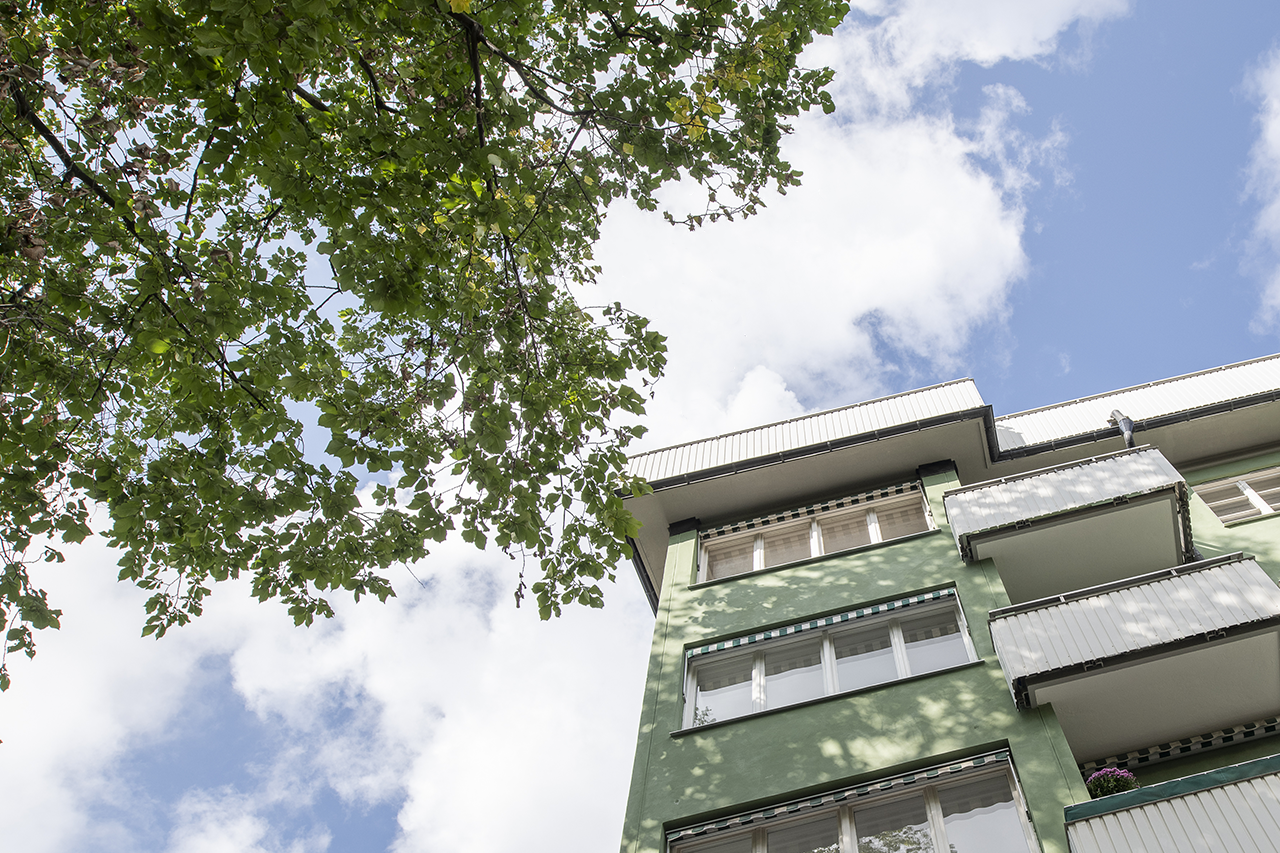
Today the cooperative landscape clusters into three groups facing different pressures. The big national member organisations, HSB and Riksbyggen, are the developer-managers of the bostadsrätt world; they build new cooperatives and administer thousands of existing ones, and their problem is the cost and interest-rate squeeze that has frozen new bostadsrätt construction. SKB stands alone as the non-equity rental cooperative, its constraint being land: it can only grow when the city allocates it a plot. A third, smaller cluster is the resident-run kollektivhus — collective houses such as Färdknäppen and Blåsut, often inside municipal buildings, where residents share kitchens and chores; their challenge is that they depend on a public landlord willing to host them. Coompanion, the national cooperative-development agency, supports the newer ventures across all three.
Which of these forms gets to grow is decided in the council chamber, not the market. Stockholm allocates building land through markanvisning — direct land assignments to chosen developers — and uses them to steer the social and tenure mix of new districts. A cooperative rental landlord like SKB depends on winning those assignments, and the current majority has signalled it wants more rental, including cooperative rental, on city land rather than more bostadsrätt for sale. That choice over who gets the land is where the housing question turns political.
Defending the public landlord
Stockholm's housing politics is, right now, a politics of defending the public landlord. Since 2022 a Social-Democrat-led majority with the Left and the Greens has governed the city, with Karin Wanngård as mayor and finance commissioner. The housing brief sits with Deniz Butros of the Left Party, who took over as housing commissioner in October 2025. Their headline commitment reverses the previous era: not a single municipal rental flat is to be sold, and the city has been buying back buildings it once let go. The aim is to keep the allmännytta — Svenska Bostäder, Familjebostäder and Stockholmshem — large and to build more rental on city land.
Town hall and parliament pull in opposite directions here. The city owns the land, owns the municipal companies and runs the markanvisning land-assignment system, so it can steer tenure locally. The national government sets the legal frame for rents — and the sitting centre-right national coalition wants that frame loosened. This is the tension that defines the moment: a Left-led city defending non-market rental, inside a national reform pushing rents toward the market.
Cooperatives sit deliberately inside the city's answer. The majority favours allocating land to rental and cooperative-rental landlords rather than selling plots for bostadsrätt, treating mixed tenure as a tool against segregation. Butros has argued that mixing tenures across the city — rentals in villa districts, owner-homes in rental-heavy ones — is the route to a city that holds together. A survey of effective affordable-housing policy points to exactly this kind of public-land steering as a lever that works.
Where the new homes go is mostly old harbour land, and partly emptied offices. With central office vacancy near 10.3% and a wave of obsolescence forecast across Europe, conversion to housing is an obvious frontier, though only a minority of buildings convert well. The bigger bet is the old harbours, gasworks and rail yards turned into new districts. There is no vacant-homes tax in a city with almost no empty homes; the binding constraint is the slow, consultation-heavy planning process, which the OECD flags as a brake on how fast Stockholm can build.
Retrofitting the existing stock and building the new are, in Stockholm, the same decarbonisation problem. Stockholm's stock averages about 50 years old, roughly 32% of dwellings are energy-efficient, and the renovation rate runs near 1.6% a year — better than most of Europe, but short of deep-retrofit goals. The city aims to be fossil-fuel-free by 2040, and its brownfield districts are the testbeds. The risk the sector watches is renoviction: deep retrofits that lift rents and push out long-tenured tenants, a dynamic a study of financialised housing in European cities documents across the Nordic market.
- 1965–1974[source]
The Million Programme
Sweden builds roughly a million dwellings in a decade, much of it through the municipal allmännytta, giving Stockholm its large public-rental backbone in suburbs such as Tensta and Husby.
- 1991–2010[source]
Conversion to bostadsrätt
Successive centre-right city majorities sell large parts of the municipal stock to sitting tenants, who convert hyresrätt flats into cooperative-ownership bostadsrätt — shrinking the public-rental share, especially in the inner city.
- 1916[source]
SKB founded
Stockholms Kooperativa Bostadsförening is set up as a cooperative rental association, pioneering the rare non-equity cooperative model that still distinguishes it from the bostadsrätt today.
- 2022[source]
Red–green majority returns
A Social-Democrat-led majority with the Left and Greens takes the city, pledging to stop the sale of municipal flats and to rebuild the public-rental sector.
- 2024[source]
A near-decade in the queue
Bostadsförmedlingen reports 857,335 people registered and an average wait of 9.9 years for a regular flat, rising to 11.6 years for the city of Stockholm itself.
- Autumn 2025[source]
Rents settled at 3.6%
The collective rent negotiation for Stockholm is decided by arbitration at a 3.6% increase, leaving both the property owners and the tenants’ union dissatisfied.
- Oct 2025[source]
New housing commissioner
Deniz Butros of the Left Party becomes Stockholm’s housing commissioner, succeeding Clara Lindblom, and continues the policy of buying municipal flats back rather than selling them.
- 1 Jul 2026[source]
A more flexible rental market
The national reform in proposition 2025/26:187 takes effect, allowing freer move-in rents for private lettings and easier increases to presumtionshyra for new-build — the biggest loosening of Sweden’s collective rent-setting in decades.
- Sep 2026[source]
Red–green majority holds City Hall
In the 13 September municipal election the Social Democrats, Greens and Left Party win 51.9% of the vote, enough for 4 more years in City Hall. The coalition keeps control of Stockholm's housing policy, although the Moderates score a record 22.4%.
From the founding of the cooperative rental landlord SKB and the post-war Million Programme to the conversion wave, the re-municipalisation turn, and the 2026 rental-market reform.
The debate is sharpest over the 2026 reform. From the national side, the property owners argue the regulated system is starving supply. Nathalie Brard, head of negotiations at Fastighetsägarna Stockholm, called the latest 3.6% rent settlement too low to sustain the business of letting flats. From the tenant side, Veronica Eriksson, who holds the same role at the Stockholm tenants' union, called the same figure too high for renters who already pay the country's steepest rents. Both speak from inside the same collective bargaining system the reform is about to loosen, and both are dissatisfied — which is the clearest sign of how contested the next step is.
3.6% means that the problems on the rental market in Stockholm, the country’s growth engine, are reinforced.From the gasworks to the collective kitchen
Stockholm's working examples run from a vast eco-district on a contaminated harbour to a single house where neighbours cook for each other. The thread between them is a city testing whether housing can be both green and shared without becoming a luxury. We start with the 236-hectare harbour district, shrink down through SKB and the collective houses to a converted hotel, then end with the architects and developers trying to make any of it repeat.
Stockholm Royal Seaport, Norra Djurgårdsstaden, is the flagship. On 236 hectares of former gasworks and harbour, the city is building around 12,000 homes and aiming to be fossil-fuel-free by 2030, a sustainability ambition that won a C40 award in Paris in 2015. The caveats are real. The district was originally meant to finish around 2025 and is years behind, with only roughly 3,000 homes complete; the contaminated land has needed extensive remediation; and as largely market-priced new-build it answers the supply question far better than the affordability one.
SKB is the quiet counter-example to all of it. The cooperative rental association, building since 1916, keeps adding non-equity flats whenever the city allocates it land — its members queue by seniority and the homes never enter the speculative market. The constraint is the same one that limits its scale: without a steady supply of city plots through markanvisning, a non-equity cooperative simply cannot grow fast, and SKB has spent a century proving the model works while staying small.
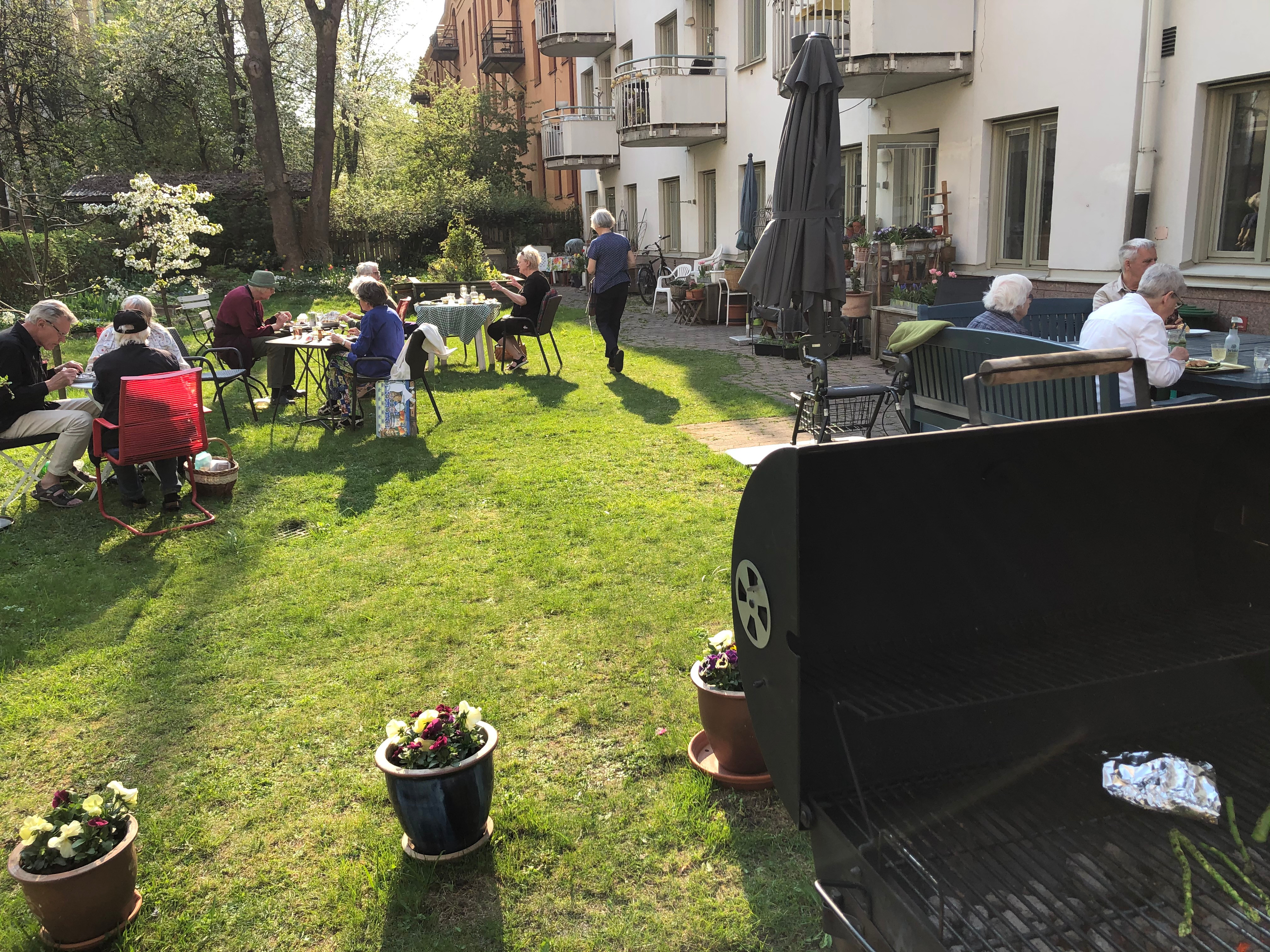
Kollektivhuset Färdknäppen is the most copied of Stockholm's collective houses. Built in the 1990s as a municipal-company project, it pioneered the Swedish second-half-of-life model — cohousing for residents over 40 without children at home, with shared kitchens, rotating weekday dinners and resident-run upkeep. Blåsut Kollektivhus carries the same idea into two metro-adjacent rental towers. A study of European co-housing documents both, and names the persistent friction: these projects depend on a public landlord willing to host them, and smaller groups struggle to be taken on.
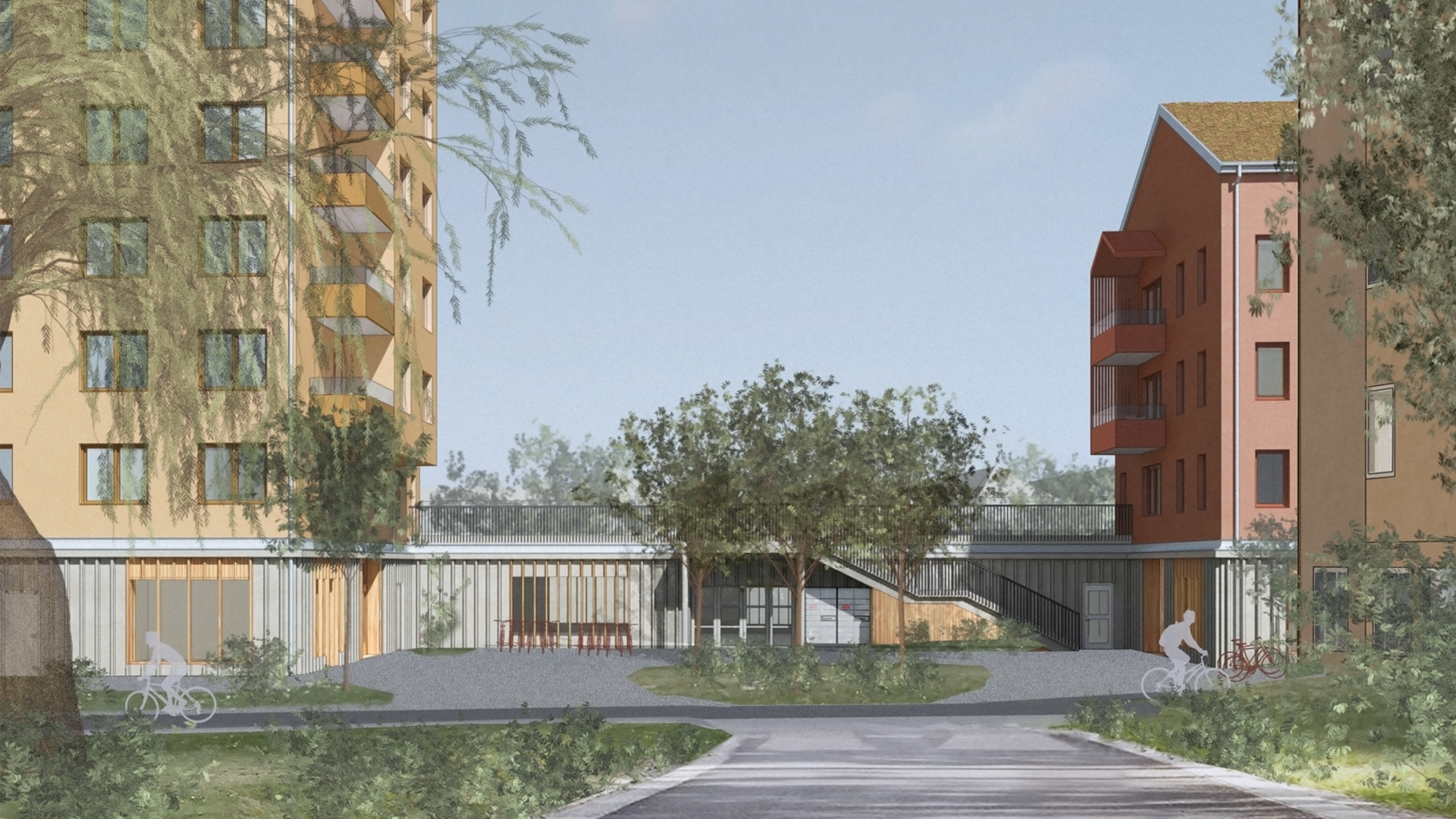
K9 shows the newest, more precarious end of shared living. A former hotel near the centre was turned into a co-living space with five shared kitchens, a cinema and a yoga room, and drew thousands of applications for its rooms — proof of the appetite for affordable, social housing among young Stockholmers, and of how little of it the conventional market supplies. Sweden's long tradition of municipally-backed collective housing, traced in a study of shared living on a shared planet, is the deeper root these newer experiments grow from.
The design and cooperative-development talent sits one layer behind these buildings, and it is anything but thin. White Arkitekter, the architect-owned cooperative practice, Kjellander Sjöberg and Belatchew Arkitekter shape much of the city's new housing, while the engineering consultancy Sweco plans the districts that hold it. Coompanion supports new housing cooperatives, and HSB's experimental HSB Living Lab — and the solar-and-battery Brf Viva cooperative in Gothenburg — show the national member organisations testing what a low-carbon cooperative flat can be. The pieces of a shared, sustainable housing model are all present in Sweden. What is missing is the land, the patient finance and the political settlement to scale them — which is exactly where the empty offices, the adaptive-reuse playbooks and the brownfield gasworks meet, a frontier mapped by Open Heritage's survey of community-driven adaptive reuse across Europe.

References
Statistics18Click on any number to see the source
Housing market
Tenure & affordability
Cooperative, social & public
Adaptive reuse & vacancy
Population & migration
From our library22
- Housing policies in the European Union — Knowledge
- Across Europe, the financial sector has pushed up house prices. It’s a political timebomb — Knowledge
- Leasehold status and apartment prices: exploring price efficiency and optimal choices among housing cooperatives — Knowledge
- SKB (Stockholms Kooperativa Bostadsförening) — Organisation
- HSB — Organisation
- Riksbyggen — Organisation
- Kollektivhuset Färdknäppen — Project
- Blåsut Kollektivhus — Project
- Coompanion — Organisation
- #Housing2030 Effective policies for affordable housing in the UNECE region — Knowledge
- Rethinking European Offices 2030 - Risks and Opportunities from Obsolesence — Knowledge
- Housing policy under the conditions of financialisation - The impact of institutional investors on affordable housing in European Cities — Knowledge
- Learning from co-housing initiatives — Between Passivhaus engineers and active inhabitants — Knowledge
- K9 — Project
- Small is Necessary: Shared Living on a Shared Planet — Knowledge
- White Arkitekter (White Arkitekter AB) — Organisation
- Kjellander Sjöberg — Organisation
- Belatchew Arkitekter — Organisation
- Sweco — Organisation
- HSB Living Lab — Project
- Brf Viva — Project
- Open Heritage - Community-Driven Adaptive Reuse in Europe: Best Practice — Knowledge
Further sources12
- The Mayor of Stockholm — Karin Wanngård — City of Stockholm
- Deniz Butros elected housing commissioner — SVT Nyheter
- Stockholm’s housing commissioner: “a secure home is not a commodity” — Bostadspolitik.se
- Fastighetsägarna disappointed at Stockholm rent rise (Brard + Eriksson) — Dagens Arena
- En mer flexibel hyresmarknad — prop. 2025/26:187 — Regeringen.se
- A more flexible rental market — what the new rules mean — Sveriges Allmännytta
- Bostadsförmedlingen i Stockholm — summary of 2024 — Bostadsförmedlingen i Stockholm
- OECD Economic Surveys: Sweden 2025 — matching supply and demand — OECD
- Municipal rental flats converted to bostadsrätt for billions — Hem & Hyra
- Stockholm Royal Seaport — city development area — City of Stockholm
- Stockholm Royal Seaport 2030 — sustainability programme — Norra Djurgårdsstaden 2030
- SKB — Stockholms Kooperativa Bostadsförening — SKB
·