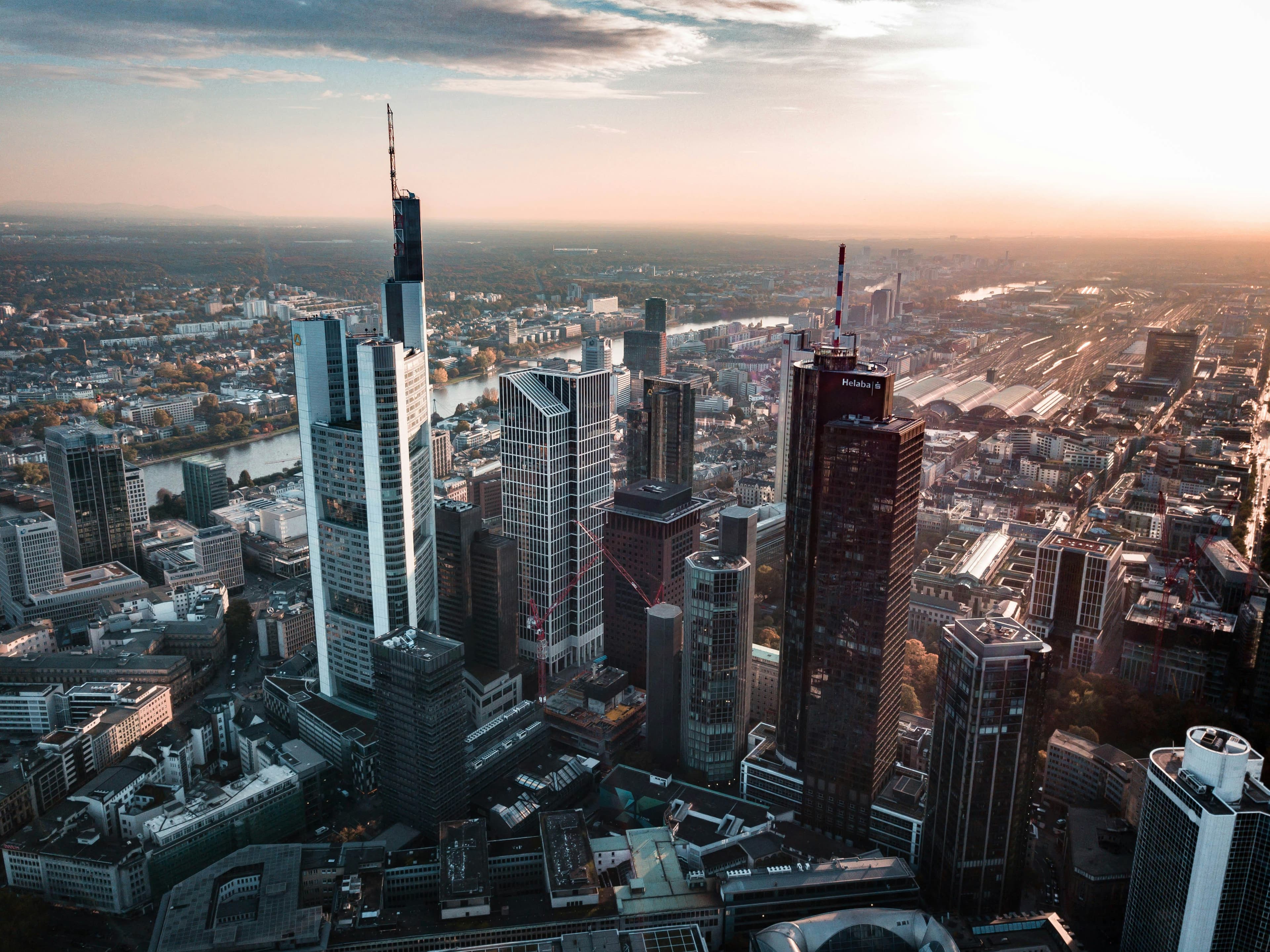
Banking towers, tight flats
Frankfurt am Main is Germany's financial capital and its most international large city. The European Central Bank sits here, the skyline holds most of the country's tall towers, and around half of all residents have a migration background. It is also a compact city of 775,790 people whose economy pulls in far more workers than its housing stock can comfortably hold. The result is the contradiction this profile turns on: a tight, expensive home-rental market sitting next to the largest pool of empty office floor of any German city.
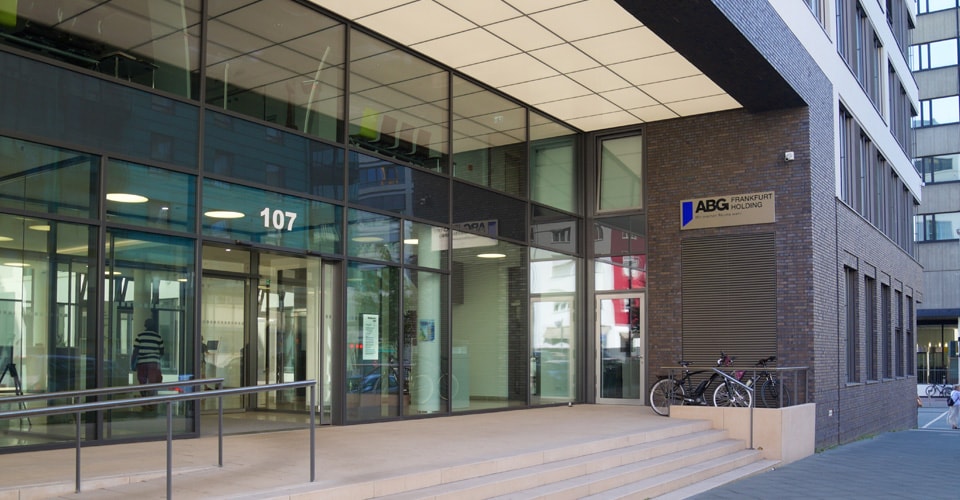
Frankfurt is, before anything else, a renters' city: 77.7% of households rent and only around 20.1% own the home they live in. Within that rental majority, public landlords hold 13.6% of all dwellings — some 54,638 apartments, the bulk of them owned by the municipal company ABG Frankfurt Holding. Wohnungsbaugenossenschaften — housing cooperatives — hold a further 3%, roughly 12,400 apartments across 11 societies, and private landlords let the remaining 61.1%. The non-market tier of cooperative plus public housing therefore covers about 16.6% of the stock: broader than Munich's, narrower than Berlin's.
- Owners
- Owner-occupier20.1%
- Renters
- Public & non-profit rental13.6%
- Cooperative3.0%
- Private rental61.1%
- Unclassified2.2%
- Unknown / Other2.2%
Social housing in Frankfurt is best read as a regulatory layer, not a tenure of its own. About 7.2% of dwellings carry a Sozialbindung — a covenant that caps the rent and limits eligibility for a fixed period. That layer sits on top of the tenure pie rather than beside it: most of it inside ABG and regional non-profit stock, some on privately-financed Sozialer Wohnungsbau, a little on cooperative new-build. The eligibility net is far wider than the bound stock. Roughly 45% of Frankfurt households earn little enough to qualify for a subsidised flat, many times what the supply can house.
Set the four Frankfurt rent tiers side by side and the spread tells the story. Cooperative tenants pay around €8.01 per square metre cold, and ABG's regulated stock about €8.50. The all-stock median in the 2025 Mietspiegel is €11.50. A newly-let private apartment asks a median €17.36, and furnished, serviced lets reach €27.36 per square metre gross. The gap between the cooperative floor and the new-contract tier is the whole Frankfurt affordability problem in one line.
- Cooperative
- Public housing (ABG)
- All-stock median
- New contracts
- Furnished / serviced (gross)
Net-cold monthly rent per square metre by tenure tier (furnished is gross, all-in). The cooperative and ABG floor sits well below the all-stock median; a newly-let private contract runs more than double the cooperative rate.
What makes Frankfurt's supply story unusual is which space sits idle. Residential vacancy runs at about 3.2%, tight by European standards, and the city counts roughly 12,915 empty buildings. The office market is the opposite. Around 1.23 million square metres of office floor stands empty, roughly 10.7% of the office stock and one of the largest vacancy pools in Germany. Holiday-let pressure is milder here than in the tourist capitals: a permit regime, the Ferienwohnungssatzung in force since 2018, has held the full-time entire-home rental pool to an estimated 312 dwellings.
The arithmetic behind the squeeze is brutal. The ECB, the banks and the wider Rhein-Main economy pull in roughly 62,000 moves a year of net inbound migration, while the city issues only about 3,500 housing permits a year. The JLL housing-needs analysis puts Frankfurt's annual supply gap among the widest of the German big cities. Nor does the pain stop at the poorest. New-let rents climbed around 8% in a single recent year, pulling middle-income earners into the same bind as low-income tenants, and a study of how finance reshapes European housing files Frankfurt among the cities where institutional investors have driven prices hardest. At the bottom of the market the strain is starkest: the city records roughly 1,200 eviction proceedings and about 4,000 homeless people a year.
The municipal housing company is failing at social housing despite a glittering balance sheet.A hundred years from Ernst May to the concept tender
The cooperative form in Frankfurt is the German Genossenschaft — a housing cooperative whose members buy a Genossenschaftsanteil, an equity share that secures a tenancy rather than a tradable flat. The cooperative then lets at cost across generations. This is closer to renting than to owning: a member has lifelong security and a low rent, but no flat to sell on. Frankfurt's cooperative tier is small but old, holding the roughly one home in thirty the tenure chart counts. The Wohnbaugenossenschaft in Frankfurt am Main, founded in 1950, anchors the established societies.
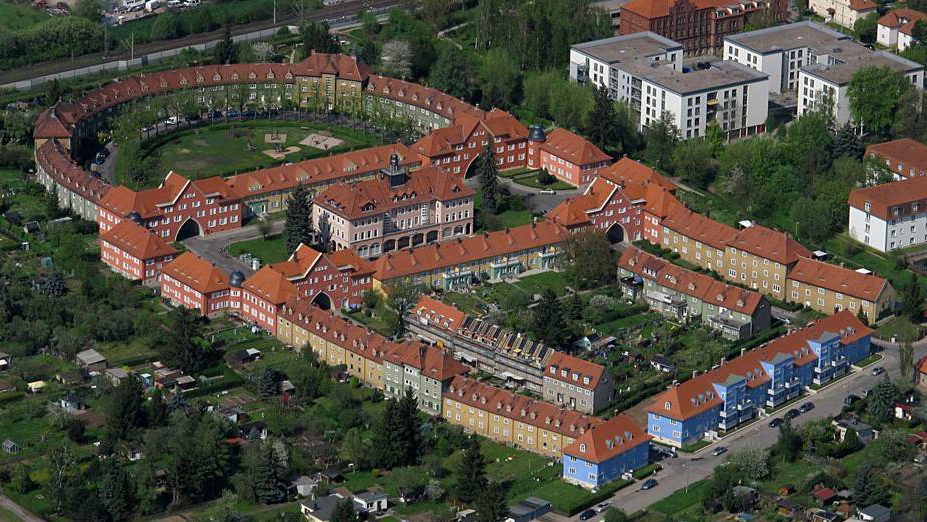
The historical anchor that gives Frankfurt its name in housing history is Das Neue Frankfurt. Ernst May's 1925-1930 municipal programme built around 12,000 apartments across Römerstadt, Praunheim and Westhausen to the principle of the Existenzminimum, the well-designed minimum dwelling. The Frankfurter Küche, the standardised fitted kitchen by Margarete Schütte-Lihotzky, was developed for these estates and became the template for the modern kitchen. The estates were placed under heritage protection in the 1970s after demolition protests, and now sit at the centre of a UNESCO bid. The arc that followed ran from post-war reconstruction through the municipal and non-profit landlords to a slow contemporary cooperative revival.
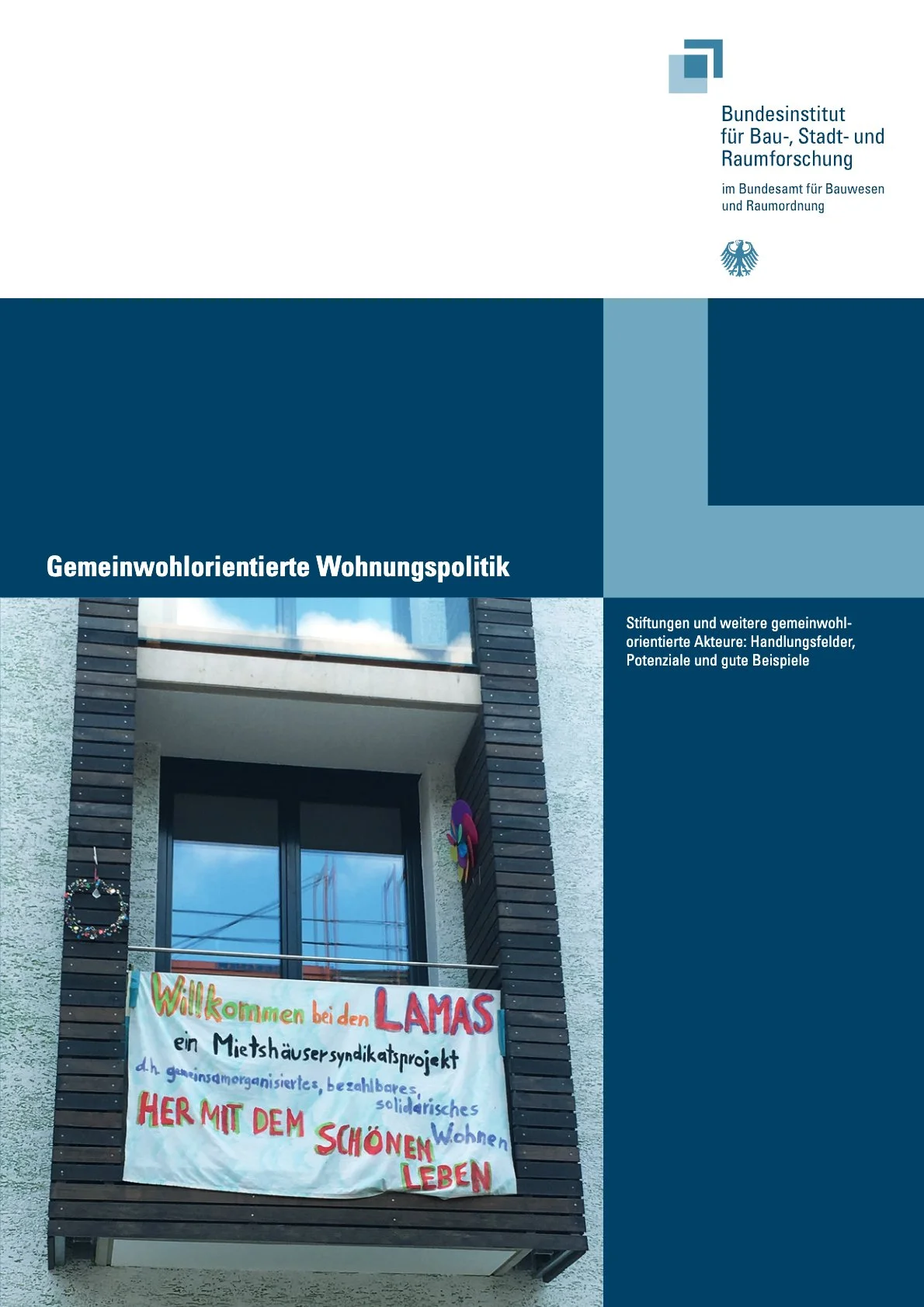
Today the sector clusters into three groups with different problems. The classic societies, led by the Wohnbaugenossenschaft in Frankfurt am Main, spend most of their energy managing and energy-retrofitting an ageing stock for an ageing membership — slow, capital-hungry work. A second cluster is the new cohousing wave: WohnGeno e.G. anchors the post-2010 community-led scene, and project cooperatives organise future residents around a single building. A third is the self-organised collective, the permanently-non-saleable houses on the model of the Mietshäuser Syndikat, which Hessen hosts in small numbers. The legacy coops struggle with retrofit cost; the new ones struggle with land and finance, because Germany's non-profit-housing framework was dismantled in 1990 and is only now being rebuilt.
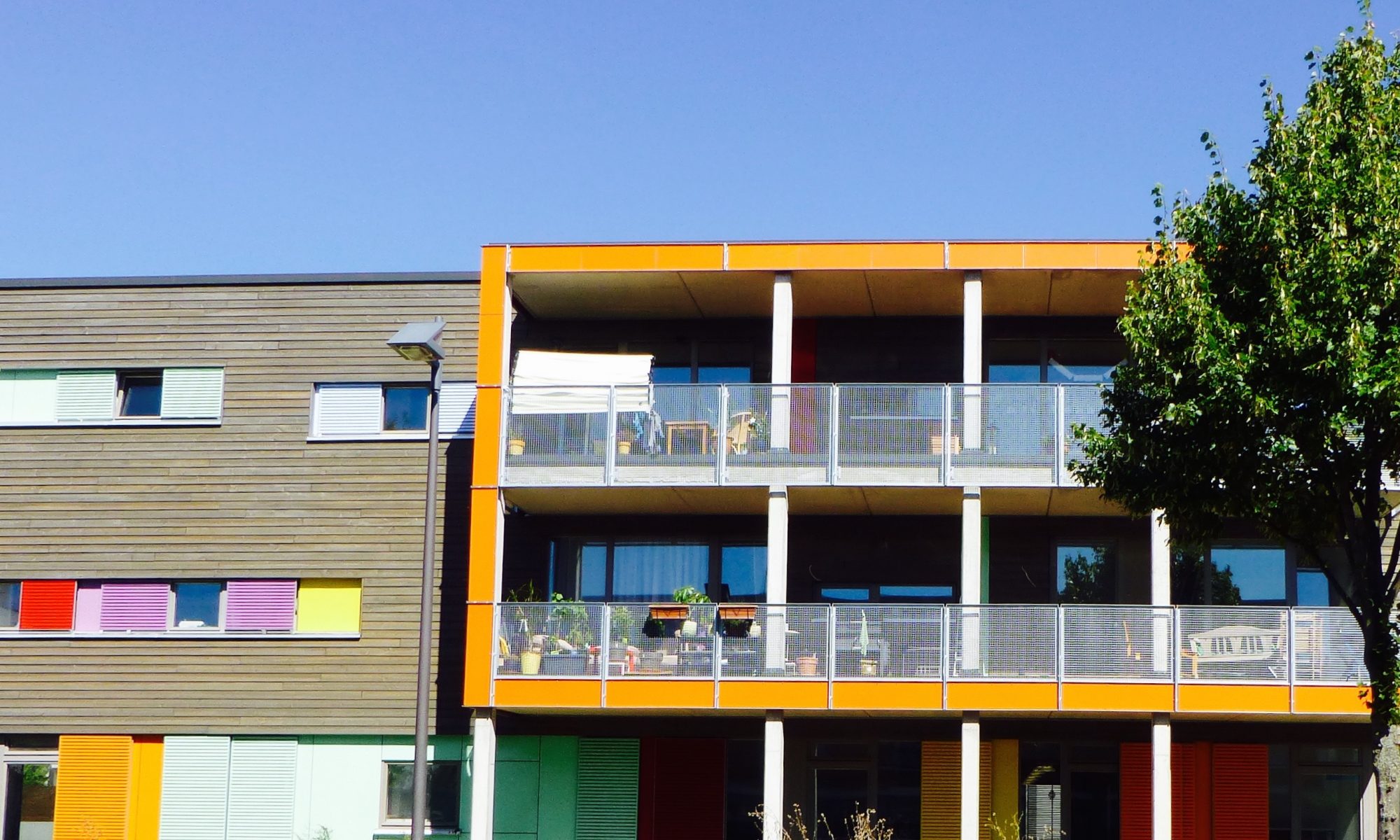
Where the cooperative tier goes next is decided by how Frankfurt hands out its land. The city increasingly allocates public plots through Konzeptverfahren — concept-led tenders that award plots on social and sustainability criteria rather than price — and through Erbbaurecht, long-term ground leases that keep the land in public hands. Cooperatives win a small but rising share of these plots. The federal promotional bank KfW, headquartered in the city, carries dedicated finance for cooperative shares and energy-efficient build. German housing cooperatives are one of the largest non-market housing forms in the country, the base the city is trying to widen. The cooperative is treated as a delivery channel for the affordable-housing strategy, not a niche beside it.
The programme, and the answer to the empty offices
Frankfurt's housing politics runs through its municipal company. Mike Josef of the SPD, the former planning and housing deputy, has been Lord Mayor since 2023, with Marcus Gwechenberger of the SPD — once a planner at the non-profit Nassauische Heimstätte — holding the housing brief. After the March 2026 city election and the FDP's exit, the SPD, Greens and Volt run the council with project-by-project majorities. The lead instrument is ABG Frankfurt Holding. In August 2025 it extended its Mietenstopp to 2030, holding rents on around 33,000 apartments to roughly 1% a year, and on a 2024 surplus it announced about 4,000 new apartments by 2029 under a €2.1 billion programme, more than 40% of it subsidised.
Three tiers of government each pull a different lever in Frankfurt. The city owns the land, runs ABG and reserves a share of its Konzeptverfahren plots for cooperatives. The state of Hessen routes construction finance and applies the Mietpreisbremse, the federal rent brake, across the whole city. Berlin sets the legal frame: the Mietpreisbremse was extended to 2029, an uprated Wohngeld housing benefit cushions low incomes, and the Bau-Turbo lets municipalities fast-track approvals until the end of 2030. KfW finance, on the city's doorstep, bridges part of the gap between build cost and the rents a cooperative can charge.

The empty offices bring the supply question to a head, and the policy answer is office-to-residential conversion. Frankfurt's vast pool of vacant office floor, the largest of any German city, is also its clearest opportunity, and the Bau-Turbo is meant to speed the approvals that conversion needs. A study of obsolete urban space argues that Germany's emptying office districts are exactly where climate-friendly, common-good redevelopment should now focus. The constraint is arithmetic: converting a 1980s office slab into flats that clear an affordability covenant rarely pencils without subsidy, which is where the KfW finance and the concept-tender land discounts are aimed.
- 1925-1930[source]
Das Neue Frankfurt
Ernst May's modernist municipal-housing programme builds around 12,000 apartments across Römerstadt, Praunheim and Westhausen, and introduces the Frankfurter Küche, the standardised fitted kitchen.
- 1970s[source]
Heritage protection
The Neues Frankfurt estates are placed under heritage protection after public protest over demolitions; Römerstadt becomes a reference for twentieth-century social housing.
- 2014[source]
ABG self-imposed rent cap
The municipal landlord ABG Frankfurt Holding begins capping in-tenancy increases, the start of a decade-long municipal rent-restraint policy.
- 2018[source]
Ferienwohnungssatzung
Frankfurt requires a permit for any tourist holiday-flat use, the start of a sustained push to return illegally-let dwellings to the regular market.
- 2023[source]
Mike Josef elected mayor
Mike Josef (SPD), the former planning and housing deputy, is elected Lord Mayor; Marcus Gwechenberger (SPD) succeeds him as planning and housing councillor.
- Aug 2025[source]
ABG Mietenstopp to 2030
ABG extends its rent freeze to 2030, holding increases on around 33,000 apartments to roughly 1% a year; its subsidised units sit outside the agreement.
- Sep 2025[source]
ABG €2.1bn build plan
On a 2024 group surplus of €95.8 million, ABG announces plans for around 4,000 new apartments by 2029 under a €2.1 billion investment programme, well over 40% of it subsidised.
- Oct 2025[source]
Federal Bau-Turbo
The Bundestag passes the Bau-Turbo (new §246e BauGB), letting municipalities approve housing outside the usual planning rules until the end of 2030.
- 2029[source]
Mietpreisbremse horizon
The federal rent brake, which Hessen applies across all of Frankfurt, is extended to the end of 2029 — the legal ceiling under which the new-let market operates.
From the Neues Frankfurt programme through the post-war municipal expansion to the contemporary rent-freeze, office-conversion and cooperative pipeline.
In Frankfurt the climate question and the affordability question have collapsed into one. The city's housing stock averages around 55 years old, only about 18% of dwellings are energy-efficient, and the renovation rate crawls at roughly 1.2% a year, far short of the EU's deep-retrofit targets. The municipal landlord's new timber and low-carbon blocks and the panel-estate retrofits the cooperatives run are the main vehicles for cutting the sector's carbon. That ties the climate goal directly to the non-market tier the city is trying to grow, and the broader construction-reform coalition, the Bauwende Allianz, presses the same case nationally.
In Frankfurt the argument is no longer whether ABG should build, but how fast and how cheaply for whom. Dominike Pauli, the housing-policy spokesperson for Die Linke in the city council, has argued that ABG builds too little even in a record year and is failing on social housing. Mike Josef, who chairs ABG's supervisory board as well as the city, counters that build costs and conditions have been punishing, and that the rent freeze protects tenants the market would not. Neither side disputes that the non-market tier has to grow; their quarrel is over the speed and over who foots the bill.
The conditions for building flats have been very difficult in recent years, and construction costs remain at a high level.Empty towers, full courtyards: where the alternative is being built
Frankfurt's working examples run from a century of heritage estates to a handful of new cooperative and conversion pilots. The distinctive thread is the office-vacancy opportunity none of its peer cities share at the same scale. The order below runs from the largest and most contested scheme down to the smallest, self-organised house, before it names the design and finance layer that makes them possible.
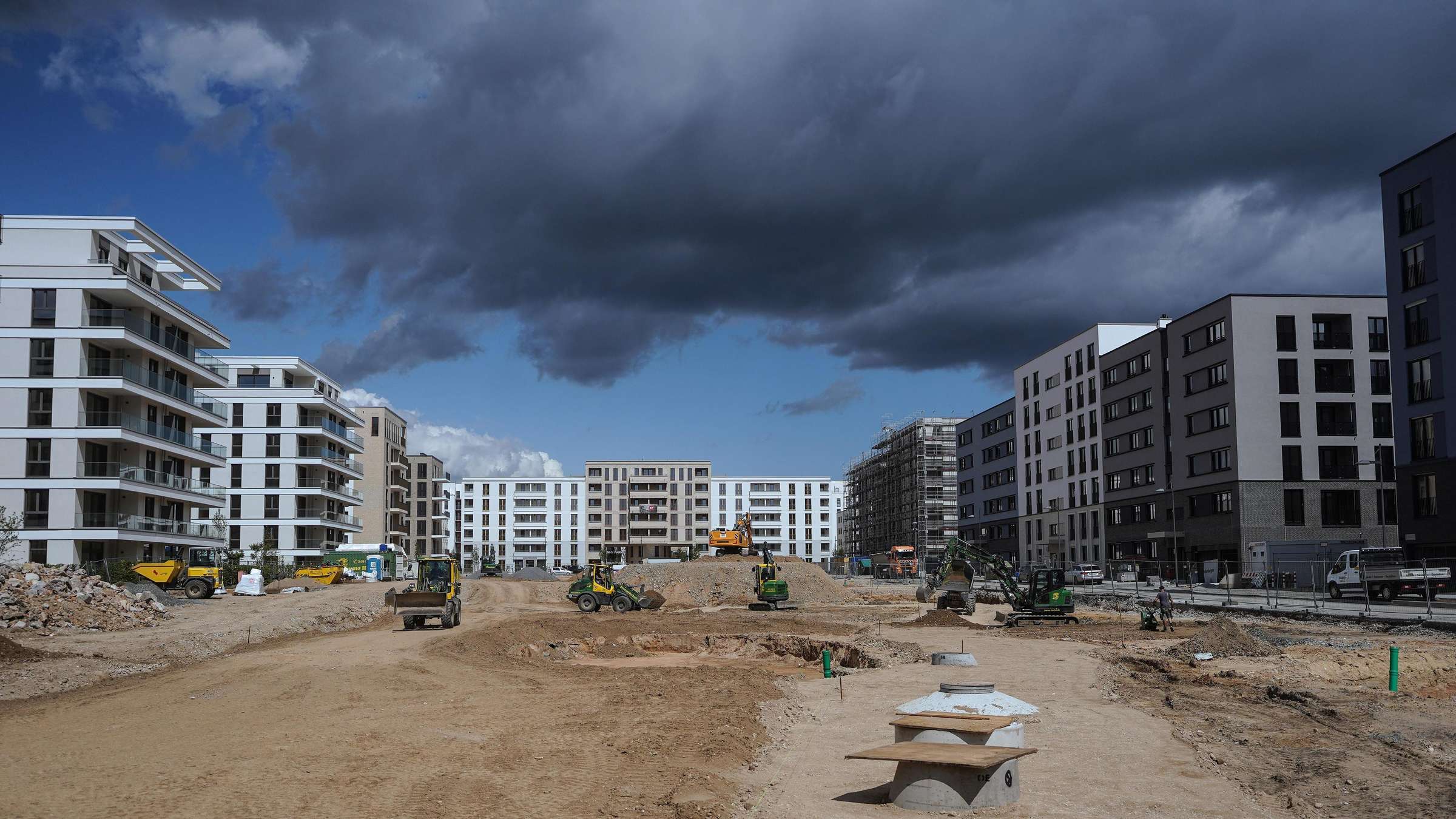
The Schönhof-Viertel in Bockenheim is the city's largest current build: around 2,000 flats on the former Siemens site, delivered by Nassauische Heimstätte with a private partner. It is also the clearest illustration of the affordability ceiling. Because Siemens sold the land at a high price, only about 30% of the flats are subsidised, and critics argue more would have been affordable had a public landlord alone bought and built the site. The first tenancies are now being let.

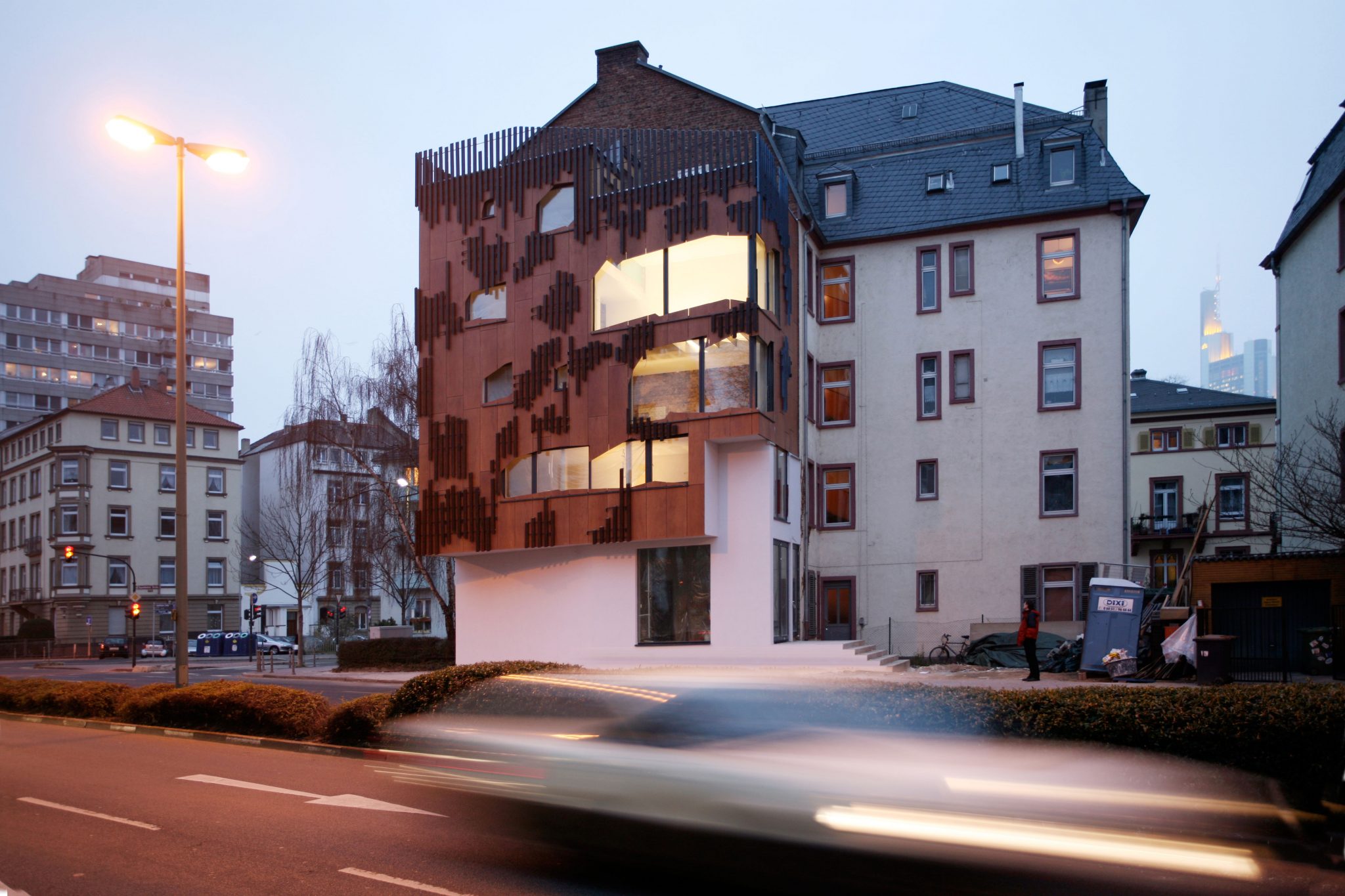
BeTrift in Niederrad is the reference at the contemporary cooperative end. Built by WohnGeno e.G., it delivered multi-generational flats with a substantial subsidised share, a car-sharing garage and a free shop on the ground floor — the largest community-led building the city has produced. The catch is replication: it took years of member effort and a rare plot, and the city has struggled to repeat the model at scale. AdAptiv, a former academy turned car-free intergenerational housing for roughly ninety residents, and the Naxos-Areal cooperative, a twelve-flat house with two subsidised units, show the same promise and the same small scale.
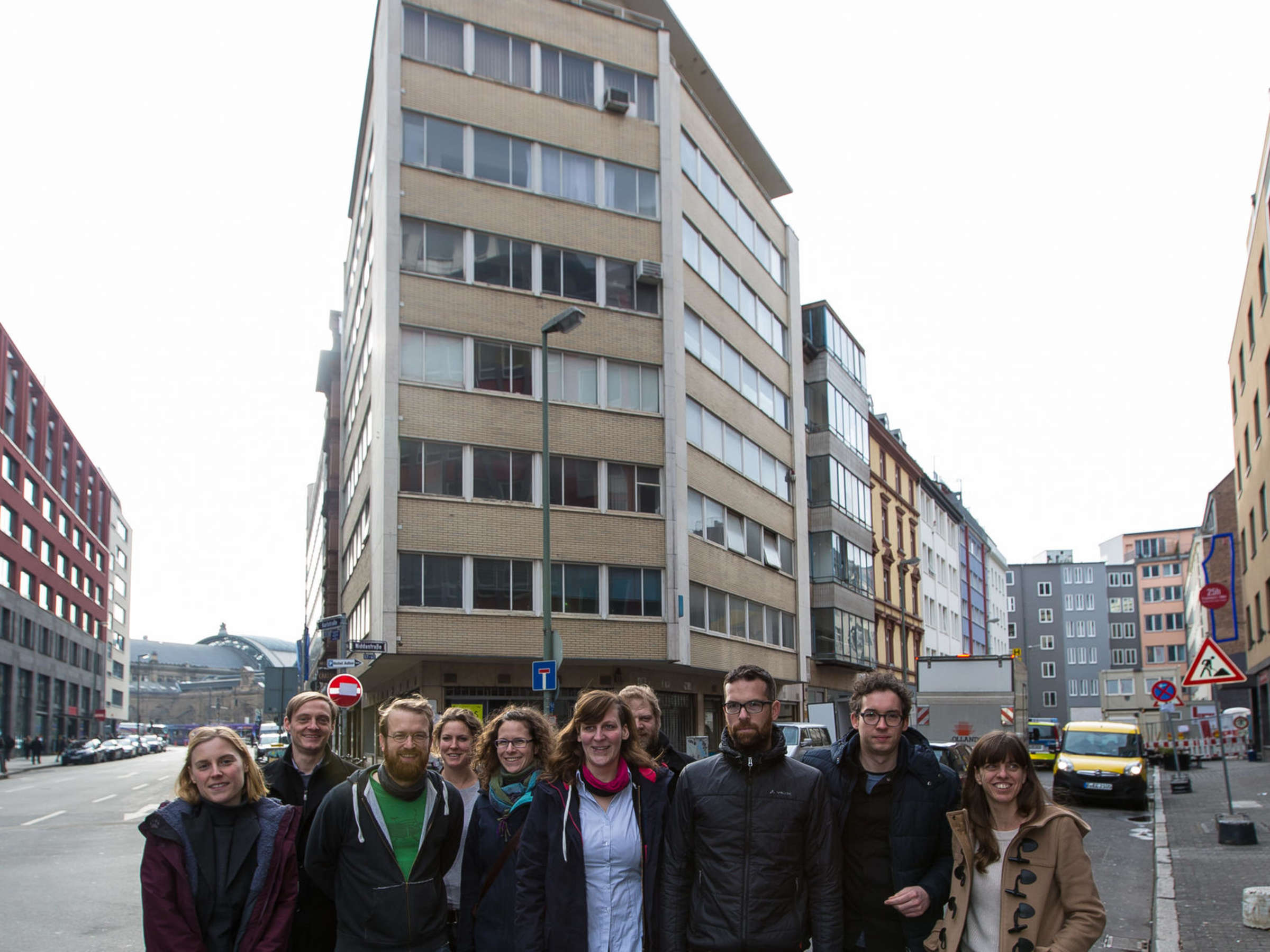
Living Together in Sufficiency goes smaller and more radical. The DGJ Architektur scheme shrinks private space to 27.8 square metres a person, offset by shared balconies and a guest room, and asks whether comfortable urban living needs the floor area the market assumes. It is a deliberate provocation rather than a mass model: the flats are tiny by German standards, and the approach divides even its admirers. NiKA.HAUS makes the conversion case directly, turning a former office building near the main station into affordable housing for several dozen residents — exactly the office-to-flats move the city's policy is chasing, achieved here without waiting for the Bau-Turbo.
Retrofit, not new-build, is where most of the stock's future is decided, and the Fritz-Kissel-Siedlung modernisation is the test case. The heritage-protected 1950s estate is gaining timber-module roof extensions and new affordable units without displacing its tenants — a model for densifying the post-war estates that ring the city, though the works are slow and the heritage rules tight. The Kulturcampus Bockenheim, the former university quarter being remade as a mixed cultural-and-housing district, shows the opposite difficulty: a decade of stop-start planning over how much of the prime central land should be housing rather than culture or commerce.
These pilots rest on a small but genuine bench of designers and financiers. DGJ Architektur and Schmidt Plöcker Architekten carry much of the city's cooperative and timber work; GIMA Frankfurt coordinates the wider commons-economy and cooperative scene, drawing on the kind of community-finance practice mapped across Europe; and KfW, the federal promotional bank, is the patient capital underneath it all. Frankfurt's enabling network is shallower than Vienna's or Berlin's. But it grows from a base few European cities can match: the Neues Frankfurt inheritance, and a million square metres of offices waiting to become homes.

References
Statistics19Click on any number to see the source
Housing market
Tenure & affordability
Cooperative, social & public
Adaptive reuse & vacancy
Population & migration
From our library22
- ABG Frankfurt Holding (ABG Frankfurt Holding GmbH) — Organisation
- The Financialization of Housing in Europe - My Home is an Asset Class — Knowledge
- Wohnbaugenossenschaft Frankfurt am Main eG (WBG) — Organisation
- WohnGeno e.G. — Organisation
- Gemeinwohlorientierte Wohnungspolitik - eine Studie — Knowledge
- KfW — Organisation
- Facts and Figures of the Cooperatives (Focus on Germany) — Knowledge
- Obsolete Stadt - Raumpotenziale für eine gemeinwohlorientierte, klimagerechte und koproduktive Stadtentwicklungspraxis in wachsenden Großstädten — Knowledge
- Bauwende Allianz — Organisation
- Schönhof-Viertel — Project
- Nassauische Heimstätte (NHW) | Wohnstadt — Organisation
- BeTrift — Project
- AdAptiv — Project
- Naxos-Areal — Project
- Living Together in Sufficiency — Project
- DGJ Architektur — Organisation
- NiKA.HAUS — Project
- Fritz-Kissel-Siedlung Modernisierung — Project
- Kulturcampus Bockenheim — Project
- Schmidt Plöcker Architekten — Organisation
- GIMA Frankfurt — Organisation
- Funding the Cooperative City: Community Finance and the Economy of Civic Spaces — Knowledge
Further sources19
- New Frankfurt — overview (Das Neue Frankfurt) — Wikipedia
- Ernst-May-Gesellschaft — Frankfurt 1925-1930 — Ernst-May-Gesellschaft
- Mietpreisbremse extended to 2029 — Deutscher Bundestag
- Bau-Turbo (§246e BauGB) — Deutscher Bundestag
- Mietpreisbremse in Hessen — Haufe
- ABG zieht Bilanz und plant 4.000 Wohnungen — ABG Frankfurt Holding
- ABG plant bis 2029 rund 4.000 neue Wohnungen — immobilienmanager
- ABG Mietenstopp für 33.000 Wohnungen — Journal Frankfurt
- ABG-Bilanz: Das sagen die Parteien im Römer — Journal Frankfurt
- Römer-Koalition: wechselnde Mehrheiten — hessenschau
- Mike Josef — Lord Mayor profile — Stadt Frankfurt am Main
- Marcus Gwechenberger — new planning councillor — Skyline Atlas
- JLL — Germany Living, H2 2025 (Frankfurt supply gap) — JLL
- IW Köln — housing-market tension in large cities — Institut der deutschen Wirtschaft
- Schönhof-Viertel — first lettings — Nassauische Heimstätte
- Günthersburghöfe — the fight over the Grüne Lunge — Journal Frankfurt
- Hilgenfeld Klimaschutzquartier — entwicklungsstadt.de
- WohnGeno BeTrift, Niederrad — gemeinschaftliches-wohnen.de
- DGJ Architektur — Genossenschaftsbau Frankfurt — DETAIL