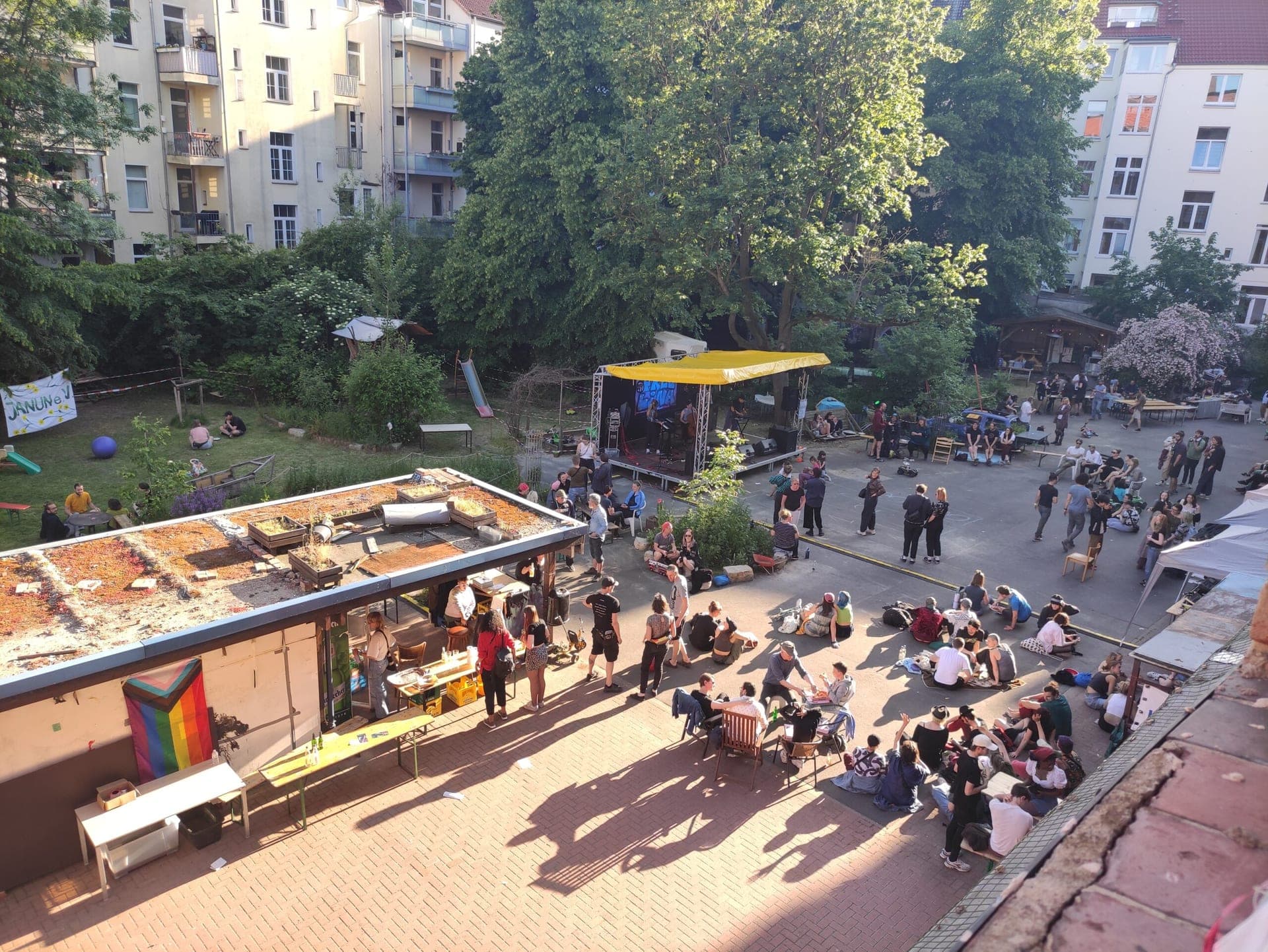
Stadtteilleben is a community housing project in Hannover-Linden, Germany, created to provide affordable rental homes and support shared, self-organised living in the neighbourhood.2 Its residents converted a listed former school into a residential building with 16 homes, as well as a seminar and group room, a self-help bicycle workshop and a space for events that can be used under the residents’ self-management.
The building served as a primary school until 2012. After the city put it up for sale, a group of engaged people bought it with support from the Mietshäuser Syndikat, then renovated it for affordable housing. The project’s model is intended to keep the building in rental use rather than turn it into individually owned apartments; a 2013 project flyer describes the aim as creating permanently affordable rental housing.2
The project is associated with Stadtteilleben Linden e.V. and the Mietshäuser Syndikat, and a 2017 account identifies both as the project’s building partners. A 2013 flyer described plans for 15 units, while the project’s current website reports 16; the website’s figure is used here.2 Available sources describe the project’s development and building history, but do not establish a specific founding date or identify individual founders.2
Stadtteilleben presents solidarity and opposition to discrimination as part of its approach to housing, including a commitment to reflect on and change its own conduct. Its shared facilities and self-managed event space extend the project’s activities beyond the homes themselves.